
ᐅ Making the Attic Walkable: Cross Battens and OSB – Practical Solution or Overkill?
Created on: 1 Jan 2026 12:46
S
Sven2617Hello everyone,
First of all, I wish you all a healthy and successful 2026. We want to make our attic, which is currently only partially insulated, accessible for walking. It will only be used for storage and keeping items. The distance between the joists varies between 80cm and 100cm (31 and 39 inches), and the joists themselves are 5cm (2 inches) wide. According to our construction company at the time, the floor load capacity is up to 100kg/m² (20.5 psf). I have attached a photo.
The AI recommends cross battens of 60×100mm (better 60×120mm) (2.4×4 inches; better 2.4×4.7 inches), structural timber grade C24, placed upright with a maximum center-to-center spacing of 40cm (16 inches). On top of this, a floor made of 22mm (7/8 inch) OSB. I’m not entirely comfortable trusting the AI blindly... It also seems rather bulky, especially since the mentioned material thicknesses already add considerable weight.
What is your assessment? Does anyone have more experience and can offer some recommendations?
Thanks in advance and best regards
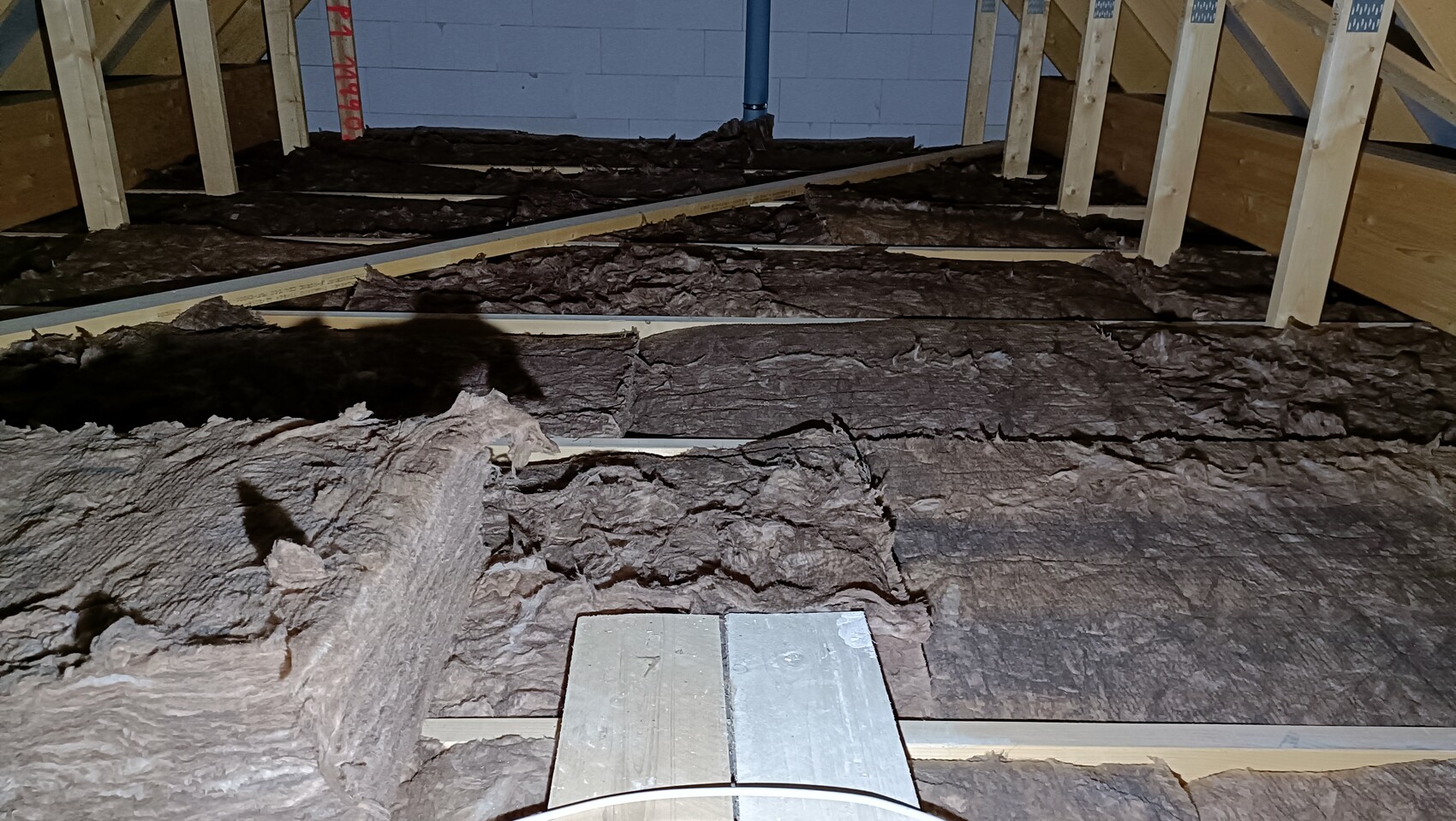
First of all, I wish you all a healthy and successful 2026. We want to make our attic, which is currently only partially insulated, accessible for walking. It will only be used for storage and keeping items. The distance between the joists varies between 80cm and 100cm (31 and 39 inches), and the joists themselves are 5cm (2 inches) wide. According to our construction company at the time, the floor load capacity is up to 100kg/m² (20.5 psf). I have attached a photo.
The AI recommends cross battens of 60×100mm (better 60×120mm) (2.4×4 inches; better 2.4×4.7 inches), structural timber grade C24, placed upright with a maximum center-to-center spacing of 40cm (16 inches). On top of this, a floor made of 22mm (7/8 inch) OSB. I’m not entirely comfortable trusting the AI blindly... It also seems rather bulky, especially since the mentioned material thicknesses already add considerable weight.
What is your assessment? Does anyone have more experience and can offer some recommendations?
Thanks in advance and best regards

I assume there is a vapor retarder beneath the installed insulation. I would recommend using tongue and groove boards rather than OSB. You need ventilation, meaning a small gap between the insulation and the final load-bearing surface. In this respect, 10 cm (4 inches) would be quite good. However, 6x10 cm (2.4x4 inches) seems a bit excessive to me. Certainly, 6x8 cm (2.4x3.2 inches) would also work.
Alternatively, you could add extra support only where the cross battens rest, using 4 or 5x6 cm (1.6x2.4 or 2x2.4 inches).
If you then use 28 mm (1.1 inch) tongue and groove boards, that will hold quite a bit of weight.
Of course, it also depends on whether you are storing many packs of tiles there or more typical items like empty suitcases, Christmas decorations, etc. The cold roof space doesn’t allow much due to frost and moisture. I wouldn’t recommend storing clothes or books there.
Alternatively, you could add extra support only where the cross battens rest, using 4 or 5x6 cm (1.6x2.4 or 2x2.4 inches).
If you then use 28 mm (1.1 inch) tongue and groove boards, that will hold quite a bit of weight.
Of course, it also depends on whether you are storing many packs of tiles there or more typical items like empty suitcases, Christmas decorations, etc. The cold roof space doesn’t allow much due to frost and moisture. I wouldn’t recommend storing clothes or books there.
Thank you for your assessment. Yes, the vapor barrier is installed beneath the insulation, and we only plan to store light to medium-weight items there—such as the suitcases and Christmas decorations you mentioned.
Tolentino schrieb:I haven’t fully understood that yet. Do you mean (a) adding one more layer lengthwise onto the existing joists as they are, then installing the cross battens on top of that—and then the tongue-and-groove boards running lengthwise on the cross battens? Or (b) without any cross battens at all, installing the tongue-and-groove boards directly onto the (then elevated) existing joists (which I think would reduce ventilation)? Or (c) something completely different, and my interpretations are way off?
Or you could even add furring strips only where the cross battens rest and go up to 4 or 5 by 6.
I also think that 28mm (about 1 inch) is sufficient and you can screw these directly onto the existing joists. I see a few boards lying around, so just try it out. Even if a board bends slightly, it’s not a problem for this kind of application.
Ultimately, the spacing between the joists needs to be reduced or the floorboards need to be thicker. It doesn’t really matter which side you reinforce more.
If you want ventilation, I would probably use the usual 6x4cm (about 2.5x1.5 inches) battens and either screw them across the existing joists at intervals of about 60-80cm (24-31 inches) depending on the thickness of the floor covering, or just lay them down and then place the boards on top (for example, tongue and groove or similar, whatever you can get at a good price).
OSB panels also work, but either you use the smaller panels and have to precisely align the joints with the battens, or you use the larger panels, which can be difficult to get up to the attic. For that reason, tongue and groove or similar seems more appropriate (grade two boards are sufficient).
Laying it out and testing it would be my approach; you’ll see straight away how it looks. For extra peace of mind, just add three more 4x6cm (about 2.5x1.5 inches) battens to reduce the spacing.
Ultimately, the spacing between the joists needs to be reduced or the floorboards need to be thicker. It doesn’t really matter which side you reinforce more.
If you want ventilation, I would probably use the usual 6x4cm (about 2.5x1.5 inches) battens and either screw them across the existing joists at intervals of about 60-80cm (24-31 inches) depending on the thickness of the floor covering, or just lay them down and then place the boards on top (for example, tongue and groove or similar, whatever you can get at a good price).
OSB panels also work, but either you use the smaller panels and have to precisely align the joints with the battens, or you use the larger panels, which can be difficult to get up to the attic. For that reason, tongue and groove or similar seems more appropriate (grade two boards are sufficient).
Laying it out and testing it would be my approach; you’ll see straight away how it looks. For extra peace of mind, just add three more 4x6cm (about 2.5x1.5 inches) battens to reduce the spacing.
Thank you both for the advice and tips. I have now decided on the 6x8cm (2.4x3.1 inches) cross battens. Together with the 28mm (1.1 inches) tongue-and-groove boarding, this adds up to about 20kg/m² (4.1 lbs/ft²) – the remaining 80kg/m² (16.4 lbs/ft²) is sufficient for storage and walking loads.
At first, I was also worried that the cross battens might not be strong enough, could break, and I might fall through the drywall ceiling to the floor below. If anyone has similar concerns, I found a very useful online calculator today for this purpose (and I am surprised what these thin battens can actually support):
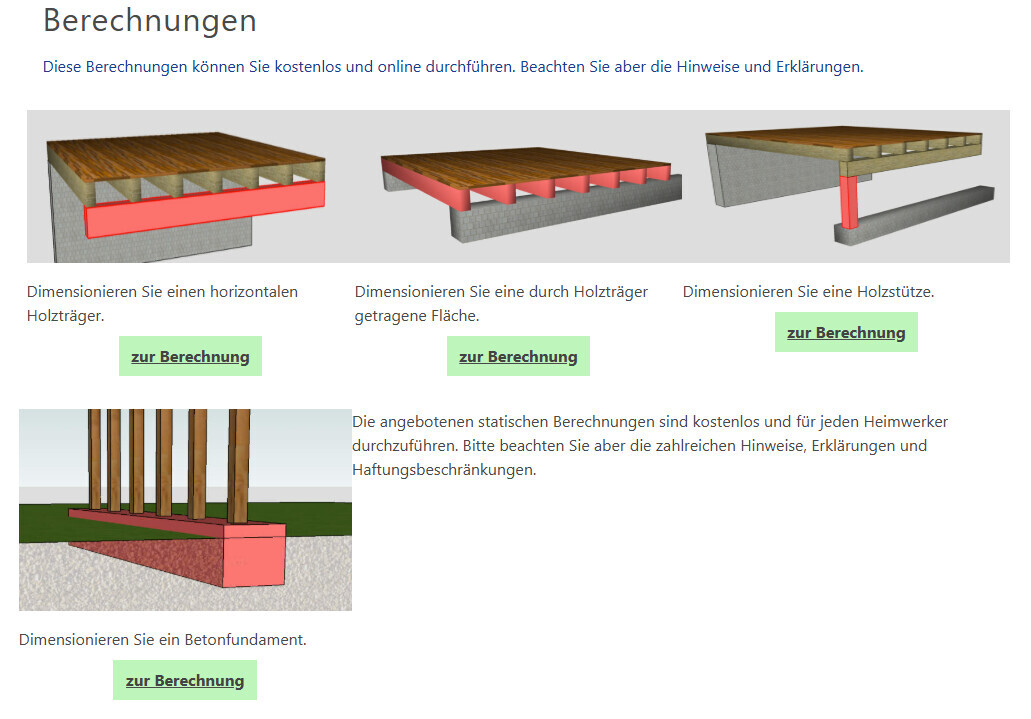
At first, I was also worried that the cross battens might not be strong enough, could break, and I might fall through the drywall ceiling to the floor below. If anyone has similar concerns, I found a very useful online calculator today for this purpose (and I am surprised what these thin battens can actually support):
Similar topics