
Hello everyone,
We have an open space of about 4.6m x 12m (15 ft x 39 ft) that combines the kitchen, dining room, and living room. Currently, a rough ceiling height of 2.77m (9 ft 1 in) is planned, and with a 15cm (6 inches) floor construction, the finished height will be around 2.62m (8 ft 7 in).
I have planned the lighting with recessed spotlights as well as openings for the mechanical ventilation system. The structural engineer mentioned that for the manufacturer of the precast ceiling, 180mm (7 inches) Halox conduit is always used, and each electrical box costs 100€ net.
Now I am considering three options:
- Have the spotlights fully installed and hope everything fits as planned. Then have the ceiling plastered.
- Lower the ceiling slightly, I estimate by about 7-8cm (3 inches). This would sacrifice some height but provide all the benefits of a suspended ceiling. A recessed shadow gap would also be possible, which I really like. Then the ceiling would be skimmed, sanded, and painted.
- Raise the ceiling by half a brick (~12.5cm / 5 inches). This would be allowed according to the building permit/planning permission and still fit with one stair step. This would result in lowering the ceiling by about 10-15cm (4-6 inches). Then skim, sand, and paint.
Unfortunately, I’m not sure how these different ceiling heights would feel. How would you approach this and what would be the recommended height for lowering the ceiling? Would you prefer to use metal profiles or wood for the suspended ceiling?
We have an open space of about 4.6m x 12m (15 ft x 39 ft) that combines the kitchen, dining room, and living room. Currently, a rough ceiling height of 2.77m (9 ft 1 in) is planned, and with a 15cm (6 inches) floor construction, the finished height will be around 2.62m (8 ft 7 in).
I have planned the lighting with recessed spotlights as well as openings for the mechanical ventilation system. The structural engineer mentioned that for the manufacturer of the precast ceiling, 180mm (7 inches) Halox conduit is always used, and each electrical box costs 100€ net.
Now I am considering three options:
- Have the spotlights fully installed and hope everything fits as planned. Then have the ceiling plastered.
- Lower the ceiling slightly, I estimate by about 7-8cm (3 inches). This would sacrifice some height but provide all the benefits of a suspended ceiling. A recessed shadow gap would also be possible, which I really like. Then the ceiling would be skimmed, sanded, and painted.
- Raise the ceiling by half a brick (~12.5cm / 5 inches). This would be allowed according to the building permit/planning permission and still fit with one stair step. This would result in lowering the ceiling by about 10-15cm (4-6 inches). Then skim, sand, and paint.
Unfortunately, I’m not sure how these different ceiling heights would feel. How would you approach this and what would be the recommended height for lowering the ceiling? Would you prefer to use metal profiles or wood for the suspended ceiling?
N
nordanney8 Sep 2025 01:35Don’t install a dropped ceiling. Plan the lighting carefully. Spotlights play a really minor role (flooding the room with spotlights has long been out of style). Use wall lamps, ceiling lights, floor lamps, table lamps, accent lighting, candles, LED strips if needed, and so on.
And the spotlights that you really think you need, install with the factory-installed housings.
You can share your lighting plan if you want.
And the spotlights that you really think you need, install with the factory-installed housings.
You can share your lighting plan if you want.
The plan would look roughly like this:

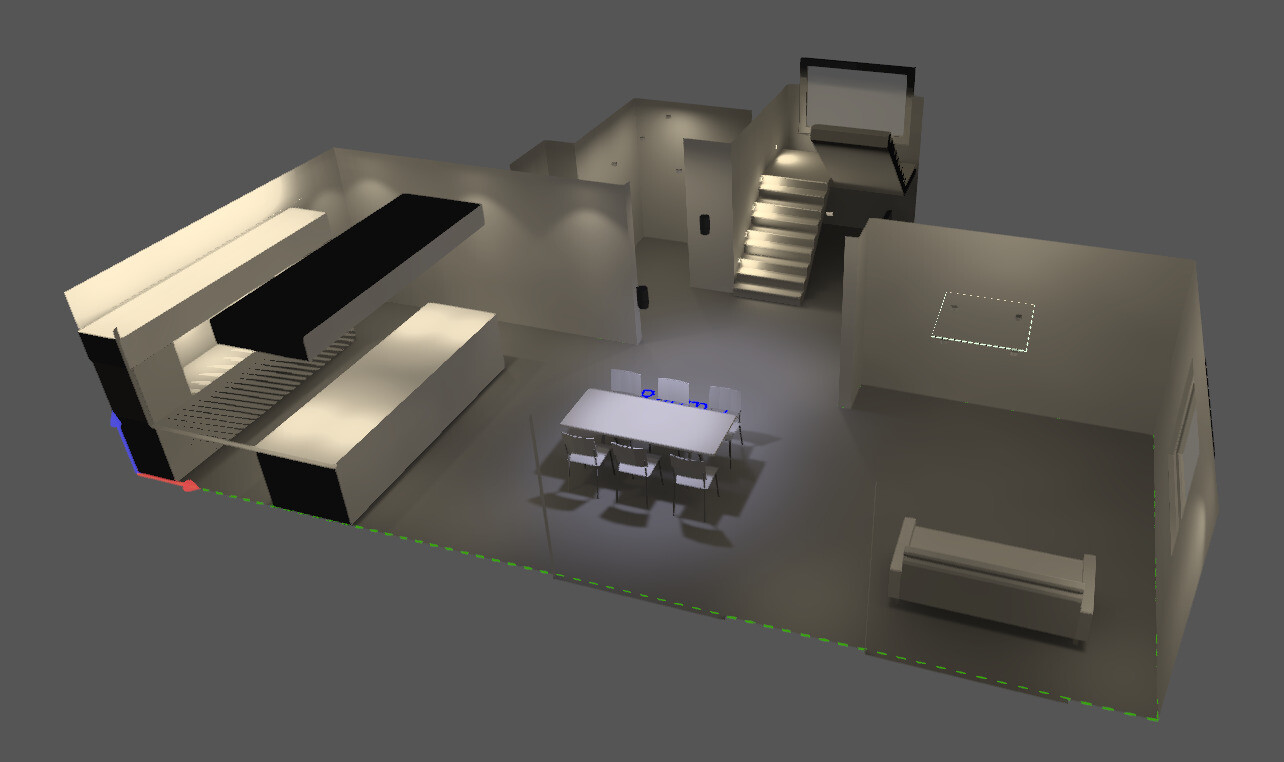
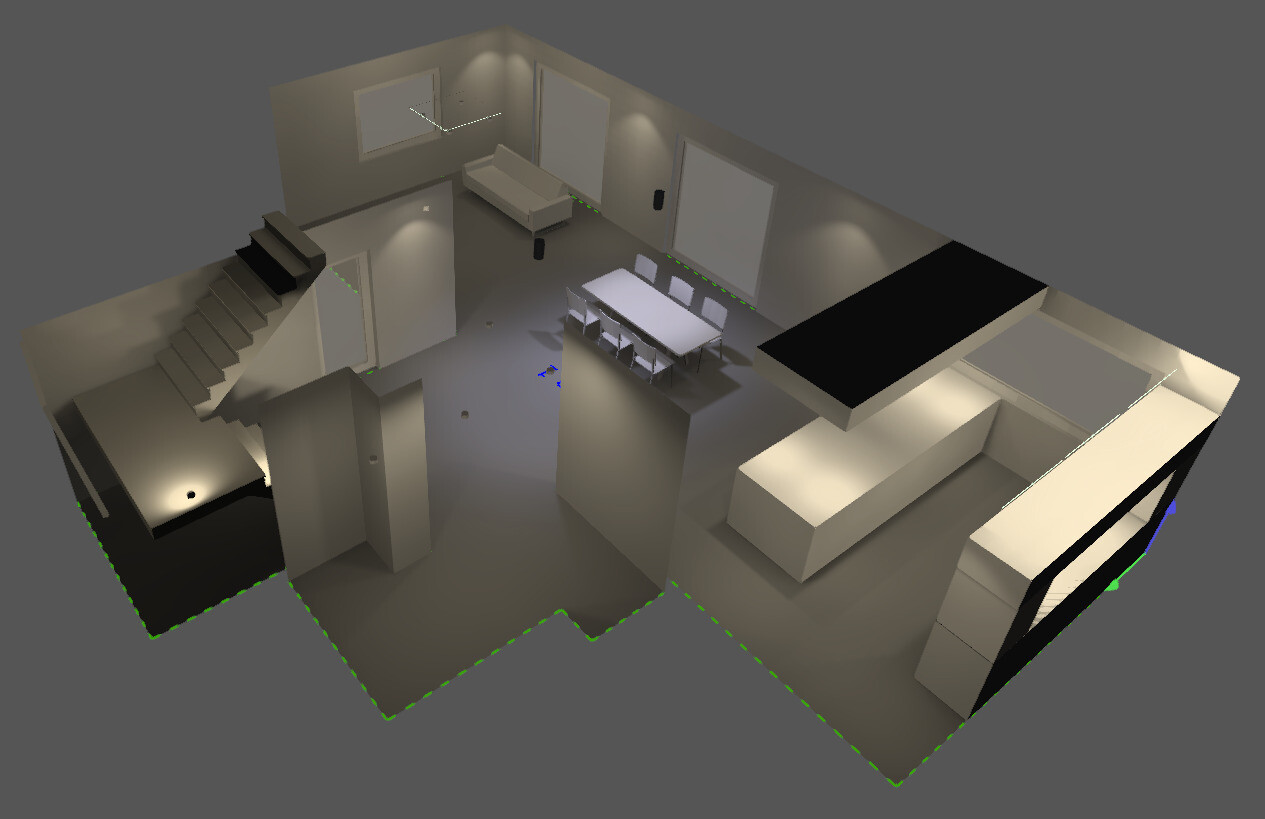
Here you can already see part of the problem. The kitchen has changed, which also affects the lighting. In one month (when the ceiling needs to be ordered), we won’t be able to guarantee with 100% certainty that everything will fit correctly.
In this case, suspending the ceiling would be a convenient way to postpone everything to a later time and make adjustments if something ends up being different than expected.
Here you can already see part of the problem. The kitchen has changed, which also affects the lighting. In one month (when the ceiling needs to be ordered), we won’t be able to guarantee with 100% certainty that everything will fit correctly.
In this case, suspending the ceiling would be a convenient way to postpone everything to a later time and make adjustments if something ends up being different than expected.

I’m sorry, I find it really terrible.
It’s your dream, so I don’t want to interfere, but @nordanney is absolutely right—spotlights are completely outdated for private homes. They became popular in the late 1980s and had a big surge in the 1990s. But at the latest since the 2010s (I’d say even earlier), people tend to prefer indirect lighting. For direct lighting, LED panels are better. They provide a more natural light quality.
Regarding your actual question: we did add about half a row of bricks more on the ground floor. It cost around 2000 EUR and I probably wouldn’t have noticed the difference (for you probably more expensive, since it was done later and is larger). The final height is now 2.68 meters (8 ft 9 in). If it had been 2.60 or even 2.55 meters (8 ft 6 in / 8 ft 4 in), nobody would have cared. So a small lowered ceiling should be possible. Whether you build the structure with wood or metal doesn’t really matter. Nowadays metal is more common, but wood would definitely be sufficient. I personally like wood because it’s more versatile (easier to work with, easier to modify later, etc.).
It’s your dream, so I don’t want to interfere, but @nordanney is absolutely right—spotlights are completely outdated for private homes. They became popular in the late 1980s and had a big surge in the 1990s. But at the latest since the 2010s (I’d say even earlier), people tend to prefer indirect lighting. For direct lighting, LED panels are better. They provide a more natural light quality.
Regarding your actual question: we did add about half a row of bricks more on the ground floor. It cost around 2000 EUR and I probably wouldn’t have noticed the difference (for you probably more expensive, since it was done later and is larger). The final height is now 2.68 meters (8 ft 9 in). If it had been 2.60 or even 2.55 meters (8 ft 6 in / 8 ft 4 in), nobody would have cared. So a small lowered ceiling should be possible. Whether you build the structure with wood or metal doesn’t really matter. Nowadays metal is more common, but wood would definitely be sufficient. I personally like wood because it’s more versatile (easier to work with, easier to modify later, etc.).
Tolentino schrieb:
But at the latest since the 2010s (I would even say earlier), the trend has been towards indirect lighting. For direct lighting, LED panels are preferred. They provide a more natural light quality. Hi,
it is generally intended to be indirect lighting. Only at the entrance, though, where I don’t want pendant lights either, because they can get knocked down when getting dressed. These are rather panels with a 100° beam angle.
Similar topics