
I now have a land offer that seems quite suitable. However, the development plan states that the ridge height may only be 7.20 m (23.6 ft). Two apartments are permitted, which I would like to have. Building envelope is 17 x 14 m (56 x 46 ft). Since I want a ceiling height of 2.75 m (9 ft) on the ground floor, as well as underfloor heating, the height restriction means that I can only build a single-story house, and the second floor would not provide comfortable living space. The knee wall would start at around 1 m (3.3 ft)... which is quite impractical.
A gable roof and hip roof are allowed, with angles between 30 and 45 degrees.
Is there a program or an online tool where I can roughly calculate this? Thanks.
A gable roof and hip roof are allowed, with angles between 30 and 45 degrees.
Is there a program or an online tool where I can roughly calculate this? Thanks.
R
ruedigold23 Dec 2019 15:53nordanney schrieb:
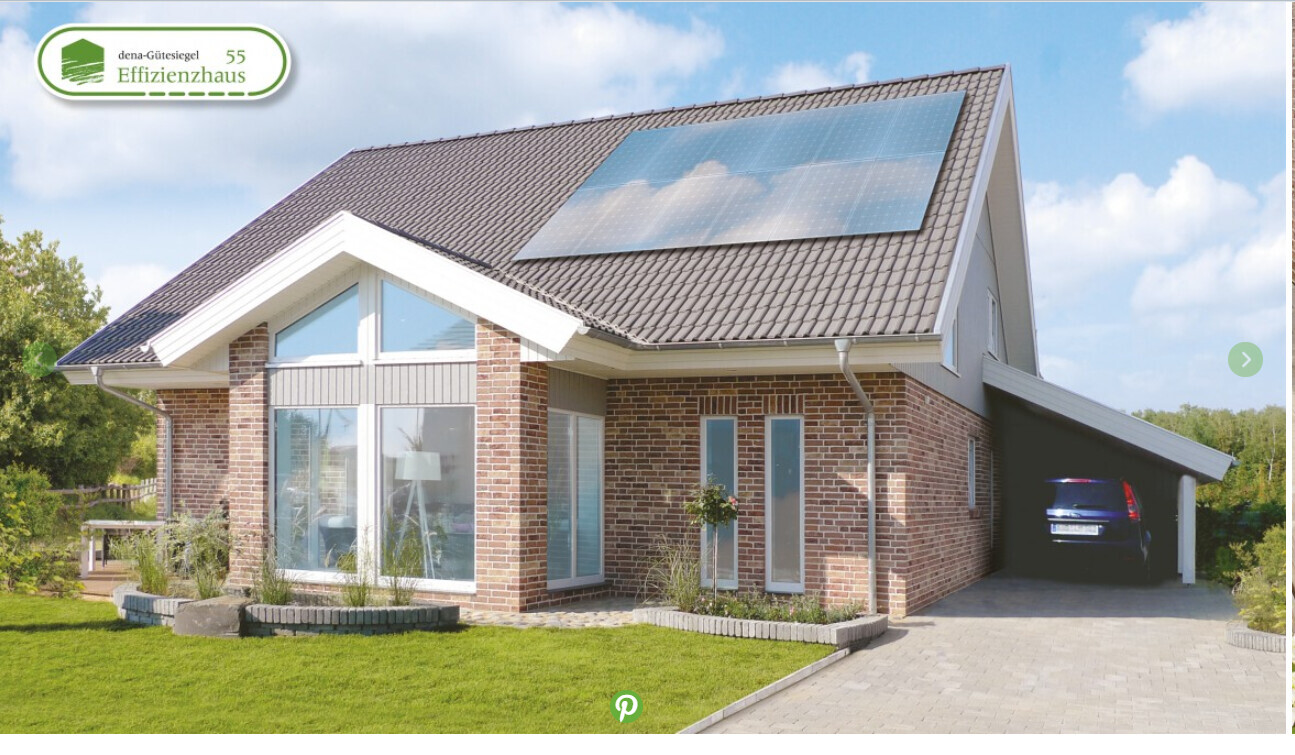
17 by 14 results in a tiny 238 sqm (2,560 sq ft) footprint, so approximately 200 sqm (2,150 sq ft) of living space plus storage area in the attic. The building envelope, however, does not include the 3 m (10 ft) setback from both neighbors, so that leaves 11 by 14 = 154 sqm (1,656 sq ft). If you subtract the wall thickness all around, for example about 40 cm (16 inches), the usable dimensions are 10.20 by 13.20 m (33.5 by 43.3 ft). That leaves 134 sqm (1,442 sq ft). From that, deduct the utility room with the technical equipment, washing machine, dryer, freezer chest, and storage shelves. Let’s say that takes up around 10 sqm (108 sq ft). Then there is the main entrance area with a hallway and cloakroom—does this count as living space in the calculation? I had always thought not. In any case, the rent for the current house I’m renting does not account for this separately (it's included in the total rent). But I believe there are standard rules for calculating living space. If I subtract another 10 sqm (108 sq ft) for the hallway, that leaves 114 sqm (1,228 sq ft) of living space. And how do you get to the attic? Surely via a staircase rather than a folding ladder pulled down from the ceiling? I’ll estimate about 5 sqm (54 sq ft) for the stairs, no idea. So that leaves about 110 sqm (1,184 sq ft) of living space plus the mentioned storage space in the attic. That would be the typical small settlement house with a steep gable roof—as shown in the picture.
What am I overlooking?
I want to move into a new house that is energy-efficient and future-proof, but I also want to feel comfortable living in it.
If the above doesn’t make sense, then it won’t work.
R
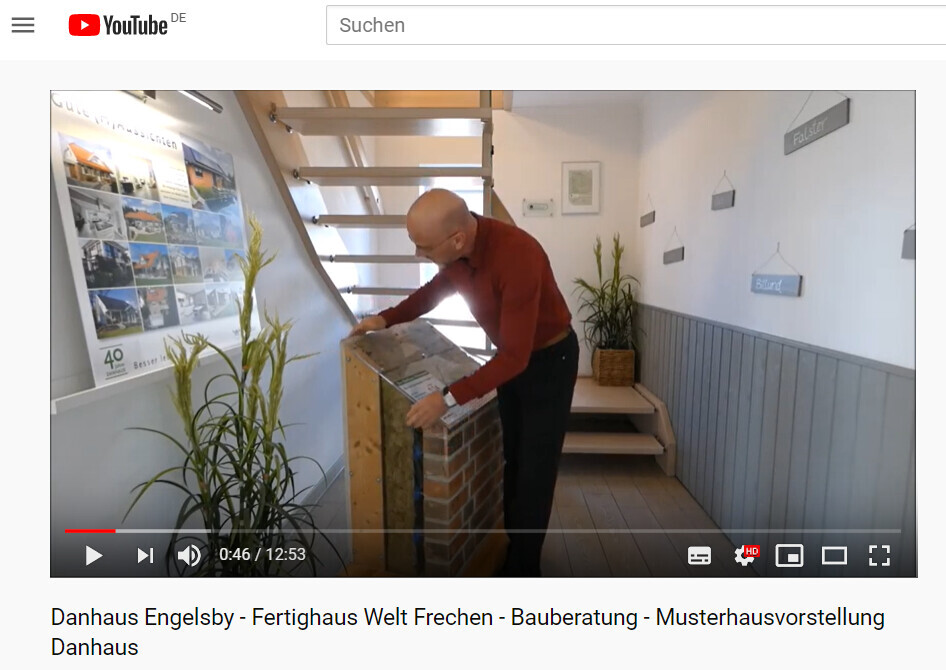
ruedigold23 Dec 2019 16:29Example: Danhaus, 1-liter house. Danhaus Polar Wall is even 44 cm (17 inches) thick. However, I couldn’t find any information about the ridge height or hear it mentioned in the video.
Do prefabricated house manufacturers not realize that development plans often specify a maximum building height? What use are all the great floor plans if the most important details—the height of the house and the required external dimensions—are overlooked?
In the model home neighborhoods, I haven’t gotten the impression that any house is limited to a certain height. They are mostly grand houses, often with a great sense of space. You get drawn in, and once you get home, you realize (or don’t) that it just doesn’t work.
Do prefabricated house manufacturers not realize that development plans often specify a maximum building height? What use are all the great floor plans if the most important details—the height of the house and the required external dimensions—are overlooked?
In the model home neighborhoods, I haven’t gotten the impression that any house is limited to a certain height. They are mostly grand houses, often with a great sense of space. You get drawn in, and once you get home, you realize (or don’t) that it just doesn’t work.
N
nordanney23 Dec 2019 16:41ruedigold schrieb:
There are 134 sqm (1442 sq ft) remaining. From that, the utility room with the technical equipment, washing machine, dryer, chest freezer, and storage shelf is deducted. Should I estimate 10 sqm (108 sq ft)? Then there is also a house entrance with a hallway and a wardrobe—does that count toward the "living area" in the calculation? I always thought it does not. No, it remains 134 sqm (1442 sq ft), just like all other apartments and houses. And if you add 50% of your terrace, the living area will actually be even larger.
Then you need to be creative with your architect. With a ridge height of 7.20 m (24 ft), you can definitely plan something nice. The floor and ceiling construction just needs to be optimized, or you accept 265 cm (8 ft 8 in), which already applies to more than 90% of all houses.
N
nordanney23 Dec 2019 16:50P.S. A typical settlement house usually has a living area of only 70-80 m² (750-860 sq ft). You can build 170-180 m² (1,830-1,940 sq ft), including the attic (estimated). So don’t compare yourself to a settlement house builder. If you’re not happy with the plot, buy a different one. If there isn’t another option, work on adjusting your housing expectations.
R
ruedigold23 Dec 2019 16:59nordanney schrieb:
No, it remains 134 sqm (1,444 sq ft) like all the other apartments and houses. And if I add 50% of your terrace, the living area actually becomes even larger.
Then you’ll need to get creative with your architect. With a ridge height of 7.20 m (23.6 ft), you can definitely design something nice. The floor/ceiling construction just needs to be optimized, or you accept a height of 265 cm (8.7 ft), which is higher than in over 90% of houses. Thank you, Nordannay. I’m just a layperson and ask simple questions. Half the terrace counts as living space? Who came up with that?
Anyway, today I sent two letters to FHH’s, so they can take some time to think about what’s possible... I can’t calculate it or even guess. So thanks in advance to everyone for their constructive input.
I’ll still go to the local authority and ask what they were thinking.
In any case, I’m increasingly realizing (finally again) the advantages of renting a house... but that’s another question/viewpoint. If only it weren’t for that oil consumption.
R
ruedigold23 Dec 2019 17:17@Nordannay, yes, my wife doesn’t like a low knee wall, and she’s right—I agree.
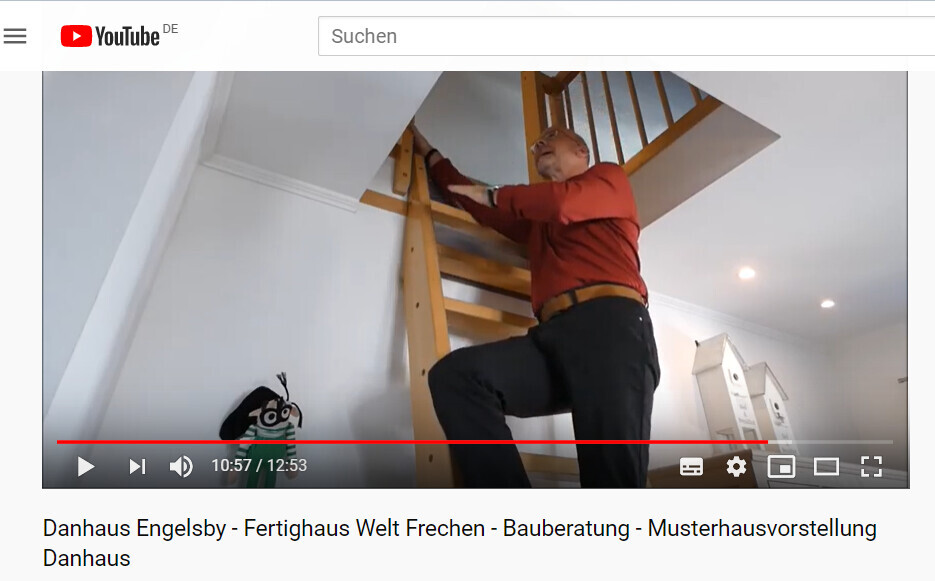
If all the space under the roof is counted as living area, then it’s like in the Danhaus video… no, that’s just not acceptable.
Good observation, I’m going to pass on the plot. Let someone else buy it who can handle it; I have no emotional attachment. But I would have emotions up to the upper edge if I found out after buying that I purchased the wrong plot.
Back to the main question the seller suddenly asked: why do you want to build at all?
Honest answer: because I can, and because I (maybe) want to. A house would be a nice project, as long as you haven’t made any critical mistakes. Choosing the wrong plot would be one of those.

If all the space under the roof is counted as living area, then it’s like in the Danhaus video… no, that’s just not acceptable.
Good observation, I’m going to pass on the plot. Let someone else buy it who can handle it; I have no emotional attachment. But I would have emotions up to the upper edge if I found out after buying that I purchased the wrong plot.
Back to the main question the seller suddenly asked: why do you want to build at all?
Honest answer: because I can, and because I (maybe) want to. A house would be a nice project, as long as you haven’t made any critical mistakes. Choosing the wrong plot would be one of those.