
H
hauswurz1016 Feb 2026 20:51I have a trap funnel under my wall-mounted heating boiler that leads through the wall into the garage using a PVC pipe (probably 40 or 50 mm (1.5 or 2 inches)).
I need to raise this drain if possible. Due to space limitations, this is not feasible with the old trap and bend. Is there a smaller alternative that serves the same purpose for cases like this?
I found something like this.
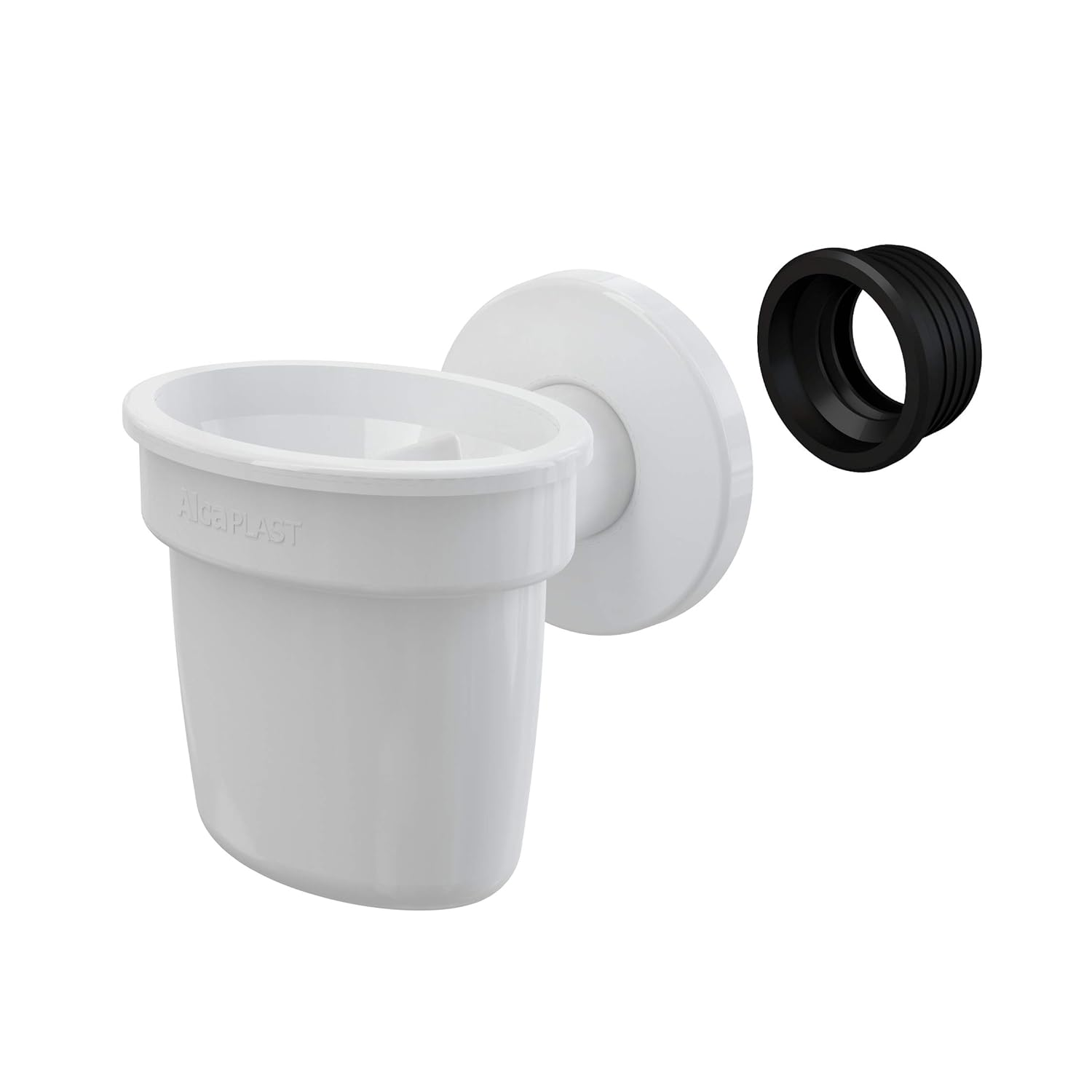
Can this also be used for the regular condensate drain of the heating system and the drain for the existing safety valve?
Some people think that this might be too small for the safety valve, as it may not handle the volume properly. Also, the water seal height might be too low.
I would appreciate product suggestions. There must be something that works, but I am not sure exactly what to look for.
The safety valve located in the left corner could potentially be connected differently or directly with a flexible hose for drainage.
Here are some pictures.
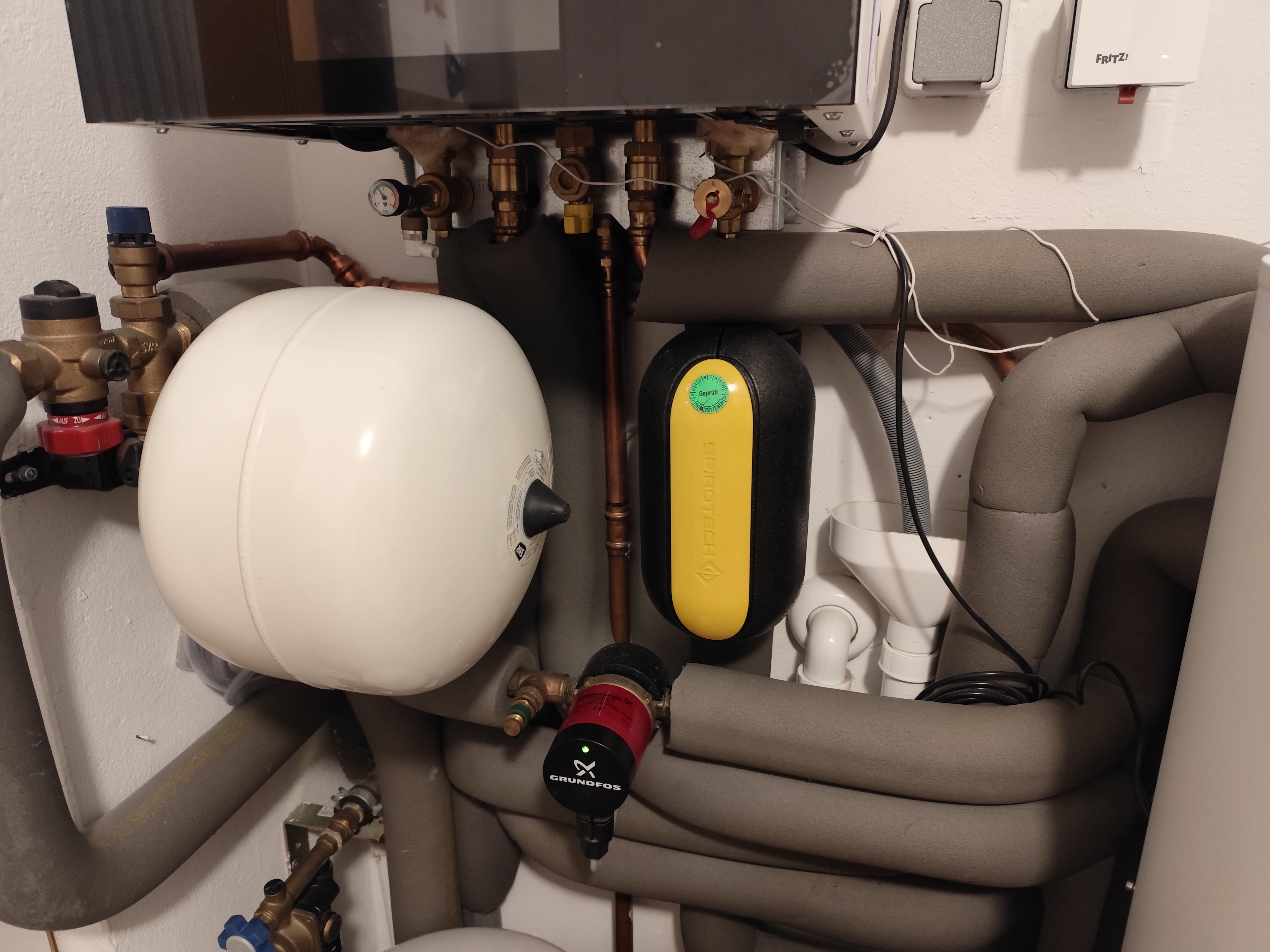
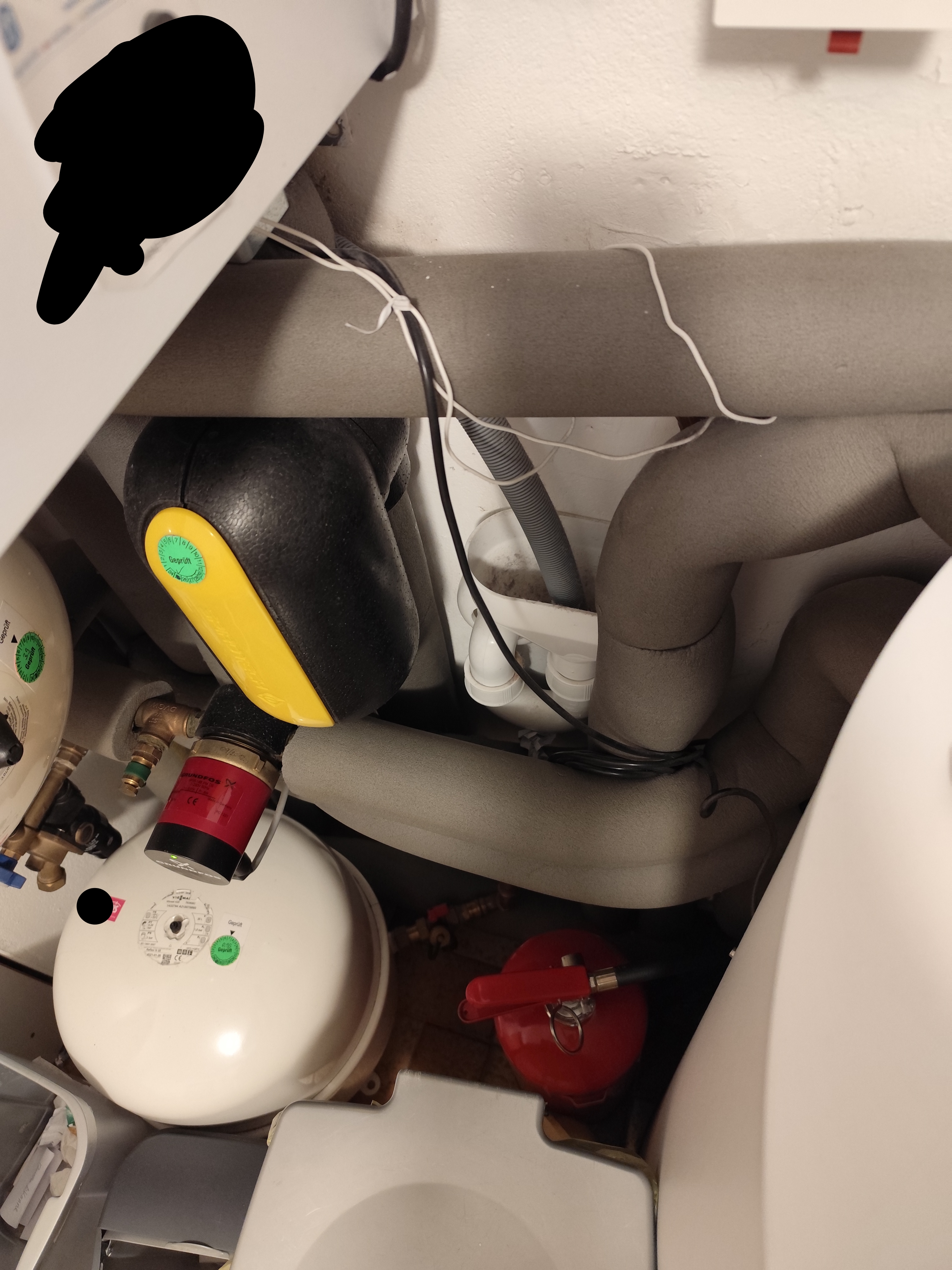
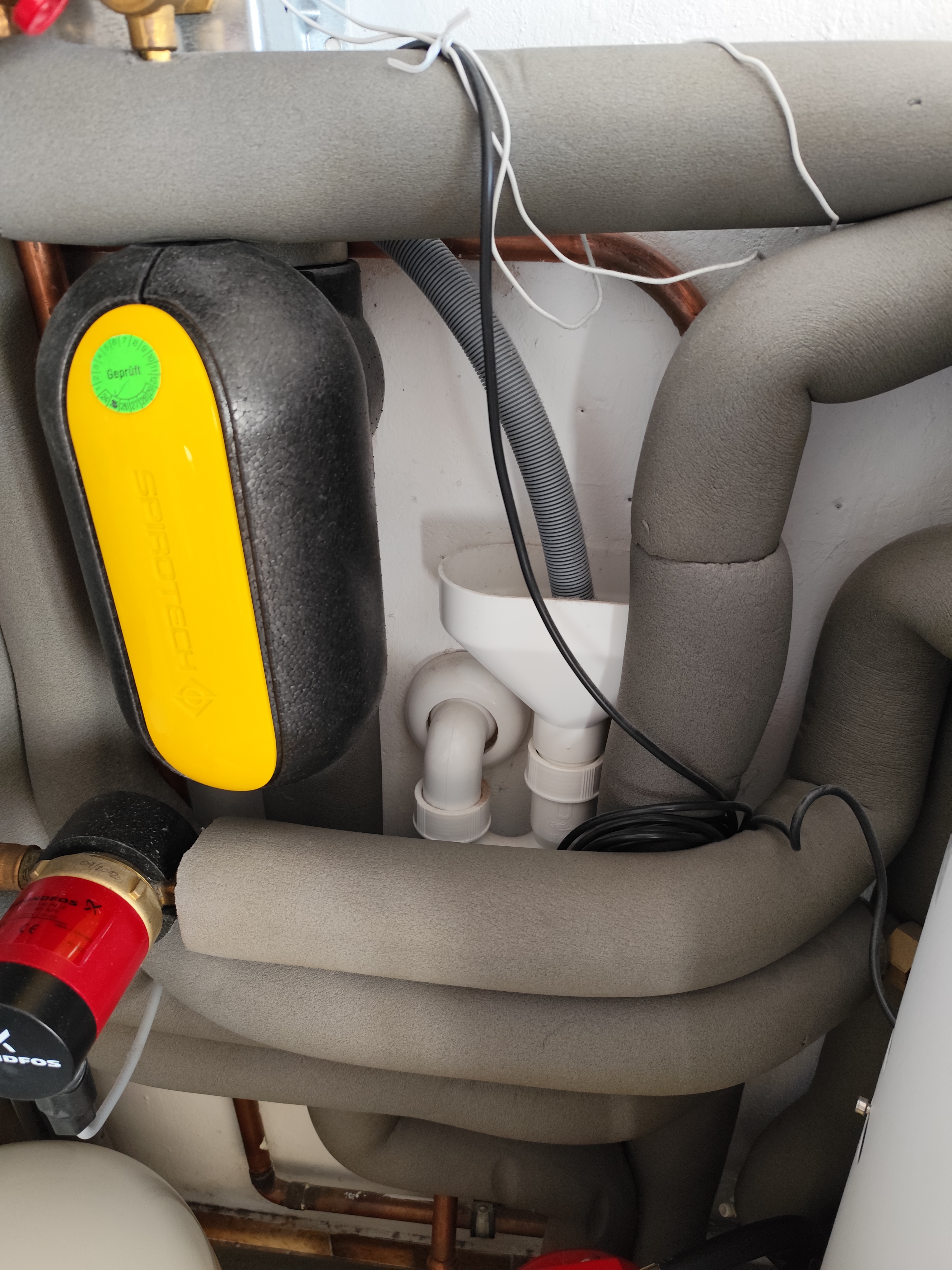
I need to raise this drain if possible. Due to space limitations, this is not feasible with the old trap and bend. Is there a smaller alternative that serves the same purpose for cases like this?
I found something like this.
Can this also be used for the regular condensate drain of the heating system and the drain for the existing safety valve?
Some people think that this might be too small for the safety valve, as it may not handle the volume properly. Also, the water seal height might be too low.
I would appreciate product suggestions. There must be something that works, but I am not sure exactly what to look for.
The safety valve located in the left corner could potentially be connected differently or directly with a flexible hose for drainage.
Here are some pictures.
Hi,
the funnel trap under the boiler is there for a reason. It separates the exhaust path from the room and handles not only the condensate but also whatever the safety valve suddenly releases in an emergency. And that’s not just a few milliliters—it can easily be 10–15 liters (2.6–4 gallons) in a very short time, depending on the system volume and pressure. Have you checked the diameter of your current pipe, DN40 or DN50? If you switch to a small trap with a 20mm (0.8 inch) inner diameter now, it will probably handle normal condensate, but it could be borderline for the safety valve discharge.
Regarding the water seal height: below 50mm (2 inches) it becomes risky, especially if the garage is cold and the water can evaporate. Then it not only smells unpleasant but also simply no longer functions properly. In my opinion, a shallow appliance trap with a 50mm (2 inch) water seal and side outlet would be more sensible than a makeshift compromise.
Another question is whether you want to position it higher only or also closer to the wall. Sometimes a different funnel with an integrated trap solves the space issue more elegantly than any elbow.
the funnel trap under the boiler is there for a reason. It separates the exhaust path from the room and handles not only the condensate but also whatever the safety valve suddenly releases in an emergency. And that’s not just a few milliliters—it can easily be 10–15 liters (2.6–4 gallons) in a very short time, depending on the system volume and pressure. Have you checked the diameter of your current pipe, DN40 or DN50? If you switch to a small trap with a 20mm (0.8 inch) inner diameter now, it will probably handle normal condensate, but it could be borderline for the safety valve discharge.
Regarding the water seal height: below 50mm (2 inches) it becomes risky, especially if the garage is cold and the water can evaporate. Then it not only smells unpleasant but also simply no longer functions properly. In my opinion, a shallow appliance trap with a 50mm (2 inch) water seal and side outlet would be more sensible than a makeshift compromise.
Another question is whether you want to position it higher only or also closer to the wall. Sometimes a different funnel with an integrated trap solves the space issue more elegantly than any elbow.
H
hauswurz1017 Feb 2026 13:30Can I connect the safety valve directly with a hose like that and somehow insert or connect the hose directly into the pipe?
I just need to raise it because the pipe on the other side in the garage has to be higher to make space for a photovoltaic battery there.
I want to raise it about 20 cm (8 inches) up to where the insulation starts, at the point where the funnel would hit. That would be 25 cm (10 inches) from the hole in the middle to the insulation, so theoretically it’s possible, but everything is very tight.
I’m open to any solutions, even unconventional ones, as long as they work perfectly. Unfortunately, I have no idea what is available on the market or what can be used. Even when I search for images online, I can’t seem to find anything suitable.
Maybe you could share your suggestions, preferably with pictures or links, so I can get a better idea.
I just need to raise it because the pipe on the other side in the garage has to be higher to make space for a photovoltaic battery there.
I want to raise it about 20 cm (8 inches) up to where the insulation starts, at the point where the funnel would hit. That would be 25 cm (10 inches) from the hole in the middle to the insulation, so theoretically it’s possible, but everything is very tight.
I’m open to any solutions, even unconventional ones, as long as they work perfectly. Unfortunately, I have no idea what is available on the market or what can be used. Even when I search for images online, I can’t seem to find anything suitable.
Maybe you could share your suggestions, preferably with pictures or links, so I can get a better idea.
Hi,
Connecting a flexible hose directly to the safety valve and pushing it into the pipe is tempting, but I would be very cautious with that. A safety valve can release 10–15 liters (2.6–4 gallons) in seconds in an emergency, causing any small hose to immediately swell, kink, or tear, which would result in the garage flooding. Gaining 20cm (8 inches) in height is, of course, tricky—especially if the space between the funnel and insulation is only 25cm (10 inches).
My first question would be: Have you checked whether a flat appliance trap with a side or downward outlet can physically fit in there at all? Some manufacturers offer traps with a 50mm (2 inch) water seal height and a compact design that you could theoretically install at a higher level without drastically reducing the cross-section. Also, keep in mind that HT pipes with DN40 and DN50 diameters require quite a bit of space, especially at 90° bends, so each additional bend makes things tighter.
It might be worth searching for a “compact heating trap DN50 flat” instead of relying on mini funnels or condensate traps, which are usually designed for 1–2 liters per hour (0.26–0.53 gallons per hour) and can’t handle the output from the safety valve.
Connecting a flexible hose directly to the safety valve and pushing it into the pipe is tempting, but I would be very cautious with that. A safety valve can release 10–15 liters (2.6–4 gallons) in seconds in an emergency, causing any small hose to immediately swell, kink, or tear, which would result in the garage flooding. Gaining 20cm (8 inches) in height is, of course, tricky—especially if the space between the funnel and insulation is only 25cm (10 inches).
My first question would be: Have you checked whether a flat appliance trap with a side or downward outlet can physically fit in there at all? Some manufacturers offer traps with a 50mm (2 inch) water seal height and a compact design that you could theoretically install at a higher level without drastically reducing the cross-section. Also, keep in mind that HT pipes with DN40 and DN50 diameters require quite a bit of space, especially at 90° bends, so each additional bend makes things tighter.
It might be worth searching for a “compact heating trap DN50 flat” instead of relying on mini funnels or condensate traps, which are usually designed for 1–2 liters per hour (0.26–0.53 gallons per hour) and can’t handle the output from the safety valve.
H
hauswurz1017 Feb 2026 14:52I will look into that right away.
From how you describe it, it’s questionable whether the system currently installed by the heating engineer properly supplies the safety valve for emergencies, meaning whether the water can drain away freely.
When venting and testing the safety valve, only a small amount of water comes out.
On the other hand, in the garage, the wastewater runs along the surface-mounted pipes on the wall.
Would it be possible to route both wastewater hoses through the wall and simply place the funnel solution inside the garage?
From how you describe it, it’s questionable whether the system currently installed by the heating engineer properly supplies the safety valve for emergencies, meaning whether the water can drain away freely.
When venting and testing the safety valve, only a small amount of water comes out.
On the other hand, in the garage, the wastewater runs along the surface-mounted pipes on the wall.
Would it be possible to route both wastewater hoses through the wall and simply place the funnel solution inside the garage?
Yes, theoretically you could run both pipes through the wall and collect the water directly in the garage, but from a safety and code compliance perspective, this is somewhat problematic. The drip tray under the boiler is specifically designed to prevent water from spraying into the heating room in the event of a sudden safety valve release or backflow. If you simply move this outside, a sudden discharge of 10–15 liters (2.6–4 gallons) would immediately spill onto the garage floor, which can be especially problematic with smooth screed floors or electrical installations. The fact that only a small amount of water comes out when venting the safety valve does not mean it can’t release a significant amount in an emergency—physics is on your side here: the flow depends on pressure, not on the small test flow. A compromise might be to keep the drip tray directly at the wall but install a short, shallow HT bend with a nominal diameter of 50mm (2 inches) that runs upwards, so the pipe inside the garage is higher. This way, the water seal height is maintained, the emergency flow works properly, and the photovoltaic battery fits.
Similar topics