
B
berlin12324 Jan 2016 14:58Hello everyone,
We have purchased a house and are now in the planning phase. We want to make fundamental changes and enlarge the rooms, but we are facing the problem that we are not completely sure if the walls we want to remove are load-bearing or not. We are especially uncertain about the mansard hip roof.
To give everyone an idea of the situation, I am attaching some files to visualize the circumstances. I hope we can get some help here.
Thank you in advance.

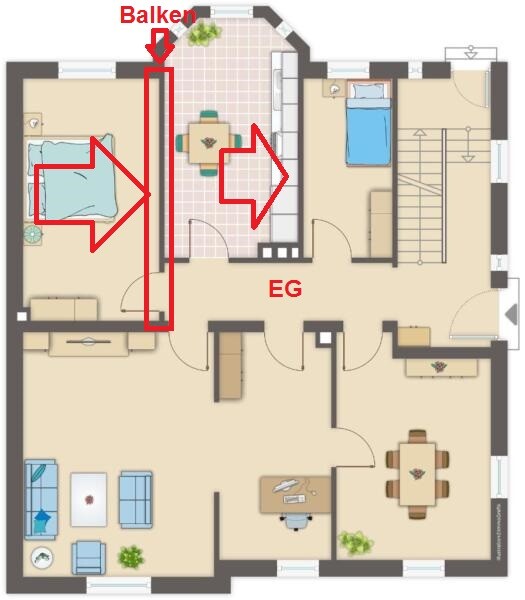
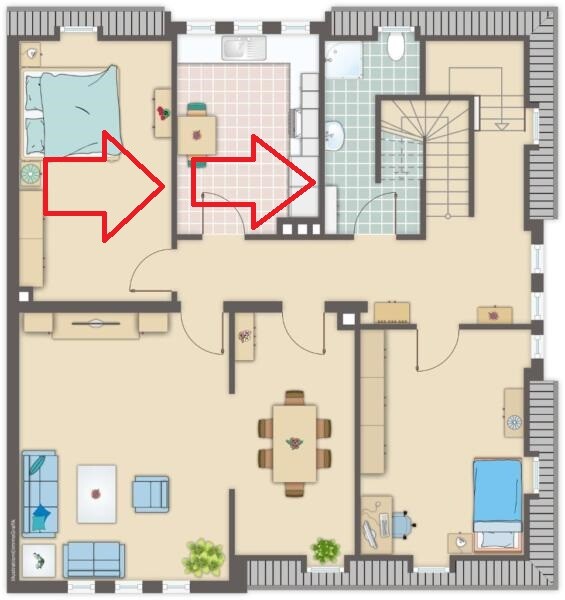
We have purchased a house and are now in the planning phase. We want to make fundamental changes and enlarge the rooms, but we are facing the problem that we are not completely sure if the walls we want to remove are load-bearing or not. We are especially uncertain about the mansard hip roof.
To give everyone an idea of the situation, I am attaching some files to visualize the circumstances. I hope we can get some help here.
Thank you in advance.
B
berlin12324 Jan 2016 16:34No, of course not binding. The real question is: have load-bearing walls ever been built like that at all?
As far as I know, they are either built perpendicular to the joists or continuous, spanning multiple floors.
That said, I have to mention that the walls consist of only a single brick thickness.
As far as I know, they are either built perpendicular to the joists or continuous, spanning multiple floors.
That said, I have to mention that the walls consist of only a single brick thickness.

It appears that the walls are likely non-load-bearing, as the ceiling beams are spanning freely between the exterior wall and the interior partition. However, since unexpected situations and unconventional construction solutions are often encountered on-site, it is essential to first carry out a thorough building survey, expose hidden structures, and conclusively clarify the current condition. Updated as-built drawings should then be created before moving forward with the renovation planning.
From the very beginning, including for the building survey, you should engage an experienced architect. They will advise you on practical renovation options, provide cost estimates, and recommend a suitable structural engineer. A detailed building survey and well-prepared renovation plan will save the most money in the long run.
From the very beginning, including for the building survey, you should engage an experienced architect. They will advise you on practical renovation options, provide cost estimates, and recommend a suitable structural engineer. A detailed building survey and well-prepared renovation plan will save the most money in the long run.
B
berlin12314 Feb 2016 20:17It turns out that the situation is apparently a bit more complicated than initially thought.
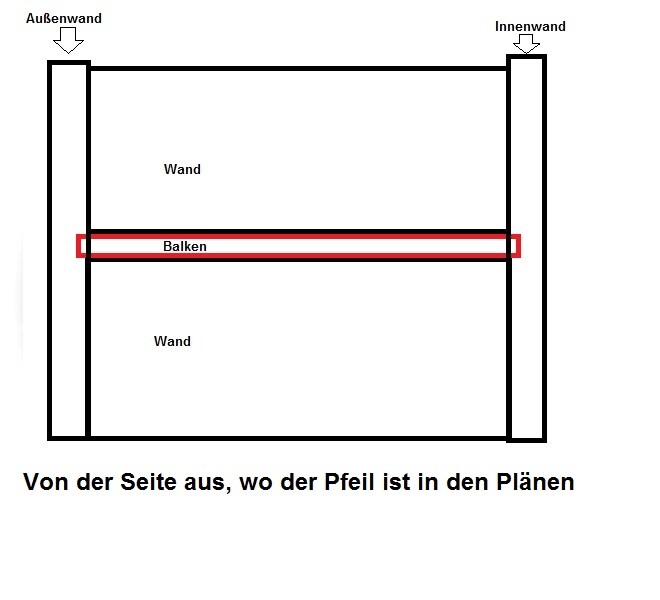
The beam rests directly on the masonry wall, and above it on the first floor (1F), there is also a masonry wall and even beams that apparently support the second floor (2F). This seems to create a continuous load path down to the ground floor.
We had an architect on site who advised me as follows:
On the second floor (2F), remove the walls on the side of the house where I want to remove the walls below, so that the beams in the attic are exposed.
I have a question about this. I have read that such walls were sometimes used for bracing in the past. Can I just remove them?
On the first floor (1F), should I remove the walls and replace them with a lightweight partition wall (e.g., drywall)?
Then I should screw a steel channel beam (U-beam) on one side to the beams and rest it with about 15cm (6 inches) on the exterior and inner masonry walls.
After that, I can safely remove the masonry wall on the ground floor.
Does all of this sound reasonable? I’m a bit concerned despite having an architect.
The beam rests directly on the masonry wall, and above it on the first floor (1F), there is also a masonry wall and even beams that apparently support the second floor (2F). This seems to create a continuous load path down to the ground floor.
We had an architect on site who advised me as follows:
On the second floor (2F), remove the walls on the side of the house where I want to remove the walls below, so that the beams in the attic are exposed.
I have a question about this. I have read that such walls were sometimes used for bracing in the past. Can I just remove them?
On the first floor (1F), should I remove the walls and replace them with a lightweight partition wall (e.g., drywall)?
Then I should screw a steel channel beam (U-beam) on one side to the beams and rest it with about 15cm (6 inches) on the exterior and inner masonry walls.
After that, I can safely remove the masonry wall on the ground floor.
Does all of this sound reasonable? I’m a bit concerned despite having an architect.

Similar topics