
Hello everyone, first of all, let me introduce myself. My name is Wolfgang. In January 2018, I purchased a semi-detached house that is about 50 years old. It was converted in several stages from a barn into a residential building. My problem now is that the walls in the lower apartment are damp at the bottom, and mold is developing. There is no basement under this apartment, but beneath the slab there is a wall that apparently stands directly in the ground, unfortunately without plaster.
So far, I have carried out the following work: From the inside, I drilled holes every 20cm (8 inches) horizontally at a height of 10cm (4 inches), angled downwards about 50cm (20 inches) deep, and injected Permagel under pressure until it came out at the joints. Then, from the outside, I excavated about 2.10m (7 feet) deep down to below the last stone, cleaned the stone wall with high pressure, and let it dry during four weeks in midsummer. I installed a drainage system, primed the wall, applied waterproof plaster, coated it with a thick membrane from MEM, installed a dimpled sheet membrane, and backfilled the whole with gravel. Unfortunately, this was not successful, as this stone wall apparently lies open in the soil at the back and is not accessible.
Now I need to find a temporary solution because the cause cannot be eliminated. Crazy ideas have already come to mind. I am considering installing a small drainage pipe in the wall (a conduit with many small holes) and connecting a small fan to it to blow air through continuously and remove some of the moisture. However, I have found no references online describing such an approach.
I need to ensure somehow that at least the lower part of the wall is moisture-tight so that no mold forms behind the furniture. If moisture then occurs higher up, at least it can be seen and treated regularly with appropriate mold removers. Pure desperation!
Perhaps you have a tip that could help me.
With desperate regards, Wolfgang
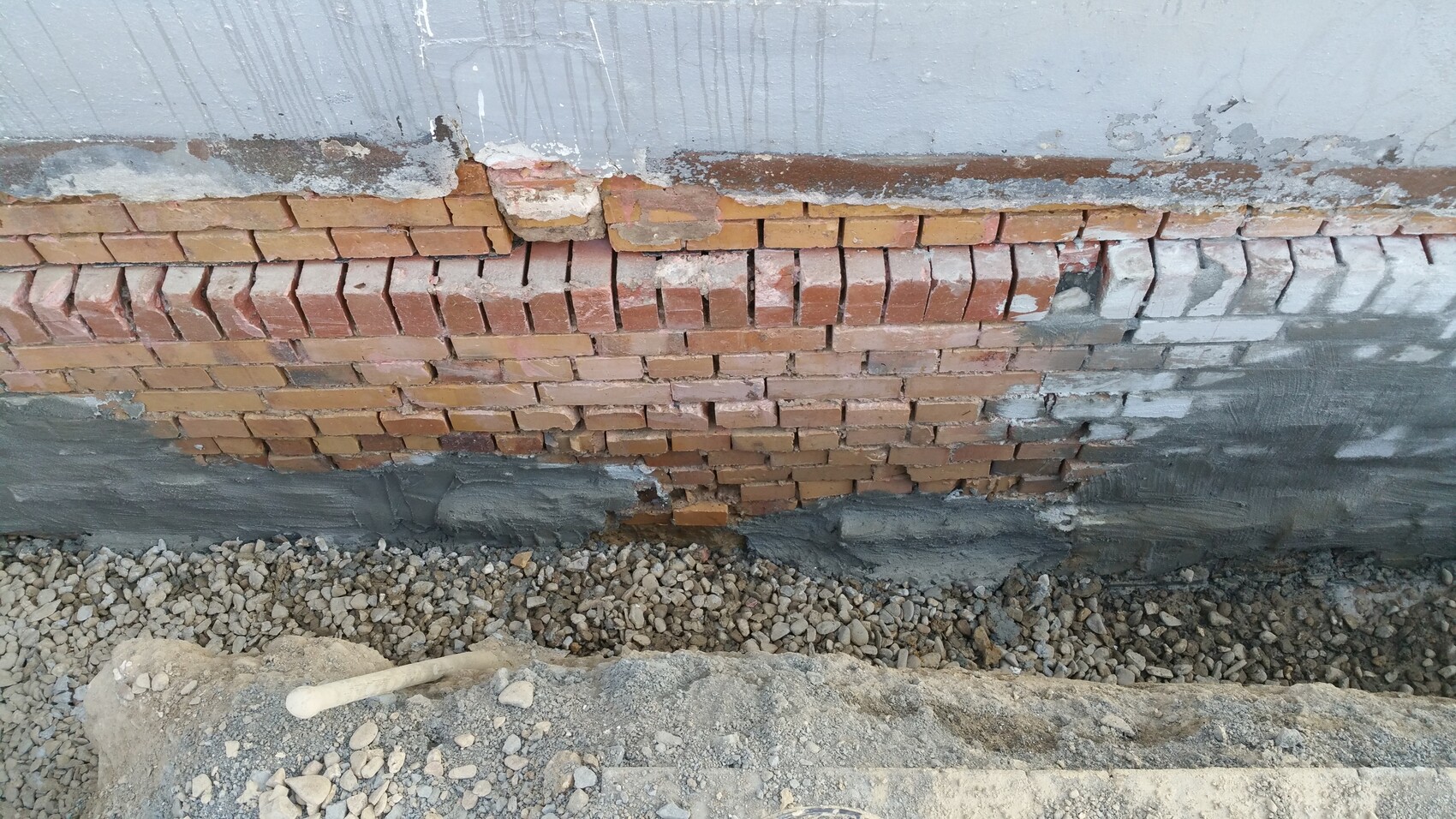
So far, I have carried out the following work: From the inside, I drilled holes every 20cm (8 inches) horizontally at a height of 10cm (4 inches), angled downwards about 50cm (20 inches) deep, and injected Permagel under pressure until it came out at the joints. Then, from the outside, I excavated about 2.10m (7 feet) deep down to below the last stone, cleaned the stone wall with high pressure, and let it dry during four weeks in midsummer. I installed a drainage system, primed the wall, applied waterproof plaster, coated it with a thick membrane from MEM, installed a dimpled sheet membrane, and backfilled the whole with gravel. Unfortunately, this was not successful, as this stone wall apparently lies open in the soil at the back and is not accessible.
Now I need to find a temporary solution because the cause cannot be eliminated. Crazy ideas have already come to mind. I am considering installing a small drainage pipe in the wall (a conduit with many small holes) and connecting a small fan to it to blow air through continuously and remove some of the moisture. However, I have found no references online describing such an approach.
I need to ensure somehow that at least the lower part of the wall is moisture-tight so that no mold forms behind the furniture. If moisture then occurs higher up, at least it can be seen and treated regularly with appropriate mold removers. Pure desperation!
Perhaps you have a tip that could help me.
With desperate regards, Wolfgang
G
garfunkel9 Jan 2019 18:24Get an expert, inspector, or a similar professional. They often deal with issues like this and might have other ideas.

You wouldn’t be the first to spend tens of thousands of euros on "renovation measures" only to find out that the initial problem was simply condensation.
Therefore, the advice to hire a professional is definitely sound.
But please make sure it is a truly independent expert, not a representative trying to sell you their solution!
Therefore, the advice to hire a professional is definitely sound.
But please make sure it is a truly independent expert, not a representative trying to sell you their solution!

In cases of moisture exposure or moisture damage, which often result from the combined effects of multiple factors, only a very detailed and investigative assessment of the building’s condition can help. Before commissioning or carrying out costly and complex remediation measures, it is essential to clarify the underlying cause of the moisture problem as clearly as possible. The construction assemblies and materials used must be researched thoroughly. The installation conditions must also be determined in detail.
This means that time and money must first be invested in a comprehensive analysis by an independent expert (structural engineer/architect). If necessary, additional specialists may need to be involved to carry out material analyses (salt contamination, professional moisture measurements, soil conditions for drainage planning, etc.). In any case, a coherent remediation concept must be developed based on the analysis. This may lead to the sobering or straightforward conclusion that the problem is either quite simple (condensation on cold components, lack of building insulation) or very complex and cannot be resolved with reasonable effort. In the latter case, damage control through “moisture management” is the only option to keep the effects of moisture within tolerable limits, allowing continued use of the premises.
What I strongly advise against is taking action without these preliminary investigations, or hiring “specialist companies” for “masonry drying,” or combining various measures that have not been coordinated.
- A chemical damp-proof course installed afterwards can be useful or a necessary prerequisite for further waterproofing measures; however, its application depends on these preliminary investigations. The effectiveness of such damp-proof courses is about 60–80%, provided the wall material has capillary pores that can be filled and is not already water-saturated.
- Building drainage systems according to DIN 4095 are more complex structural measures whose necessity and technical feasibility must be proven by these same preliminary investigations. If done incorrectly, they can worsen moisture problems.
My recommendation is also to have an independent expert carry out an analysis and create a remediation plan. This expert should then, if required, manage the detailed planning, tendering, awarding of contracts to companies, and construction supervision including quality control. This approach also allows for preparing owner-performed work in a structured and planned manner.
This means that time and money must first be invested in a comprehensive analysis by an independent expert (structural engineer/architect). If necessary, additional specialists may need to be involved to carry out material analyses (salt contamination, professional moisture measurements, soil conditions for drainage planning, etc.). In any case, a coherent remediation concept must be developed based on the analysis. This may lead to the sobering or straightforward conclusion that the problem is either quite simple (condensation on cold components, lack of building insulation) or very complex and cannot be resolved with reasonable effort. In the latter case, damage control through “moisture management” is the only option to keep the effects of moisture within tolerable limits, allowing continued use of the premises.
What I strongly advise against is taking action without these preliminary investigations, or hiring “specialist companies” for “masonry drying,” or combining various measures that have not been coordinated.
- A chemical damp-proof course installed afterwards can be useful or a necessary prerequisite for further waterproofing measures; however, its application depends on these preliminary investigations. The effectiveness of such damp-proof courses is about 60–80%, provided the wall material has capillary pores that can be filled and is not already water-saturated.
- Building drainage systems according to DIN 4095 are more complex structural measures whose necessity and technical feasibility must be proven by these same preliminary investigations. If done incorrectly, they can worsen moisture problems.
My recommendation is also to have an independent expert carry out an analysis and create a remediation plan. This expert should then, if required, manage the detailed planning, tendering, awarding of contracts to companies, and construction supervision including quality control. This approach also allows for preparing owner-performed work in a structured and planned manner.
Similar topics