
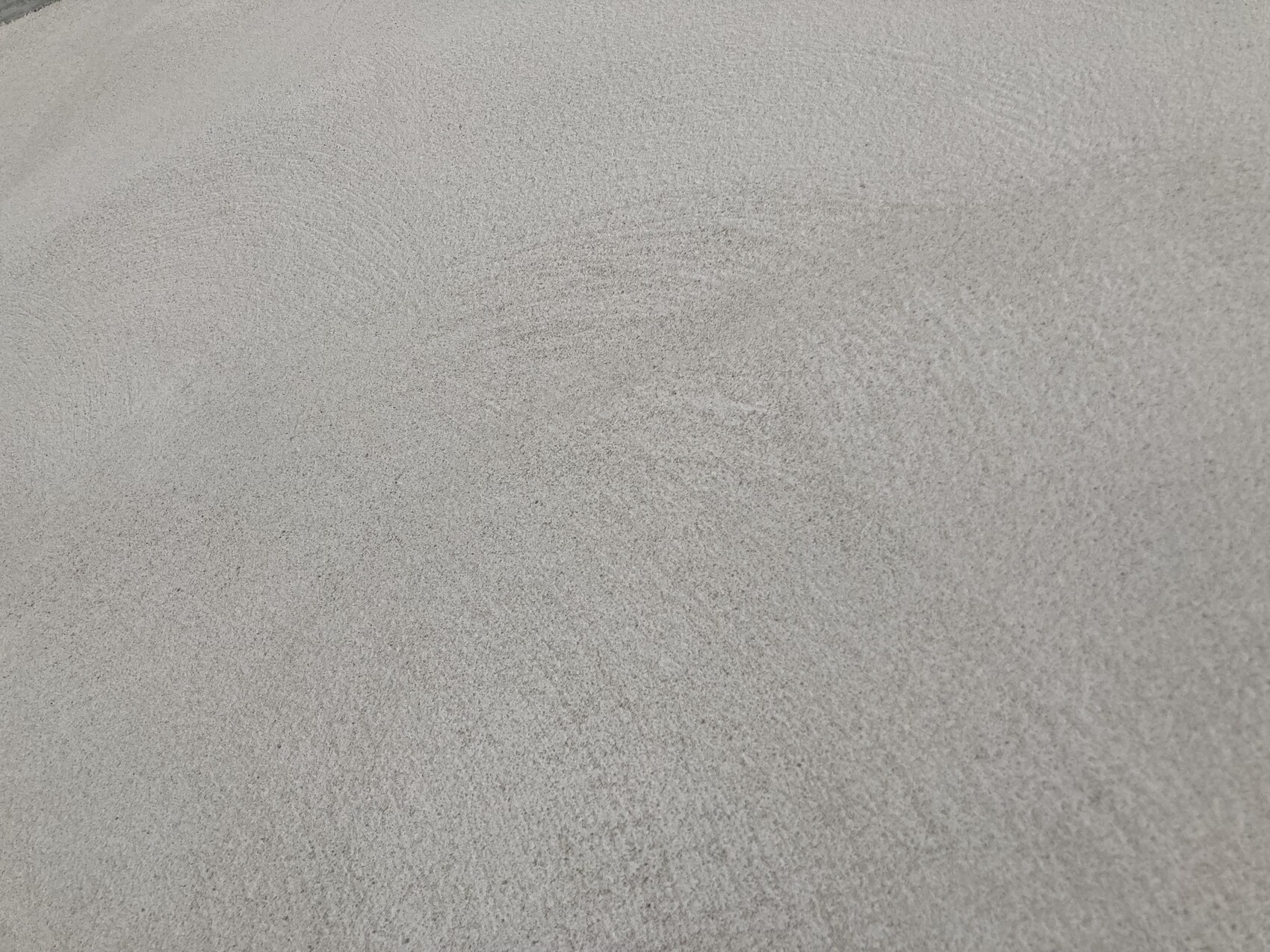
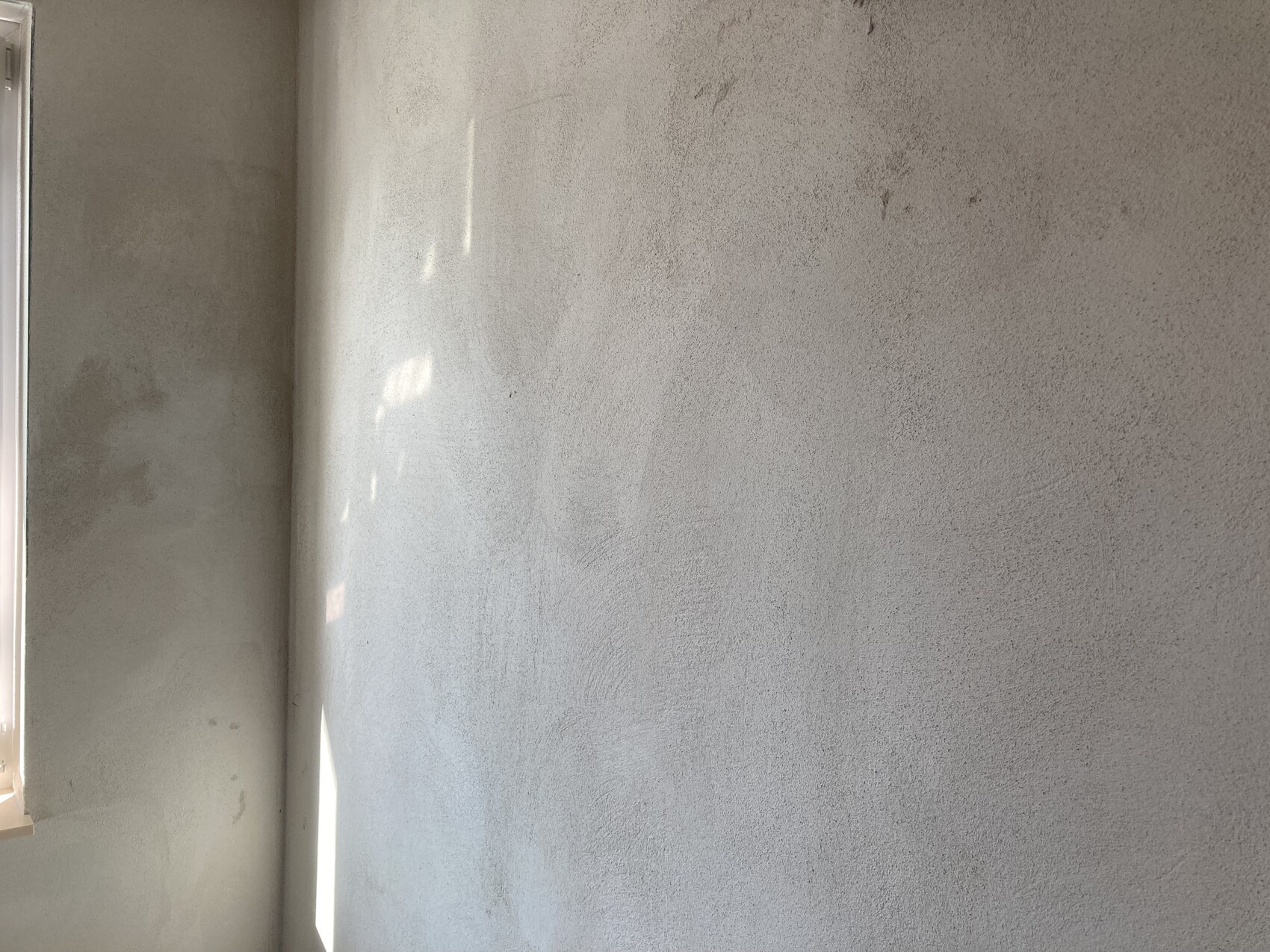
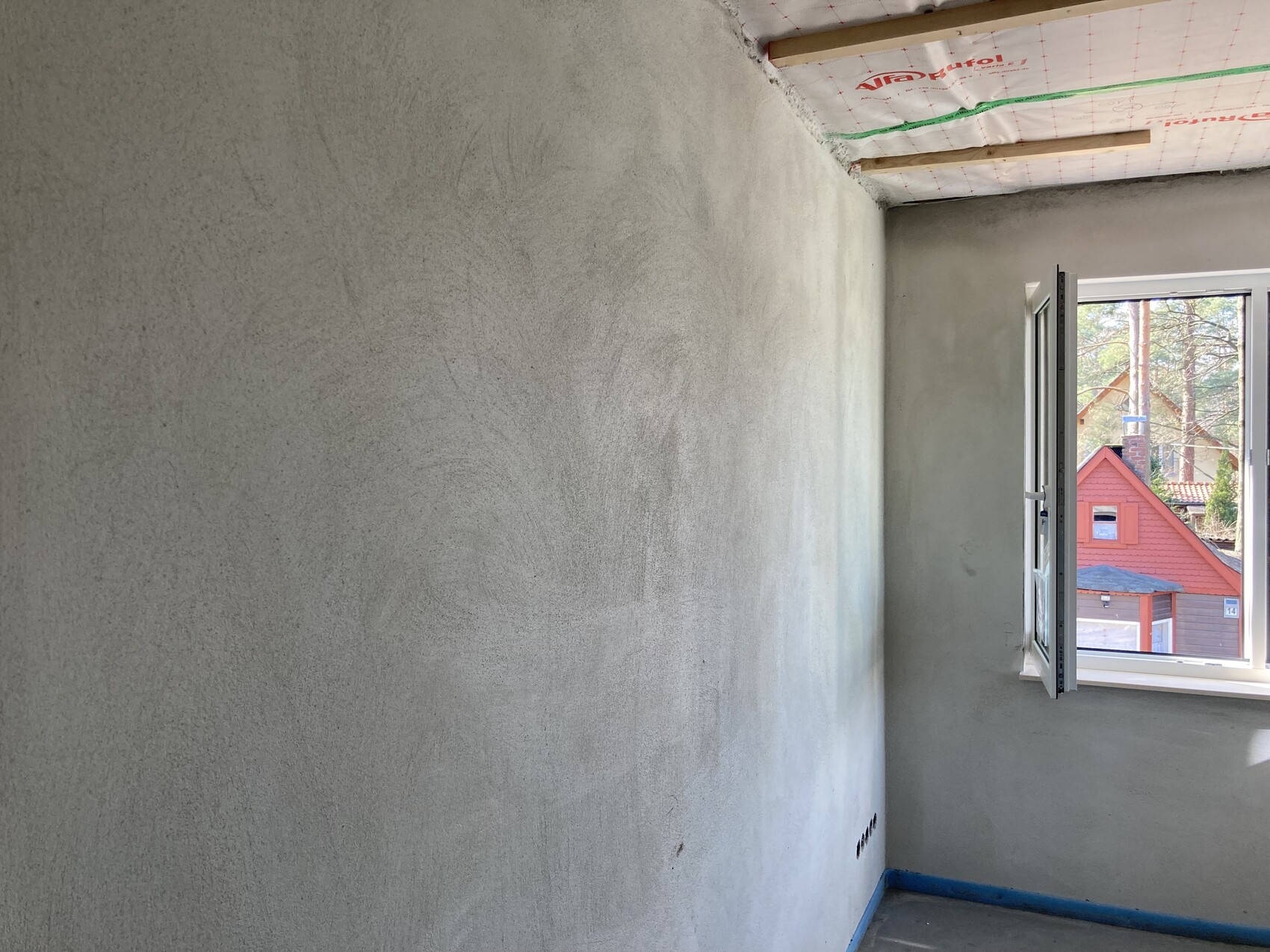
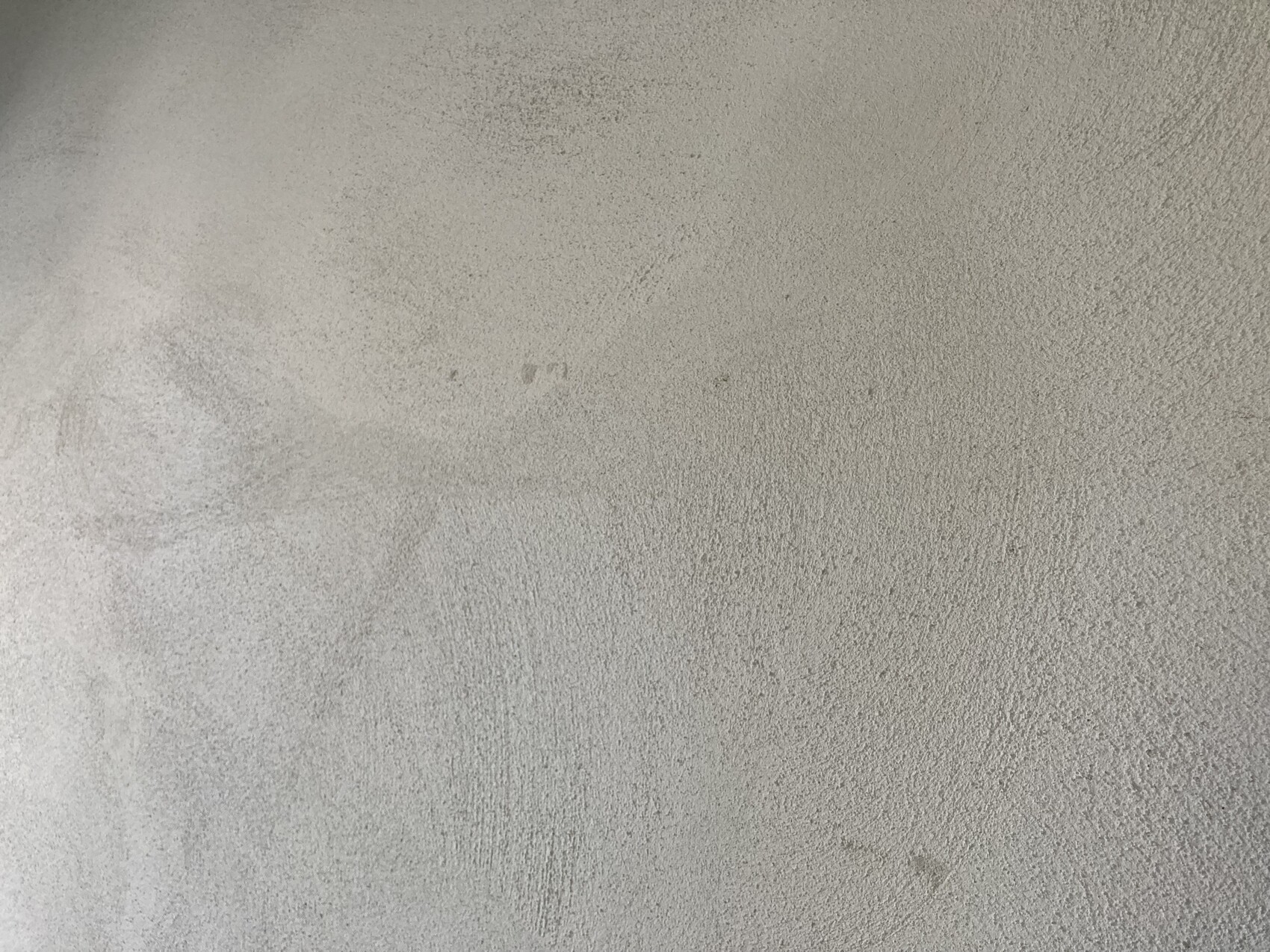
Our interior plasterer has completed the lime plaster (Weber174). On almost all walls, the marks from the finishing trowel, in the form of grooves and scratches, are clearly visible. We understood that lime plaster does not have a perfectly smooth surface, but we had expected at least no visible tool marks. The contractor was contracted for a Q2 finish, and we always emphasized that we want to paint the plaster directly. The contractor repeatedly assured us that the painter would fill the grooves by using a lambswool roller. However, the painter has now said that this will not work with the planned silicate paint.
The plaster has already dried quite a lot, and we are now looking for advice on how to further treat the walls to eliminate these marks.
The plaster has already dried quite a lot, and we are now looking for advice on how to further treat the walls to eliminate these marks.
J
JohnBuilder21 Mar 2022 19:03According to the contractor, the wall has been skim-coated. I expected the typical rough texture, but it is actually uniform, and you cannot see the individual steps of the skim-coating process.
This is how it currently looks on two walls:
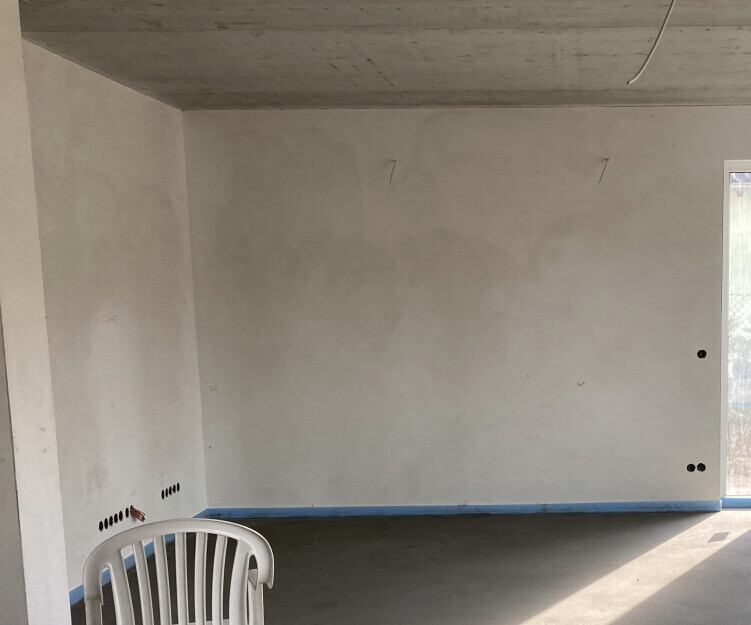
I will look for a close-up shot shortly.
This is how it currently looks on two walls:
I will look for a close-up shot shortly.
J
JohnBuilder21 Mar 2022 20:49Here are some closer pictures:
 HausiKlausi21 Mar 2022 21:17
I cannot comment on the requirements for surface imperfections regarding Q2, but to my knowledge, a Q2 plaster finish is always intended (and defined) as a base for textured wallpapers, structured coatings, brush-applied plasters, etc. From the photos, there seems to be little to criticize about the plasterer’s work here. “Regular paint” does not forgive imperfections and clearly shows the texture. I believe Q2 is the highest quality level achievable with lime plaster. Beyond that, filling and smoothing are necessary. In my opinion, he delivered exactly what was requested.
With the lime system, you can achieve nicer surfaces; the material itself is not the issue. It’s just that Q2 finishing is required and contracted. A smoother, troweled surface would probably have to be applied in two layers. Using a 1mm (0.04 inch) grain size already allows for decent surfaces. However, that corresponds to Q3 and must be compensated accordingly.

JohnBuilder schrieb:
Q2 was agreed with the contractor, with the understanding that we would paint the plaster directly. We also pointed out that we wanted to paint directly, and our situation looks similar.
Our expert inspected the result and told us that the specified Q2 finish was achieved.
However, there seem to be homeowners with different expectations. He has also had clients who considered the result good enough and started painting almost immediately.
In our case, additional filling and sanding work is still required.
Friends and my husband have a knack for this, and the father of a close friend works professionally in this field and basically acts as a foreman for the whole team 🙂 Hopefully, this will achieve the originally desired result.

Similar topics