
Hello everyone,
We have a detached double garage that is still in the shell construction phase.
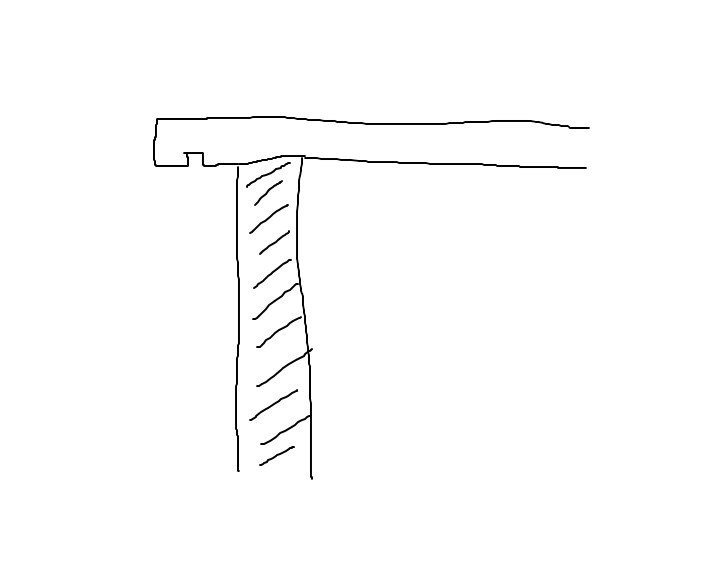
The flat roof (solid concrete) extends about 30cm (12 inches) on two sides: once along the length of 8m (26 feet) and once along the width of 6m (20 feet) at the front. During the shell construction, I planned a groove here (approximately 2.5cm (1 inch) wide and 1.5cm (0.6 inches) deep) to lay a cable or an LED light strip, see sketch. Additionally, there are empty conduits with junction boxes at two corners as supply lines from the sub-distribution board.
What kind of exterior lighting would you recommend here? Would an LED light strip even make sense, or would it hardly be noticeable since the facade hardly receives any light? The entire facade and the roof overhang are not plastered yet, so I’m still considering the lighting options.
The entire electrical setup has not been planned yet because my electrician is still on vacation. However, I would like to get some preliminary ideas. The double garage is approximately 26m (85 feet) away from the main house (main distribution board). The garage should have its own sub-distribution board, possibly a wall box for electric vehicle charging, maybe two decentralized ventilation units (whether with heat recovery or not still needs to be decided), an electric garage door, about 4-5 power outlets, and lighting. Therefore, the cross-section of the supply cable will be important, and it might even be better to choose a somewhat larger cross-section. The electrician will need to advise or calculate this. But in general, which direction would the cable cross-section tend to go? 10mm², 16mm², or larger?
We have a detached double garage that is still in the shell construction phase.
The flat roof (solid concrete) extends about 30cm (12 inches) on two sides: once along the length of 8m (26 feet) and once along the width of 6m (20 feet) at the front. During the shell construction, I planned a groove here (approximately 2.5cm (1 inch) wide and 1.5cm (0.6 inches) deep) to lay a cable or an LED light strip, see sketch. Additionally, there are empty conduits with junction boxes at two corners as supply lines from the sub-distribution board.
What kind of exterior lighting would you recommend here? Would an LED light strip even make sense, or would it hardly be noticeable since the facade hardly receives any light? The entire facade and the roof overhang are not plastered yet, so I’m still considering the lighting options.
The entire electrical setup has not been planned yet because my electrician is still on vacation. However, I would like to get some preliminary ideas. The double garage is approximately 26m (85 feet) away from the main house (main distribution board). The garage should have its own sub-distribution board, possibly a wall box for electric vehicle charging, maybe two decentralized ventilation units (whether with heat recovery or not still needs to be decided), an electric garage door, about 4-5 power outlets, and lighting. Therefore, the cross-section of the supply cable will be important, and it might even be better to choose a somewhat larger cross-section. The electrician will need to advise or calculate this. But in general, which direction would the cable cross-section tend to go? 10mm², 16mm², or larger?
@Araknis
According to the diagram, I would have leaned towards B2 / 3. That means, with 16 square millimeters (mm²) cable, you could load it with 62A. A 25 square millimeter (mm²) cable would probably be too much for a garage if you assume a sub-distribution board is always rated at 63A. (You never know what electrification and the future might bring.)
Oh. Is the garage heated or not ventilated, so that insulation was necessary? That’s not something I considered for my garage. However, I plan to install one or two decentralized ventilation units as a precaution. I’m not sure yet whether these will have heat recovery ventilation (HRV) or enthalpy exchangers.
How many centimeters (cm) of insulation did you use, since the overhang is still quite long?
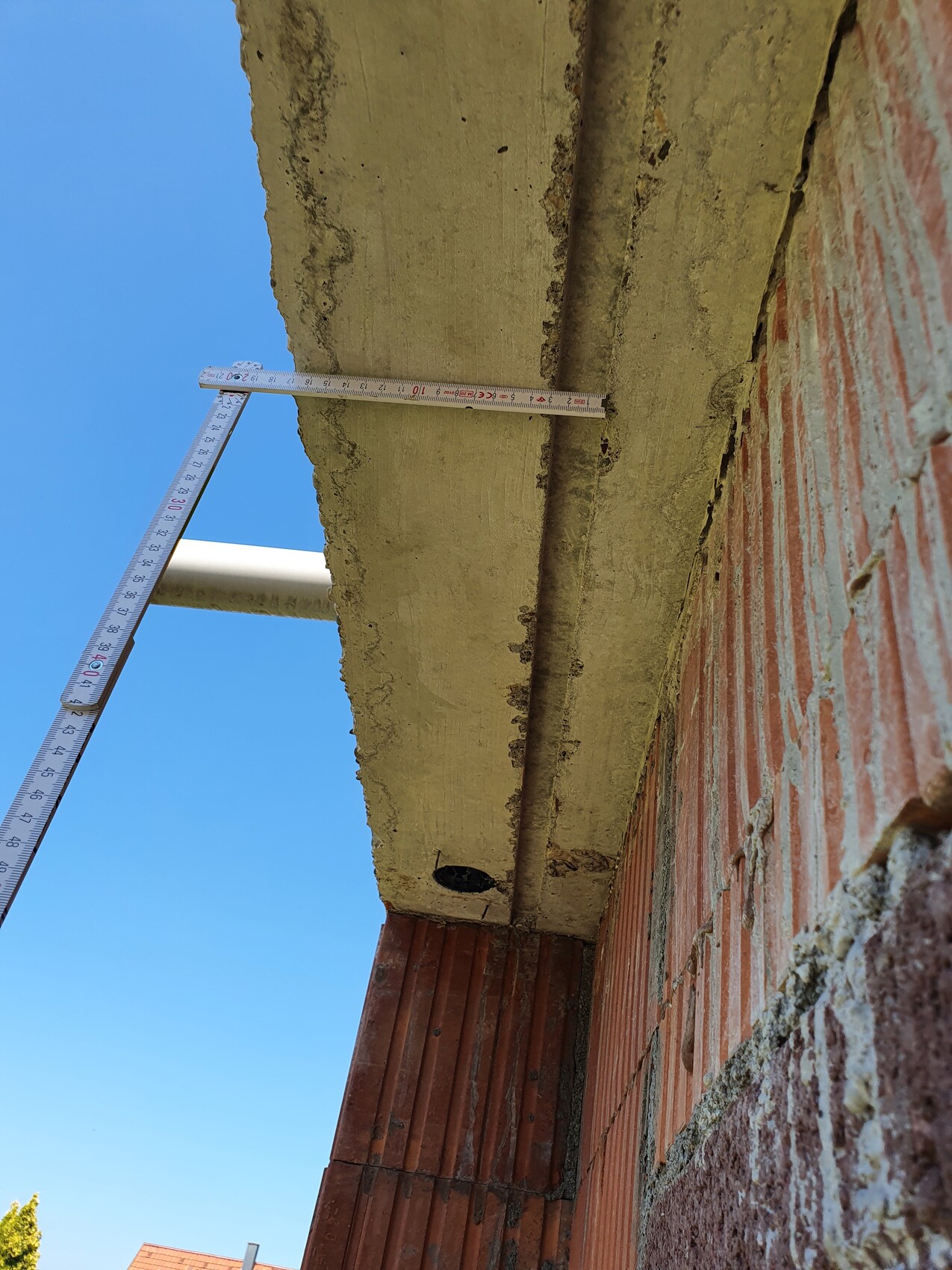
My roof overhang is quite short.
According to the diagram, I would have leaned towards B2 / 3. That means, with 16 square millimeters (mm²) cable, you could load it with 62A. A 25 square millimeter (mm²) cable would probably be too much for a garage if you assume a sub-distribution board is always rated at 63A. (You never know what electrification and the future might bring.)
Stephan— schrieb:
In our case, the cantilevered section (garage) was insulated all around because otherwise a thermal bridge would form, causing a risk of mold in the corner on the inside upper part of the garage next to the wall.
Oh. Is the garage heated or not ventilated, so that insulation was necessary? That’s not something I considered for my garage. However, I plan to install one or two decentralized ventilation units as a precaution. I’m not sure yet whether these will have heat recovery ventilation (HRV) or enthalpy exchangers.
How many centimeters (cm) of insulation did you use, since the overhang is still quite long?
My roof overhang is quite short.
I initially planned to heat it but decided it’s not cost-effective since it won’t be actively heated. However, it is adjacent to one side of the house.
The garage is made of aerated concrete blocks, and the ring beam has continuous 4cm (1.6 inches) insulation. The roof will have 12cm (4.7 inches), and the cantilever has 8cm (3.1 inches) insulation on the bottom and sides. According to a thermal bridge calculation tool, this is the result, although I think it’s quite oversized. Including plaster and all, the cantilever now measures 44cm (17.3 inches).
I didn’t want to believe it at first either, but such a concrete slab (WITH cantilever) acts like a cooling fin.
The garage is made of aerated concrete blocks, and the ring beam has continuous 4cm (1.6 inches) insulation. The roof will have 12cm (4.7 inches), and the cantilever has 8cm (3.1 inches) insulation on the bottom and sides. According to a thermal bridge calculation tool, this is the result, although I think it’s quite oversized. Including plaster and all, the cantilever now measures 44cm (17.3 inches).
I didn’t want to believe it at first either, but such a concrete slab (WITH cantilever) acts like a cooling fin.
Similar topics