
Hello everyone,
My house and roof were built in 1991, making them 34 years old. A small part of my roof surface is covered with bitumen sheets. The pitch is quite low, a maximum of 2° (approximately 3.5%), and the surface is uneven, which causes standing water to form after rain.
When I bought the house two years ago, I quickly noticed that the bitumen roof was leaking. During heavy rainfall, moisture penetrates the structure underneath. A triple coat of insulating sealant last year provided temporary relief. However, this spring, due to frosty nights, the bitumen roof has become leaky again.
What would you recommend for a lasting solution? Is there something like a leveling compound for bitumen roofs that can even out irregularities while also sealing the roof?
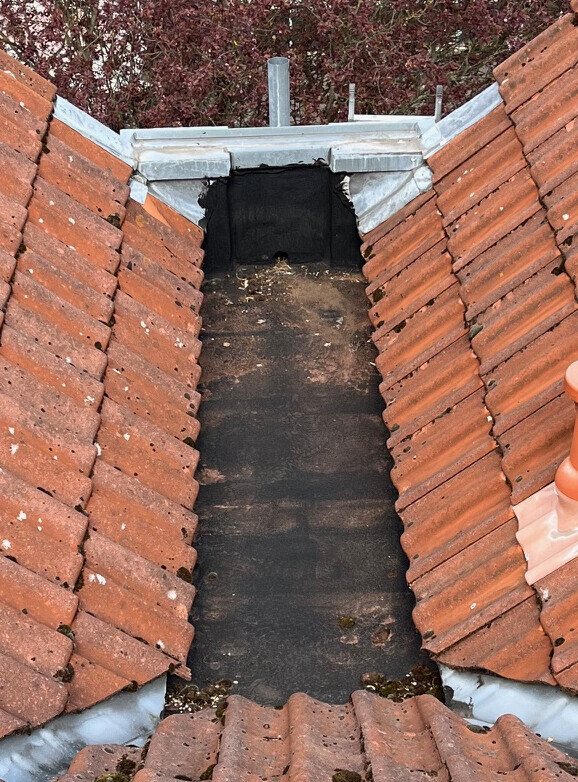
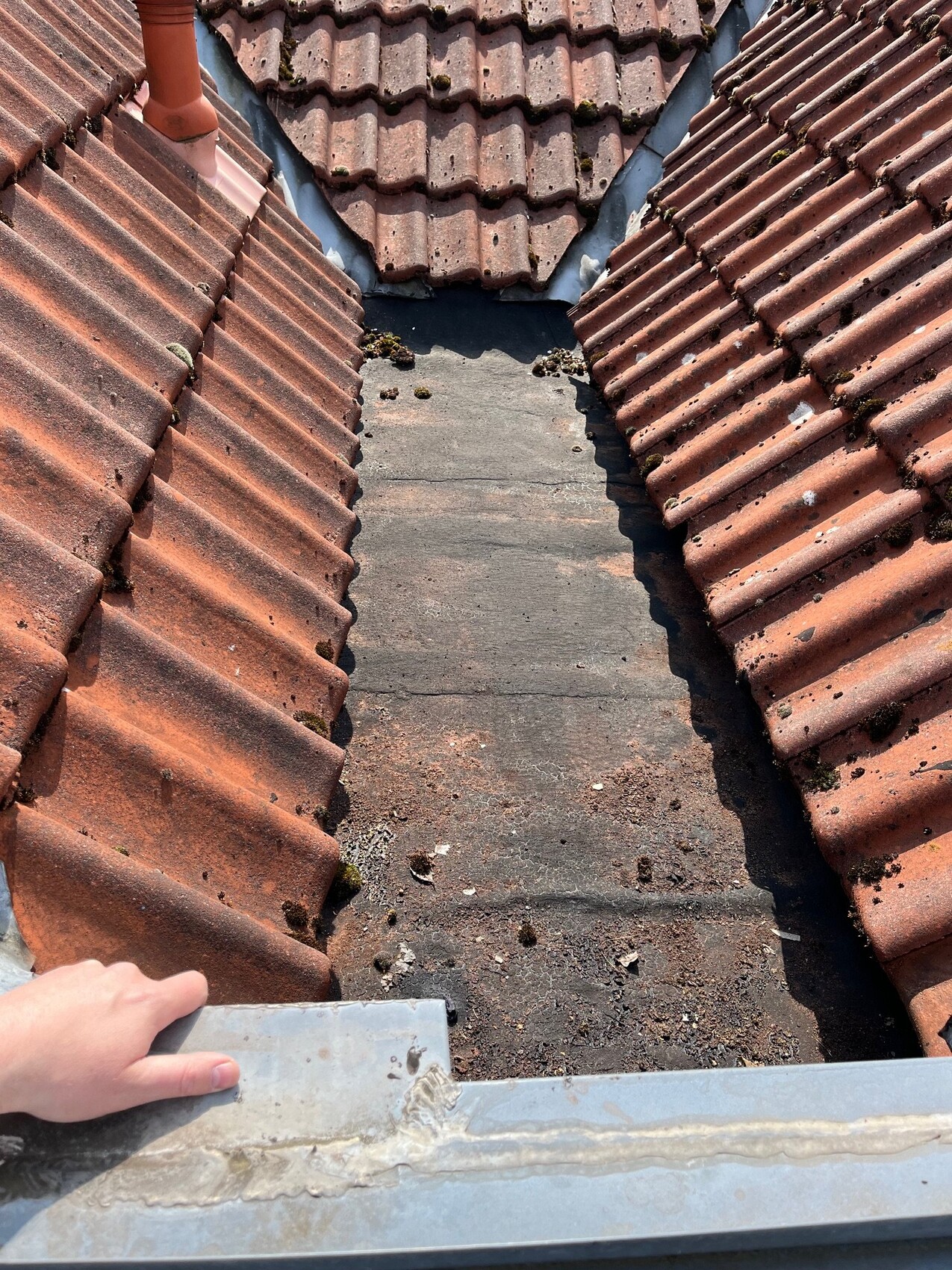
My house and roof were built in 1991, making them 34 years old. A small part of my roof surface is covered with bitumen sheets. The pitch is quite low, a maximum of 2° (approximately 3.5%), and the surface is uneven, which causes standing water to form after rain.
When I bought the house two years ago, I quickly noticed that the bitumen roof was leaking. During heavy rainfall, moisture penetrates the structure underneath. A triple coat of insulating sealant last year provided temporary relief. However, this spring, due to frosty nights, the bitumen roof has become leaky again.
What would you recommend for a lasting solution? Is there something like a leveling compound for bitumen roofs that can even out irregularities while also sealing the roof?

Since you’re looking for a permanent solution and the roof clearly has some problem areas (low slope, standing water, age of the bitumen membrane), you probably won’t be satisfied with simply applying more coatings. Here are some practical considerations:
If the roof has only a minimal slope (as you say, max. 2°), it is no longer a classic pitched roof but rather approaches a flat roof. In this case, standing water is always a long-term issue, regardless of the coating or waterproofing applied. Bitumen (especially old bitumen) can only withstand this for a limited time before cracks, blisters, or brittleness in frost occur.
You have two options:
Either a complete rebuild with slope correction: On such surfaces, you can install slope insulation boards (usually made of EPS or PU) to create a functional slope. A new waterproofing layer is then applied—either the traditional multi-layer bitumen system or a more modern option like an EPDM or plastic membrane. This method is more complex but technically sound and ensures long-lasting waterproofing.
Or liquid-applied waterproofing: If you can’t or don’t want to sacrifice installation height, a waterproofing system with liquid-applied membranes (e.g., Triflex, Kemperol, or similar) might be an option. This also helps to level out minor unevenness but does not replace proper slope correction. Advantages are lasting elasticity, resistance to standing water (depending on the product), and good adhesion at edges, penetrations, etc.
It is important to thoroughly clean the surface beforehand (remove moss, loose bitumen pieces, etc.) and use an appropriate primer.
If you want peace of mind over the long term, I would honestly recommend against just “tinkering around” again and instead carry out a proper renovation with effective slope and durable waterproofing.
Have you already requested quotes or are you still in the planning phase?
If the roof has only a minimal slope (as you say, max. 2°), it is no longer a classic pitched roof but rather approaches a flat roof. In this case, standing water is always a long-term issue, regardless of the coating or waterproofing applied. Bitumen (especially old bitumen) can only withstand this for a limited time before cracks, blisters, or brittleness in frost occur.
You have two options:
Either a complete rebuild with slope correction: On such surfaces, you can install slope insulation boards (usually made of EPS or PU) to create a functional slope. A new waterproofing layer is then applied—either the traditional multi-layer bitumen system or a more modern option like an EPDM or plastic membrane. This method is more complex but technically sound and ensures long-lasting waterproofing.
Or liquid-applied waterproofing: If you can’t or don’t want to sacrifice installation height, a waterproofing system with liquid-applied membranes (e.g., Triflex, Kemperol, or similar) might be an option. This also helps to level out minor unevenness but does not replace proper slope correction. Advantages are lasting elasticity, resistance to standing water (depending on the product), and good adhesion at edges, penetrations, etc.
It is important to thoroughly clean the surface beforehand (remove moss, loose bitumen pieces, etc.) and use an appropriate primer.
If you want peace of mind over the long term, I would honestly recommend against just “tinkering around” again and instead carry out a proper renovation with effective slope and durable waterproofing.
Have you already requested quotes or are you still in the planning phase?
Hello Lüftermax,
thanks for your answer. I have also considered using liquid waterproofing. I have been looking at MEM Wasserstop from Bauhaus.
I plan to get a quote soon for a proper renovation with an appropriate slope and base. If the quote is in the lower four-figure range, I will probably go ahead with it. If it turns out to be too expensive, I will reconsider applying a coat of liquid waterproofing. If it lasts for several years, I would be satisfied and could then do preventive recoating every few years.
thanks for your answer. I have also considered using liquid waterproofing. I have been looking at MEM Wasserstop from Bauhaus.
I plan to get a quote soon for a proper renovation with an appropriate slope and base. If the quote is in the lower four-figure range, I will probably go ahead with it. If it turns out to be too expensive, I will reconsider applying a coat of liquid waterproofing. If it lasts for several years, I would be satisfied and could then do preventive recoating every few years.
Similar topics