
Hello everyone,
I have a problem that is somewhat bothering us...
We recently moved into a rental apartment. Great location, great landlord, everything really excellent.
The bathroom was renovated 5 years ago, including a new window.
Now we noticed the following:
- There is always moisture on the silicone sealant on the bathroom window sill. Even if we wipe it away, it reappears a few hours later, although we always ventilate after showering or bathing.
- As a result, some black mold has developed there, which we cannot remove.
- Right in front of the window/window sill is the bathtub… when sitting in it, you can feel a “draft” at the back of the neck.
- Using Tesamoll to fix it didn’t help; the sealing lips are now tight, but the draft remains. Taping over the small openings also didn’t help.
According to the outdoor sensor of the weather station, the window sill is below 17°C (63°F) and the humidity is above 70% with the window closed and nobody having showered or bathed recently.
If the sensor is placed in the middle of the room, the temperature rises and the humidity drops. Don’t worry, I was just curious how far the sensor reaches 😉
The landlord wants to address the problem, which I feel uncomfortable about because it means the entire beautiful tile work might have to be removed if the insulation foam around the window frame isn’t sealed properly. I find the landlords (a couple) very likable and understanding, and he also feels awkward and quite frustrated about it :-/
Most importantly: what about warranty after 5 years? The seal seems tight, and the window as well… so is this just poor original workmanship that only becomes obvious now?
So... we need help to maybe check where the fault lies beforehand :-/
What should we do? What else I noticed: the bathroom (3 x 4 meters (10 x 13 feet)) is unusually cold in the morning (facing the weather side). There are no blinds or shutters to close… :-/
I would appreciate any tips.
Thank you in advance,
Regards,
Daenni
I have a problem that is somewhat bothering us...
We recently moved into a rental apartment. Great location, great landlord, everything really excellent.
The bathroom was renovated 5 years ago, including a new window.
Now we noticed the following:
- There is always moisture on the silicone sealant on the bathroom window sill. Even if we wipe it away, it reappears a few hours later, although we always ventilate after showering or bathing.
- As a result, some black mold has developed there, which we cannot remove.
- Right in front of the window/window sill is the bathtub… when sitting in it, you can feel a “draft” at the back of the neck.
- Using Tesamoll to fix it didn’t help; the sealing lips are now tight, but the draft remains. Taping over the small openings also didn’t help.
According to the outdoor sensor of the weather station, the window sill is below 17°C (63°F) and the humidity is above 70% with the window closed and nobody having showered or bathed recently.
If the sensor is placed in the middle of the room, the temperature rises and the humidity drops. Don’t worry, I was just curious how far the sensor reaches 😉
The landlord wants to address the problem, which I feel uncomfortable about because it means the entire beautiful tile work might have to be removed if the insulation foam around the window frame isn’t sealed properly. I find the landlords (a couple) very likable and understanding, and he also feels awkward and quite frustrated about it :-/
Most importantly: what about warranty after 5 years? The seal seems tight, and the window as well… so is this just poor original workmanship that only becomes obvious now?
So... we need help to maybe check where the fault lies beforehand :-/
What should we do? What else I noticed: the bathroom (3 x 4 meters (10 x 13 feet)) is unusually cold in the morning (facing the weather side). There are no blinds or shutters to close… :-/
I would appreciate any tips.
Thank you in advance,
Regards,
Daenni
A
Andreas Euler1 Mar 2010 18:25Hello,
thank you for the information, I am looking forward to the result.
thank you for the information, I am looking forward to the result.
So, the technician was here.
Disappointing news: he’s not sure where the issue is coming from either.
He adjusted the window a bit, so now it’s more airtight than before.
The cold radiating might be coming from the windowsill, which also extends outside (a long stone slab, about 70% of it inside).
Or maybe an intermediate insulation layer was forgotten...
Well, it looks like we’ll have to wait until spring, then tap the tiles off to remove the windowsill and see what’s underneath.
Can you live with that?
Oh, and by the way, the landlord was mistaken: the window itself has been there for at least 15 years.
However, the glass was only replaced 3 years ago.
It turned out when the window technician came and said, "Oh, the window is quite old..." that it took a moment to realize he was talking about the frame, not the glass. 🙄
Best regards,
Daniel
Disappointing news: he’s not sure where the issue is coming from either.
He adjusted the window a bit, so now it’s more airtight than before.
The cold radiating might be coming from the windowsill, which also extends outside (a long stone slab, about 70% of it inside).
Or maybe an intermediate insulation layer was forgotten...
Well, it looks like we’ll have to wait until spring, then tap the tiles off to remove the windowsill and see what’s underneath.
Can you live with that?
Oh, and by the way, the landlord was mistaken: the window itself has been there for at least 15 years.
However, the glass was only replaced 3 years ago.
It turned out when the window technician came and said, "Oh, the window is quite old..." that it took a moment to realize he was talking about the frame, not the glass. 🙄
Best regards,
Daniel
A
Andreas Euler2 Mar 2010 19:13Hello,
that definitely changes the perspective.
About 15 years ago, it was quite common for the windows to be insulated only with foam.
I wouldn’t immediately go for the radical solution of removing the tiles.
Perhaps, as mentioned above, the easiest first step is to carry out a thermographic inspection.
that definitely changes the perspective.
About 15 years ago, it was quite common for the windows to be insulated only with foam.
I wouldn’t immediately go for the radical solution of removing the tiles.
Perhaps, as mentioned above, the easiest first step is to carry out a thermographic inspection.
Now eight months have passed, the summer was mostly "dry," and today we see... the small cork baskets (for my girlfriend’s jewelry) are moldy.
There is dripping along the side tiles. The chill at the back of the neck while bathing remains. And that despite the still relatively warm temperatures...
We now ventilate almost every time after showering or bathing.
But even today, when we only showered in the morning, everything was damp again earlier.
The humidity inside the apartment is now just under 70%, even though we ventilated after cooking earlier (75%), and the humidity then temporarily drops by at least 10-15%.
I took three photos to illustrate the issue. I’m not sure if they are any good.
The silicone joint on the inside bottom is always damp, as well as the right inner side of the tiles.
It would be great if someone could take another look at this :-/
Thank you very much and best regards,
Daniel
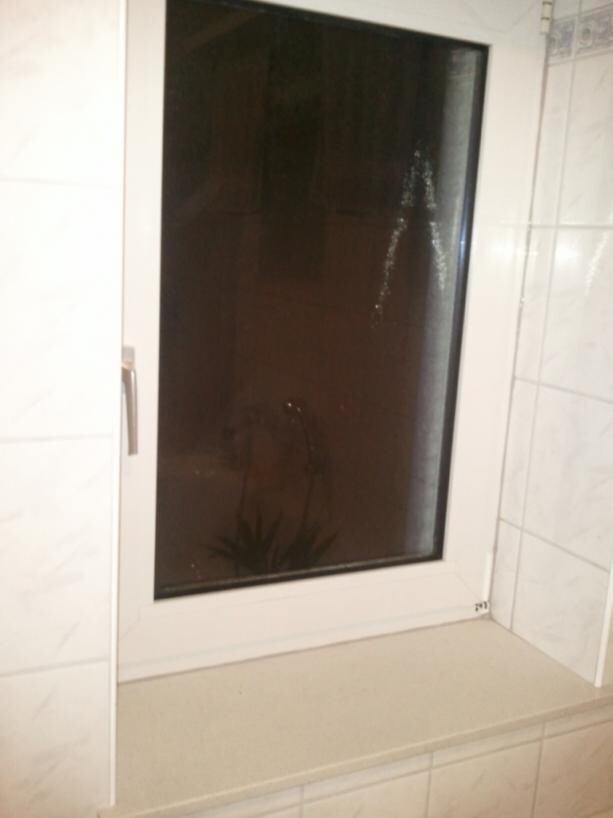
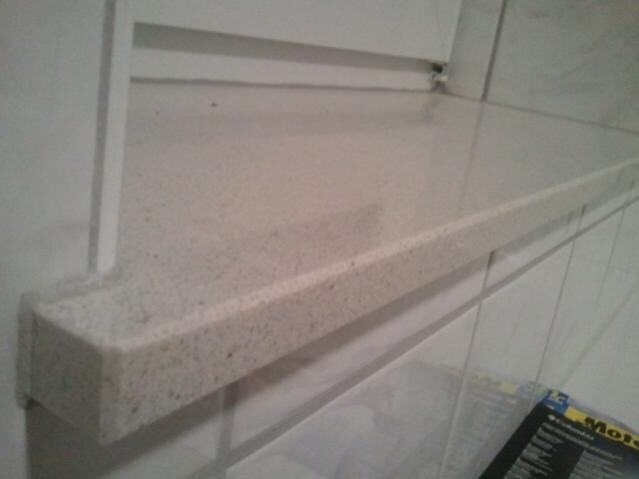
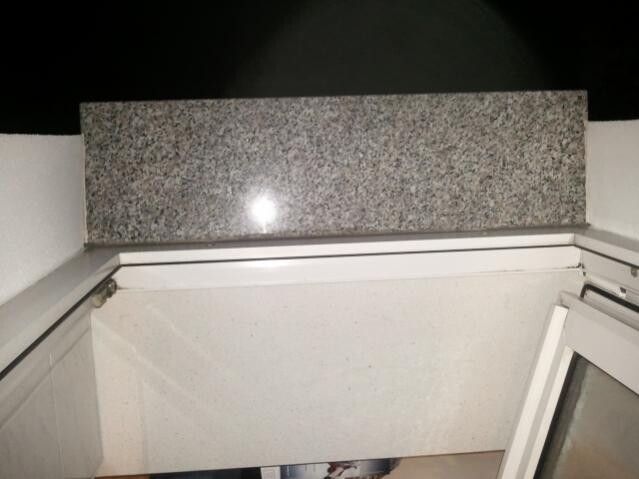
There is dripping along the side tiles. The chill at the back of the neck while bathing remains. And that despite the still relatively warm temperatures...
We now ventilate almost every time after showering or bathing.
But even today, when we only showered in the morning, everything was damp again earlier.
The humidity inside the apartment is now just under 70%, even though we ventilated after cooking earlier (75%), and the humidity then temporarily drops by at least 10-15%.
I took three photos to illustrate the issue. I’m not sure if they are any good.
The silicone joint on the inside bottom is always damp, as well as the right inner side of the tiles.
It would be great if someone could take another look at this :-/
Thank you very much and best regards,
Daniel
Hello Hypocrites
I suspect that the lady was responsible for overseeing the renovation of the building envelope back then, possibly as part of a KfW program, without ever setting foot on the construction site... which is a shame... and therefore the landlord should possibly hold her accountable. Because if that were the case, her signature would have confirmed that the work was carried out correctly... which it clearly was not!
The interior window sill looks more like an artificial marble sill (pressed marble dust)... it also has no impact on the problem... ceramic tiles would have behaved the same way... The interior sill only ever meets the old window frame... which has a corresponding groove for this... a rabbet. In addition, it is always installed higher than the exterior sill.
However, as is and was common with solid or natural stone exterior window sills, it can happen that they are installed too far below the window frame... if it is too long, it might press at the back under the interior sill... fully or just barely... and in any case, it is not insulated. If you are unlucky, there is nothing but an air gap or some mortar lumps there... Furthermore, exterior window sills during installation usually rest on only one or two mortar lumps... standard mortar, that is... otherwise there is air all around, meaning no insulation.
If only the front side was later "plastered over," then behind it is now a massive thermal bridge..! Exactly what is happening in your case here.
Ultimately, the only option is to remove and renovate the surrounding area... and if you are doing that anyway... I wouldn’t hesitate to install a modern window at the same time... it’s not that large or expensive!
From a technical perspective, it also raises the question of where the facade was “blown in”? This likely means cellulose insulation... on the inside or outside? Was the exterior window sill also replaced during this? Or has it been like that for 15 years already (although it would still look quite good for that)?
I suspect that the lady was responsible for overseeing the renovation of the building envelope back then, possibly as part of a KfW program, without ever setting foot on the construction site... which is a shame... and therefore the landlord should possibly hold her accountable. Because if that were the case, her signature would have confirmed that the work was carried out correctly... which it clearly was not!
The interior window sill looks more like an artificial marble sill (pressed marble dust)... it also has no impact on the problem... ceramic tiles would have behaved the same way... The interior sill only ever meets the old window frame... which has a corresponding groove for this... a rabbet. In addition, it is always installed higher than the exterior sill.
However, as is and was common with solid or natural stone exterior window sills, it can happen that they are installed too far below the window frame... if it is too long, it might press at the back under the interior sill... fully or just barely... and in any case, it is not insulated. If you are unlucky, there is nothing but an air gap or some mortar lumps there... Furthermore, exterior window sills during installation usually rest on only one or two mortar lumps... standard mortar, that is... otherwise there is air all around, meaning no insulation.
If only the front side was later "plastered over," then behind it is now a massive thermal bridge..! Exactly what is happening in your case here.
Ultimately, the only option is to remove and renovate the surrounding area... and if you are doing that anyway... I wouldn’t hesitate to install a modern window at the same time... it’s not that large or expensive!
From a technical perspective, it also raises the question of where the facade was “blown in”? This likely means cellulose insulation... on the inside or outside? Was the exterior window sill also replaced during this? Or has it been like that for 15 years already (although it would still look quite good for that)?
I have heard or been told something similar... that the exterior window sill and the interior window sill practically meet under the window with almost no insulation between them, causing the cold outer sill to draw the cold inward.
The wall was blown with insulation on the outside... whatever it was.
The exterior walls were renewed/refreshed, and I believe the sill was replaced as well.
I will bring this up, as it can’t be right. I think I might have already seen something on the wall (ceiling corner) and hope it’s not coming from that.
So, should the exterior wall be opened up, the window sill removed, insulated, reinstalled, and then closed up again? Is it really that simple?
Best regards and thanks for the answer,
Daniel
The wall was blown with insulation on the outside... whatever it was.
The exterior walls were renewed/refreshed, and I believe the sill was replaced as well.
I will bring this up, as it can’t be right. I think I might have already seen something on the wall (ceiling corner) and hope it’s not coming from that.
So, should the exterior wall be opened up, the window sill removed, insulated, reinstalled, and then closed up again? Is it really that simple?
Best regards and thanks for the answer,
Daniel
Similar topics