
Hello,
There is currently a classic corner bathtub in the bathroom, tiled on two sides and positioned against two walls. There is no screed underneath the bathtub.
Since the tub is made of acrylic, I would like to replace it with a steel enamel bathtub. There are now bathtubs on the market that are already panelled on two sides:
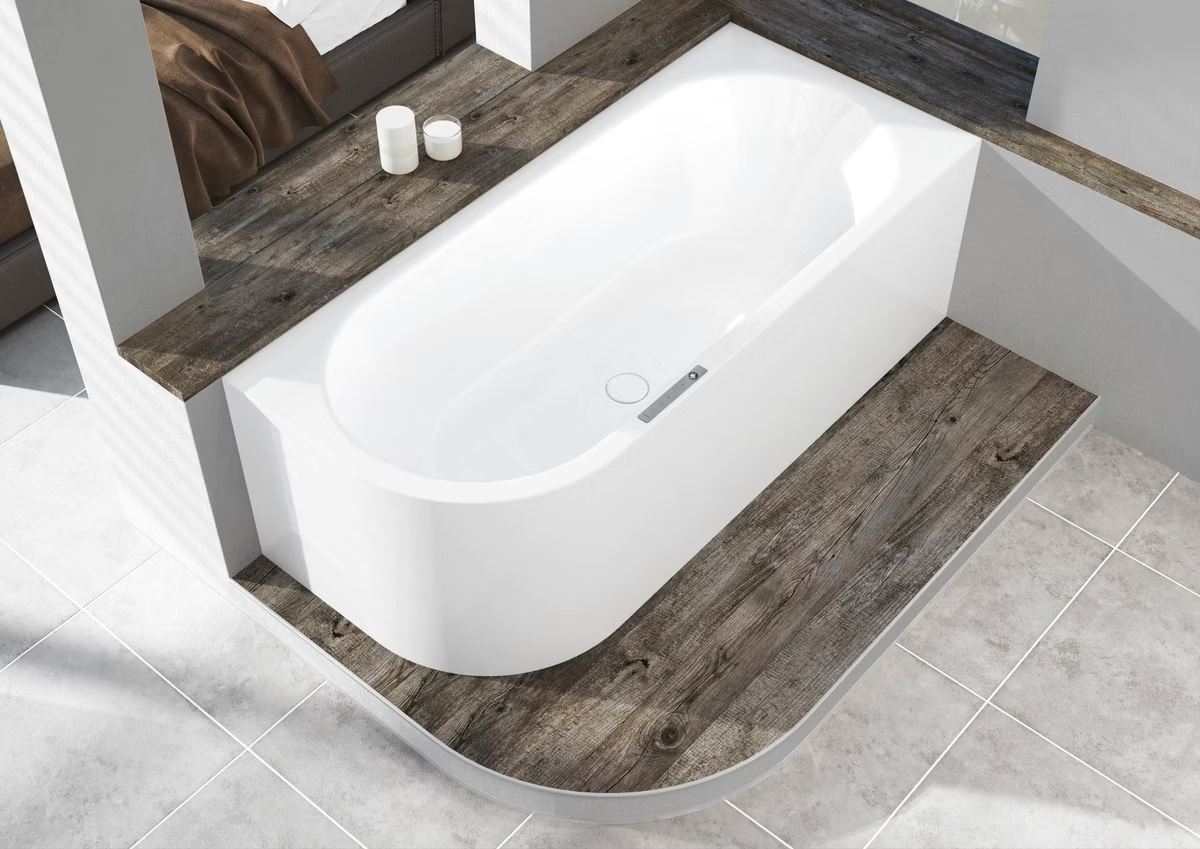
The problem is that these bathtubs are meant to be installed on screed or tiles. How should I fill the gap under the bathtub so that it can be tiled afterwards?
There is currently a classic corner bathtub in the bathroom, tiled on two sides and positioned against two walls. There is no screed underneath the bathtub.
Since the tub is made of acrylic, I would like to replace it with a steel enamel bathtub. There are now bathtubs on the market that are already panelled on two sides:
The problem is that these bathtubs are meant to be installed on screed or tiles. How should I fill the gap under the bathtub so that it can be tiled afterwards?
N
nordanney29 Apr 2026 13:37erwind2 schrieb:
How do I fill the gap under the bathtub so that it can be tiled afterward? If that is the only issue, use screed on a separation layer or bonded screed. How have you planned the waterproofing, especially the connection to the existing waterproofing under the floor tiles (if there is any)?

erwind2 schrieb:
In a bathroom, there is currently a classic corner bathtub, tiled on two sides and positioned against the wall on the other two sides. There is no screed beneath the bathtub. Since the tub is made of acrylic, I would like to remove it and replace it with an enameled steel bathtub. On the market, there are bathtubs now available that are already finished on two sides: [Bild] The problem is that these bathtubs are supposed to be placed on screed or tiles. So how do I fill the gap under the bathtub so that tiling can be done afterward? I can’t imagine that the manufacturer’s requirement is "there must be screed underneath." The bathtub support tray will have different specified requirements for flatness and surface quality of the base. These are the conditions to meet, and not necessarily with screed, which also might not be ideal for the purpose.
Having no screed under the bathtub is not a flaw but a feature. You don’t just not need it there; it also adds height, affecting the relationship between the bathtub floor and the bathroom floor. Stepping out with wet feet down even by the thickness of a screed requires some stability in the hip joint. Those who enjoy falling or getting back pain can feel free to experiment. The platform shown in the showroom is there for a reason. Anyone named Erwin is usually at least my age ;-)
https://www.instagram.com/11antgmxde/
https://www.linkedin.com/company/bauen-jetzt/
Yes, to keep the step-in height low, they probably did not install a screed at the bathtub location back then. If I proceed with this approach, the issue is that the new bathtub has rounded edges. The existing tub is rectangular, so at least where the rounding is, I will need to lay and tile a screed.
I had hoped to make the bathtub replacement as straightforward as possible with this system. But this rounding complicates many things.
I had hoped to make the bathtub replacement as straightforward as possible with this system. But this rounding complicates many things.
There should be screed available in bags that you can carry yourself into the bathroom and, if necessary, mix in a bucket. This way, you can either fill the entire surface or just the difference to the old contour. If you still have old tiles, you can patch the surface or tile the entire floor.
You can simply fill the missing areas with mortar or whatever it is called.
Or something like that. Actually, the name doesn’t really matter.
It’s just about closing a gap.
During our bathroom renovation, we removed the bathtub and shower along one side of the room and then filled a remaining 1 sqm (11 sq ft) area after installing a bathtub. The important thing is stability and flatness. You can then tile over it with flexible adhesive.
However, this is only about the area underneath, right? You can also support bathtubs or their feet securely on fixed blocks. It’s all possible. Using screed is not mandatory.
Grundaus schrieb:
There are supposed to be screed bags available that you can carry into the bathroom yourself
Or something like that. Actually, the name doesn’t really matter.
erwind2 schrieb:
so that I need screed at least at the curved area and have to level it.
It’s just about closing a gap.
During our bathroom renovation, we removed the bathtub and shower along one side of the room and then filled a remaining 1 sqm (11 sq ft) area after installing a bathtub. The important thing is stability and flatness. You can then tile over it with flexible adhesive.
However, this is only about the area underneath, right? You can also support bathtubs or their feet securely on fixed blocks. It’s all possible. Using screed is not mandatory.
Similar topics