
Hello,
I am currently renovating our bathroom from 1979. We want to install a walk-in shower. I have removed the bathtub and leveled the floor as best as possible, including removing loose bitumen.
Now, I have read online that before laying the screed, you absolutely must remove 100% of tar and bitumen residues. Is that really necessary?
The screed will be about 2-3cm (1 inch) thick and cover an area of approximately 1.5 sqm (16 sq ft). It should serve as a flat base for an XPS shower board.
I had hoped there would be some kind of primer or similar product, or that I could lay the screed directly.
Best regards, neubauer
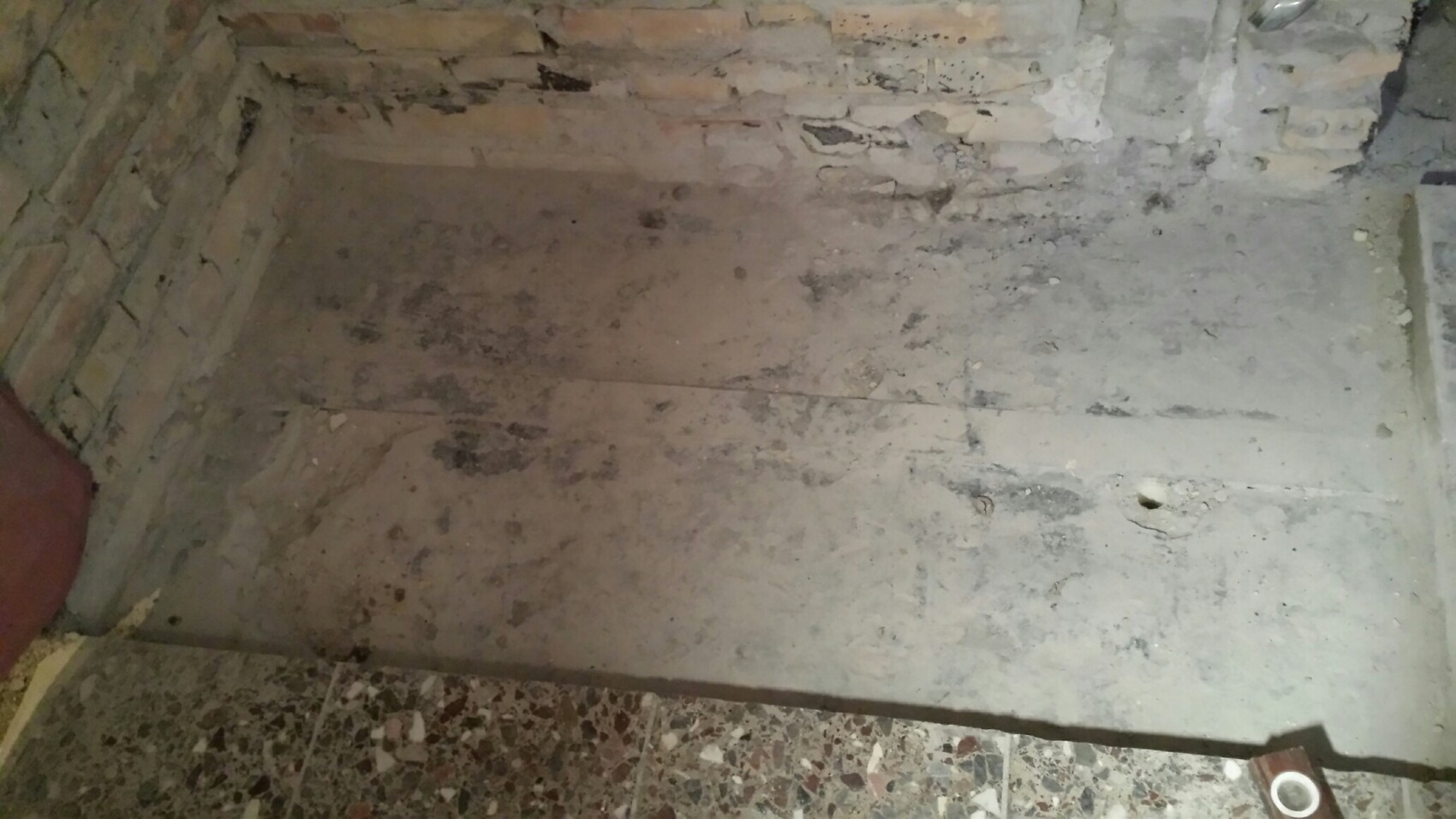
I am currently renovating our bathroom from 1979. We want to install a walk-in shower. I have removed the bathtub and leveled the floor as best as possible, including removing loose bitumen.
Now, I have read online that before laying the screed, you absolutely must remove 100% of tar and bitumen residues. Is that really necessary?
The screed will be about 2-3cm (1 inch) thick and cover an area of approximately 1.5 sqm (16 sq ft). It should serve as a flat base for an XPS shower board.
I had hoped there would be some kind of primer or similar product, or that I could lay the screed directly.
Best regards, neubauer

Hello Mr. or Mrs. Neugebauer,
Unfortunately, internet research often produces error messages, half-truths, or outdated information that may have represented the state of the art at some point—or not.
Therefore, it is wise to be skeptical of any information that is not communicated as current.
If the bitumen felt (tar has definitely not been used indoors in the last 100 years) has been mostly removed so that it does not cause any issues, then that is acceptable.
Bitumen residues must be completely removed only during floor covering work, which includes installing parquet or tiles.
However, the screed cannot be only 2-3 cm (1 inch) thick unless it forms a composite construction with the concrete underneath.
If that were the case, then indeed all loose components would need to be removed first. Is the dark layer firmly bonded, or can it be scratched?
If it is firmly bonded, then a suitable substrate for a bonded screed can be created using a reactive resin primer that is fully sanded during its wet phase.
If the black layer can be scratched, well, then it has to be removed entirely.
A primer acts as an adhesion promoter.
If the substrate does not allow proper bonding despite this, it will be necessary to remove or grind down to the "solid base" (as it is casually called in the construction industry).
------------------------------------
Regards, KlaRa
Unfortunately, internet research often produces error messages, half-truths, or outdated information that may have represented the state of the art at some point—or not.
Therefore, it is wise to be skeptical of any information that is not communicated as current.
If the bitumen felt (tar has definitely not been used indoors in the last 100 years) has been mostly removed so that it does not cause any issues, then that is acceptable.
Bitumen residues must be completely removed only during floor covering work, which includes installing parquet or tiles.
However, the screed cannot be only 2-3 cm (1 inch) thick unless it forms a composite construction with the concrete underneath.
If that were the case, then indeed all loose components would need to be removed first. Is the dark layer firmly bonded, or can it be scratched?
If it is firmly bonded, then a suitable substrate for a bonded screed can be created using a reactive resin primer that is fully sanded during its wet phase.
If the black layer can be scratched, well, then it has to be removed entirely.
A primer acts as an adhesion promoter.
If the substrate does not allow proper bonding despite this, it will be necessary to remove or grind down to the "solid base" (as it is casually called in the construction industry).
------------------------------------
Regards, KlaRa
Similar topics