
ᐅ Installing a drainage membrane for a house without a basement
Created on: 15 Jul 2024 09:14
R
Ruedi006Hello,
I would like to install the dimpled membrane myself and then apply the splash guard. I have a question about that. Currently, the situation looks like this (see picture). You can see the insulation board (the expanded polystyrene) and below that, the concrete slab. Do I need to place the dimpled membrane directly against the concrete slab (which would require some excavation), or is it sufficient to attach it in front of the insulation boards?
Thank you very much in advance!
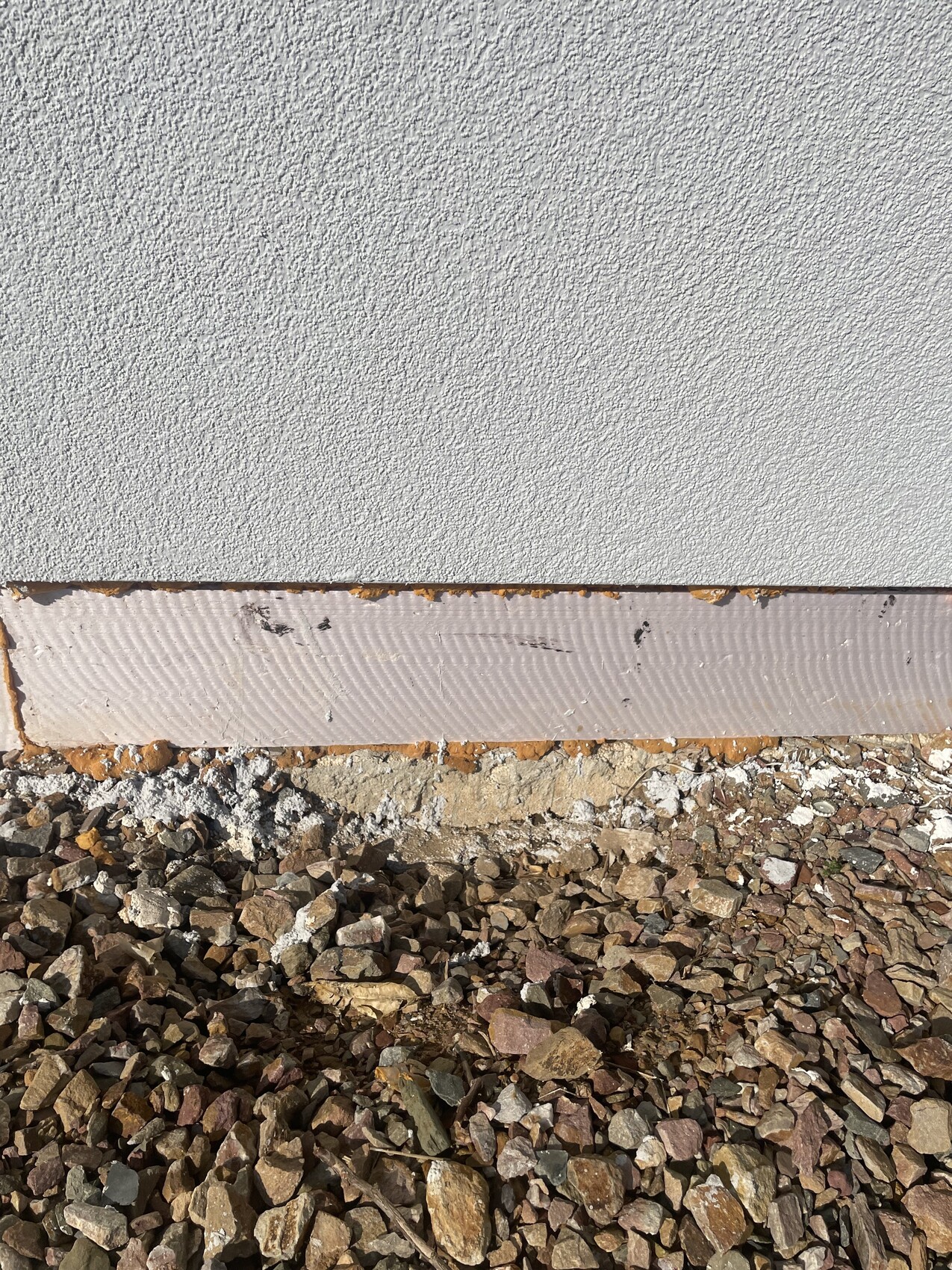
I would like to install the dimpled membrane myself and then apply the splash guard. I have a question about that. Currently, the situation looks like this (see picture). You can see the insulation board (the expanded polystyrene) and below that, the concrete slab. Do I need to place the dimpled membrane directly against the concrete slab (which would require some excavation), or is it sufficient to attach it in front of the insulation boards?
Thank you very much in advance!
A
Allthewayup16 Jul 2024 21:58Apart from the fact that I find the execution of the floor slab somewhat unusual, yes, I would always expose 1 meter (3 feet), apply a dimpled membrane, and then backfill. Then expose the next meter, and so on. However, it seems to me that applying a reactive waterproofing membrane (e.g., PCI Barraseal Turbo) before installing the dimpled membrane would make sense. Trim off any excess mounting foam from the XPS boards, sweep the surface thoroughly, and apply two layers of reactive waterproofing. The dimpled membrane is only a protective layer during backfilling. The goal should be to keep as much moisture as possible away from the sides of the floor slab and the XPS. Even if the construction above rests on a drainage layer, moisture often finds a way in, no matter how unlikely that seems.
Back to the floor slab construction: what is the purpose of the XPS in this location? Is the floor slab insulated from below? If so, then the XPS here should have been continuous with the XPS under the floor slab. Otherwise, there is a considerable thermal bridge present. Or am I missing something? In our case, the XPS on the side was placed on top of the XPS under the floor slab, resulting in a continuous 12cm (5 inches) insulation layer around it.
Back to the floor slab construction: what is the purpose of the XPS in this location? Is the floor slab insulated from below? If so, then the XPS here should have been continuous with the XPS under the floor slab. Otherwise, there is a considerable thermal bridge present. Or am I missing something? In our case, the XPS on the side was placed on top of the XPS under the floor slab, resulting in a continuous 12cm (5 inches) insulation layer around it.
Similar topics