
Hello everyone 🙂
Since I found a lot of contradictory information during my online research, I wanted to get your feedback and ideas on the best way to care for the lawn after winter.
Attached are two pictures showing the current condition of my lawn (brown patches like in the pictures are present all over the lawn).
The lawn was treated with a “fall fertilizer” in autumn.
The lawn was seeded in summer 2019.
How would you approach getting the lawn back into good condition?
Scarifying? If yes, when is the best time for this?
Fertilizing? If yes, which type and when?
What else would you recommend?
Thanks & regards
Jörg
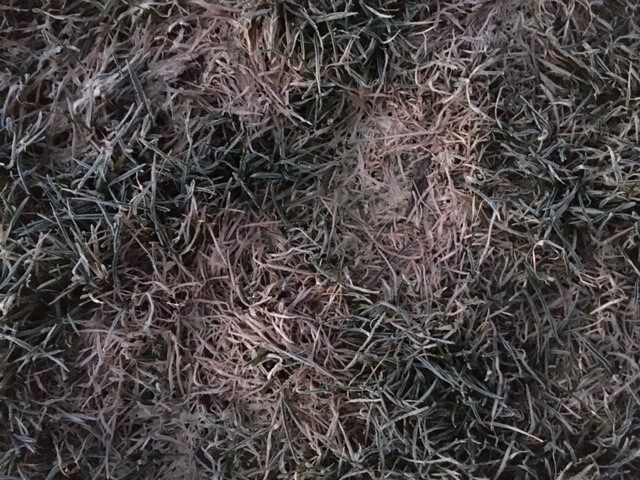
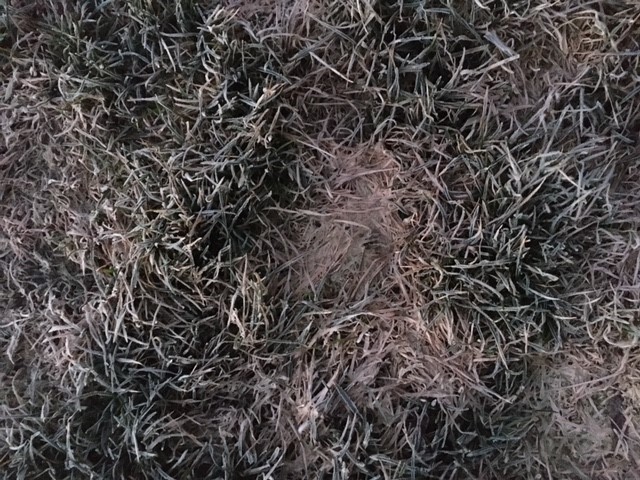
Since I found a lot of contradictory information during my online research, I wanted to get your feedback and ideas on the best way to care for the lawn after winter.
Attached are two pictures showing the current condition of my lawn (brown patches like in the pictures are present all over the lawn).
The lawn was treated with a “fall fertilizer” in autumn.
The lawn was seeded in summer 2019.
How would you approach getting the lawn back into good condition?
Scarifying? If yes, when is the best time for this?
Fertilizing? If yes, which type and when?
What else would you recommend?
Thanks & regards
Jörg

halmi schrieb:
Exactly, and if you are going to scarify, fertilize at least 2 weeks before. I have to admit, I always fertilize and seed after scarifying. The soil is loosened then, so in my opinion, fertilizer and seeds can penetrate best.
Whether that is correct, I have no idea.
Here, the last bits of snow only melted yesterday, so I’m still waiting for the nights to get a bit warmer.
It looks exactly the same for me.
Since I was also wondering about the right time to start fertilizing, I came across the following aspect in another forum.
The general consensus is that fertilizing should begin once the cumulative daily average temperature reaches 150 degrees Celsius (302°F). After all, the plants don’t follow our calendar. At this temperature, the lawn apparently needs the most nutrients to recover from the stresses of winter. If this timing is missed, you may be struggling to catch up all year.
The main problem is that this temperature threshold for weeds is already at 120 degrees Celsius (248°F). So if you wait too long, the weeds might get the upper hand.
Since I was also wondering about the right time to start fertilizing, I came across the following aspect in another forum.
The general consensus is that fertilizing should begin once the cumulative daily average temperature reaches 150 degrees Celsius (302°F). After all, the plants don’t follow our calendar. At this temperature, the lawn apparently needs the most nutrients to recover from the stresses of winter. If this timing is missed, you may be struggling to catch up all year.
The main problem is that this temperature threshold for weeds is already at 120 degrees Celsius (248°F). So if you wait too long, the weeds might get the upper hand.
Fertilizer: It only makes sense once it starts growing. Growth only really occurs when the temperature is above 10°C (50°F) during the day. So, it’s still a bit early to fertilize. I recommend patience. Our lawn also looked bad after the snow melted, but it is gradually recovering. There is still no actual growth, only the color turning green.
At the moment, there is increasing sunlight every hour.
In front of the house, it’s spring, everything is growing.
Behind the house, the last patches of ice are still bravely fighting for survival. It is expected to get colder again soon.
Dandelions and other plants are already growing well again.
In front of the house, it’s spring, everything is growing.
Behind the house, the last patches of ice are still bravely fighting for survival. It is expected to get colder again soon.
Dandelions and other plants are already growing well again.
Similar topics