
ᐅ Insulation of knee walls, ceiling joists penetrating masonry walls
Created on: 10 Jun 2020 11:16
D
Dan2020Hello everyone,
I’m new here and hope you can help me.
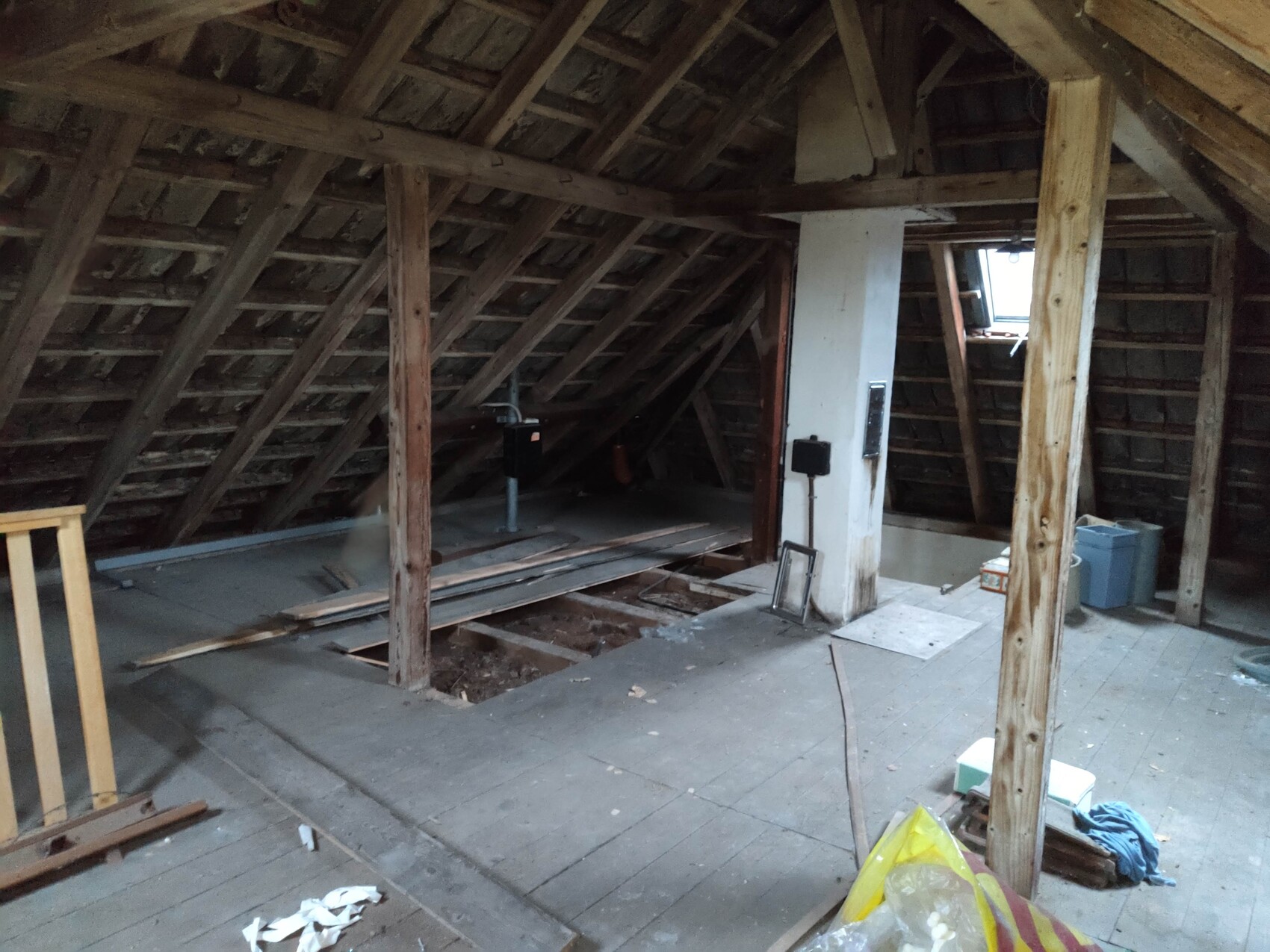
We are currently planning a new roof structure for an 80-year-old house. The old roof has water damage, and to create space for a stairway, the roof will be raised by 50cm (20 inches) at the knee wall. The building permit / planning permission is already approved.
It is currently a hip rafter roof and will remain a hip rafter roof.
Boundary conditions:
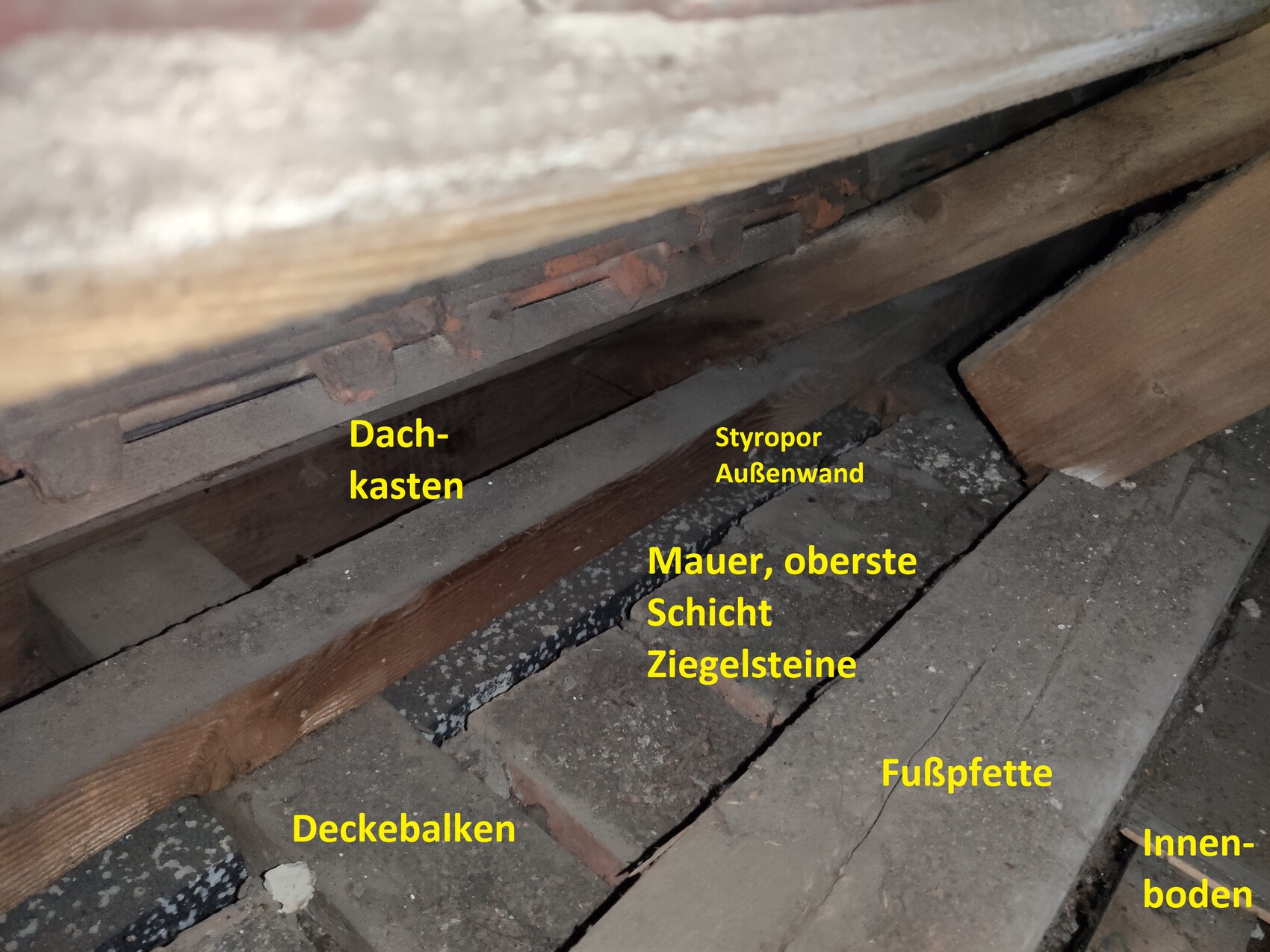
- The ceiling joists are embedded in the masonry and extend beyond the outer wall.
- The facade was insulated with polystyrene foam several years ago.
- The roof will be fully insulated with wood fiber: 24cm (9.5 inches) between the rafters and 8cm (3 inches) above the rafters (counter battens).
Question:
What is the best way to handle insulation around the knee wall?
1) Place the vapor retarder on the ceiling joists (marked in blue) → risk that drafts passing around the projecting ceiling joists cause moisture to settle near them?
2) Try to seal the ceiling joists embedded in the wall?
3) Fill the entire roof box with insulation? Is ventilation necessary?
So far, the area is very well ventilated, but I’m worried that if I seal it up tightly, it might start to rot.
I’m starting to get a bit desperate. What’s your opinion? How should the insulation concept be designed here?
I would really appreciate your suggestions.
Best regards,
Daniel

I’m new here and hope you can help me.
We are currently planning a new roof structure for an 80-year-old house. The old roof has water damage, and to create space for a stairway, the roof will be raised by 50cm (20 inches) at the knee wall. The building permit / planning permission is already approved.
It is currently a hip rafter roof and will remain a hip rafter roof.
Boundary conditions:
- The ceiling joists are embedded in the masonry and extend beyond the outer wall.
- The facade was insulated with polystyrene foam several years ago.
- The roof will be fully insulated with wood fiber: 24cm (9.5 inches) between the rafters and 8cm (3 inches) above the rafters (counter battens).
Question:
What is the best way to handle insulation around the knee wall?
1) Place the vapor retarder on the ceiling joists (marked in blue) → risk that drafts passing around the projecting ceiling joists cause moisture to settle near them?
2) Try to seal the ceiling joists embedded in the wall?
3) Fill the entire roof box with insulation? Is ventilation necessary?
So far, the area is very well ventilated, but I’m worried that if I seal it up tightly, it might start to rot.
I’m starting to get a bit desperate. What’s your opinion? How should the insulation concept be designed here?
I would really appreciate your suggestions.
Best regards,
Daniel

If the attic is converted into living space, what can we expect regarding the future thermal envelope (I am only curious about the question in relation to the wall penetration)?
https://www.instagram.com/11antgmxde/
https://www.linkedin.com/company/bauen-jetzt/
https://www.instagram.com/11antgmxde/
https://www.linkedin.com/company/bauen-jetzt/
Thanks for asking.
A new roof framework will be installed, which is very similar to the current one. However, it will have wider rafters (24 cm (9.5 inches)) and a knee wall height of 50 cm (20 inches). With both insulation between the rafters and insulation above the rafters (24 + 8 cm (9.5 + 3 inches)), the attic will be converted into a living space. So the concept is basically set.
The only open question:
What is the best way to seal the knee wall, especially since the ceiling beams extend through the masonry to the outside?
Should slots with insect screens be installed at the roof eaves for ventilation?
A new roof framework will be installed, which is very similar to the current one. However, it will have wider rafters (24 cm (9.5 inches)) and a knee wall height of 50 cm (20 inches). With both insulation between the rafters and insulation above the rafters (24 + 8 cm (9.5 + 3 inches)), the attic will be converted into a living space. So the concept is basically set.
The only open question:
What is the best way to seal the knee wall, especially since the ceiling beams extend through the masonry to the outside?
Should slots with insect screens be installed at the roof eaves for ventilation?
Similar topics