
H
hoppelstrasse15 Jan 2026 22:56Hello,
We will soon be moving into our purchased house built in 2002. The exterior walls are made of 36cm (14 inch) Poroton hollow bricks.
Our kitchen will be located along an exterior wall, including a corner (corner shown on the left in the picture). The upper cabinets have rear ventilation, but this is limited to about 0.5mm (0.02 inch) below by the decorative panel.
On the left, there will be a narrow vented gap between the cabinets and the wall, although it is very small – the upper cabinet is almost flush against the wall while the lower cabinet is about 10cm (4 inches) away.
The kitchen has underfloor heating, and I assume at most one pipe runs beneath the cabinets. Additionally, the kitchen is open to the living area and has a patio door.
What do you think is the risk of mold developing behind the cabinets, even if I monitor the humidity carefully?
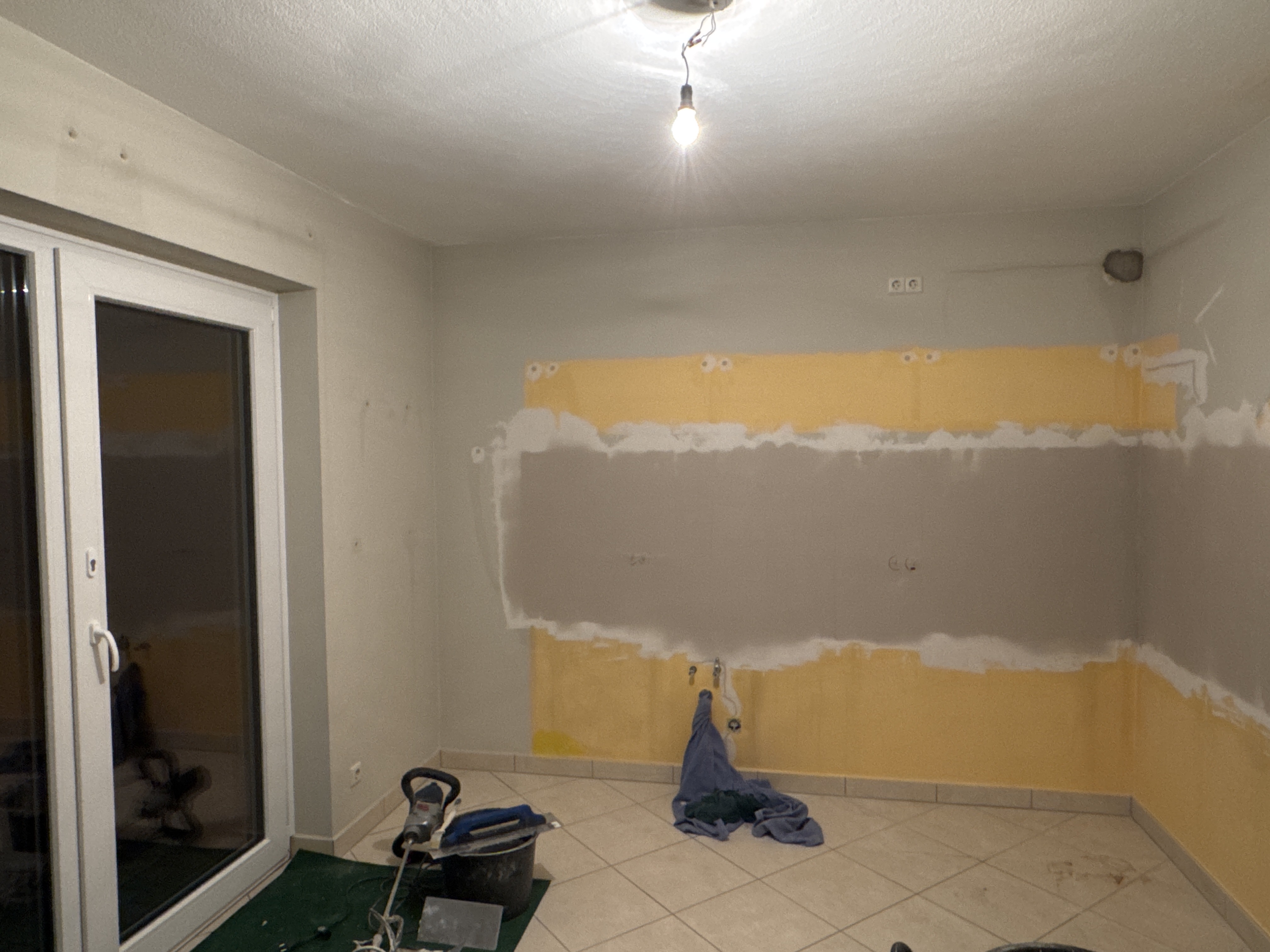
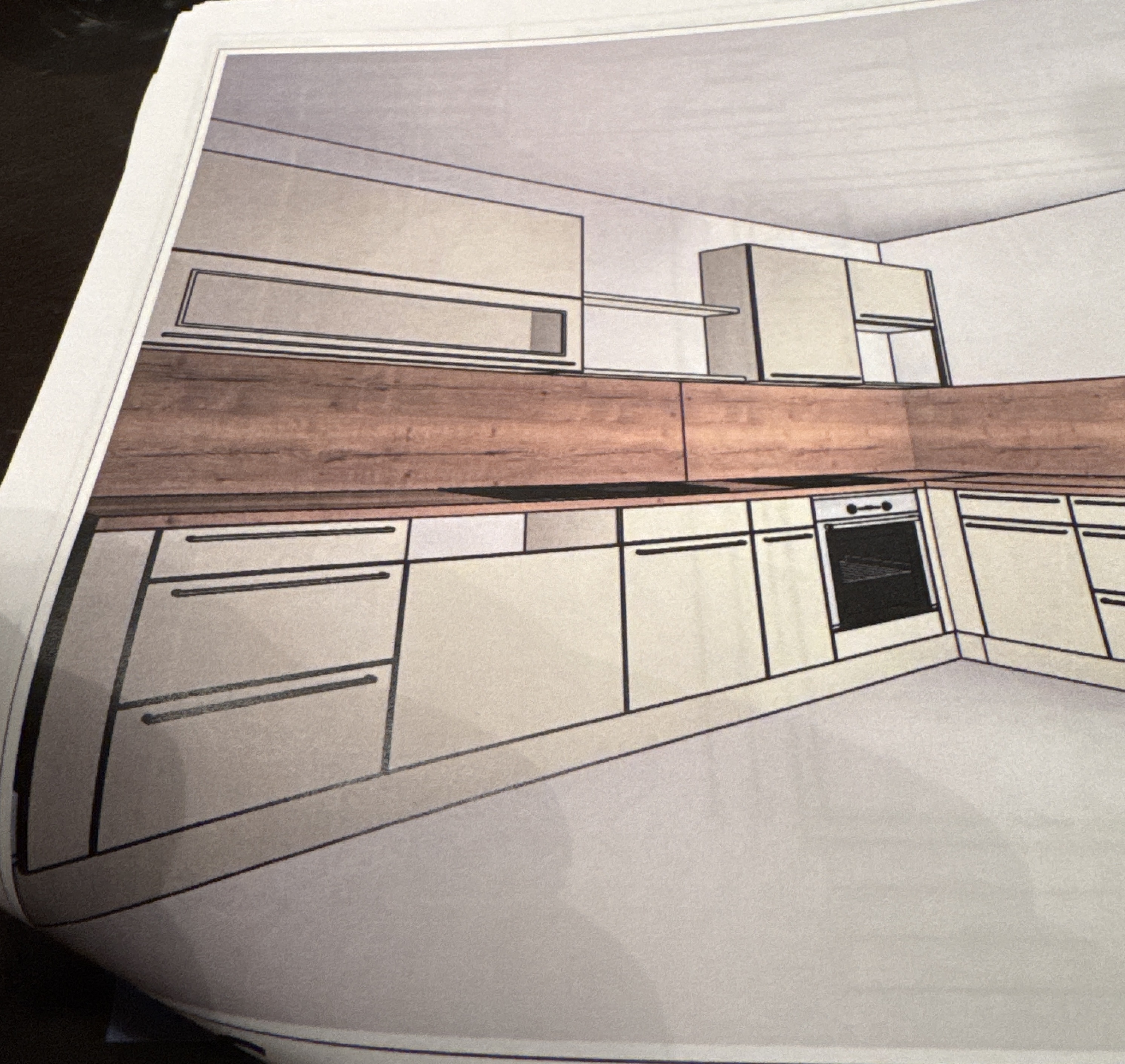
We will soon be moving into our purchased house built in 2002. The exterior walls are made of 36cm (14 inch) Poroton hollow bricks.
Our kitchen will be located along an exterior wall, including a corner (corner shown on the left in the picture). The upper cabinets have rear ventilation, but this is limited to about 0.5mm (0.02 inch) below by the decorative panel.
On the left, there will be a narrow vented gap between the cabinets and the wall, although it is very small – the upper cabinet is almost flush against the wall while the lower cabinet is about 10cm (4 inches) away.
The kitchen has underfloor heating, and I assume at most one pipe runs beneath the cabinets. Additionally, the kitchen is open to the living area and has a patio door.
What do you think is the risk of mold developing behind the cabinets, even if I monitor the humidity carefully?
J
Jesse Custer16 Jan 2026 08:40I would just approach it from the end:
Kitchens have been built this way for ages – and yes, if you host god knows what kind of canning marathons and produce tons of pasta in your kitchen, who knows what might happen...
...but so far, no one has really given it much thought, and they probably shouldn’t have.
About six years ago, we renovated our kitchen, which was built along two exterior walls.
The result:
Nothing happened.
By the way, kitchens seem to be less problematic than expected – we have a GROHE Sense device under the kitchen unit that quietly and unobtrusively monitors everything going on. Even under the sink and the associated appliance, humidity levels only reach a maximum of 54% relative humidity...
Kitchens have been built this way for ages – and yes, if you host god knows what kind of canning marathons and produce tons of pasta in your kitchen, who knows what might happen...
...but so far, no one has really given it much thought, and they probably shouldn’t have.
About six years ago, we renovated our kitchen, which was built along two exterior walls.
The result:
Nothing happened.
By the way, kitchens seem to be less problematic than expected – we have a GROHE Sense device under the kitchen unit that quietly and unobtrusively monitors everything going on. Even under the sink and the associated appliance, humidity levels only reach a maximum of 54% relative humidity...

I believe it really depends on the specific installation situation and also the outside temperatures.
A friend of mine recently found mold next to his refrigerator in his rented apartment. The fridge is about 8cm (3 inches) away from the exterior wall on the side, but it’s enclosed with a decorative panel. He cleans and defrosts the fridge once a year, taking it out for that purpose. He has lived there for 12 years, and this is the first time he’s experienced mold. However, this winter is also the coldest in 15 years (in Berlin).
To the thread starter:
In this case, I would recommend removing large sections of the decorative back panels (cut out with a utility knife). This is generally advised for appliances anyway. But there’s really no reason you can’t do this for regular cabinets, too. The wall behind them should be painted, right, or did you skip that?
Then, regularly install ventilation grilles in the kickboards of the appliances to ensure airflow behind the cabinets. There should already be some space at the top, right? How are your upper cabinets constructed? If you want to be 110% sure, you could also install small radiator fans either at the top or bottom, running on the lowest setting regularly during winter.
In 99% of cases, this probably isn’t necessary, as Jesse Custer said. But if the rare 100th case occurs, you could have a leak problem. And in my opinion, these measures aren’t that complicated to implement...
A friend of mine recently found mold next to his refrigerator in his rented apartment. The fridge is about 8cm (3 inches) away from the exterior wall on the side, but it’s enclosed with a decorative panel. He cleans and defrosts the fridge once a year, taking it out for that purpose. He has lived there for 12 years, and this is the first time he’s experienced mold. However, this winter is also the coldest in 15 years (in Berlin).
To the thread starter:
In this case, I would recommend removing large sections of the decorative back panels (cut out with a utility knife). This is generally advised for appliances anyway. But there’s really no reason you can’t do this for regular cabinets, too. The wall behind them should be painted, right, or did you skip that?
Then, regularly install ventilation grilles in the kickboards of the appliances to ensure airflow behind the cabinets. There should already be some space at the top, right? How are your upper cabinets constructed? If you want to be 110% sure, you could also install small radiator fans either at the top or bottom, running on the lowest setting regularly during winter.
In 99% of cases, this probably isn’t necessary, as Jesse Custer said. But if the rare 100th case occurs, you could have a leak problem. And in my opinion, these measures aren’t that complicated to implement...
M
MachsSelbst17 Jan 2026 17:35The ventilation gap recommended by most manufacturers is already quite small at 2-3cm (1-1¼ inches), so you should definitely use the full depth and avoid narrowing it with decorative trim.
The issue with the wall cabinets is as follows:
If not enough warm air reaches that area, the wall can cool down, and the dew point may be reached or even surpassed.
This can happen even at 23°C (73°F) and 54% humidity, especially when pouring hot pasta water down the sink.
Heat struggles to reach this spot because under the cabinets is the countertop, and there’s no underfloor heating in that area.
Also, there hasn’t been a really cold and long winter for a while; the last one was in 2010/11.
As I said, remove the decorative trim, and it should be fine.
The issue with the wall cabinets is as follows:
If not enough warm air reaches that area, the wall can cool down, and the dew point may be reached or even surpassed.
This can happen even at 23°C (73°F) and 54% humidity, especially when pouring hot pasta water down the sink.
Heat struggles to reach this spot because under the cabinets is the countertop, and there’s no underfloor heating in that area.
Also, there hasn’t been a really cold and long winter for a while; the last one was in 2010/11.
As I said, remove the decorative trim, and it should be fine.
Similar topics