
ᐅ Kitchen Island and Dining Table – Which Layout Should You Choose?
Created on: 13 Oct 2016 11:47
D
DragonyxXLD
DragonyxXL13 Oct 2016 11:47After extensive discussions, we have ultimately decided against an L-shaped kitchen layout. This now leaves us with two different options for the kitchen island. What are your thoughts on these two variants? What advantages and disadvantages do you see for each?
Details:
- No door between the hallway and the room, only a 2m (6.5 ft) wide passage with a lintel
- Dining table size: small variant 2m (6.5 ft), medium variant 3m (10 ft), long variant 4.5-5m (15-16.5 ft)
- Distance between the kitchen run and the island: 0.95m (3 ft)
- The window on the right side of the plan should not be moved; patio doors could be shifted if absolutely necessary
- Kitchen run layout from top to bottom: oven, stove, dishwasher, sink, freezer, refrigerator
Why choose a kitchen island at all?
1. More countertop workspace
2. Additional storage is needed
3. At least a partial separation between the kitchen and the rest of the room
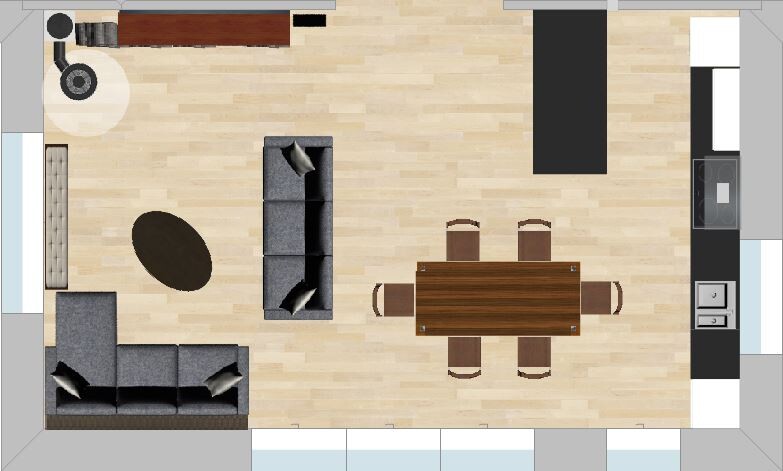
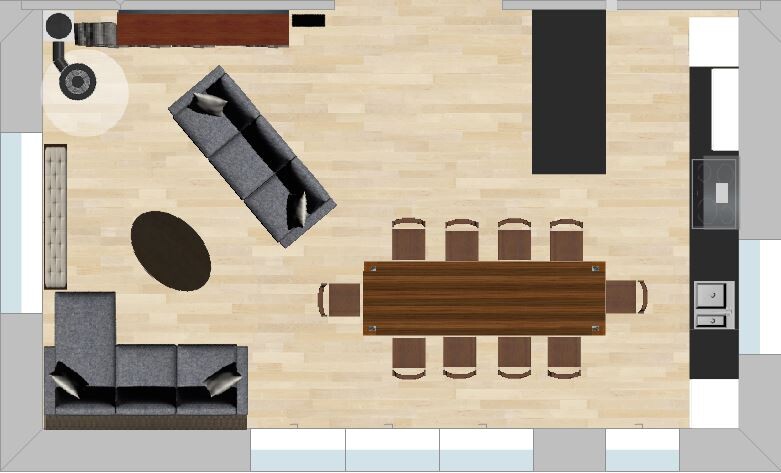
Variant 1 – island at the top of the plan:
- The dining table is closer to the windows, which might be more pleasant
- The main workspace is far from the refrigerator, sink, and trash bin, so it might not be used as intended
- The first thing you see from the hallway is the kitchen island (which doesn’t feel very welcoming to me)
- Good amount of open space when entering the room
- Table and chairs partially block the patio doors, making opening and passing through inconvenient
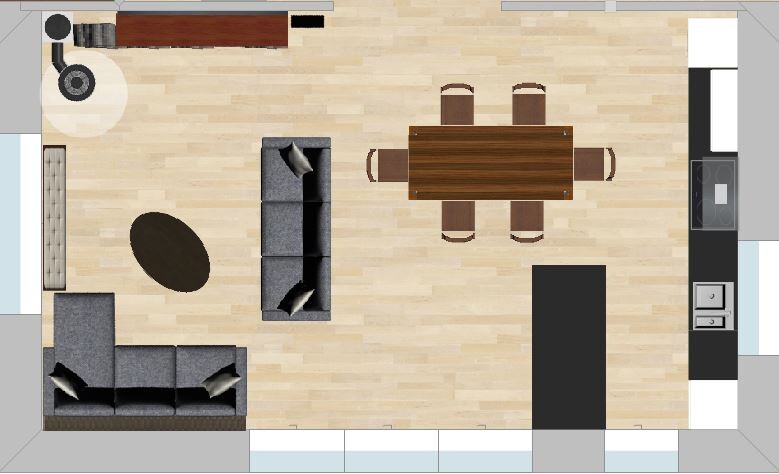
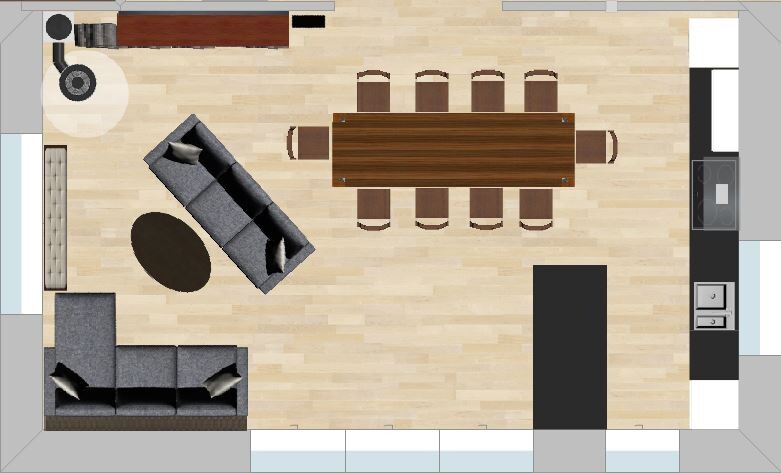
Variant 3 – island at the bottom of the plan:
- The dining table seems more accessible, also due to the permanent opening to the hallway
- The dining table is about 2.5m (8 ft) away from the patio doors
- Opportunity to set up a very long table for celebrations
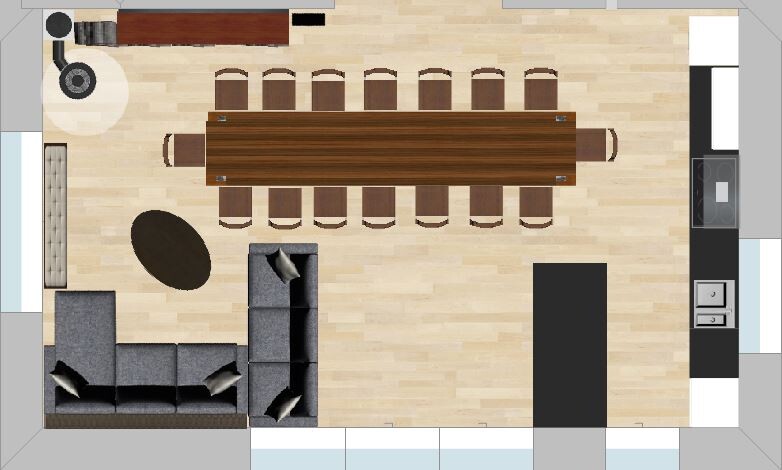
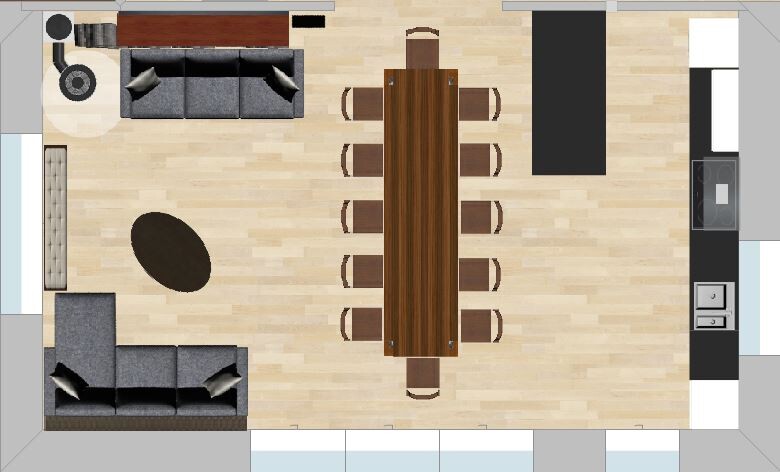
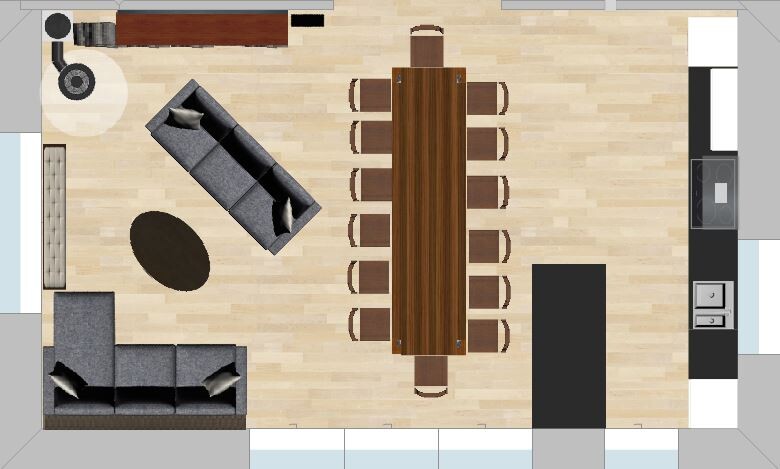
Details:
- No door between the hallway and the room, only a 2m (6.5 ft) wide passage with a lintel
- Dining table size: small variant 2m (6.5 ft), medium variant 3m (10 ft), long variant 4.5-5m (15-16.5 ft)
- Distance between the kitchen run and the island: 0.95m (3 ft)
- The window on the right side of the plan should not be moved; patio doors could be shifted if absolutely necessary
- Kitchen run layout from top to bottom: oven, stove, dishwasher, sink, freezer, refrigerator
Why choose a kitchen island at all?
1. More countertop workspace
2. Additional storage is needed
3. At least a partial separation between the kitchen and the rest of the room
Variant 1 – island at the top of the plan:
- The dining table is closer to the windows, which might be more pleasant
- The main workspace is far from the refrigerator, sink, and trash bin, so it might not be used as intended
- The first thing you see from the hallway is the kitchen island (which doesn’t feel very welcoming to me)
- Good amount of open space when entering the room
- Table and chairs partially block the patio doors, making opening and passing through inconvenient
Variant 3 – island at the bottom of the plan:
- The dining table seems more accessible, also due to the permanent opening to the hallway
- The dining table is about 2.5m (8 ft) away from the patio doors
- Opportunity to set up a very long table for celebrations
Room dimensions? I don’t think either island option is ideal yet, especially because I don’t consider the main countertop layout ideal. The primary workspace is between the sink and the cooktop, and right now you have only 60 cm (24 inches) there – with the dishwasher also placed in between.
D
DragonyxXL13 Oct 2016 12:46kbt09 schrieb:
Room dimensions? I think both island layouts are still not ideal... mainly because I don't consider the counter run to be optimal. The main work area is usually between the sink and the cooktop, and right now you’re allowing only about 60cm (24 inches) there... with the dishwasher in between as well.The room measures 8.4m x 5m (27.6 ft x 16.4 ft). More precisely, the space between the sink and cooktop is only about 30–40cm (12–16 inches), since the sink will be wider than 60cm (24 inches) — which isn’t clear from the drawing. It might be possible to swap the freezer and the sink cabinet, but then the sink would end up quite close to the refrigerator.DragonyxXL schrieb:
because the sink will be wider than 60 (not clearly shown in the drawing). If you mean the drainboard, it can also extend over the freezer cabinet.
Your example clearly illustrates the challenges of an almost square dining/cooking area.
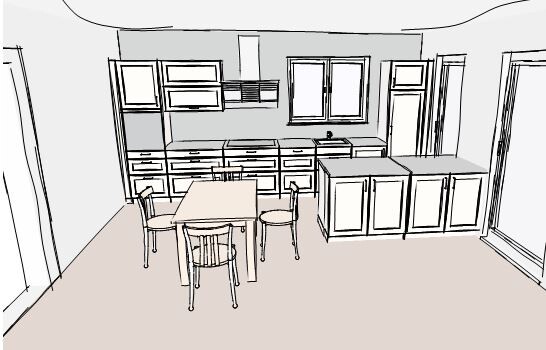
Why shouldn’t it be an L-shaped layout anymore? However, the window on the right side should be moved, possibly by the full width of the window. Here’s a rough sketch:
At the top of the plan:
- Refrigerator
- Oven cabinet
- Freezer base cabinet, followed by a blind corner … especially for storing coffee machines and similar appliances
- Dishwasher
- 60cm (24 inches) sink cabinet
- 40cm (16 inches) waste cabinet under the countertop
- 3 x 90cm (35 inches) base cabinets with drawers, with the cooktop on the middle one
The table would then be positioned with its short side at the patio door, providing plenty of space.
D
DragonyxXL13 Oct 2016 13:22kbt09 schrieb:
If you mean the drip area m, it can also be above the freezer cabinet.But then, as right-handers, we have the issue with the dishes/sponges.
kbt09 schrieb:
Why shouldn’t it be an L-shape anymore?It doesn’t add much benefit. A carousel goes into the corner, which offers relatively little space. The wall cabinets can’t be planned sensibly around the corner.
kbt09 schrieb:
Roughly sketched:
Top of plan:
- Refrigerator
- Oven cabinet
- Freezer base cabinet, then a blind corner ... especially for storing coffee machines, etc.
- Dishwasher
- 60cm (24 inches) sink base cabinet
- 40cm (16 inches) waste bin under the countertop
- 3 x 90cm (36 inches) pull-out base cabinets, with the cooktop on the middle one
Table with its side facing the patio door ... provides plenty of space.Is this what you mean?
We wanted to open the kitchen a bit towards the room but don’t want to be completely inside the kitchen. More of a mix between open and separated.
Similar topics