
R
RomanWolf11 Jun 2019 15:34Hello everyone!
I hope there are some experts here who can quickly tell me if this is okay or if something urgently needs to be changed. The plumber completed the rough installation last week. I have two questions regarding this.
1. The builder and I placed special emphasis on sealing the bottom layer (concrete slab) with bitumen. The plumber has now fastened all the pipes with hammer-set anchors, thus penetrating the waterproofing layer. The response was that this is standard practice and complies with regulations.
Is that correct? Does the anchor effectively re-establish the waterproofing layer (similar to a vapor barrier), or am I overthinking this? Or should it be handled differently?
2. The builder apparently set the kitchen drain connection too high, so the plumber had to drain both the dishwasher and sink together. I am concerned about the sink connection, which has a “trap” loop going around once. I worry this might cause clogging in the kitchen.
I asked why a T-joint wasn’t used instead, but the plumber said it’s not possible and that the trap is fine since only 45° bends or less were used.
If everything is really okay, that’s good. But I want to avoid any irreversible damage later on.
I would be very grateful if someone could briefly reassure me or let me know if I need to provide more details.
Thanks in advance and best regards
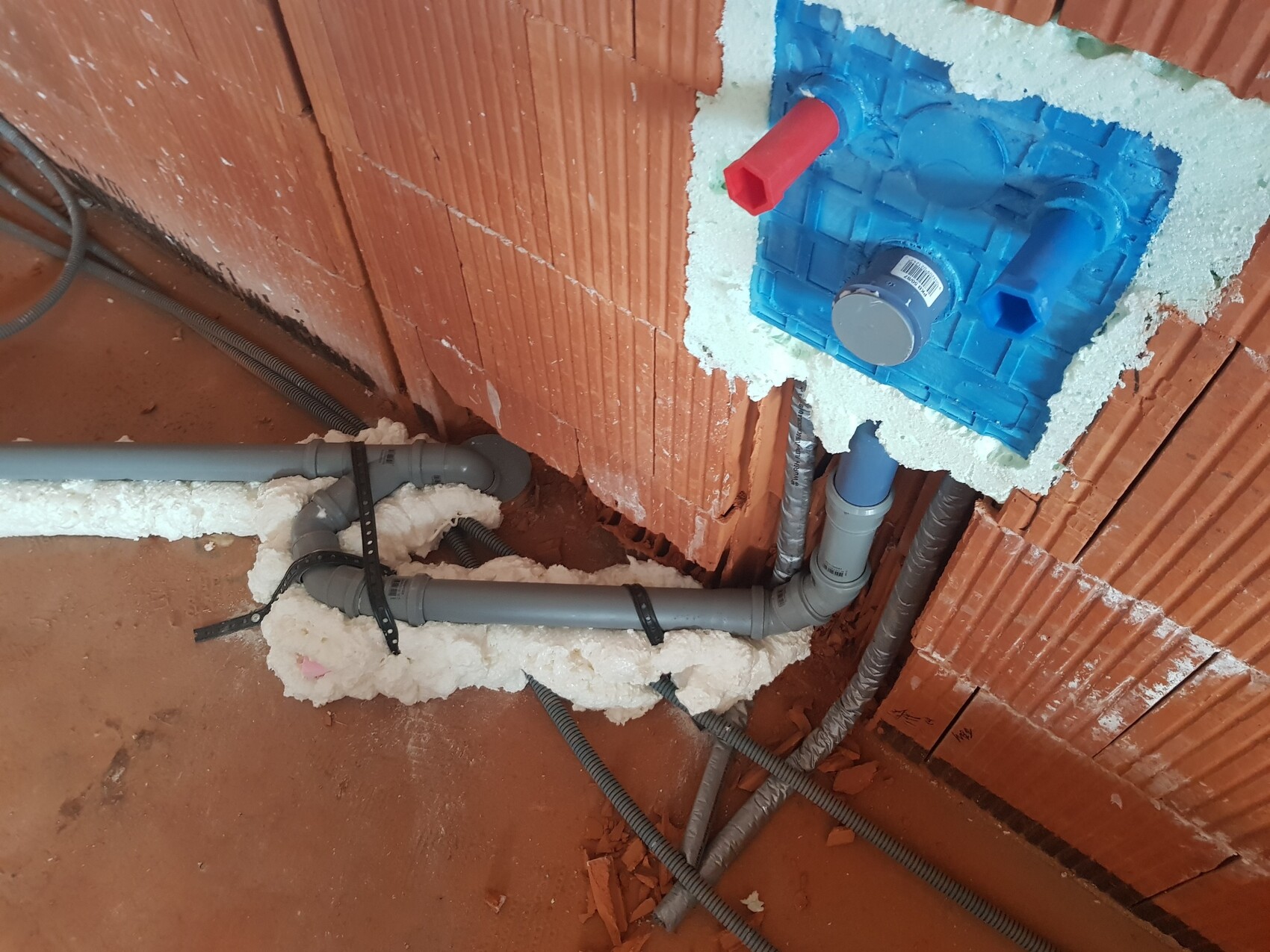
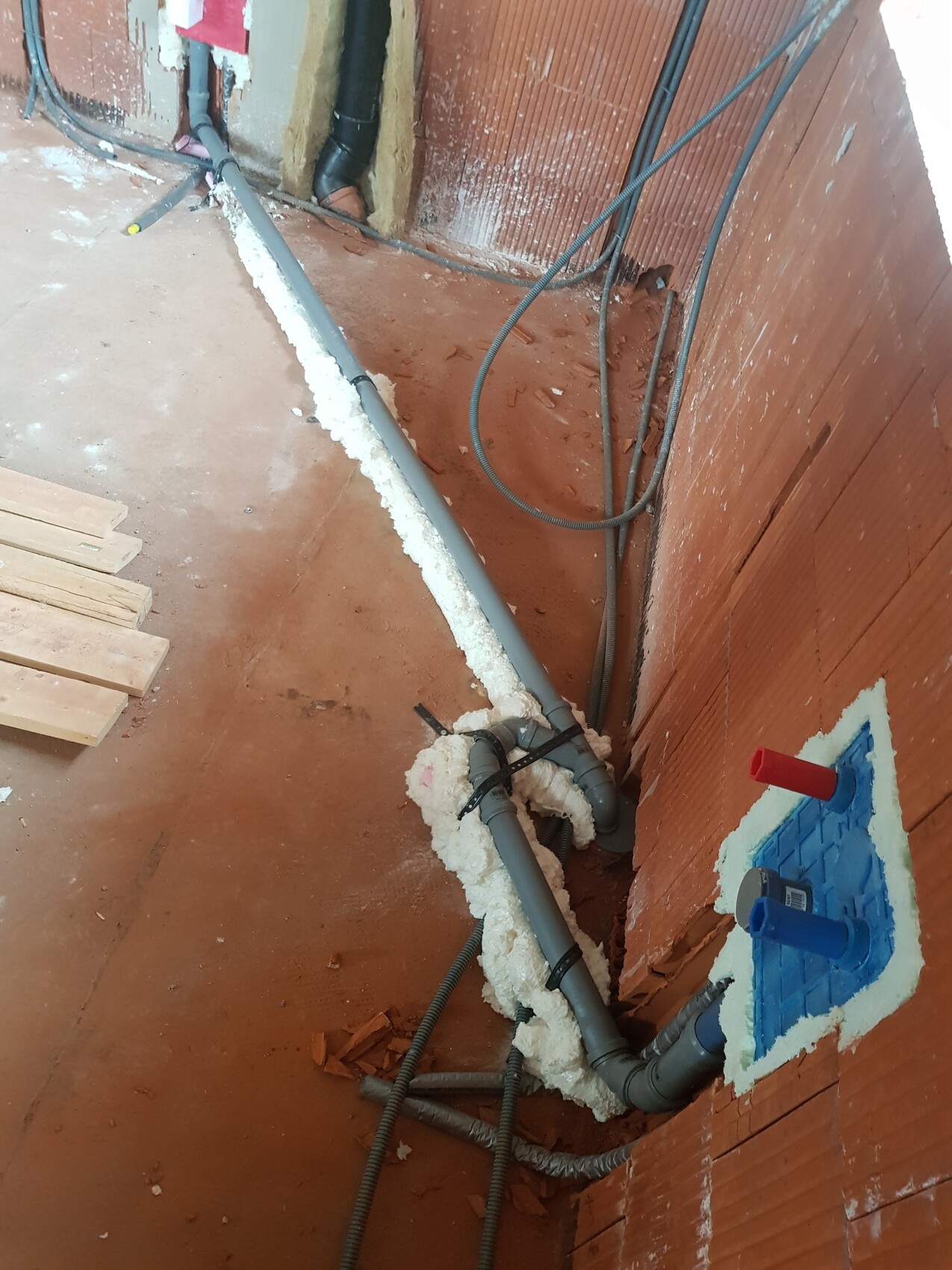
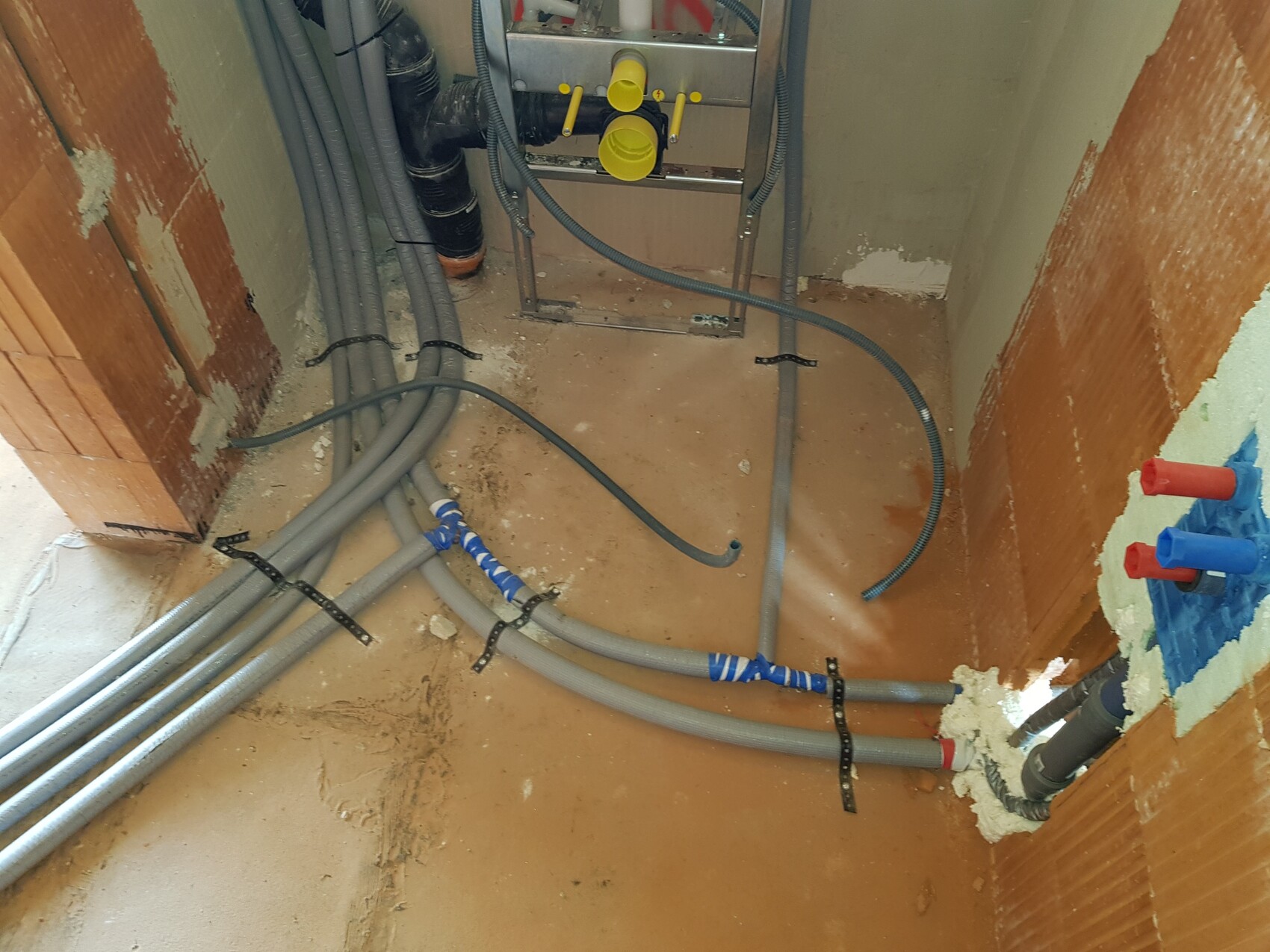
I hope there are some experts here who can quickly tell me if this is okay or if something urgently needs to be changed. The plumber completed the rough installation last week. I have two questions regarding this.
1. The builder and I placed special emphasis on sealing the bottom layer (concrete slab) with bitumen. The plumber has now fastened all the pipes with hammer-set anchors, thus penetrating the waterproofing layer. The response was that this is standard practice and complies with regulations.
Is that correct? Does the anchor effectively re-establish the waterproofing layer (similar to a vapor barrier), or am I overthinking this? Or should it be handled differently?
2. The builder apparently set the kitchen drain connection too high, so the plumber had to drain both the dishwasher and sink together. I am concerned about the sink connection, which has a “trap” loop going around once. I worry this might cause clogging in the kitchen.
I asked why a T-joint wasn’t used instead, but the plumber said it’s not possible and that the trap is fine since only 45° bends or less were used.
If everything is really okay, that’s good. But I want to avoid any irreversible damage later on.
I would be very grateful if someone could briefly reassure me or let me know if I need to provide more details.
Thanks in advance and best regards
1. It depends on your concrete slab. At our site, the slab was also sealed with bitumen, although according to the construction manager, it wasn’t strictly necessary. They do it anyway as a standard procedure. Our plumber also used perforated tape. After installation, they coat it with a bitumen layer.
2. To me, everything looks appropriate. The most important thing is that the slope was taken into account.
2. To me, everything looks appropriate. The most important thing is that the slope was taken into account.
H
hampshire11 Jun 2019 18:25Regarding point 1, I cannot make an assessment.
Regarding point 2, the drainage is properly installed. Wastewater is directed and discharged in the flow direction, which provides optimal flow characteristics.
Regarding point 2, the drainage is properly installed. Wastewater is directed and discharged in the flow direction, which provides optimal flow characteristics.
R
RomanWolf12 Jun 2019 08:50Thank you in advance for the quick responses.
I would appreciate it if someone with background knowledge could comment on point 1.
I am not sure how critical the topic of waterproofing is.
Regarding the structure:
The slab rests on strip foundations and, of course, a blinding layer and XPS insulation.
Above that, there is 25cm (10 inches) of concrete.
I would appreciate it if someone with background knowledge could comment on point 1.
I am not sure how critical the topic of waterproofing is.
Regarding the structure:
The slab rests on strip foundations and, of course, a blinding layer and XPS insulation.
Above that, there is 25cm (10 inches) of concrete.
R
RomanWolf12 Jun 2019 13:03Lumpi_LE schrieb:
1 is not a problem. Bitumen stays waterproof when nailed.That sounds promising.. so I don’t need to apply a bitumen coating over it?
Similar topics