
ᐅ Keep soil away from the house using paving slabs or similar materials.
Created on: 13 Nov 2022 14:18
D
DerToni
Hello everyone,
I already made a post on this topic elsewhere, but with a different question. I still haven’t found a satisfactory solution, so please forgive me for asking again for opinions on an idea...
Here’s the situation: Our house is already built and fully plastered. For the upcoming garden/landscaping work, it looks like the ground level will be raised in some areas, which means parts of the facade that currently don’t touch the soil will end up in contact with it and therefore haven’t been treated accordingly yet.
There are different ways to waterproof the facade afterwards, but none of them really convince me. So I’m currently wondering if there is a way to prevent the wall from actually coming into contact with the soil at all.
One option would surely be to install L-shaped blocks (crib wall blocks / retaining blocks) with some distance to the wall. But that’s neither cheap nor easy. Also, the load-bearing capacity of these blocks isn’t really needed here, since the house itself can easily support the small amount of soil.
Therefore, I’m thinking about fixing panels on a substructure to the wall (so wall, then a post about 10cm (4 inches) deep, and then the panel) that would keep the wall away from soil and moisture. Wood would obviously be a poor choice, as it would rot.
Do you have any opinions or other suggestions related to this question?
I’d really appreciate your input, this topic is really on my mind ;-)
Best regards
DerToni
I already made a post on this topic elsewhere, but with a different question. I still haven’t found a satisfactory solution, so please forgive me for asking again for opinions on an idea...
Here’s the situation: Our house is already built and fully plastered. For the upcoming garden/landscaping work, it looks like the ground level will be raised in some areas, which means parts of the facade that currently don’t touch the soil will end up in contact with it and therefore haven’t been treated accordingly yet.
There are different ways to waterproof the facade afterwards, but none of them really convince me. So I’m currently wondering if there is a way to prevent the wall from actually coming into contact with the soil at all.
One option would surely be to install L-shaped blocks (crib wall blocks / retaining blocks) with some distance to the wall. But that’s neither cheap nor easy. Also, the load-bearing capacity of these blocks isn’t really needed here, since the house itself can easily support the small amount of soil.
Therefore, I’m thinking about fixing panels on a substructure to the wall (so wall, then a post about 10cm (4 inches) deep, and then the panel) that would keep the wall away from soil and moisture. Wood would obviously be a poor choice, as it would rot.
Do you have any opinions or other suggestions related to this question?
I’d really appreciate your input, this topic is really on my mind ;-)
Best regards
DerToni

Presumably, you need to leave space for the heat pump outdoor unit with L-shaped blocks as described, and you want to build a (long?) wall from L-shaped blocks to create a partially level garden – is that correct?
We need significantly more information: What is your motivation? Where is the entire plot shown with elevation details (how else should elevation changes be estimated, which are IMPORTANT for example to determine where water flows to and where it comes from, etc.) This is still very tedious. Really!!!
And a heat pump outdoor unit directly in front of L-shaped blocks? You should ask the plumber what they think about this (noise!)
Who came up with this nonsense in the first place? Or did you later (after completing the planning and construction) consider a different use for the plot?
Or, as I suspect, nobody gave (good) thought to the site design—a bold undertaking for a sloped plot 😳
I see this rather leading to a larger!! site redesign (if you provide information) so that it works properly.
We need significantly more information: What is your motivation? Where is the entire plot shown with elevation details (how else should elevation changes be estimated, which are IMPORTANT for example to determine where water flows to and where it comes from, etc.) This is still very tedious. Really!!!
And a heat pump outdoor unit directly in front of L-shaped blocks? You should ask the plumber what they think about this (noise!)
Who came up with this nonsense in the first place? Or did you later (after completing the planning and construction) consider a different use for the plot?
Or, as I suspect, nobody gave (good) thought to the site design—a bold undertaking for a sloped plot 😳
I see this rather leading to a larger!! site redesign (if you provide information) so that it works properly.
@i_b_n_a_n at the spot with the heat pump, everything is coordinated – also with the plumbing company (if you look closely, you can see a faucet hanging in mid-air because they knew that the ground there would be raised later). The distance to the heat pump is correct. The L-shaped retaining blocks (L-steine) will be set in an L-shape, so only part of the slope will be raised, while the rest continues to slope downward. The terrace is planned to wrap around the corner of the house here. All of this was already planned during construction. However, for some reason, the plaster was not applied accordingly.
The area in front of the house (the two windows quite close to the ground): this was not planned. We only really realized it when we stood in front of the house. The terrain here slopes continuously downward toward the street. We would simply prefer if the ground here were raised a bit, and the rather tall facade on the street side was visually lowered somewhat. If this is absolutely not possible, I will have to lead the path directly along the house, keep the ground at the current height right next to the house, and only create a raised front garden section between the path and the street.
I’m attaching two “drawings” that might help with understanding. Sorry, I can’t do more right now, as I’m on the train.
I understand that I can’t expect full landscaping here. My main concern is the best way to protect the wall (especially where the terrace will be) against soil and moisture. I have also considered using liquid applied waterproofing membrane with embedded fleece. This is often used for base sealing and should work here as well.
Anyway, thanks again to all of you. It’s clear that something went wrong here. That’s why I’m asking for help in the hope of avoiding having to call the plasterer again, to redo everything, and pay for it once more. I also understand that might always be the final solution.
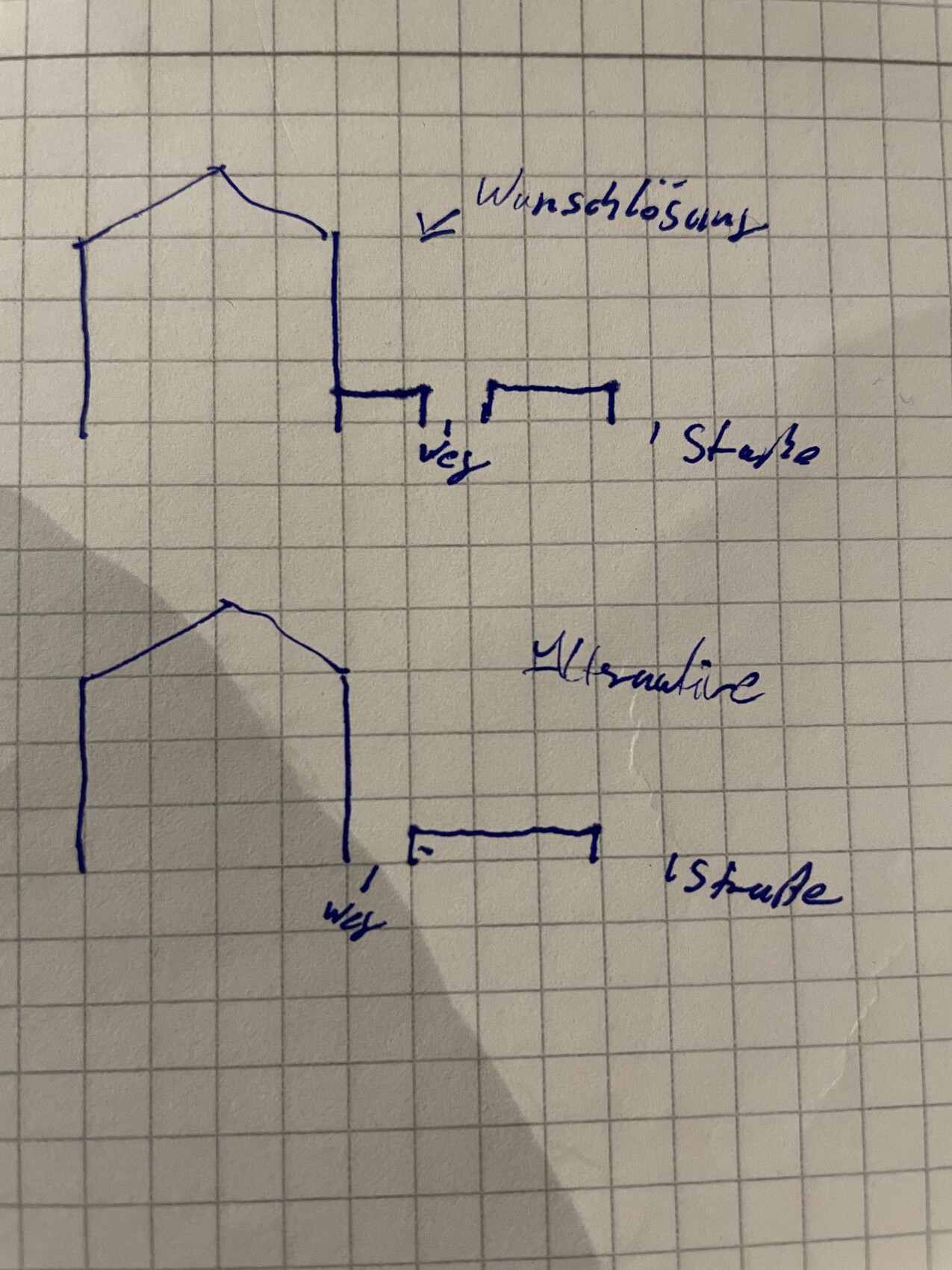
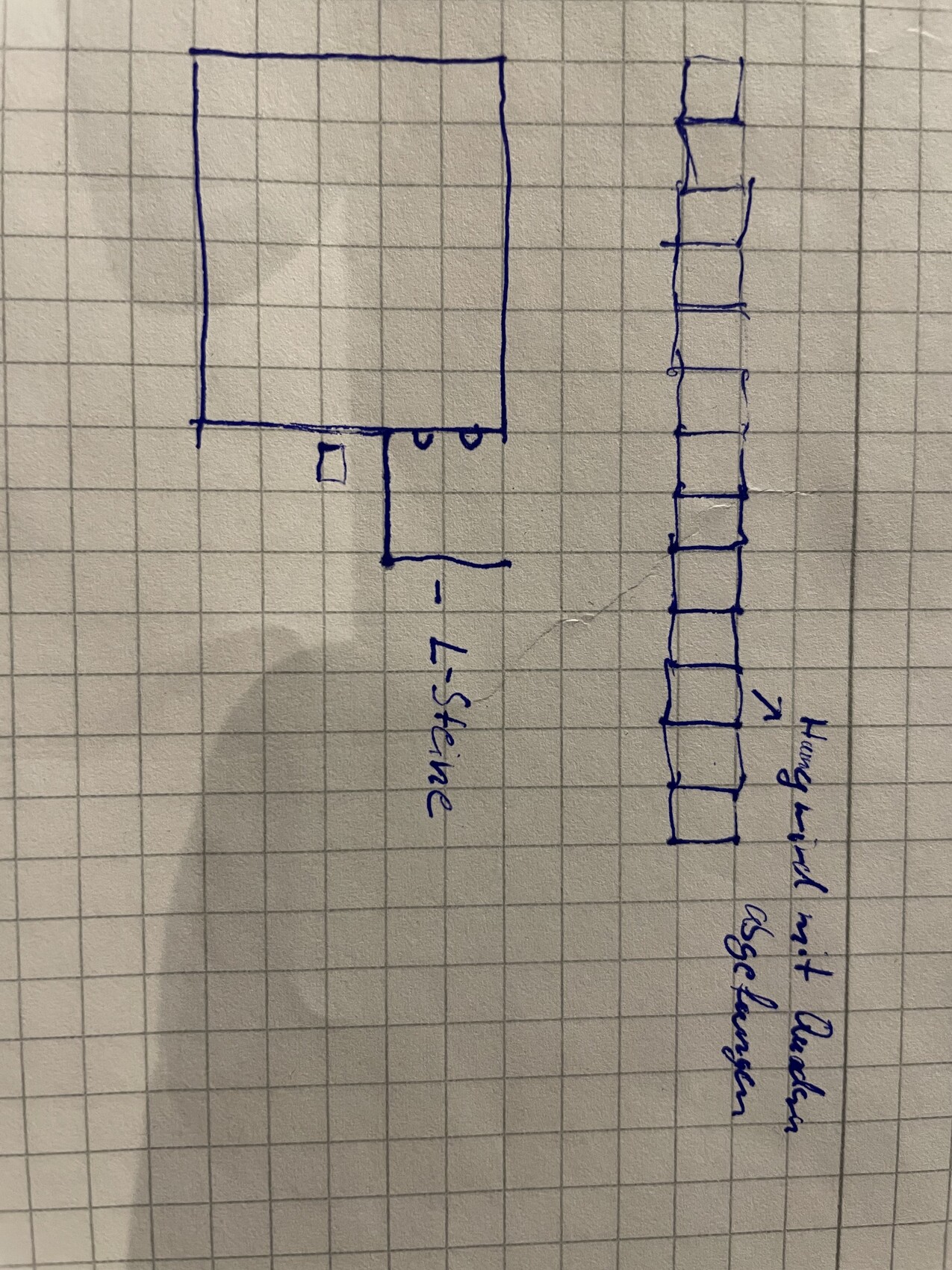
The area in front of the house (the two windows quite close to the ground): this was not planned. We only really realized it when we stood in front of the house. The terrain here slopes continuously downward toward the street. We would simply prefer if the ground here were raised a bit, and the rather tall facade on the street side was visually lowered somewhat. If this is absolutely not possible, I will have to lead the path directly along the house, keep the ground at the current height right next to the house, and only create a raised front garden section between the path and the street.
I’m attaching two “drawings” that might help with understanding. Sorry, I can’t do more right now, as I’m on the train.
I understand that I can’t expect full landscaping here. My main concern is the best way to protect the wall (especially where the terrace will be) against soil and moisture. I have also considered using liquid applied waterproofing membrane with embedded fleece. This is often used for base sealing and should work here as well.
Anyway, thanks again to all of you. It’s clear that something went wrong here. That’s why I’m asking for help in the hope of avoiding having to call the plasterer again, to redo everything, and pay for it once more. I also understand that might always be the final solution.

If I understand correctly, another solution comes to mind: instead of piling up soil against the house, create a raised terrace with stairs leading down to the path.
This shouldn’t be much more expensive than renovating the facade now and then adding soil. Additionally, there would be the potential for a hidden storage space under the terrace.
This shouldn’t be much more expensive than renovating the facade now and then adding soil. Additionally, there would be the potential for a hidden storage space under the terrace.
Similar topics