
ᐅ Insulated drywall enclosure for controlled residential ventilation unit in the attic
Created on: 25 Mar 2020 19:01
A
annab377
Hello everyone,
I have two questions regarding the following proposal from our architect:
We are planning a two-story house with a pitched roof and a basement. He recommends installing the central mechanical ventilation system with heat recovery in the attic (this avoids breaking through the basement wall and having a "little tower" in the garden). However, the attic is intended to be outside the thermal envelope (insulation will be added on top of the concrete ceiling of the first floor). Since the attic can get quite cold without insulation, and according to him the ventilation system does not work well in rooms colder than 10°C (50°F), we are advised to build an insulated small room for the ventilation system on one gable wall inside a drywall structure attached to the masonry Poroton 49cm (19 inch) wall.
Question 1): Should I choose the gable side that is not above the kitchen on the ground floor with the exhaust hood, or do kitchen odors dissipate well enough over two floors so that you don’t end up pulling kitchen air into the ventilation unit in the gable?
Question 2): Are there any experiences with this approach of having an insulated small room? It seems the insulation on top of the ceiling would be left out in this area to allow heat from the first floor to rise into the small room. Is that sufficient to keep the insulated space warm enough just from the heat of the rooms below?
Looking forward to hearing your thoughts.
Best regards
I have two questions regarding the following proposal from our architect:
We are planning a two-story house with a pitched roof and a basement. He recommends installing the central mechanical ventilation system with heat recovery in the attic (this avoids breaking through the basement wall and having a "little tower" in the garden). However, the attic is intended to be outside the thermal envelope (insulation will be added on top of the concrete ceiling of the first floor). Since the attic can get quite cold without insulation, and according to him the ventilation system does not work well in rooms colder than 10°C (50°F), we are advised to build an insulated small room for the ventilation system on one gable wall inside a drywall structure attached to the masonry Poroton 49cm (19 inch) wall.
Question 1): Should I choose the gable side that is not above the kitchen on the ground floor with the exhaust hood, or do kitchen odors dissipate well enough over two floors so that you don’t end up pulling kitchen air into the ventilation unit in the gable?
Question 2): Are there any experiences with this approach of having an insulated small room? It seems the insulation on top of the ceiling would be left out in this area to allow heat from the first floor to rise into the small room. Is that sufficient to keep the insulated space warm enough just from the heat of the rooms below?
Looking forward to hearing your thoughts.
Best regards
annab377 schrieb:
saves basement wall breakthroughYou always need a wall breakthrough, even in the attic. I don’t see why two core drillings or the sealing of two PVC pipes in the basement would be more work compared to an insulated drywall chamber plus insulated pipe routing in the attic.annab377 schrieb:
and the “turrets” in the gardenOf course, I would let the foundation settle. But the turrets also have advantages. If you run the fresh air intake long and deep enough underground (below frost level), the fresh air will already be preheated before the heat exchanger in winter, and in summer, not too much heat reaches the heat exchanger. Then you just need a slope and condensate drain, but it’s doable.
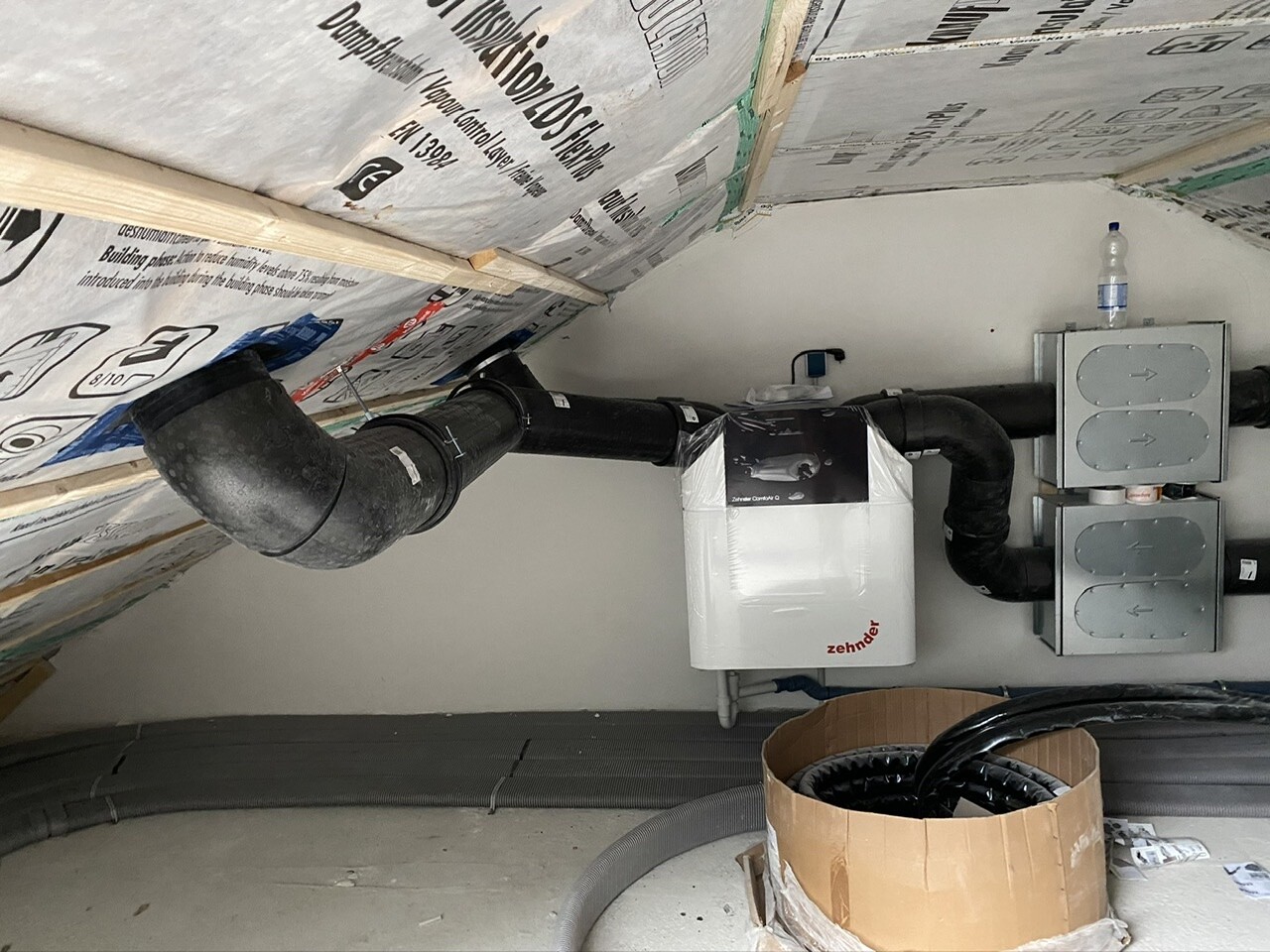
During construction, we decided to insulate the attic after all and, some time later, to install the mechanical ventilation system up there. In hindsight, this was a very good decision because it relieved a lot of space in our utility room and indirectly provided us with a considerable amount of heated storage area. Wouldn’t this be an option for you as well, especially since it might not end up being more expensive than an insulated crawl space?
Similar topics