
ᐅ Insulating the knee wall in the bathroom: Proper planning of EPS boards, condensation, and moisture protection
Created on: 28 Dec 2025 17:35
T
Totti1234T
Totti123428 Dec 2025 17:35Hello everyone,
I have a knee wall in my bathroom built with drywall.
Current setup:
My idea:
Is there a risk of moisture or condensation if warm, humid bathroom air can get into the knee wall?
Is it sufficient to glue the EPS boards tightly edge to edge (without foil) to effectively block air flow, or do I need to install a vapor retarder?
How is this managed with the knee wall door?
The roof slope has both cavity and under-rafter insulation, with an OSB panel on top. I also added insulation and a vapor barrier on the interior side of the exterior wall.
Here are a few pictures to illustrate the situation better, everything should be clearly visible there. 😉
Looking forward to your opinions!
Best regards
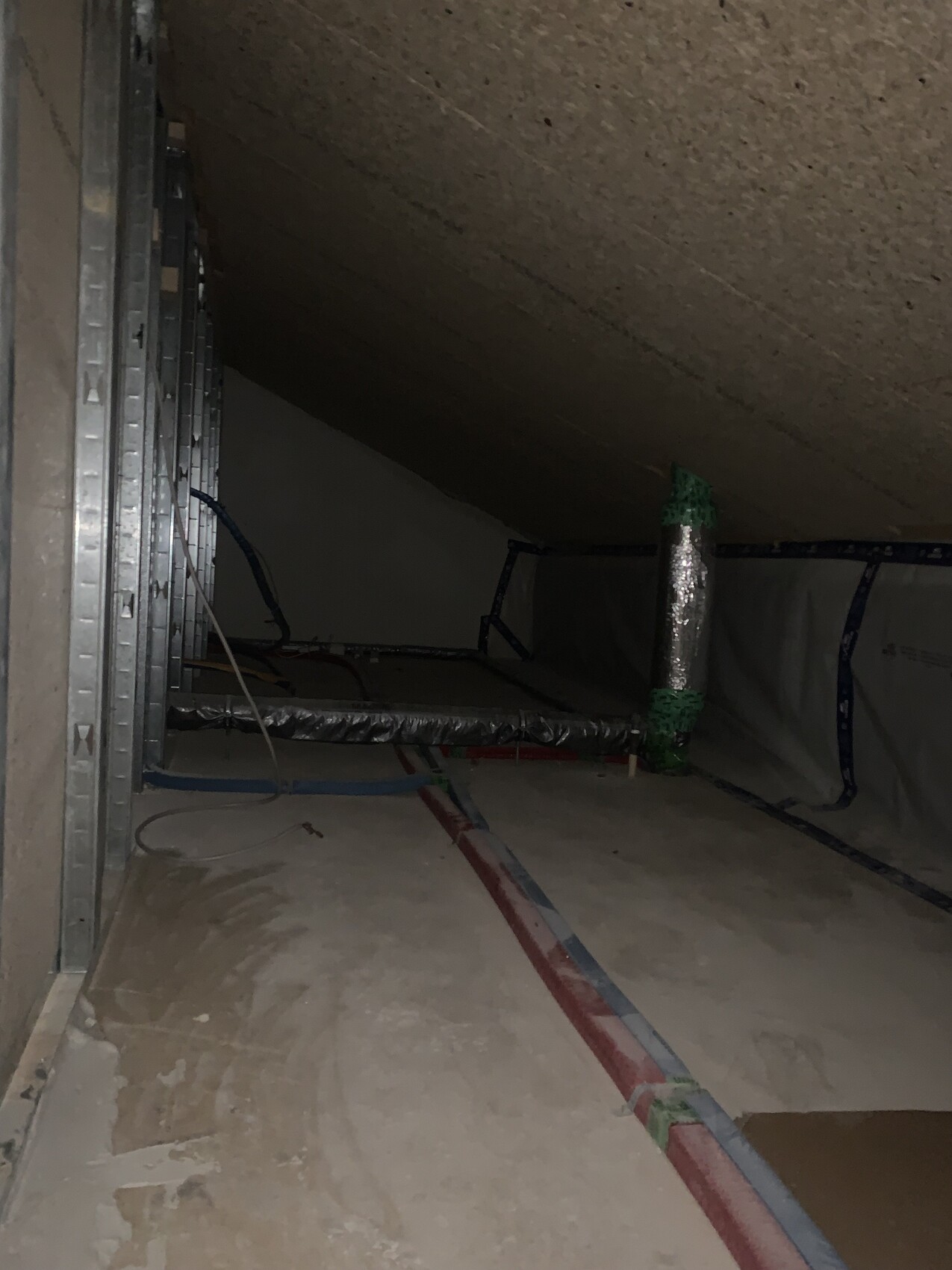
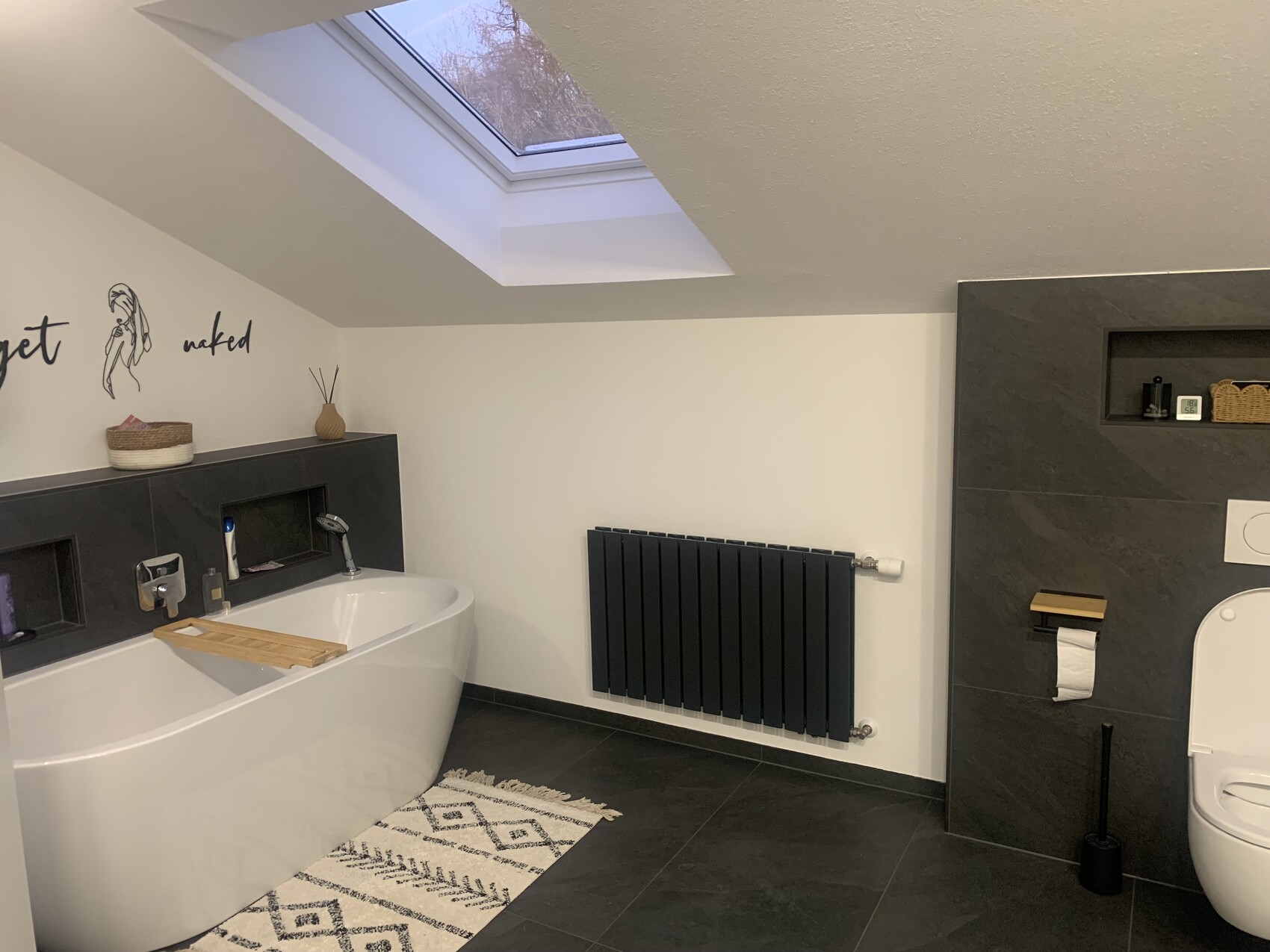
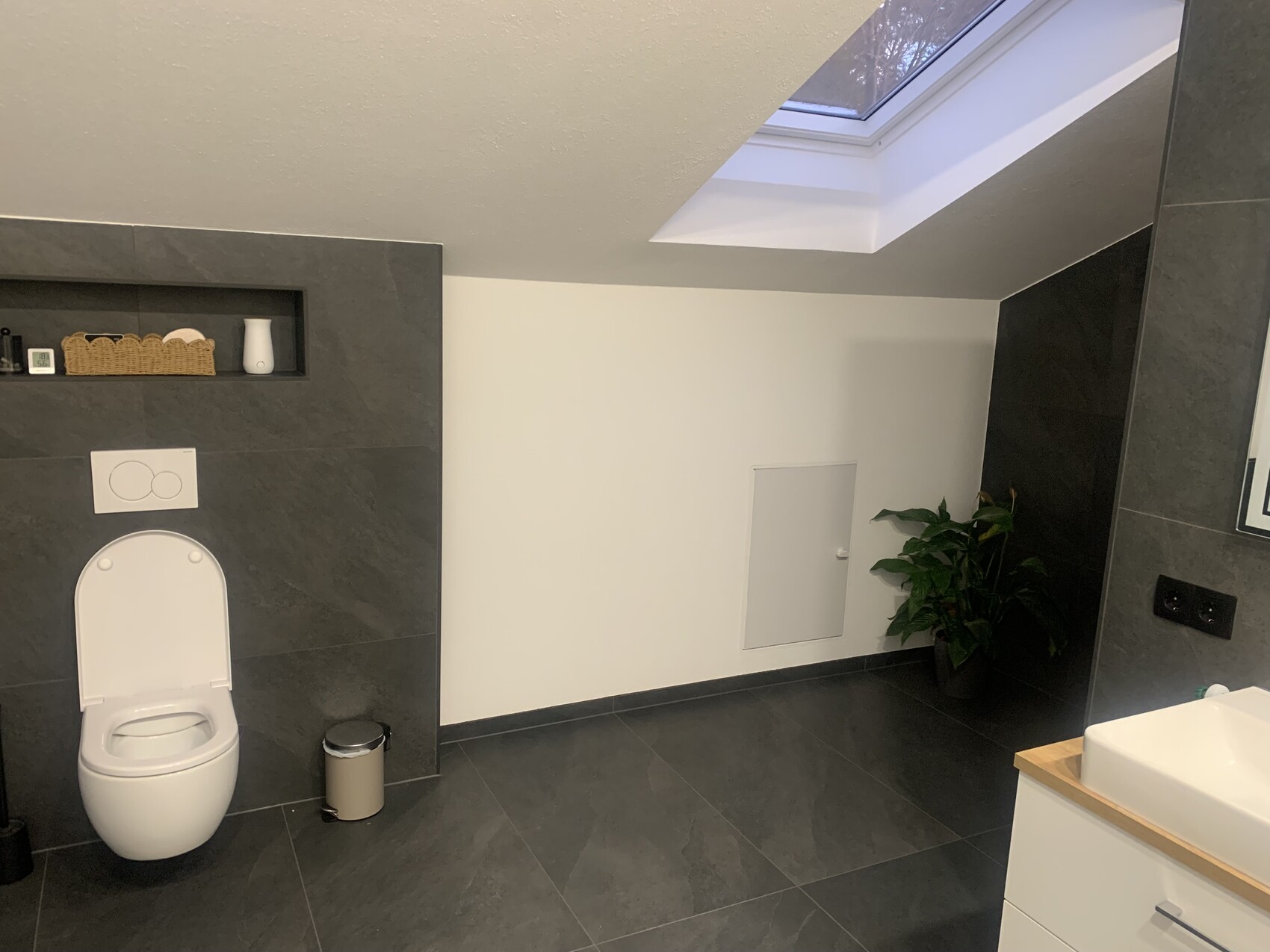
I have a knee wall in my bathroom built with drywall.
Current setup:
- Knee wall approximately 160 cm (63 inches) high and about 150 cm (59 inches) deep up to the exterior wall
- Bathroom side: plasterboard (gypsum board) + oriented strand board (OSB) panels
- Backside (knee wall): open
- Radiator mounted on the OSB inside the bathroom (cannot be relocated)
- Inside the knee wall I measure around 16–17°C (61–63°F), directly behind the radiator on the OSB about 22–23°C (72–73°F)
My idea:
- Cover the entire knee wall from the knee wall side with EPS insulation boards (about 5–10 cm (2–4 inches))
- No foil / vapor barrier
- Goal: reduce heat loss, prevent cold drafts
Is there a risk of moisture or condensation if warm, humid bathroom air can get into the knee wall?
Is it sufficient to glue the EPS boards tightly edge to edge (without foil) to effectively block air flow, or do I need to install a vapor retarder?
How is this managed with the knee wall door?
The roof slope has both cavity and under-rafter insulation, with an OSB panel on top. I also added insulation and a vapor barrier on the interior side of the exterior wall.
Here are a few pictures to illustrate the situation better, everything should be clearly visible there. 😉
Looking forward to your opinions!
Best regards
Hi,
to be specific: if warm, humid bathroom air reaches behind the EPS boards, condensation can form directly on the colder OSB board or between the OSB and EPS. 5–10cm (2–4 inches) of EPS alone does not reliably prevent this because EPS is vapor permeable, and even small air gaps are enough to allow moisture to enter. Clean, tight edge-to-edge bonding reduces airflow but does not replace a vapor retarder. It would be advisable to install the EPS boards with a thin, vapor-retardant membrane or vapor retarder behind them, especially at all edges and corners facing the bathroom. At the knee wall door, make sure the joint is sealed or provide a small vent to avoid trapping moisture. Without a vapor barrier, there is always some risk of mold or material damage, especially over longer periods.
to be specific: if warm, humid bathroom air reaches behind the EPS boards, condensation can form directly on the colder OSB board or between the OSB and EPS. 5–10cm (2–4 inches) of EPS alone does not reliably prevent this because EPS is vapor permeable, and even small air gaps are enough to allow moisture to enter. Clean, tight edge-to-edge bonding reduces airflow but does not replace a vapor retarder. It would be advisable to install the EPS boards with a thin, vapor-retardant membrane or vapor retarder behind them, especially at all edges and corners facing the bathroom. At the knee wall door, make sure the joint is sealed or provide a small vent to avoid trapping moisture. Without a vapor barrier, there is always some risk of mold or material damage, especially over longer periods.
T
Totti123429 Dec 2025 09:57Thanks in advance for the reply!
Does this mean I need to install the EPS panels on the back side of the OSB boards first, and then add the vapor barrier, or is it enough to just tape the joints and apply a membrane at the edge connections?
For the installation, should I use an adhesive that needs mixing, or is standard expanding foam sufficient?
The knee wall door can’t be insulated any further. You probably can’t make it 100% airtight—will that be an issue?
Does this mean I need to install the EPS panels on the back side of the OSB boards first, and then add the vapor barrier, or is it enough to just tape the joints and apply a membrane at the edge connections?
For the installation, should I use an adhesive that needs mixing, or is standard expanding foam sufficient?
The knee wall door can’t be insulated any further. You probably can’t make it 100% airtight—will that be an issue?
T
Totti12341 Jan 2026 18:08Happy New Year everyone! 😎
Does anyone have any ideas or experiences they would like to share?
I would really appreciate it!
Does anyone have any ideas or experiences they would like to share?
I would really appreciate it!
Similar topics