
ᐅ Combining a heat pump heating system with air conditioning?
Created on: 26 Feb 2025 10:15
R
RafaelsenR
Rafaelsen26 Feb 2025 10:15Hello everyone,
Is there a practical way to combine a heat pump heating system with air conditioning in a multi-family building?
Suppose you are constructing a multi-family building for rental purposes and want to install air conditioning.
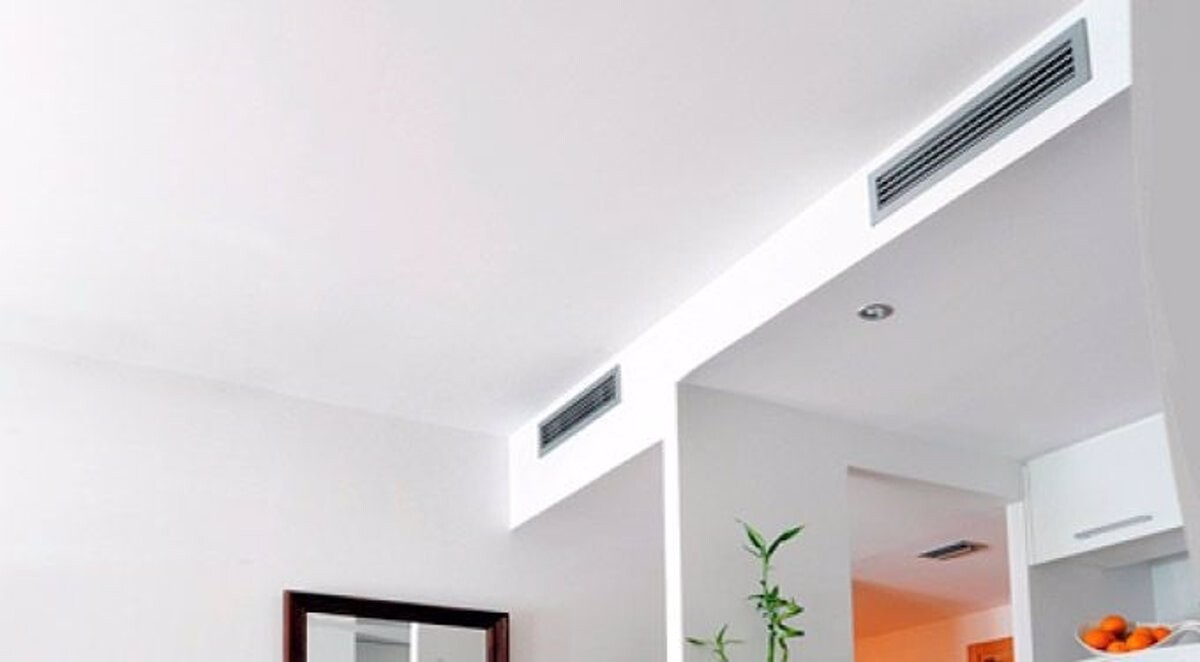
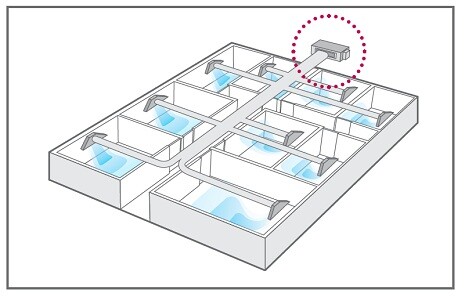
A central air conditioning unit provides both heating and cooling, which can then be distributed to each apartment via ducted units. The ducted unit works as air heating and cooling.
How would the billing work for a central air conditioning/heating system?
Are there cooling/heating meters that can be installed in front of each ducted unit to measure the exact consumption?
This way, you could potentially avoid installing underfloor heating. Domestic hot water can be supplied using an instantaneous water heater, which would simplify billing since each tenant has their own electricity meter.
In a modern, well-insulated building, heating load shouldn’t be an issue. The seasonal performance factor should also be high enough to prevent excessive costs.
Does anyone have a better idea? Am I mistaken in any of my assumptions?
I am open to all suggestions.
Is there a practical way to combine a heat pump heating system with air conditioning in a multi-family building?
Suppose you are constructing a multi-family building for rental purposes and want to install air conditioning.
A central air conditioning unit provides both heating and cooling, which can then be distributed to each apartment via ducted units. The ducted unit works as air heating and cooling.
How would the billing work for a central air conditioning/heating system?
Are there cooling/heating meters that can be installed in front of each ducted unit to measure the exact consumption?
This way, you could potentially avoid installing underfloor heating. Domestic hot water can be supplied using an instantaneous water heater, which would simplify billing since each tenant has their own electricity meter.
In a modern, well-insulated building, heating load shouldn’t be an issue. The seasonal performance factor should also be high enough to prevent excessive costs.
Does anyone have a better idea? Am I mistaken in any of my assumptions?
I am open to all suggestions.
Air is generally not a very efficient heat transfer medium. However, if the building is well insulated, it is worth considering heating with an air conditioning unit. Essentially, these units are just heat pumps.
Before you spend too much time on cost calculations, first consider:
a) Whether the occupants would be comfortable with or accept an air-based heating solution (this is not for everyone)
b) Do they all have similar heating and cooling needs?
If the answer to b) is no, and you are thinking of more than about 2 apartments with 2 climate zones each, then you will likely need a VRF/VRV system. These work perfectly fine, but are priced accordingly...
Before you spend too much time on cost calculations, first consider:
a) Whether the occupants would be comfortable with or accept an air-based heating solution (this is not for everyone)
b) Do they all have similar heating and cooling needs?
If the answer to b) is no, and you are thinking of more than about 2 apartments with 2 climate zones each, then you will likely need a VRF/VRV system. These work perfectly fine, but are priced accordingly...
N
Nice-Nofret26 Feb 2025 11:11We have solar panels on the roof, which power the heat pump for heating in winter and the air conditioners in summer – which I, of course, run during the day to prevent the walls from heating up. At night, I turn off the unit in the bedroom.
N
nordanney26 Feb 2025 11:16The following problems / costs:
- Billing (measuring/counting is almost impossible or unknown to me)
- Hygiene/maintenance
- Enhanced fire protection measures
- Never seen this in practice (I personally manage property developers, etc.)
- Air heating unpopular due to airflow
- Different user behavior is difficult to control – one user needs cooling while another wants heating (during transitional periods, suitable orientation of apartments, for example)
I can’t think of a single reason to combine such a system.
P.S. Is the rent high enough or the location in such demand that installing air conditioning would be worth the effort? In my experience, for high-quality housing, underfloor heating is state of the art, combined with separate air conditioning. I don’t expect a “cheap combo solution” when I’m already paying a lot as a tenant.
- Billing (measuring/counting is almost impossible or unknown to me)
- Hygiene/maintenance
- Enhanced fire protection measures
- Never seen this in practice (I personally manage property developers, etc.)
- Air heating unpopular due to airflow
- Different user behavior is difficult to control – one user needs cooling while another wants heating (during transitional periods, suitable orientation of apartments, for example)
I can’t think of a single reason to combine such a system.
P.S. Is the rent high enough or the location in such demand that installing air conditioning would be worth the effort? In my experience, for high-quality housing, underfloor heating is state of the art, combined with separate air conditioning. I don’t expect a “cheap combo solution” when I’m already paying a lot as a tenant.
R
Rafaelsen27 Feb 2025 08:55Hello everyone,
thanks for the input.
I will give it some thought.
Underfloor heating plus split air conditioning units is probably simpler.
Best regards
thanks for the input.
I will give it some thought.
Underfloor heating plus split air conditioning units is probably simpler.
Best regards
Similar topics