
Hello everyone,
we are planning to install a metal garden shed from a well-known Austrian brand in our garden. While researching the assembly and foundation, I also came across the topic of insulation. We do not intend to spend a lot of time inside or use it as a living space, but many sources online say that insulating the garden shed helps protect it against moisture and thus prevents mold.
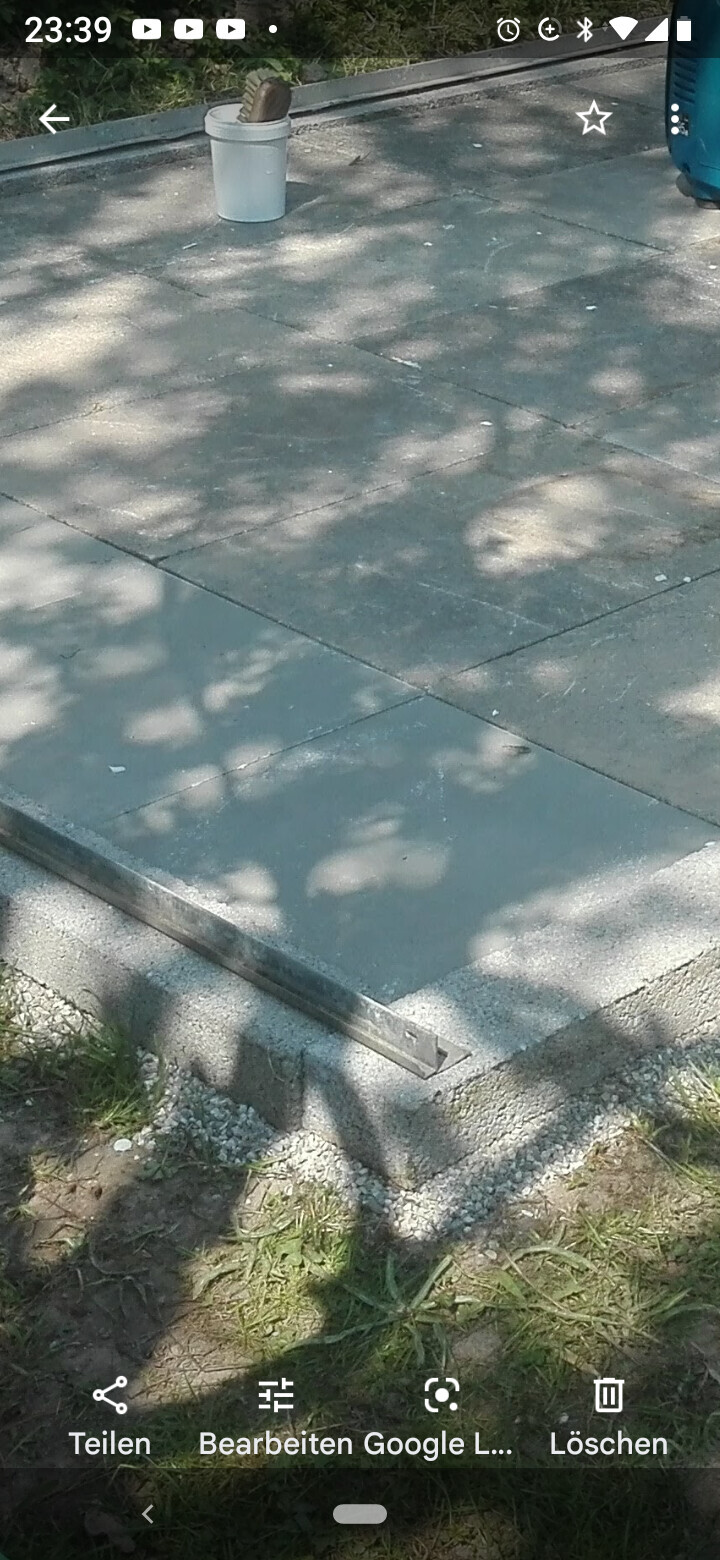
Originally, the plan was to create a "foundation" using concrete paving slabs measuring 50x50x5cm (with gravel underneath) and simply place the shed on top. However, the manufacturer suggests adding an extra frame (4x4cm) underneath the shed, then laying 2-3cm thick XPS panels on it, and finally installing the interior floor on top of those. Why exactly 2-3cm? 4cm would also fit. But anyway.
What I have learned so far is that most of the cold comes from below. My main question now is whether these 2, 3, or 4cm thick XPS panels really make a difference or if it’s a waste of effort. I guess it’s definitely better than nothing, but will it really improve anything? The easiest option would be if the insulation is not necessary at all, but if insulating now helps avoid problems later, I’m willing to take the effort. What will definitely be included in the foundation is a vapor barrier to prevent rising moisture.
Regarding insulation, it should also be noted that the roof comes factory-prepared to easily install 3cm thick XPS panels later on. This can also be done quite easily afterward. I suspect this only makes sense if the floor is insulated as well.
we are planning to install a metal garden shed from a well-known Austrian brand in our garden. While researching the assembly and foundation, I also came across the topic of insulation. We do not intend to spend a lot of time inside or use it as a living space, but many sources online say that insulating the garden shed helps protect it against moisture and thus prevents mold.
Originally, the plan was to create a "foundation" using concrete paving slabs measuring 50x50x5cm (with gravel underneath) and simply place the shed on top. However, the manufacturer suggests adding an extra frame (4x4cm) underneath the shed, then laying 2-3cm thick XPS panels on it, and finally installing the interior floor on top of those. Why exactly 2-3cm? 4cm would also fit. But anyway.
What I have learned so far is that most of the cold comes from below. My main question now is whether these 2, 3, or 4cm thick XPS panels really make a difference or if it’s a waste of effort. I guess it’s definitely better than nothing, but will it really improve anything? The easiest option would be if the insulation is not necessary at all, but if insulating now helps avoid problems later, I’m willing to take the effort. What will definitely be included in the foundation is a vapor barrier to prevent rising moisture.
Regarding insulation, it should also be noted that the roof comes factory-prepared to easily install 3cm thick XPS panels later on. This can also be done quite easily afterward. I suspect this only makes sense if the floor is insulated as well.
H
Haussuche8518 Feb 2022 23:28We anchored the bio... onto concrete lintels using dowels, which only cost a few euros. I believe the dimensions were 11.5/7/100 cm (4.5/2.75/39 inches), and we cut them to size accordingly. It worked perfectly. The location was very well sheltered from the wind, so we didn’t embed the lintels in concrete. The garden shed itself is already quite heavy. There was no frame included, and it was too expensive anyway; we bought it second-hand. Inside, we leveled the ground with gravel and laid concrete paving slabs.
We didn’t insulate it, only protected fuel, oil, and possibly liquid fertilizer in the winter with bubble wrap.
Mold usually develops due to poor ventilation, right? What happens if you insulate and moisture gets trapped between the insulation and the metal?
We didn’t insulate it, only protected fuel, oil, and possibly liquid fertilizer in the winter with bubble wrap.
Mold usually develops due to poor ventilation, right? What happens if you insulate and moisture gets trapped between the insulation and the metal?
H
Haussuche8518 Feb 2022 23:43I have a little picture, hope you can picture it. Had to cut it quite a bit because of the kids. We’re not professionals, it probably looks funny, but it worked great and we were able to get the lawn mower in at ground level.
Thanks for the feedback and the picture. I had to look up “concrete lintel” first 😀 but they are relatively light… a 50x50x5 cm (20x20x2 inch) concrete paving slab weighs more. But that doesn’t really matter for now.
Regarding mold, from my basic research, it’s more complicated than just ventilation alone. As I understand it, insulating the floor raises the temperature inside the garden shed slightly, which helps reduce mold issues. For me, the question is whether these 3-4 cm (1-1.5 inch) thick XPS boards actually make a significant difference. I really can’t judge that.
The shed seems to be ventilated through small vents… how effective the ventilation is, I don’t know. If problems arise, maybe additional ventilation holes or slots could be drilled later on?
The walls can’t be insulated anyway, and the roof appears to be designed so that there is some air circulation between the XPS boards and the metal roof, hopefully preventing condensation buildup between the insulation and the metal. But does it actually work?
Regarding mold, from my basic research, it’s more complicated than just ventilation alone. As I understand it, insulating the floor raises the temperature inside the garden shed slightly, which helps reduce mold issues. For me, the question is whether these 3-4 cm (1-1.5 inch) thick XPS boards actually make a significant difference. I really can’t judge that.
The shed seems to be ventilated through small vents… how effective the ventilation is, I don’t know. If problems arise, maybe additional ventilation holes or slots could be drilled later on?
The walls can’t be insulated anyway, and the roof appears to be designed so that there is some air circulation between the XPS boards and the metal roof, hopefully preventing condensation buildup between the insulation and the metal. But does it actually work?
 HausiKlausi19 Feb 2022 01:06
Mold is influenced not only by temperature but also by humidity (dew point). A garden shed that is not occupied and where the indoor temperature usually matches the outdoor temperature, with relative humidity also barely differing from outside, will not have mold issues if it is properly constructed. Insulating only the floor makes no sense if the walls are not insulated. Therefore, unless you plan to use the space as a sauna, live in it during winter, or set up a hemp plantation, I wouldn’t worry about it.
May I ask what exactly you mean by proper assembly? I think there isn’t much that can go wrong with a small house like this... especially since it comes with very clear instructions. The only "problem" will probably be the sealing between the base frame (on which the walls rest) and the concrete paving slabs—particularly at the joints between the slabs.
Similar topics