
ᐅ Is it practical or necessary to have heating installed in the basement?
Created on: 25 Oct 2016 14:37
S
skybiker2000
Hello everyone,
we are currently planning our house (timber frame construction, KfW 50 or KfW 40 standard) and I am considering whether to include heating in the basement after all.
Here is our basement plan and the wall construction.
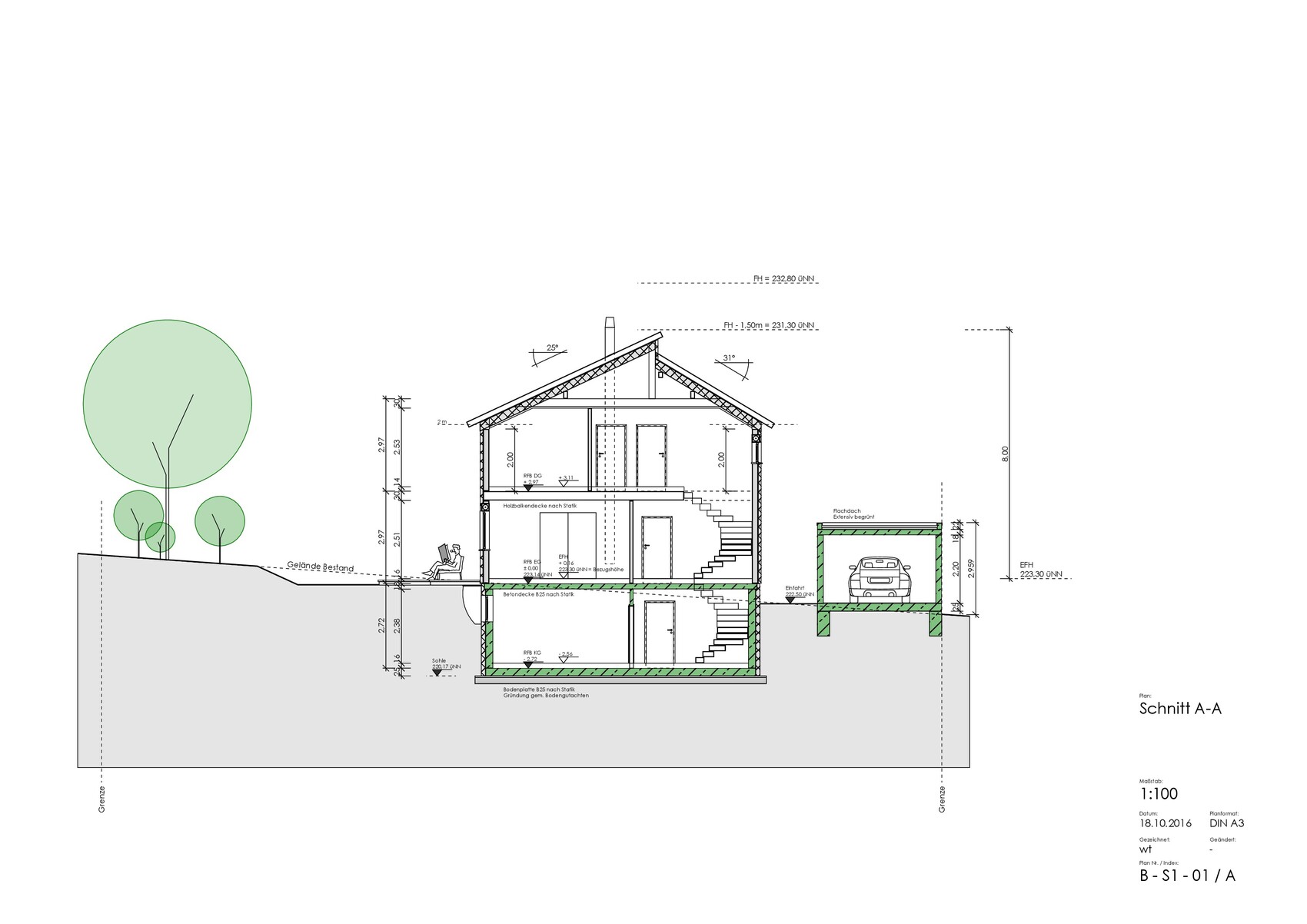
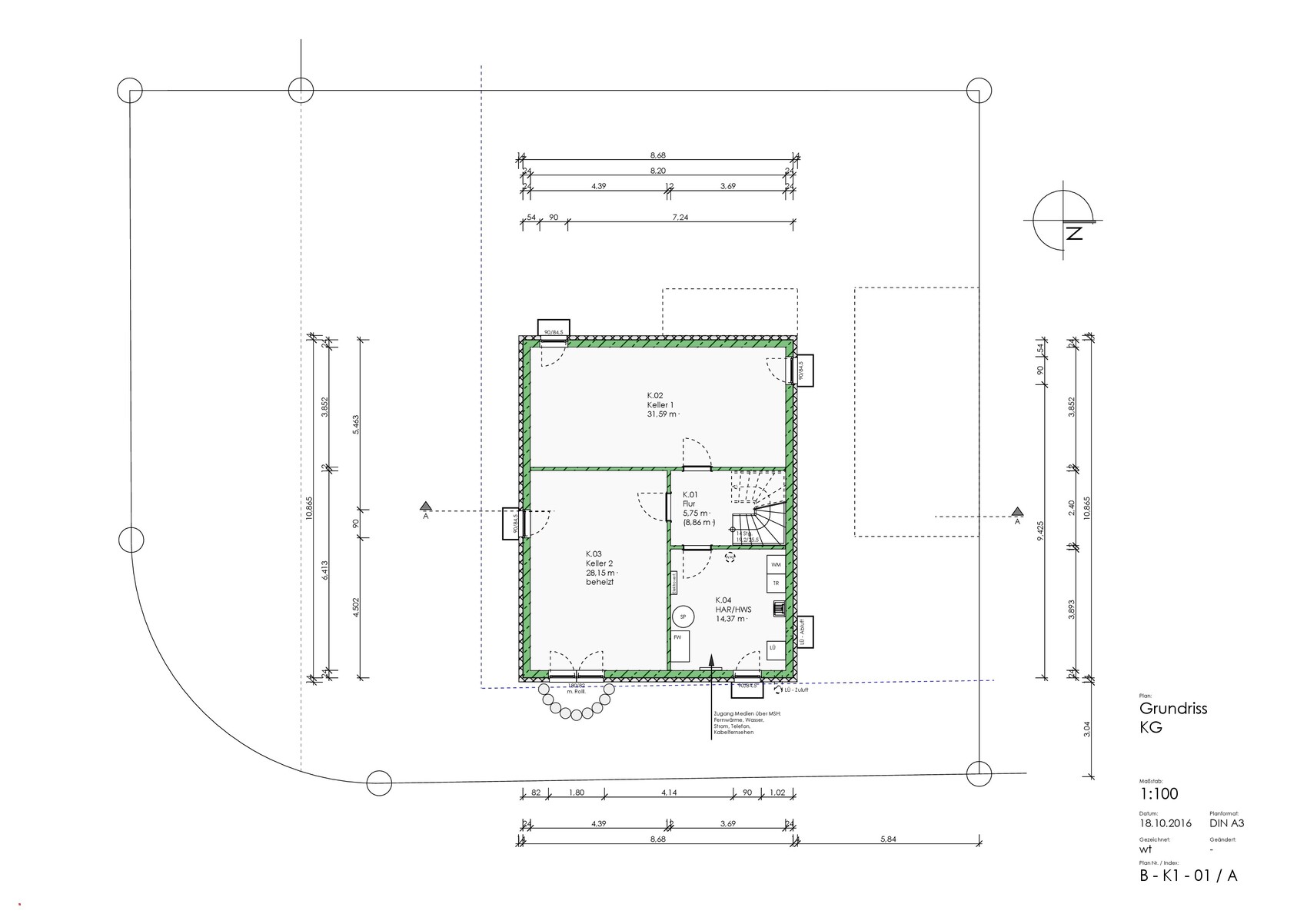
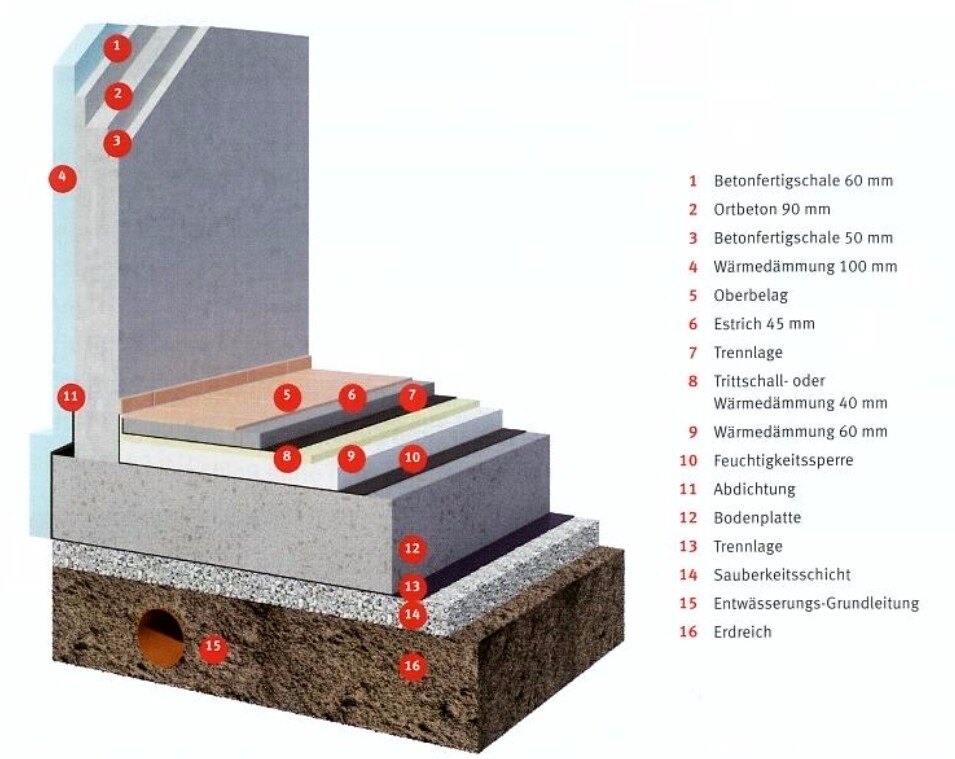
The perimeter insulation is 14 cm (5.5 inches) thick. The slab is concrete class C 25/30 and 20 cm (8 inches) thick. The exterior walls consist of two-layer precast concrete elements (class C 25/30) with the appropriate reinforcement.
At the moment, two heating options are being considered:
Option 1: district heating + underfloor heating on ground floor and first floor
Option 2: air-to-water heat pump + underfloor heating on ground floor and first floor
I would like to use room K.03 (Basement 2) as an office when I work from home.
Is it advisable to install underfloor heating in the basement as well, or are there alternatives for the heat sources mentioned above? Also, does it make sense to extend the mechanical ventilation with heat recovery to the basement?
Thank you very much for your feedback and answers!
Best regards
Björn
we are currently planning our house (timber frame construction, KfW 50 or KfW 40 standard) and I am considering whether to include heating in the basement after all.
Here is our basement plan and the wall construction.
The perimeter insulation is 14 cm (5.5 inches) thick. The slab is concrete class C 25/30 and 20 cm (8 inches) thick. The exterior walls consist of two-layer precast concrete elements (class C 25/30) with the appropriate reinforcement.
At the moment, two heating options are being considered:
Option 1: district heating + underfloor heating on ground floor and first floor
Option 2: air-to-water heat pump + underfloor heating on ground floor and first floor
I would like to use room K.03 (Basement 2) as an office when I work from home.
Is it advisable to install underfloor heating in the basement as well, or are there alternatives for the heat sources mentioned above? Also, does it make sense to extend the mechanical ventilation with heat recovery to the basement?
Thank you very much for your feedback and answers!
Best regards
Björn
J
Johannes230712 Apr 2024 11:56Sorry to bring up an old topic, but we are facing a similar issue:
We are currently building a new house with a relatively large basement. One area will be dedicated solely to technical equipment, storage, tools, etc. The other rooms are intended for more "living" purposes (laundry room, fitness room, restroom, playroom for children, etc.). Our architect has advised us to install underfloor heating in the basement as well (at least in the living areas), similar to the ground floor and upper floor. Heating will be provided by an air-to-water heat pump.
Now I am wondering to what extent the basement will need to be heated continuously later on (possibly unnecessarily), or if it is possible and practical to heat it only when needed and occupied using a room-based heating controller (RBC). The problem with underfloor heating is that it is quite slow and cannot quickly heat a room. The alternative would be to heat the basement continuously, regardless of whether the rooms are in use on a given day or not, which would likely be neither environmentally sensible nor cost-effective.
I would appreciate any experiences or advice on this matter.
We are currently building a new house with a relatively large basement. One area will be dedicated solely to technical equipment, storage, tools, etc. The other rooms are intended for more "living" purposes (laundry room, fitness room, restroom, playroom for children, etc.). Our architect has advised us to install underfloor heating in the basement as well (at least in the living areas), similar to the ground floor and upper floor. Heating will be provided by an air-to-water heat pump.
Now I am wondering to what extent the basement will need to be heated continuously later on (possibly unnecessarily), or if it is possible and practical to heat it only when needed and occupied using a room-based heating controller (RBC). The problem with underfloor heating is that it is quite slow and cannot quickly heat a room. The alternative would be to heat the basement continuously, regardless of whether the rooms are in use on a given day or not, which would likely be neither environmentally sensible nor cost-effective.
I would appreciate any experiences or advice on this matter.
Basement inside or outside the thermal envelope? I will assume it is inside. In that case, the basement should be heated because if you don't, your ground floor will end up heating your basement. This can lead to a higher required supply temperature. You don't have to heat your basement to living room temperature.
If the basement is within the thermal envelope, it makes sense to install underfloor heating throughout. Except for perhaps a few small areas, in my opinion, there is no reason not to cover the entire floor surface.
If your planning is not yet too advanced, you might consider using concrete core activation for the basement slab, or embedding the underfloor heating directly in the slab (also known as a “Swedish slab”). With proper execution, this could potentially be almost cost-neutral, with the advantage that you can utilize the thermal mass of the slab for both heating and – possibly even more interesting – cooling.
If your planning is not yet too advanced, you might consider using concrete core activation for the basement slab, or embedding the underfloor heating directly in the slab (also known as a “Swedish slab”). With proper execution, this could potentially be almost cost-neutral, with the advantage that you can utilize the thermal mass of the slab for both heating and – possibly even more interesting – cooling.
J
Johannes230712 Apr 2024 14:25Thank you for your feedback. Exactly, the basement is located within the thermal envelope. I was not familiar with the Swedish slab and unfortunately it’s already too late to consider it. So we will probably stick to installing underfloor heating everywhere except in one area, and then maintain a constant base temperature.
Similar topics