
Hello,
we are planning to build a single-family house in Bavaria, and due to groundwater pressure in the soil, the fully waterproofed concrete basement will be quite expensive. The general contractor said, "the basement costs more than the above-ground living space." Is it really possible that increasing the size of the above-ground house by nearly the same usable area that is lost by omitting the basement results in cost savings? In other words, is a 150 m² (1,615 sq ft) house with an expensive waterproof concrete basement more costly than a house without a basement but with 150 m² (1,615 sq ft) of living space plus 50-70 m² (540-750 sq ft) of utility rooms (the latter with cheaper flooring, etc.)? The general contractor only had a few rough rules of thumb, which obviously didn’t apply well in this case, and did not provide any actual cost calculations. Strangely, he also refused to calculate both options side by side, saying it would be too time-consuming.
Does anyone here have real experience with this? It would be very helpful, thanks in advance!
Best regards
we are planning to build a single-family house in Bavaria, and due to groundwater pressure in the soil, the fully waterproofed concrete basement will be quite expensive. The general contractor said, "the basement costs more than the above-ground living space." Is it really possible that increasing the size of the above-ground house by nearly the same usable area that is lost by omitting the basement results in cost savings? In other words, is a 150 m² (1,615 sq ft) house with an expensive waterproof concrete basement more costly than a house without a basement but with 150 m² (1,615 sq ft) of living space plus 50-70 m² (540-750 sq ft) of utility rooms (the latter with cheaper flooring, etc.)? The general contractor only had a few rough rules of thumb, which obviously didn’t apply well in this case, and did not provide any actual cost calculations. Strangely, he also refused to calculate both options side by side, saying it would be too time-consuming.
Does anyone here have real experience with this? It would be very helpful, thanks in advance!
Best regards
In our house, you can throw laundry down the chute either from the main bathroom on the upper floor or from the children’s bathroom on the ground floor. It really depends on the floor plan; many houses have the laundry chute opening simply in the hallway.
Laundry is thrown in without sorting. I sort everything in the basement myself by colors, etc., since the kids usually don’t do that properly anyway (depending on their age).
Laundry is thrown in without sorting. I sort everything in the basement myself by colors, etc., since the kids usually don’t do that properly anyway (depending on their age).
D
Davidoff8623 Jan 2020 16:41Hello,
I'm starting to explore this topic and would like to share my planning dilemma:
We have a flat building plot of 225 m2 (2,422 ft2), on which we are supposed to build a single-family house according to the development plan. The house consists of a ground floor, upper floor, and a recessed top floor (this is required by the development plan) and has a maximum gross building footprint of 9x9 meters (30x30 feet). We expect a living area of at least 150-160 m2 (1,615-1,722 ft2).
Now the question arises whether to build with or without a basement.
Arguments in favor:
Arguments against:
And so on...
I know there are several, partly inconsistent (what-if) factors involved. Nevertheless, I would greatly appreciate concrete and objective advice.
For better understanding, I am attaching the development plan.
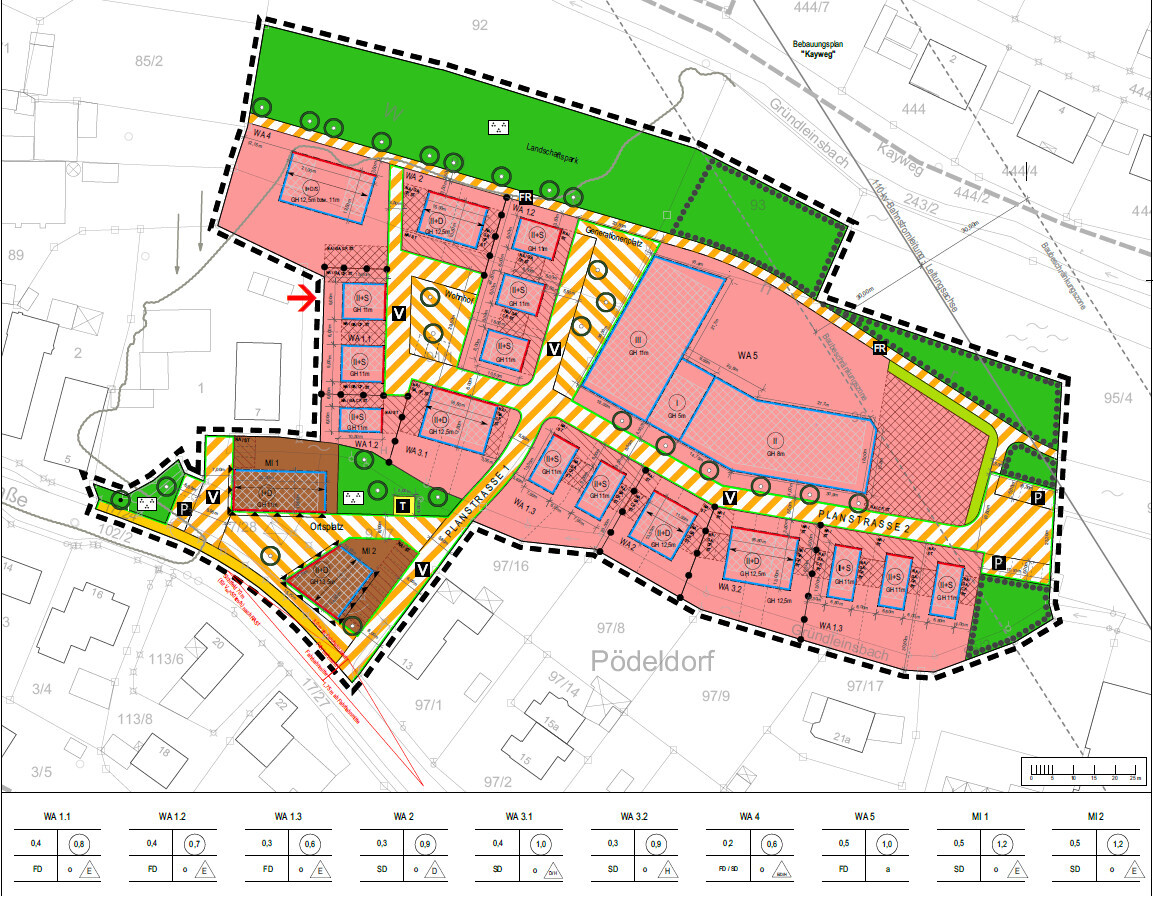
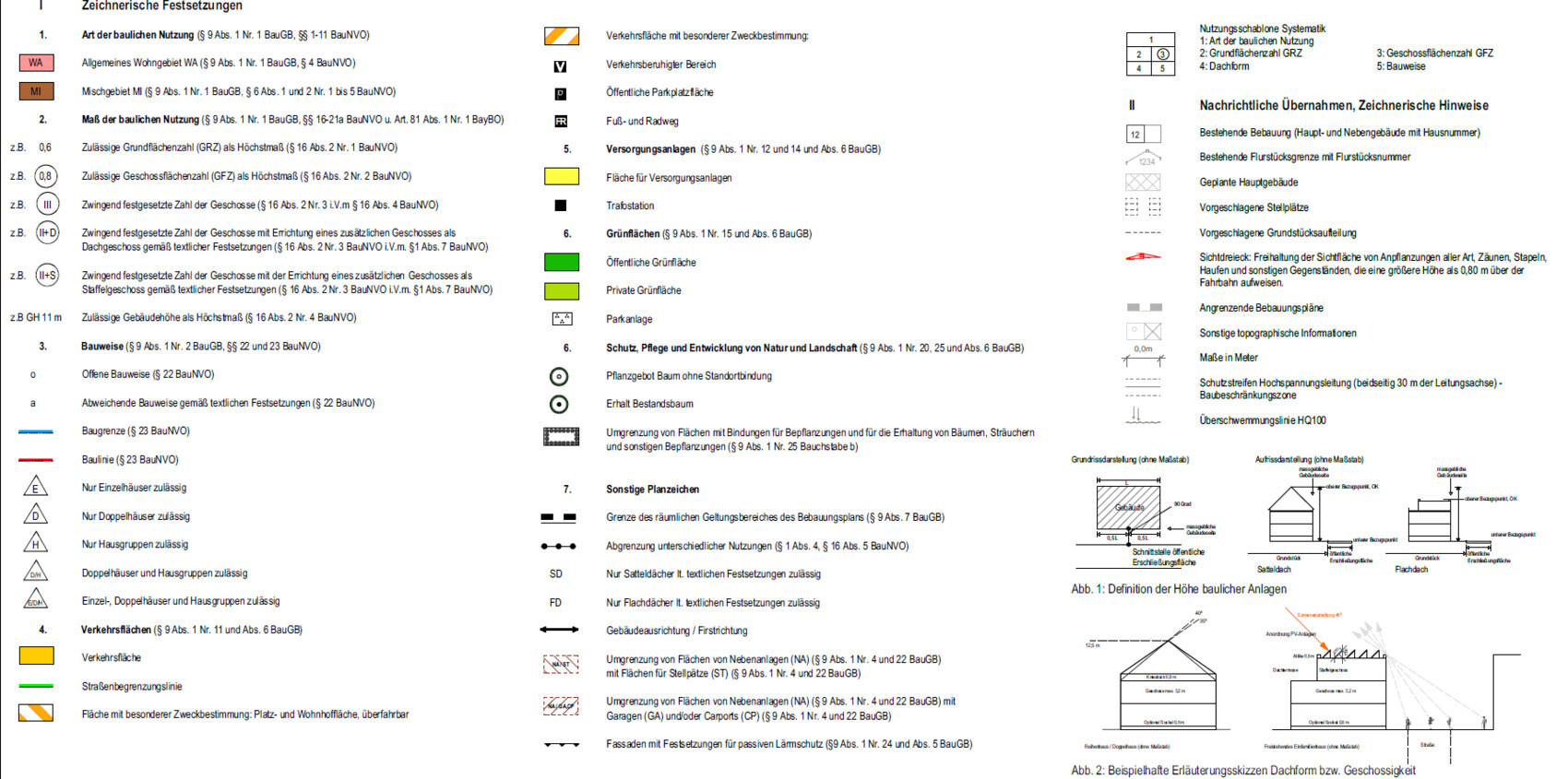
I'm starting to explore this topic and would like to share my planning dilemma:
We have a flat building plot of 225 m2 (2,422 ft2), on which we are supposed to build a single-family house according to the development plan. The house consists of a ground floor, upper floor, and a recessed top floor (this is required by the development plan) and has a maximum gross building footprint of 9x9 meters (30x30 feet). We expect a living area of at least 150-160 m2 (1,615-1,722 ft2).
Now the question arises whether to build with or without a basement.
Arguments in favor:
- A basement obviously offers a lot of space, for example for building services, laundry, storage, etc.
- Without a basement, we definitely need a utility room on the ground floor. Although we could manage this within the 9x9 meter (30x30 feet) dimensions, we would prefer to use that space differently (for example, my wife is a teacher and needs a home office);
- We plan to build a 10x3 meter (33x10 feet) garage with an additional room, but this extra room will only be about 4x3 meters (13x10 feet). Unfortunately, we have no more space for, say, a garden shed or similar;
- We currently have one child but plan for at least a second or even third child. Despite that, space might become tight;
- Higher value of the house.
Arguments against:
- Due to the high groundwater level, the basement must be built as a "white tank" (watertight concrete structure), which means:
- High costs, I estimate at least €60,000-70,000 (utility basement, with no or very few windows);
- Despite the white tank construction, I am still concerned about moisture, for example if the basement is constructed improperly. A house with a damp basement is worth less than one without;
- The question of more children is, of course, uncertain. What if more children don’t come? Then we would have a very large house with little practical use.
And so on...
I know there are several, partly inconsistent (what-if) factors involved. Nevertheless, I would greatly appreciate concrete and objective advice.
For better understanding, I am attaching the development plan.
D
Davidoff8623 Jan 2020 19:34Thank you, I don’t expect that either. I am rather hoping to hear from other homeowners who may have been or are in a similar situation (small building lot, strict regulations, soil conditions, etc.) and how they resolved it.
However, I realize that I probably asked the question incorrectly.
However, I realize that I probably asked the question incorrectly.
Similar topics