
Hello everyone,
we want to build a wall using these "Lego concrete blocks." 40cm (16 inches) thick, 2 blocks each 80cm (31.5 inches) high, and about 25m (82 feet) long in total.
I think you know which blocks I mean. Linking is not allowed in the forum, and I am respecting that.
Currently, the base is a gravel layer that was compacted three years ago when construction took place there. Opinions differ somewhat regarding the base:
- Re-compact the soil, level/grade with gravel, and place the concrete blocks directly on top.
- Excavate (how deep?) and pour a lean concrete footing, then place the concrete blocks on top.
- Re-compact the soil, pour a lean concrete footing (is 13cm (5 inches) enough?), and place the concrete blocks on top.
What would you do or recommend? Is reinforcement necessary? I was thinking of making the footing slightly wider than 40cm (16 inches), or does it not matter if it is exactly as wide as the wall thickness?
Best regards,
kanuddel
we want to build a wall using these "Lego concrete blocks." 40cm (16 inches) thick, 2 blocks each 80cm (31.5 inches) high, and about 25m (82 feet) long in total.
I think you know which blocks I mean. Linking is not allowed in the forum, and I am respecting that.
Currently, the base is a gravel layer that was compacted three years ago when construction took place there. Opinions differ somewhat regarding the base:
- Re-compact the soil, level/grade with gravel, and place the concrete blocks directly on top.
- Excavate (how deep?) and pour a lean concrete footing, then place the concrete blocks on top.
- Re-compact the soil, pour a lean concrete footing (is 13cm (5 inches) enough?), and place the concrete blocks on top.
What would you do or recommend? Is reinforcement necessary? I was thinking of making the footing slightly wider than 40cm (16 inches), or does it not matter if it is exactly as wide as the wall thickness?
Best regards,
kanuddel
H
hanghaus200022 Jun 2021 08:05A 3-4 m (10-13 feet) change in terrain elevation suggests a hillside property. Has the house already been planned or even built?
Yes, the plot is on a slope, and the slope rises upwards. We have already built a hall into this slope, and currently, there is a 45-degree incline up to the natural ground level. Our future garden will be located at the top of the slope.
The house is planned and will be built soon. However, the house will not be built where this wall is intended, nor on the slope itself. So, this does not affect the overall situation. The ground floor will be partially embedded in the slope at the rear.
The retaining blocks have specific load-bearing capacities: the 40cm (16 inch) block can retain 1.20m (4 feet) of soil with a 15% incline above it. A 60cm (24 inch) wide block can retain 1.80m (6 feet), and an 80cm (32 inch) wide block can hold back 2.5m (8 feet) with a slope. Therefore, we will need a thicker block. The 60cm (24 inch) block also weighs 2 tons each. According to structural calculations, these blocks are simply placed on a stable 032 crushed stone base and compacted firmly with a layer of gravel or lean concrete to ensure an even surface.
The house is planned and will be built soon. However, the house will not be built where this wall is intended, nor on the slope itself. So, this does not affect the overall situation. The ground floor will be partially embedded in the slope at the rear.
The retaining blocks have specific load-bearing capacities: the 40cm (16 inch) block can retain 1.20m (4 feet) of soil with a 15% incline above it. A 60cm (24 inch) wide block can retain 1.80m (6 feet), and an 80cm (32 inch) wide block can hold back 2.5m (8 feet) with a slope. Therefore, we will need a thicker block. The 60cm (24 inch) block also weighs 2 tons each. According to structural calculations, these blocks are simply placed on a stable 032 crushed stone base and compacted firmly with a layer of gravel or lean concrete to ensure an even surface.
H
hampshire22 Jun 2021 11:52What you are building is not a small wall. Drainage and frost-free foundation are important. Whether a full footing is necessary is something I would question. There can certainly be some movement – so if it needs to stay perfectly straight, the effort will be correspondingly greater. The soil mass becomes a problem when it is fully saturated with water.
H
hanghaus200022 Jun 2021 13:55kanuddel schrieb:
Yes, it is a sloped plot, with the slope going upward. We have already built a hall into this slope, and currently there is a 45-degree slope up to the natural terrain level. Our future garden will be located at the top of the slope.
The house is designed and will be built soon. However, it will not be constructed where this retaining wall is planned, nor directly on the slope. So this does not affect the house. The ground floor will also be partially embedded into the slope at the back.
The blocks have structural specifications: the 40cm (16 inches) block can support 1.20m (3.9 feet) height with a 15% slope above. With a width of 60cm (24 inches), it can hold 1.80m (5.9 feet), and with a width of 80cm (31 inches), it can support 2.5m (8.2 feet) including the slope. We will need a thicker block anyway. The 60cm (24 inches) block weighs about 2 tons each. According to structural engineering, they are simply placed on 032 concrete and compacted firmly with a layer of gravel or lean concrete for leveling. I am not asking about the impact on the retaining wall but about the overall planning. How steep is the slope where the house will stand? Standard home designers often plan by leveling the entire plot, which often leads to expensive surprises. It is rare that the design is adapted to the natural slope.
You will also need a much gentler slope on top. The Lego-style solution is probably not the best idea.
Yes, the house will be partially built into the ground, just like the hall was a few years ago. From the southwest side, the lower floor is almost not visible. Our garden will be on two levels, with the first level aligned with the upper floor and the second level slightly higher. We plan to dispose of the excavation material as much as possible behind the wall.
I have also attached an old photo from the hall construction showing the current slope. I have marked the planned wall and the new terrain profile. The house will practically stand where the photo was taken. Approximately there, in the upper floor, you will later be standing in our dining room.
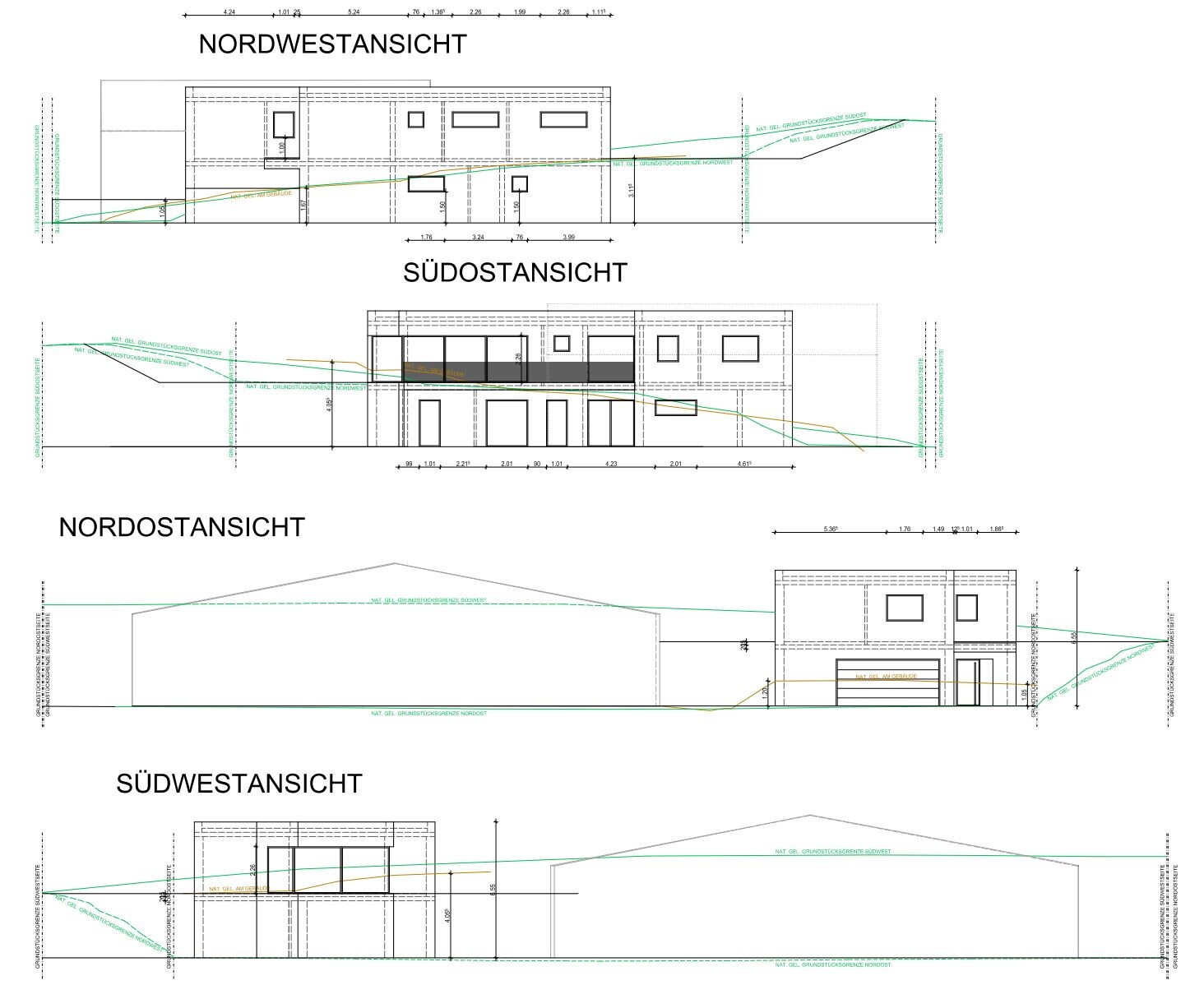
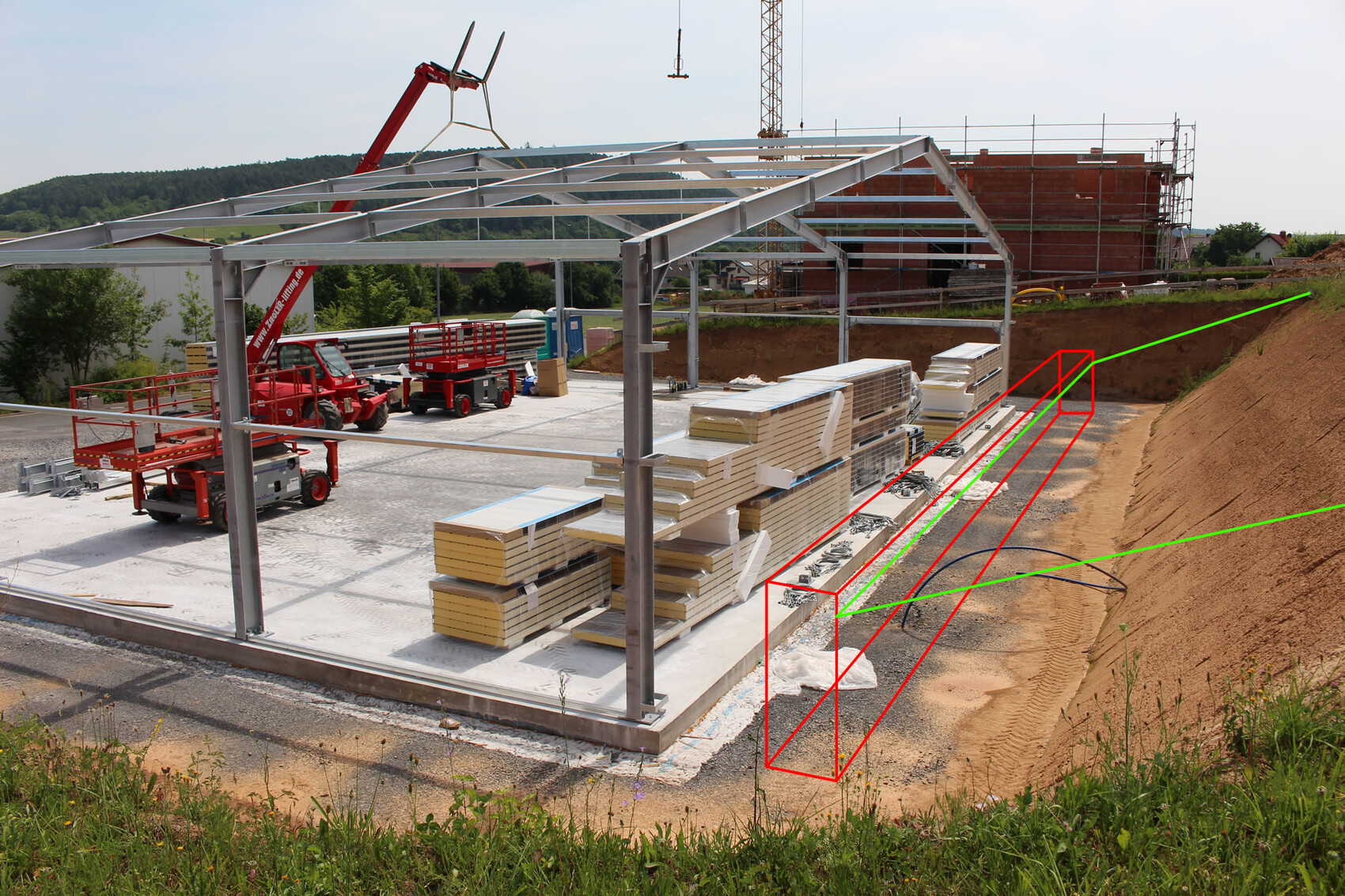
I have also attached an old photo from the hall construction showing the current slope. I have marked the planned wall and the new terrain profile. The house will practically stand where the photo was taken. Approximately there, in the upper floor, you will later be standing in our dining room.
H
hanghaus200022 Jun 2021 15:18As the retaining wall is drawn in the photo, it could work. Why not use L-shaped blocks?
Overall, the house is well designed with the slope.
Overall, the house is well designed with the slope.
Similar topics