
ᐅ Irrigation – Detailed Planning and Fundamental Considerations
Created on: 23 Apr 2020 17:14
O
opalau
After completing the house construction, moving in, and with summer approaching, we are increasingly focusing on the garden. Since we currently have a barren plot, I will plan the irrigation system as soon as possible to start by digging the trenches.
A few months ago, I thought I was clever by having a well drilled. Unfortunately, I failed to research further and was only pleased with the low price of the driven well. Now I am beginning to suspect that this might not have been such a smart decision.
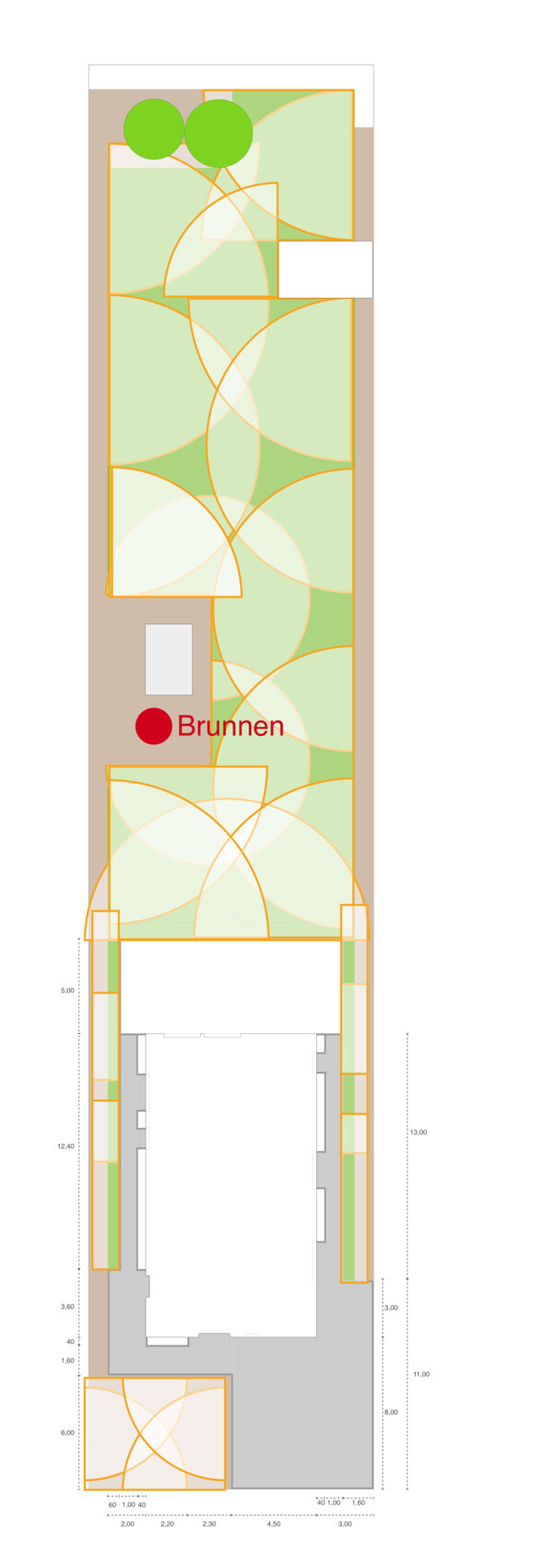
Once these basic questions are clarified, I would like to focus on detailed planning. I have already attached a first version. Our plot is relatively narrow and long—about 15 by 75 meters (50 by 246 feet)—but so far it does not seem to pose a major problem.
A few months ago, I thought I was clever by having a well drilled. Unfortunately, I failed to research further and was only pleased with the low price of the driven well. Now I am beginning to suspect that this might not have been such a smart decision.
- Apparently, you should not extract more than about 900 liters per hour (~240 gallons per hour) from a driven well to minimize the risk of incrustation. This is bad news for the number of sprinkler heads. I should have done better research beforehand…
- Yesterday, I made a first attempt by connecting the suction pump (Grundfos JP5), which the well driller "included." Using the “bucket method” and a pressure gauge set to 3.5 bar (2.8 bar for Hunter rotators plus 0.7 bar system loss), only a trickle comes out. (Without back pressure, my pump provides about 1800 liters per hour (~475 gallons per hour), with the valve closed about 3.9 bar is registered.) When I mentioned this to the well driller, he did not understand the problem and said that with 1800 liters per hour I could flood my property within a few hours. Am I misunderstanding the method?
- Assuming the situation is as poor as feared, what could be a possible solution? Getting a buffer tank (1000–2000 liters [260–530 gallons]), letting the suction pump keep it full, and then using a submersible pump in the tank to supply the irrigation system? Any other ideas?
Once these basic questions are clarified, I would like to focus on detailed planning. I have already attached a first version. Our plot is relatively narrow and long—about 15 by 75 meters (50 by 246 feet)—but so far it does not seem to pose a major problem.
In the end, both options are possible. However, I believe that in either case, the plants should be selected to provide the greatest possible benefit to wildlife and insects. Especially the highly insect-friendly flowering plants are particularly colorful and even require much less water than others that offer a lower ecological benefit.

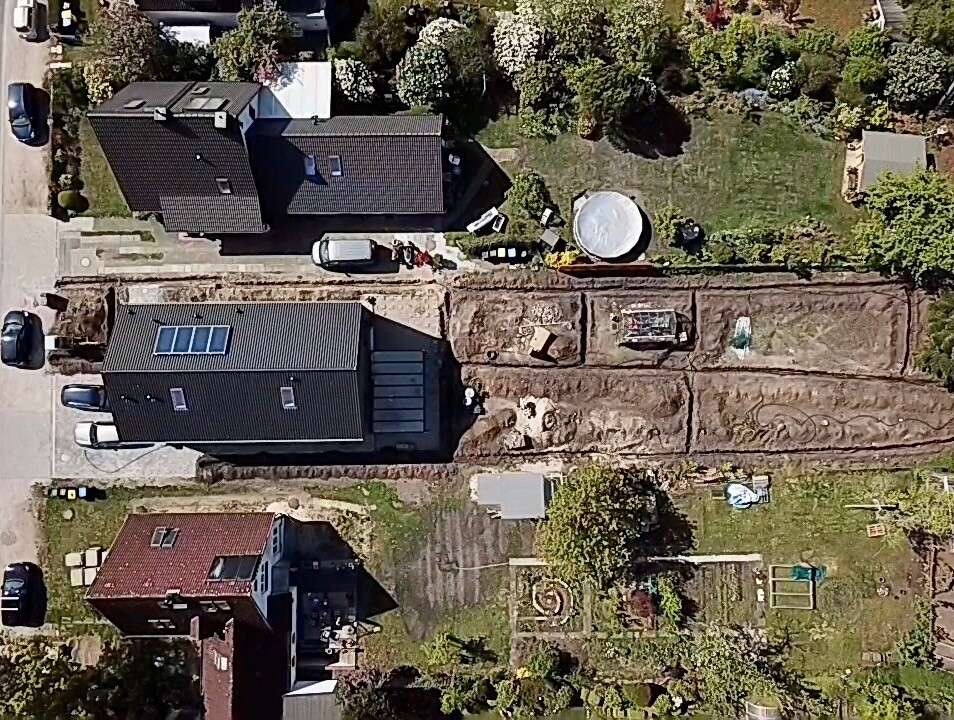
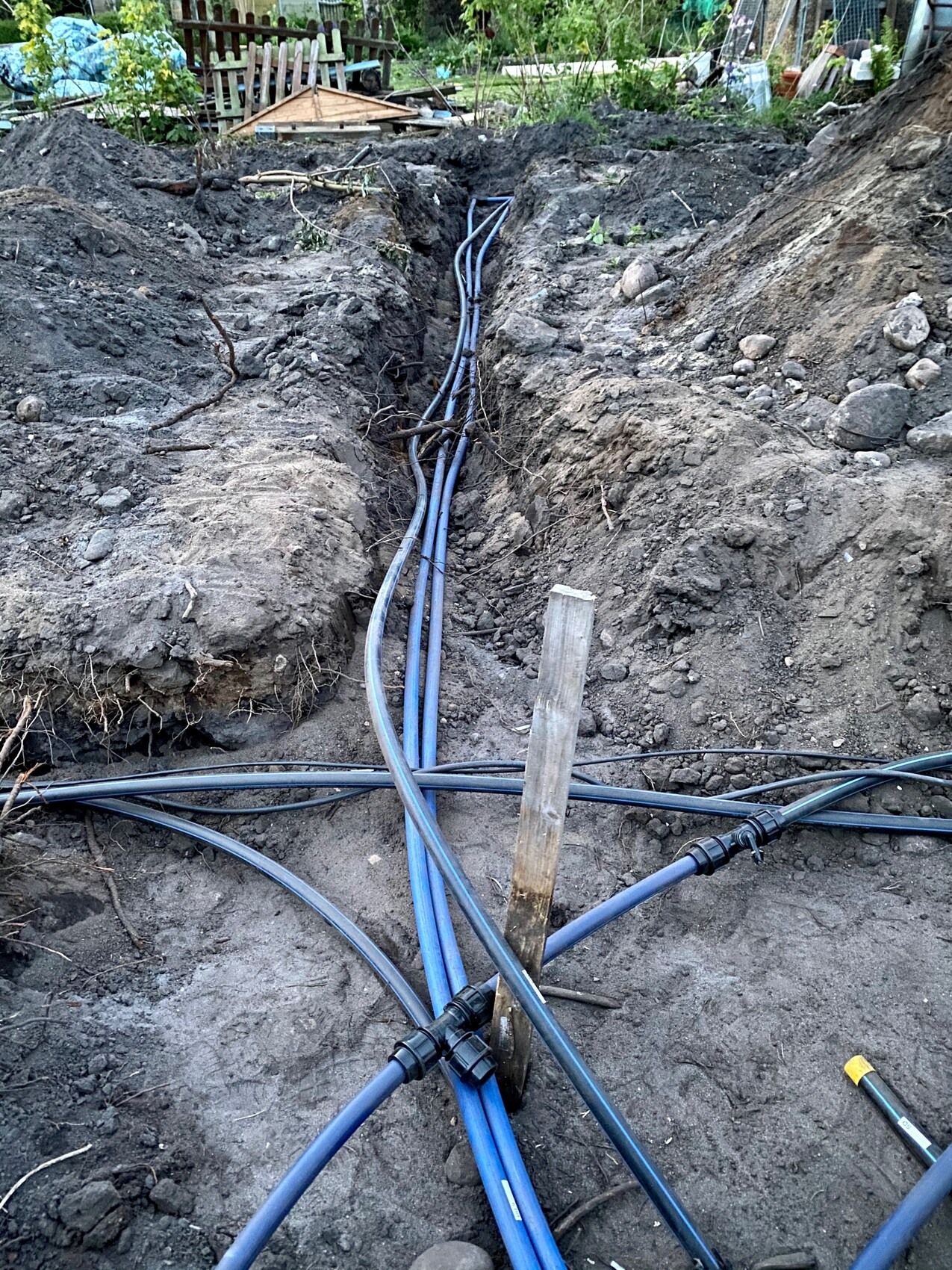
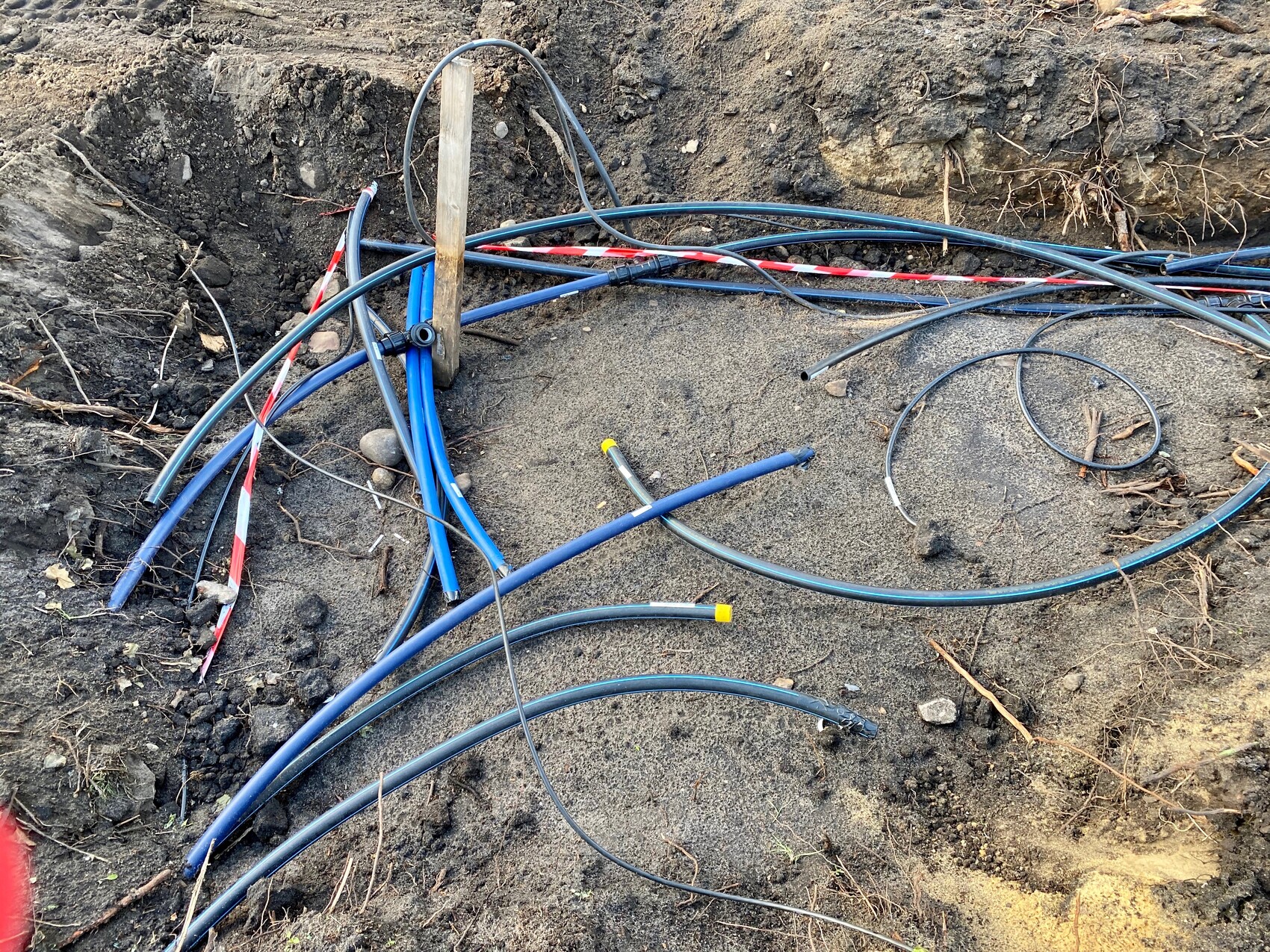
A lot has been accomplished so far: We rented a mini excavator for four days and dug trenches around the house for the irrigation system. Then we installed about 350m (1150 ft) of PE pipe (32mm / 1.25 inches) and around 100m (330 ft) of electrical cable inside the trenches before refilling them. Now, only 30 flexible pipe ends remain as evidence of all the work.
The well specialist came back and fixed the issue where the pump wasn’t drawing water. The landscapers had installed the concrete ring for the shaft where the pump will be located, but when shortening the drill pipe, it wasn’t properly reconnected, causing air to be sucked in before the check valve. Additionally, the check valve was apparently damaged during the frost in February. After sealing and replacing it, everything is working now. The water column remains stable, and the pump is running smoothly without sputtering.
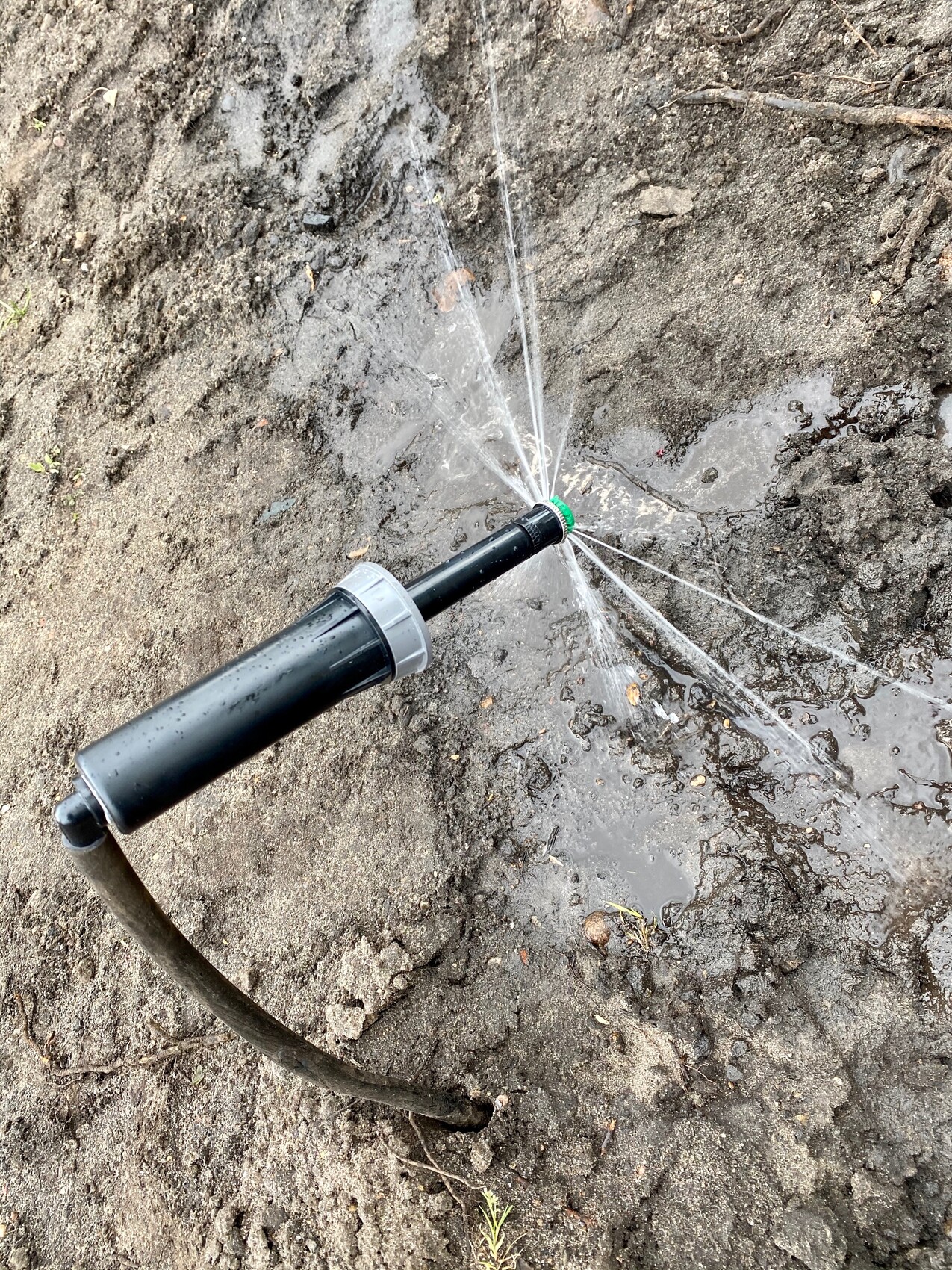
For a test today, we connected a zone directly to the pump and installed PRS40 valves with rotors throughout. And as expected: they all raise cleanly!
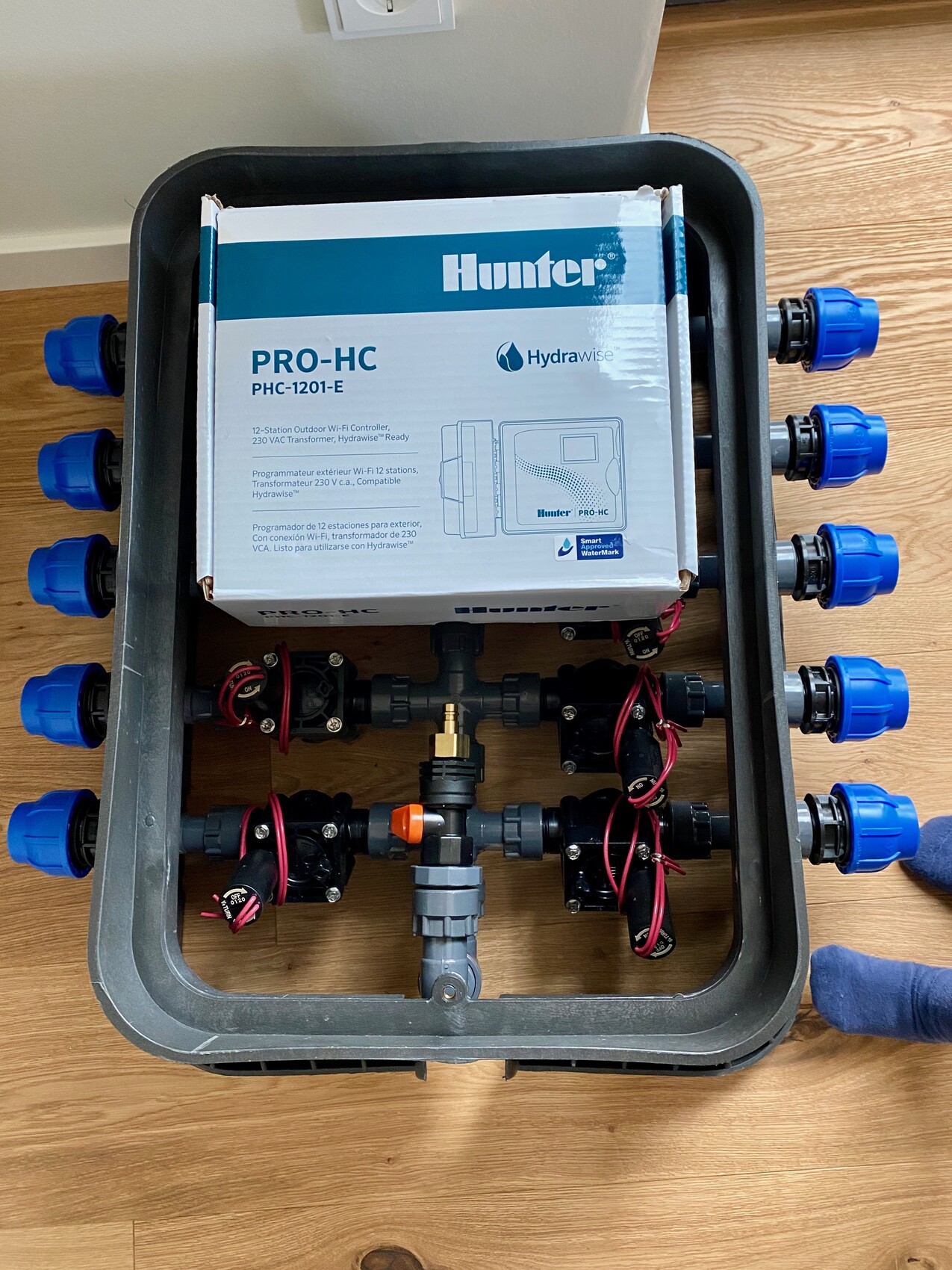
Next steps are just a small task: installing the valve box, connecting all pipes, wiring the Hunter Hydrawise controller, and then starting up the system to support the upcoming lawn seeding!
The well specialist came back and fixed the issue where the pump wasn’t drawing water. The landscapers had installed the concrete ring for the shaft where the pump will be located, but when shortening the drill pipe, it wasn’t properly reconnected, causing air to be sucked in before the check valve. Additionally, the check valve was apparently damaged during the frost in February. After sealing and replacing it, everything is working now. The water column remains stable, and the pump is running smoothly without sputtering.
For a test today, we connected a zone directly to the pump and installed PRS40 valves with rotors throughout. And as expected: they all raise cleanly!
Next steps are just a small task: installing the valve box, connecting all pipes, wiring the Hunter Hydrawise controller, and then starting up the system to support the upcoming lawn seeding!