
ᐅ Ventilation design for KfW 55 standard using window-frame ventilators and a mechanical ventilation system
Created on: 5 Mar 2023 12:25
A
Andii87Hello everyone,
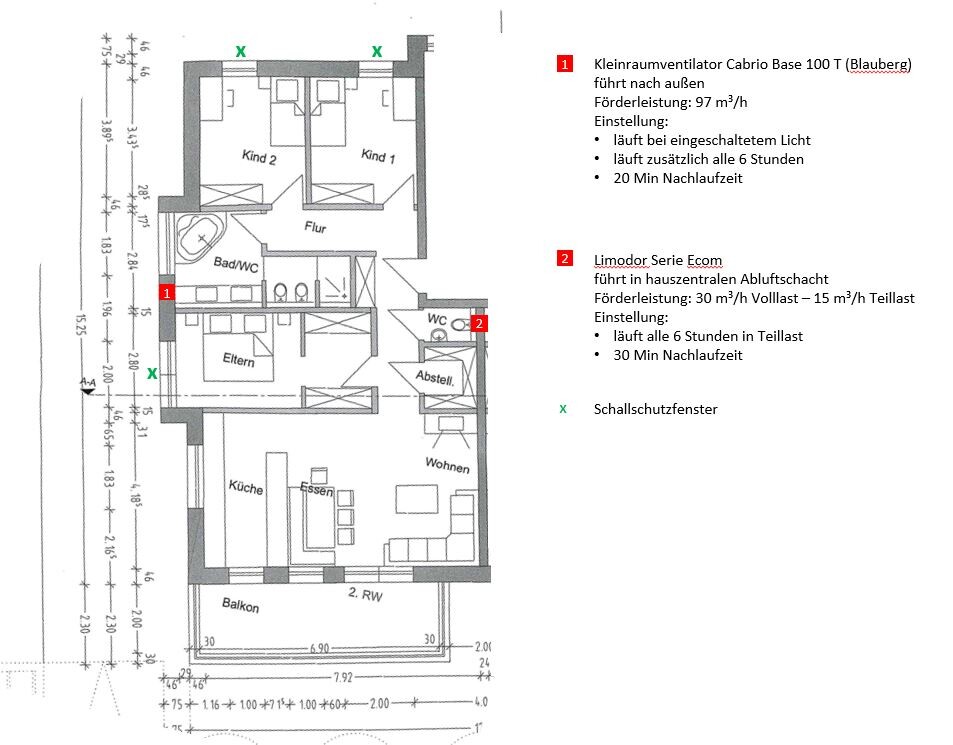
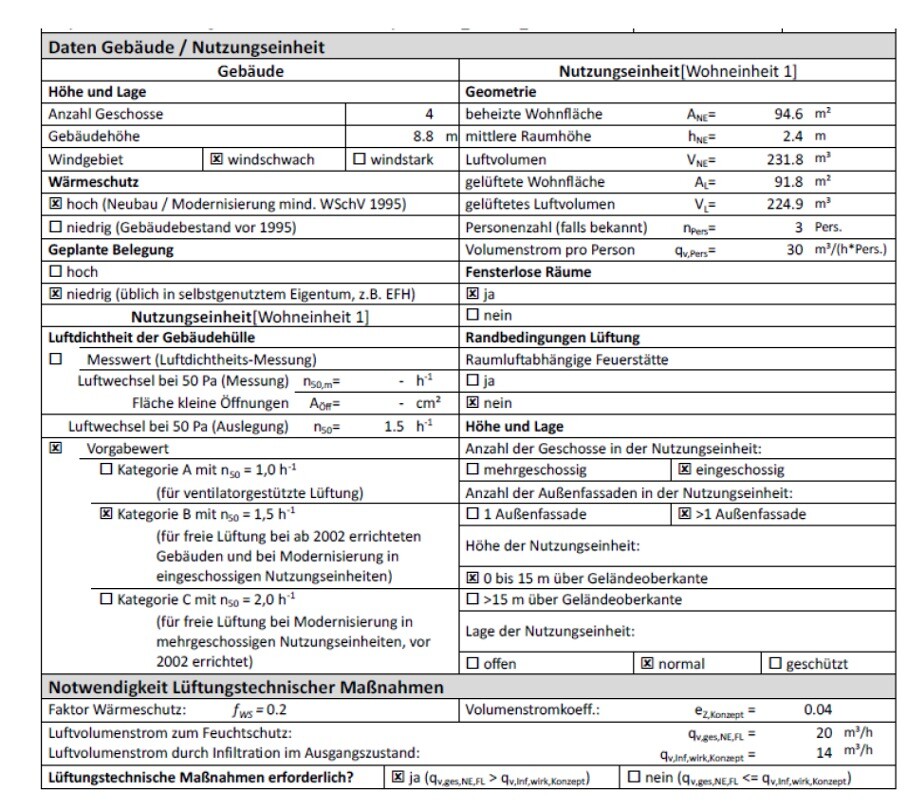
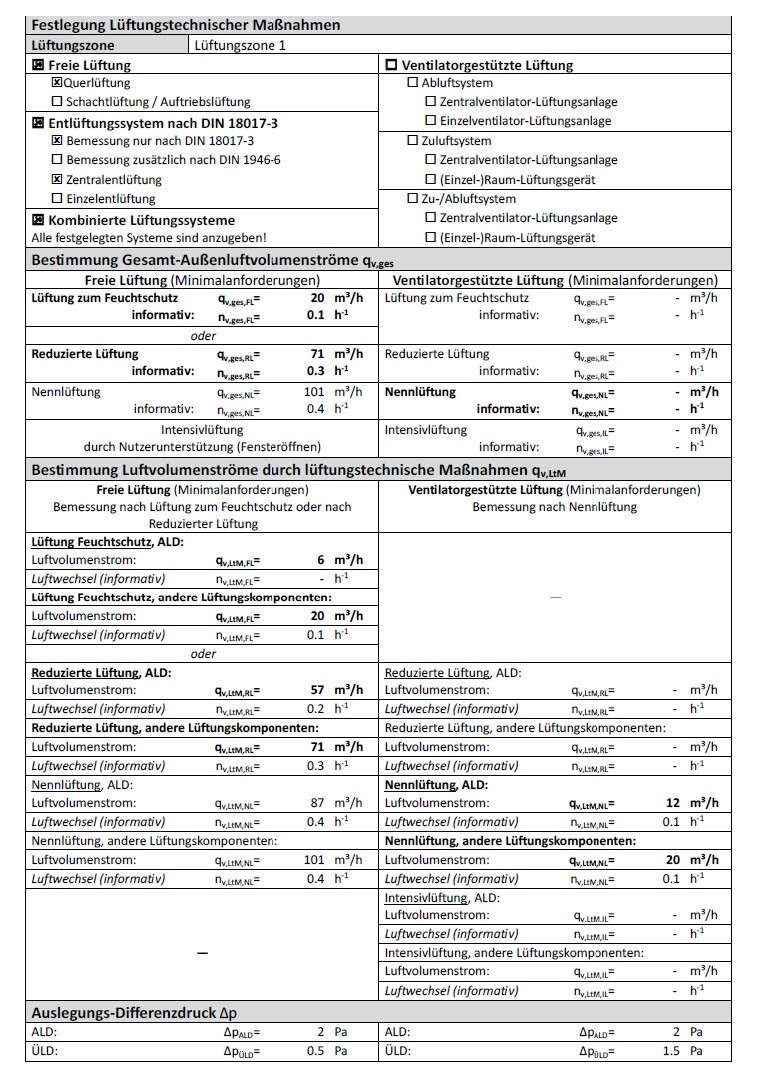
we have purchased a new condominium in a five-unit KfW55 energy-efficient building (floor plan and ventilation concept attached). The building exceeds the airtightness requirements, as confirmed by the blower door test.
So far, one ventilation device (small room fan) has been installed in the bathroom (exhaust to the outside) and another ventilation device (central exhaust) in the interior guest toilet (exhaust into the ventilation duct):
- Bathroom ventilation: capacity: 92 m3/h (54 cfm); controlled by light switch and additionally runs every 6 hours with a 20-minute overrun
- Guest toilet ventilation: capacity: 30 m3/h (18 cfm) at full load, 15 m3/h (9 cfm) at partial load; controlled by light switch (full load) and additionally runs every 6 hours for 30 minutes at partial load
Despite these ventilation systems, the humidity levels in the rooms are not ideal. Humidity measurements in the bathroom show that the moisture levels regularly increase significantly (due to normal bathroom use) and the ventilation cannot reduce it despite the operation modes mentioned above.
We suspect that the ventilation capacity may be limited by insufficient air supply, so we tested the ventilation with tilted windows in other rooms and observed better results.
The airtightness of the building means that natural air supply may not be possible when the ventilation units are running.
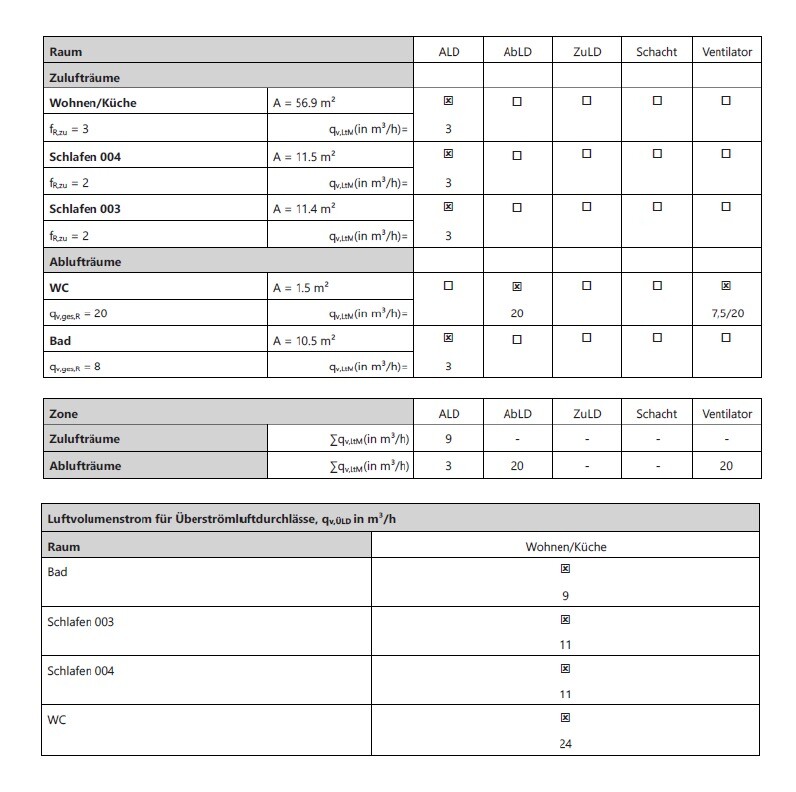
Therefore, we are now considering in which rooms/windows trickle vents (which have not yet been installed) could help.
A particular challenge is that the bedrooms have windows with enhanced sound insulation requirements, and we want to maintain this soundproofing as much as possible.
Could anyone advise us on how many trickle vents and in which rooms (see apartment floor plan and possibly ventilation concept) should be installed to achieve optimal performance of the ventilation unit at least in the bathroom and create a comfortable indoor climate in the other rooms?
Regarding the bedrooms: If you think that, due to a potential minimum required number of trickle vents, it is necessary to install them in the bedrooms as well, could you possibly recommend trickle vents that meet high sound insulation requirements? Have you had any personal experience with this?
Thank you very much for your help!
we have purchased a new condominium in a five-unit KfW55 energy-efficient building (floor plan and ventilation concept attached). The building exceeds the airtightness requirements, as confirmed by the blower door test.
So far, one ventilation device (small room fan) has been installed in the bathroom (exhaust to the outside) and another ventilation device (central exhaust) in the interior guest toilet (exhaust into the ventilation duct):
- Bathroom ventilation: capacity: 92 m3/h (54 cfm); controlled by light switch and additionally runs every 6 hours with a 20-minute overrun
- Guest toilet ventilation: capacity: 30 m3/h (18 cfm) at full load, 15 m3/h (9 cfm) at partial load; controlled by light switch (full load) and additionally runs every 6 hours for 30 minutes at partial load
Despite these ventilation systems, the humidity levels in the rooms are not ideal. Humidity measurements in the bathroom show that the moisture levels regularly increase significantly (due to normal bathroom use) and the ventilation cannot reduce it despite the operation modes mentioned above.
We suspect that the ventilation capacity may be limited by insufficient air supply, so we tested the ventilation with tilted windows in other rooms and observed better results.
The airtightness of the building means that natural air supply may not be possible when the ventilation units are running.
Therefore, we are now considering in which rooms/windows trickle vents (which have not yet been installed) could help.
A particular challenge is that the bedrooms have windows with enhanced sound insulation requirements, and we want to maintain this soundproofing as much as possible.
Could anyone advise us on how many trickle vents and in which rooms (see apartment floor plan and possibly ventilation concept) should be installed to achieve optimal performance of the ventilation unit at least in the bathroom and create a comfortable indoor climate in the other rooms?
Regarding the bedrooms: If you think that, due to a potential minimum required number of trickle vents, it is necessary to install them in the bedrooms as well, could you possibly recommend trickle vents that meet high sound insulation requirements? Have you had any personal experience with this?
Thank you very much for your help!
Similar topics