
ᐅ Interior Window Sills – What Depth or Overhang Is Recommended?
Created on: 25 Jan 2018 19:15
W
winnetou78
Hello,
I was working away from home this week and stopped by the construction site briefly this evening.
I couldn’t believe my eyes.
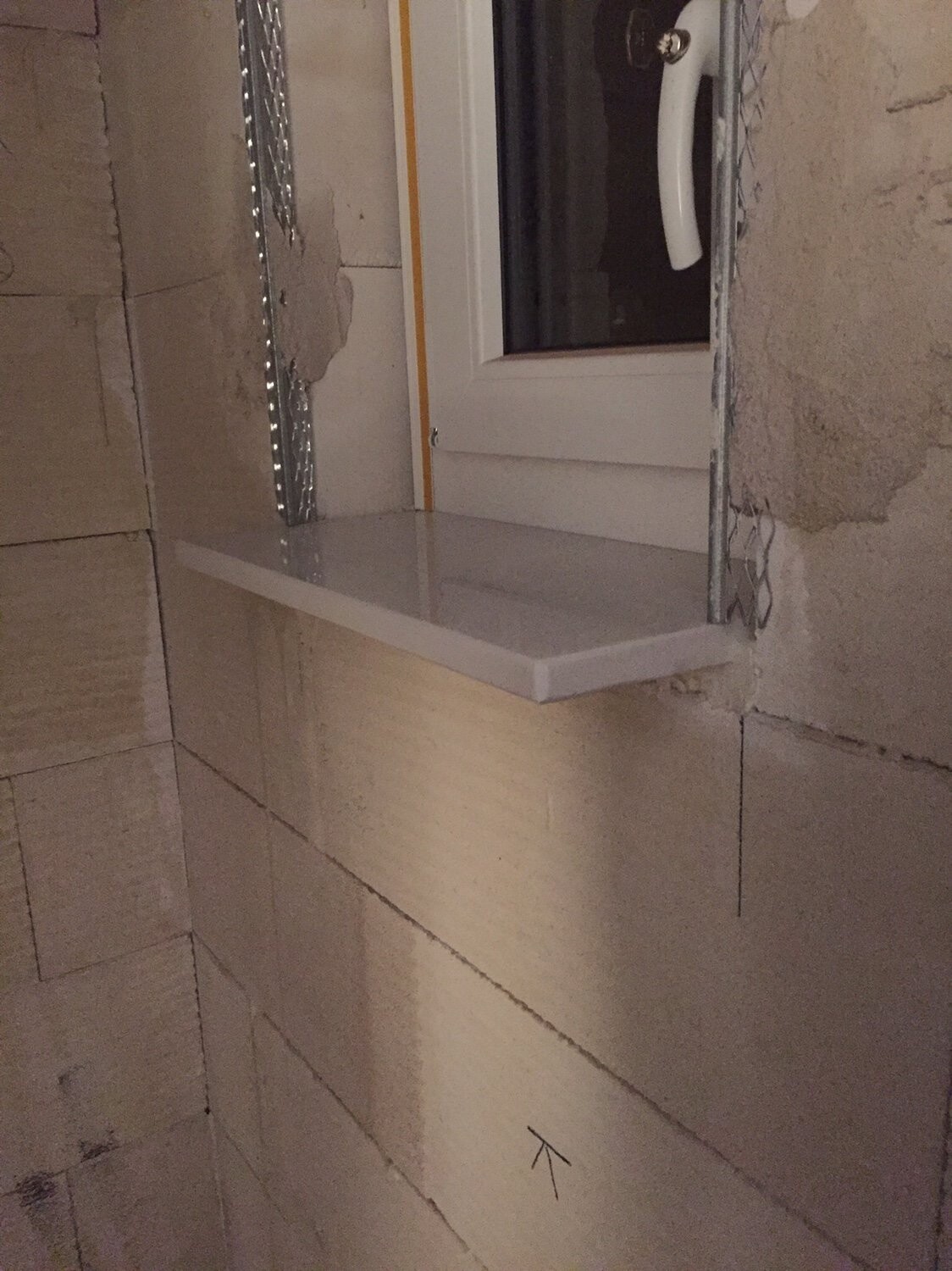
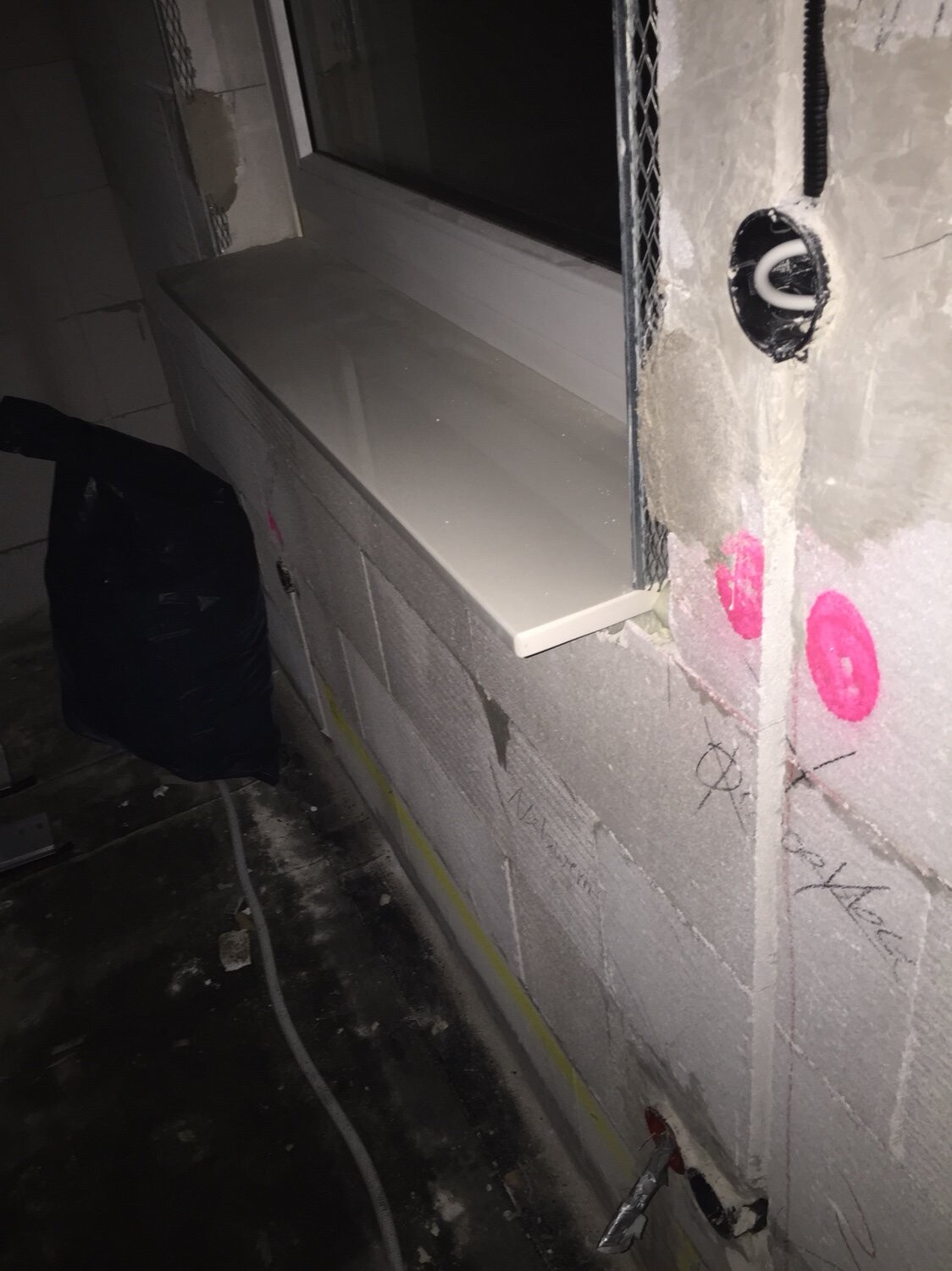
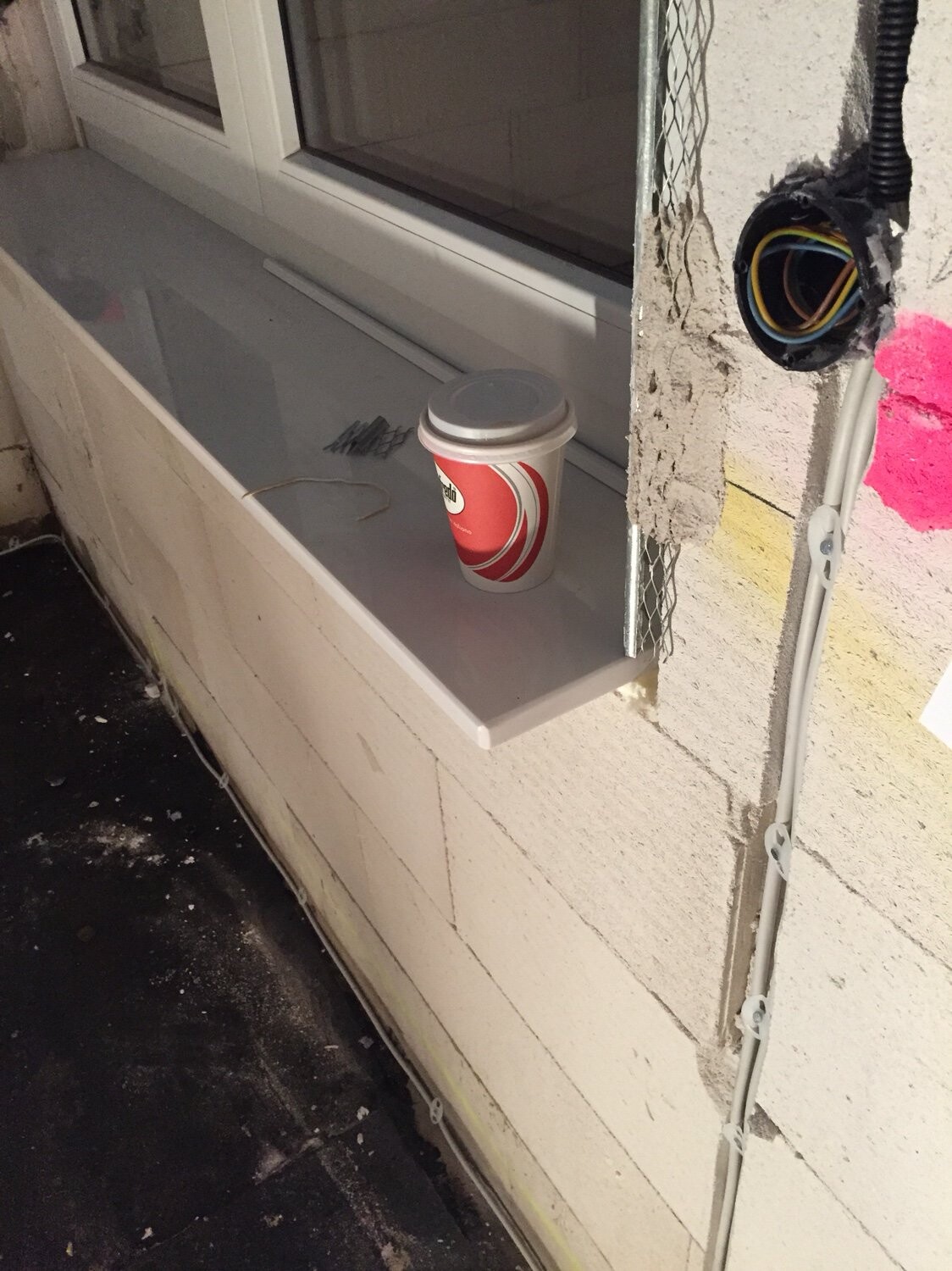
The main contractor installed the interior window sills, but they protrude by at least 10 cm (4 inches), and probably around 8.5 cm (3.3 inches) after plastering.
Isn’t that unusual nowadays?
That was common practice in the past when you needed to hide radiators underneath.
Now all the issues begin, but surely it can’t stay like this, right?
Best regards,
Daniel
I was working away from home this week and stopped by the construction site briefly this evening.
I couldn’t believe my eyes.
The main contractor installed the interior window sills, but they protrude by at least 10 cm (4 inches), and probably around 8.5 cm (3.3 inches) after plastering.
Isn’t that unusual nowadays?
That was common practice in the past when you needed to hide radiators underneath.
Now all the issues begin, but surely it can’t stay like this, right?
Best regards,
Daniel
W
winnetou7826 Jan 2018 18:46So, the roller shutters are installed flush with the wall now and will be set back later as well.
I also think that’s better—it’s more protected from wind and avoids rattling.
You all have definitely got me excited about the windows now.
I did some research, and the general contractor is right: according to some DIN standards and regulations, the window should be placed in the middle of the middle third of the wall.
This apparently has to do with thermal bridges and the dew point, among other factors.
It is definitely the correct approach.
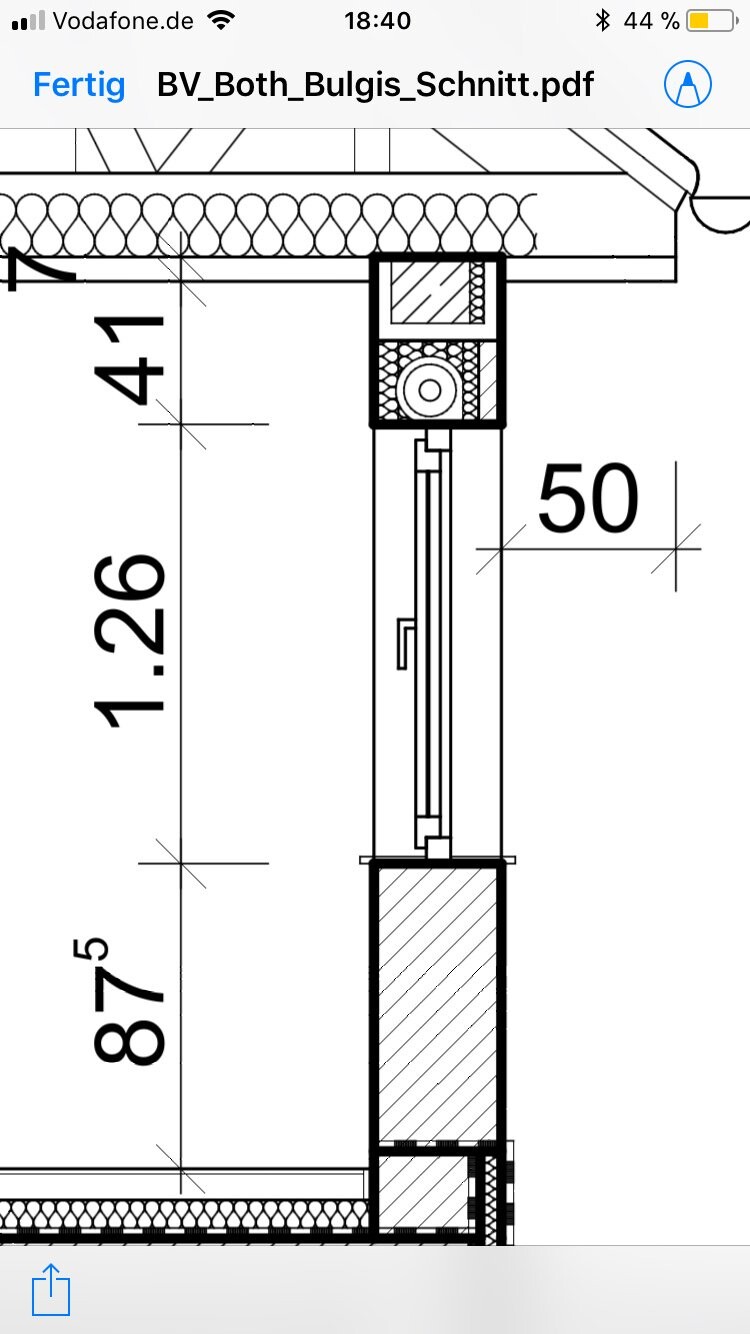
I also noticed in the cross-section that the architect designed it that way too.
I also think that’s better—it’s more protected from wind and avoids rattling.
You all have definitely got me excited about the windows now.
I did some research, and the general contractor is right: according to some DIN standards and regulations, the window should be placed in the middle of the middle third of the wall.
This apparently has to do with thermal bridges and the dew point, among other factors.
It is definitely the correct approach.
I also noticed in the cross-section that the architect designed it that way too.
W
winnetou7826 Jan 2018 18:52DIN 4208 Supplement 2

W
winnetou7826 Jan 2018 19:00Nevertheless, contrary to your opinion, what my general contractor told me is not nonsense.

winnetou78 schrieb:
When building without insulation, I was told to position the window centrally. With insulation, position it further towards the outside. That's what I’m saying. Your general contractor installed the windows based on this old common belief, but ordered the window sills in the width usually used for ETICS (external thermal insulation composite systems) walls. The window sill depth is his standard, but the wall construction is different.
So, the total sill depth is "as usual," but the relative depth (overhang) is not. He is right about "it’s always like that," and you are right saying "it shouldn’t be like that."
The window sills protrude exactly as much as the windows are recessed too far inside.
RobsonMKK schrieb:
All around me are new houses, and everywhere the windows are installed in the outer third of the wall. Exactly. New houses. And the practice of recessing the windows that deeply dates back to the time of stained wooden windows.
https://www.instagram.com/11antgmxde/
https://www.linkedin.com/company/bauen-jetzt/
11ant schrieb:
That's what I mean. Your general contractor installed the windows based on this old superstition, but ordered the window sills in the usual width he uses for walls with external insulation. The sill depth is his standard, but the wall construction is different.
...If he had done that, Winnetou would now have window sills 16 cm (6 inches) deep, as it should be.
Similar topics