
ᐅ Interior Wall: Aerated Concrete or Lightweight Construction?
Created on: 17 Aug 2019 10:56
R
Rowingpartner
Hello community,
I am currently facing a problem and hope you can offer some advice! Here is the situation:
I am building a four-unit house with a contractor to rent it out afterwards. I will not be living in it myself. There is a general contractor agreement (fixed price) with contractor XY in which all specifications were defined. Among other things, it states that all interior walls are to be built using solid construction methods (calcium silicate or aerated concrete blocks).
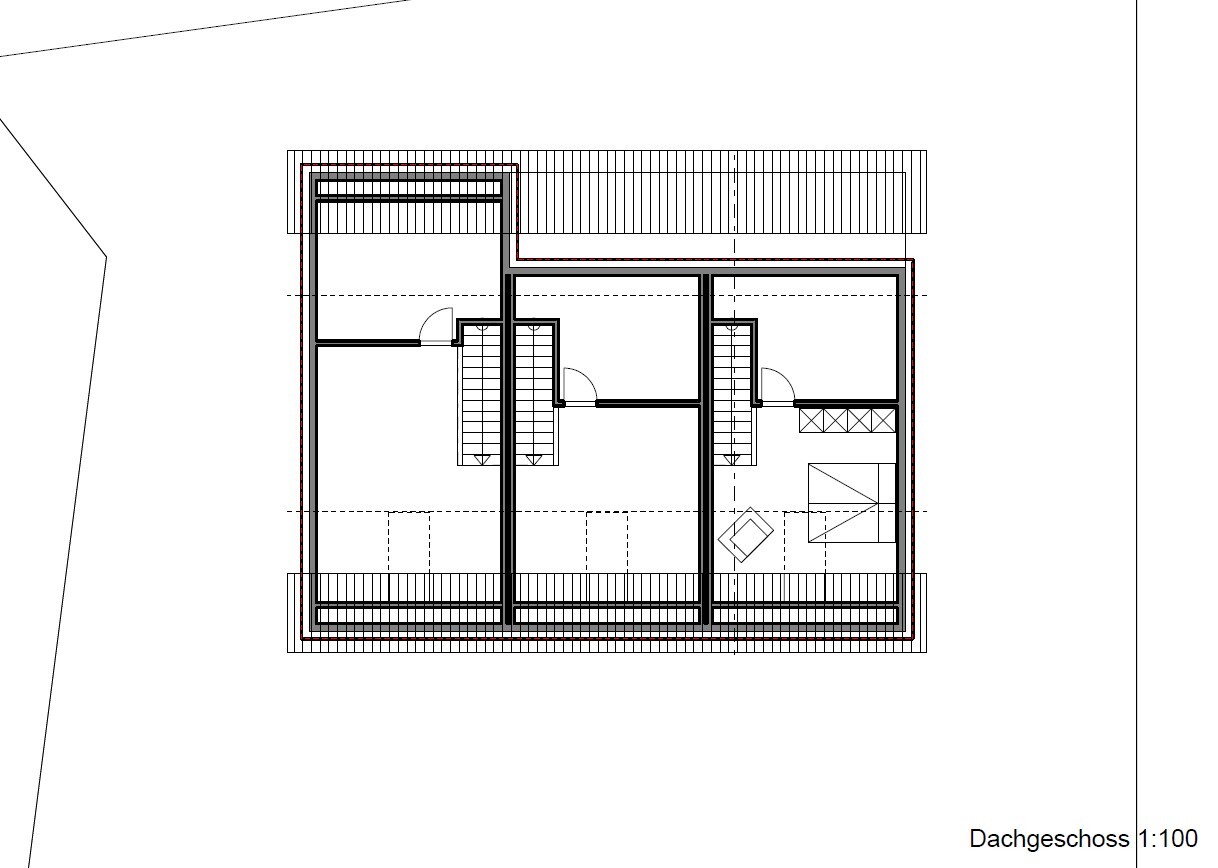
The house is currently at an advanced stage of construction. However, some partition walls still need to be installed in the attic. This will create two rooms there: a bedroom and a study/storage room/walk-in closet, or something similar. The contractor now wants to build these partition walls in the attic using lightweight construction methods (stud framing, insulation, etc.) instead of solid construction as specified in the contract. However, I insist that it be executed in aerated concrete as stated in the contract.
I can, of course, imagine why the contractor prefers to build with lightweight construction, as the costs for a lightweight wall can be significantly lower than for a solid wall. The contractor claims that the lightweight wall is actually much better than an aerated concrete wall. This discussion has been going back and forth for about two weeks, and I have repeatedly said I want a solid wall. The contractor doesn’t seem entirely happy with this and has tried several times to convince me to choose the other type of wall. So far, without success.
In a phone call yesterday, I was told that it is structurally impossible to install an aerated concrete wall there and that they therefore have to use a lightweight wall. However, I believe this is absolutely wrong since aerated concrete is quite light, and the floor slab below is also a solid concrete slab. The span lengths there are also very small. Of course, one would have to look at the structural calculations in detail, but I will leave that aside for now.
For me, the solid wall is simply much higher quality and better. Just thinking about the noise a lightweight wall makes when you knock on it makes me definitely prefer the solid wall. On the other hand, I can stay relaxed since I will not be living in the apartments myself...
I would like to hear your opinions on this. Which type of wall would you prefer? Are there advantages or disadvantages? Could it possibly even be a good idea to install a lightweight wall?
I look forward to your feedback!
I am currently facing a problem and hope you can offer some advice! Here is the situation:
I am building a four-unit house with a contractor to rent it out afterwards. I will not be living in it myself. There is a general contractor agreement (fixed price) with contractor XY in which all specifications were defined. Among other things, it states that all interior walls are to be built using solid construction methods (calcium silicate or aerated concrete blocks).
The house is currently at an advanced stage of construction. However, some partition walls still need to be installed in the attic. This will create two rooms there: a bedroom and a study/storage room/walk-in closet, or something similar. The contractor now wants to build these partition walls in the attic using lightweight construction methods (stud framing, insulation, etc.) instead of solid construction as specified in the contract. However, I insist that it be executed in aerated concrete as stated in the contract.
I can, of course, imagine why the contractor prefers to build with lightweight construction, as the costs for a lightweight wall can be significantly lower than for a solid wall. The contractor claims that the lightweight wall is actually much better than an aerated concrete wall. This discussion has been going back and forth for about two weeks, and I have repeatedly said I want a solid wall. The contractor doesn’t seem entirely happy with this and has tried several times to convince me to choose the other type of wall. So far, without success.
In a phone call yesterday, I was told that it is structurally impossible to install an aerated concrete wall there and that they therefore have to use a lightweight wall. However, I believe this is absolutely wrong since aerated concrete is quite light, and the floor slab below is also a solid concrete slab. The span lengths there are also very small. Of course, one would have to look at the structural calculations in detail, but I will leave that aside for now.
For me, the solid wall is simply much higher quality and better. Just thinking about the noise a lightweight wall makes when you knock on it makes me definitely prefer the solid wall. On the other hand, I can stay relaxed since I will not be living in the apartments myself...
I would like to hear your opinions on this. Which type of wall would you prefer? Are there advantages or disadvantages? Could it possibly even be a good idea to install a lightweight wall?
I look forward to your feedback!
fragg schrieb:
Go with stone. When a tenant mounts their TV on the wall, they don’t think twice, they just do it. It’s certainly possible with drywall, but not with standard hardware store anchors. This is probably the strongest argument for solid construction!
When the tenant moves out and removes their anchors, they have to fill a 1.5 to 2cm (0.6 to 0.8 inch) hole in drywall. Usually, this is done carelessly, and even if repainted, it’s noticeable. With smaller anchors, it’s also visible, but a 6 to 8mm (0.2 to 0.3 inch) hole is much less conspicuous.
Speaking from experience, as I have just moved out of a rental myself, and also experienced the “careless” patching.
Whether 11.5cm (4.5 inches) aerated concrete can really be considered "solid construction" is debatable. The sound insulation rating of the block is based on its physical properties and cannot be significantly improved. The drywall partition can be designed accordingly if higher requirements are needed. Double-layered drywall on both sides and filling the cavity with 40mm (1.6 inches) mineral wool. Just search for the sound insulation ratings of similar assemblies—you might be surprised.
However, the tenant’s argument regarding damage cannot be dismissed.
A thinner wall assembly, on the other hand, results in more usable living space, which means higher net rent. Hmmmn
However, the tenant’s argument regarding damage cannot be dismissed.
A thinner wall assembly, on the other hand, results in more usable living space, which means higher net rent. Hmmmn
Similar topics