
Hello, we have a nice large freestanding refrigerator that we would like to include in our new kitchen. We would like to integrate it into a wall (leading to the pantry). The pantry is not heated. How can we make sure the refrigerator fits as tightly as possible in the wall recess? Visually, it should match the adjacent pantry door. The design looks pretty good in the drawing, but how can this be implemented in practice? The wall is made of solid sand-lime brick. Best regards, Steffi.
Thanks for your tips. Here are some pictures:
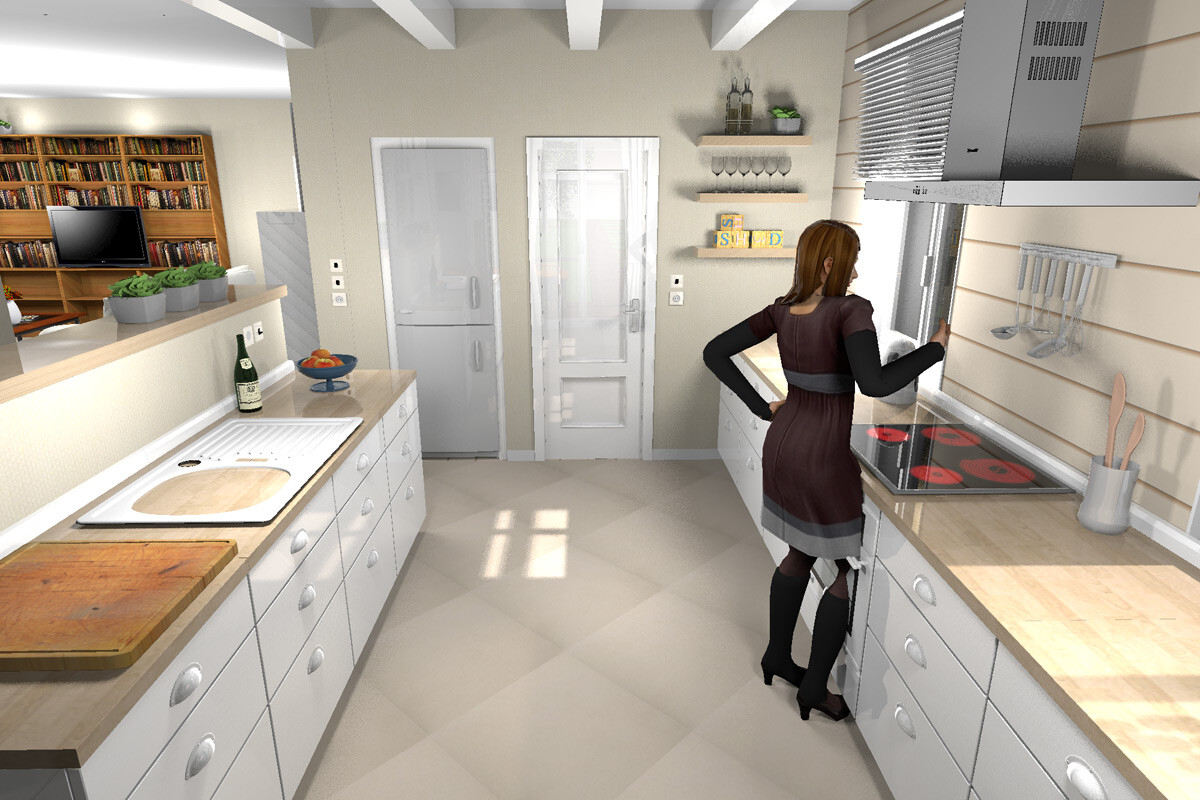
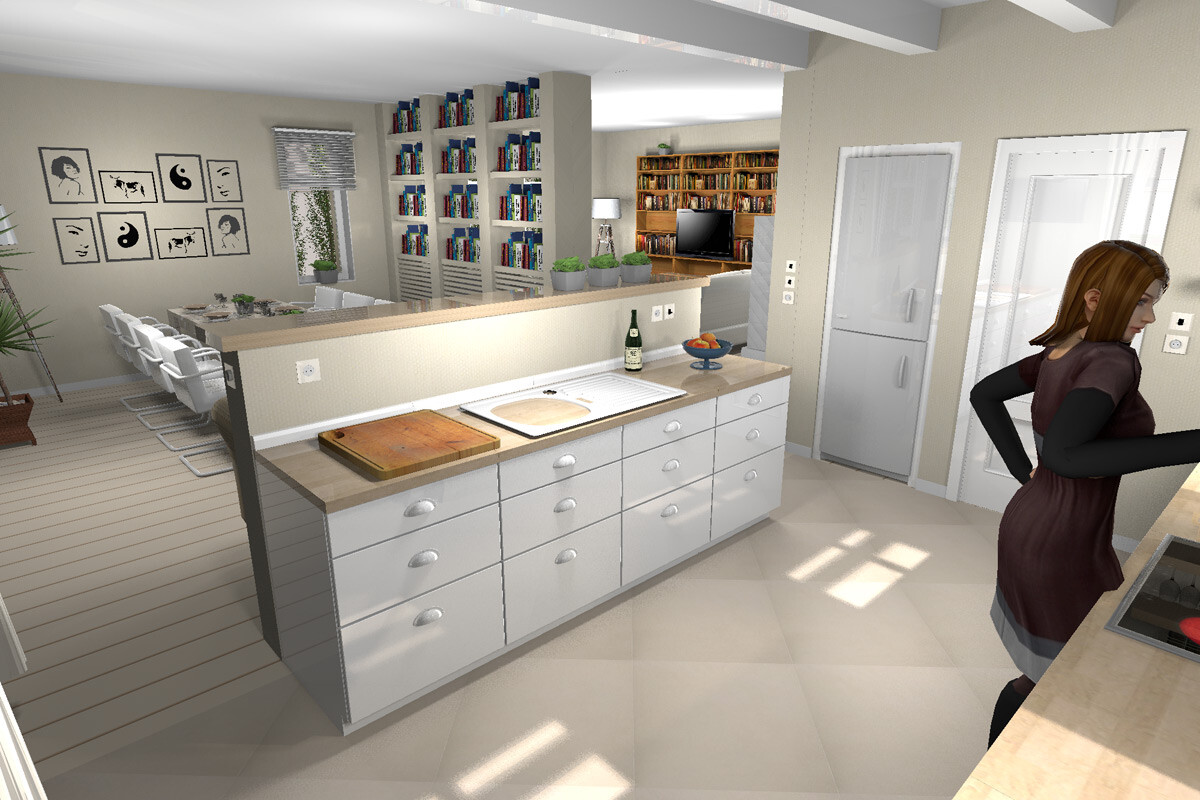

Thanks for your tips. Here are some pictures:
There is nothing wrong with the refrigerator niche itself, quite the opposite. However, I would make it universal... about 210 cm (83 inches) high and 61 cm (24 inches) wide, and if necessary, sealed off at the back in the utility room. That way, any freestanding fridge will fit. And yes, the front will not be flush with the wall.
B
Bauexperte2 Mar 2016 17:18@ Steffi
Why don’t you just put it directly in the pantry?
Regards, Bauexperte
Bauexperte
Why don’t you just put it directly in the pantry?
Regards, Bauexperte
Bauexperte
T
toxicmolotof2 Mar 2016 17:31For the shell construction, I would also technically plan for a second door and then create the final recess during the drywall phase, so that the refrigerator including its niche remains part of the kitchen. This way, there is no direct connection to the pantry.
However, this requires knowing the clearance dimensions of the refrigerator. In most cases, you are not allowed to build it in permanently.
However, this requires knowing the clearance dimensions of the refrigerator. In most cases, you are not allowed to build it in permanently.
Bauexperte schrieb:
Why don’t you just put it directly in the pantry?I had the same thought.. it’s just a bit inconvenient to always have to open two doors first when you want to quickly grab something from the fridge. It would indeed be the simplest solution. I’ll think about it more carefully....
Best regards, Steffi


We installed a complete kitchen cabinet flush with the wall, including the refrigerator. However, I wouldn’t recommend fitting a standalone refrigerator flush into the wall. What happens if it breaks and you can’t find a replacement of the exact same size to fit the gap? We can replace our built-in refrigerator because only the cabinet frame is enclosed.
Anyway, if you want to go that route, the easiest way to achieve a very flush look is to make the opening in the masonry larger, place the refrigerator inside, and then close the gap with drywall. By the way, letting the refrigerator stick out two-thirds at the front like in the picture doesn’t look good in my opinion. In our case, only the front panel protrudes slightly so the cabinets can still open, and the drywall fits almost perfectly flush (1-2mm).
The dark stripe in the picture is just a shadow; the drywall really fits almost flush. I placed a very thin piece of cardboard between the gypsum fiberboard and the cabinet before screwing the panels in place.
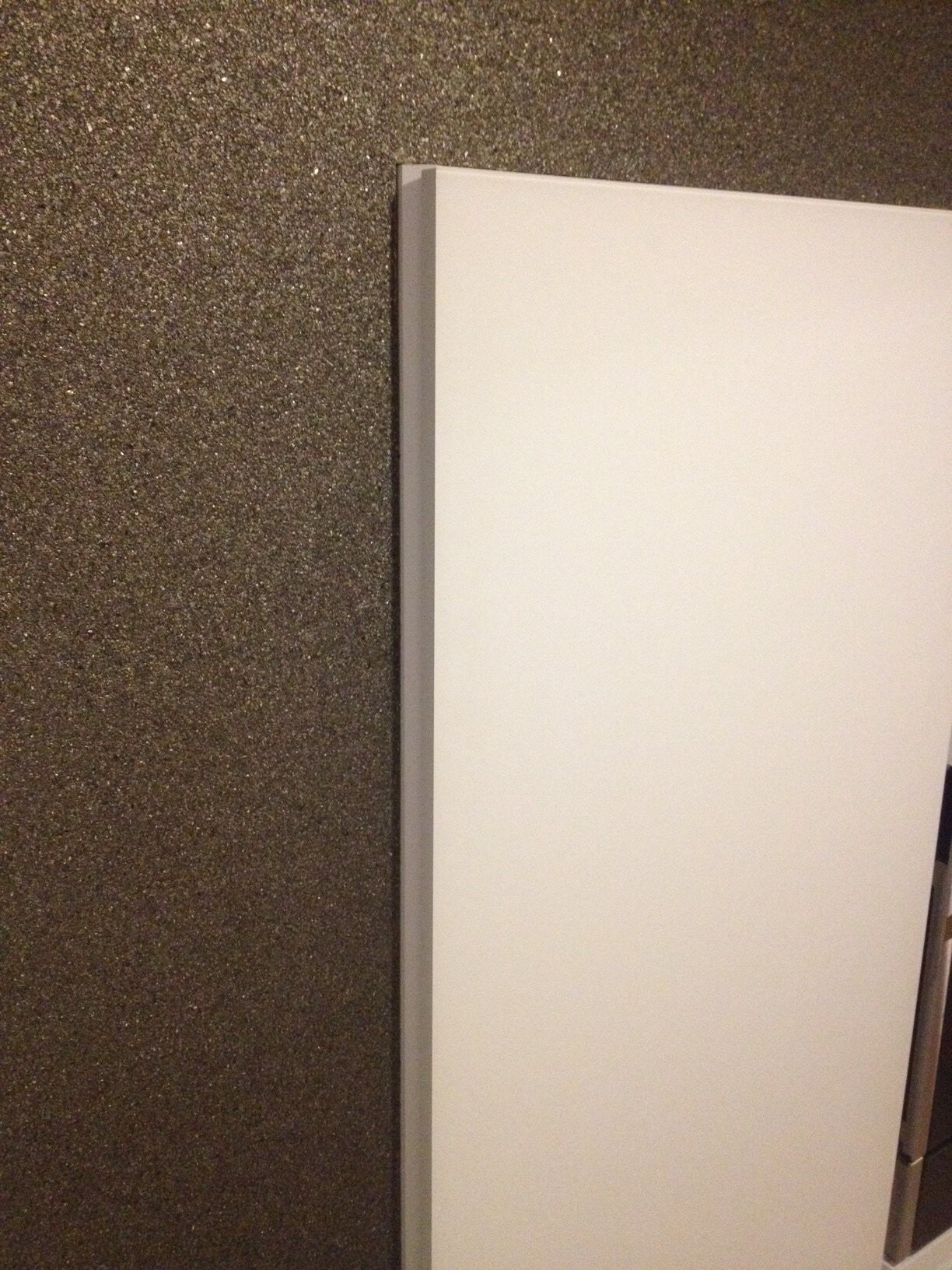
Anyway, if you want to go that route, the easiest way to achieve a very flush look is to make the opening in the masonry larger, place the refrigerator inside, and then close the gap with drywall. By the way, letting the refrigerator stick out two-thirds at the front like in the picture doesn’t look good in my opinion. In our case, only the front panel protrudes slightly so the cabinets can still open, and the drywall fits almost perfectly flush (1-2mm).
The dark stripe in the picture is just a shadow; the drywall really fits almost flush. I placed a very thin piece of cardboard between the gypsum fiberboard and the cabinet before screwing the panels in place.
Similar topics