
D
Didges7234 Aug 2024 21:17Hello everyone,
I am new to the forum and have spent the last few days going through numerous threads, but I still have not found a clear answer to my specific problem. Therefore, I am reaching out directly and hope for your expert advice.
Basically, I have to comply with the legal requirement to insulate either the roof or the top floor ceiling in my newly purchased older building. I want to do this myself as simply and cost-effectively as possible. Insulating the roof is currently not an option for me because it is mostly covered with wooden panelling, which I do not want to remove and reinstall. The attic should remain accessible, and a reduction in height due to the insulation of about 16cm (6 inches) would be acceptable.
Regarding the required insulation, I have already been informed that an insulation material with a thermal conductivity of 0.035 W/(m·K) (WLS 035) and a thickness of 140mm (5.5 inches) is necessary. My plan so far was to lay a vapor barrier foil on the existing top floor ceiling surface, then place 140mm (5.5 inches) thick load-bearing expanded polystyrene (EPS) insulation boards on top, and cover this with 22mm (0.9 inches) thick OSB3 panels. The material cost would be just under €1,000 for about 30m² (320 ft²) at a price of €20/m² for the EPS and €10/m² for the OSB3.
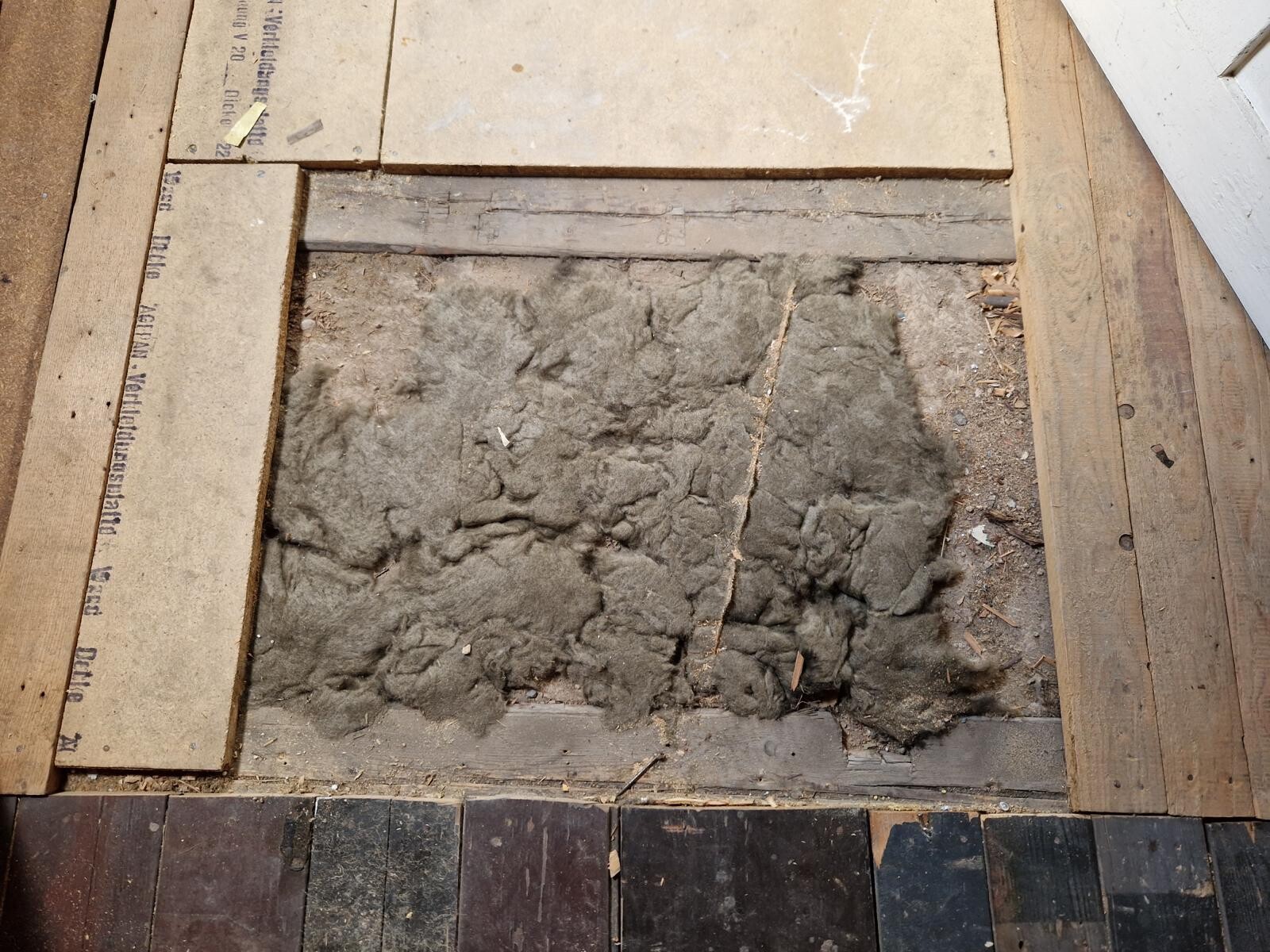
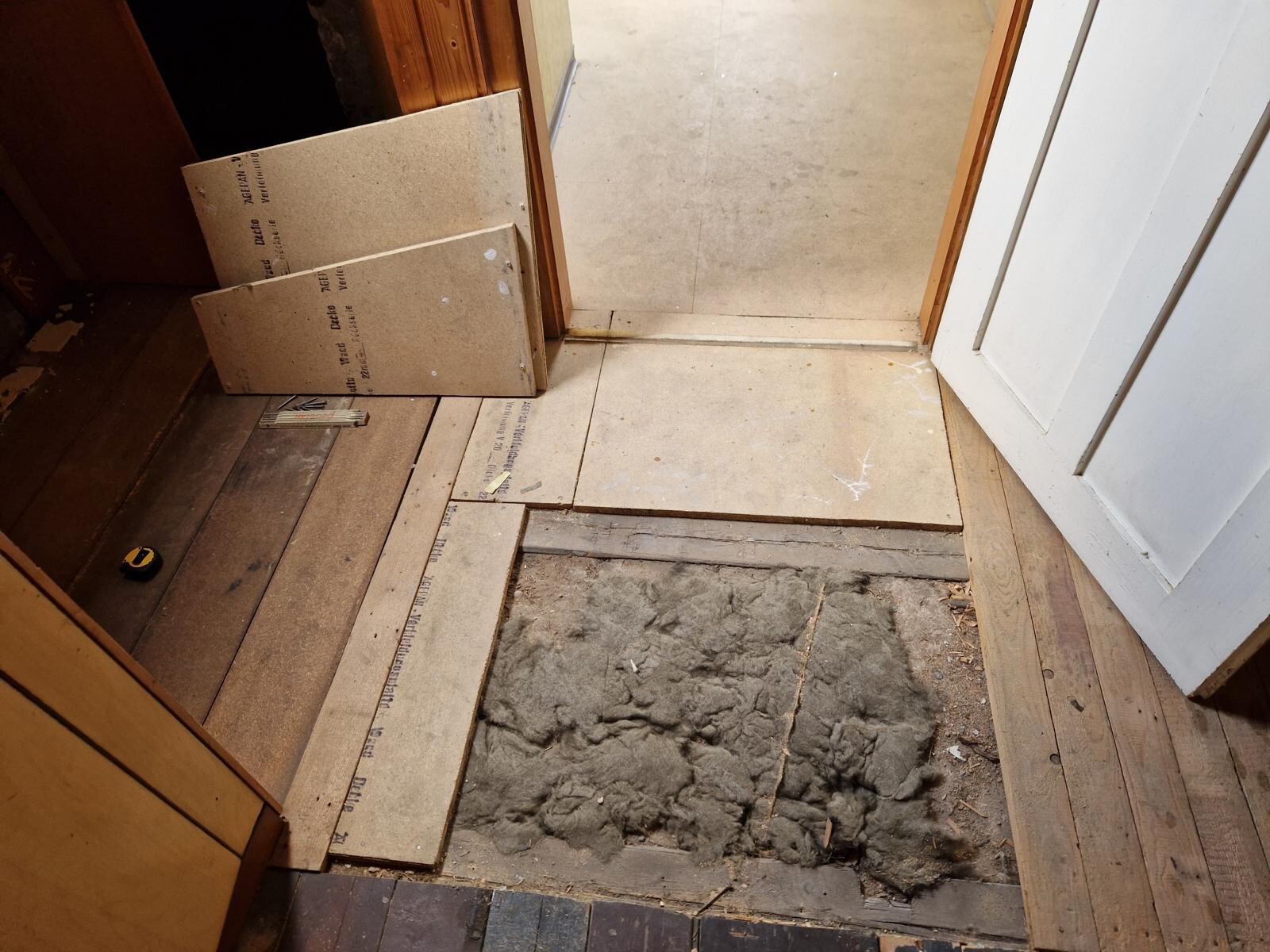
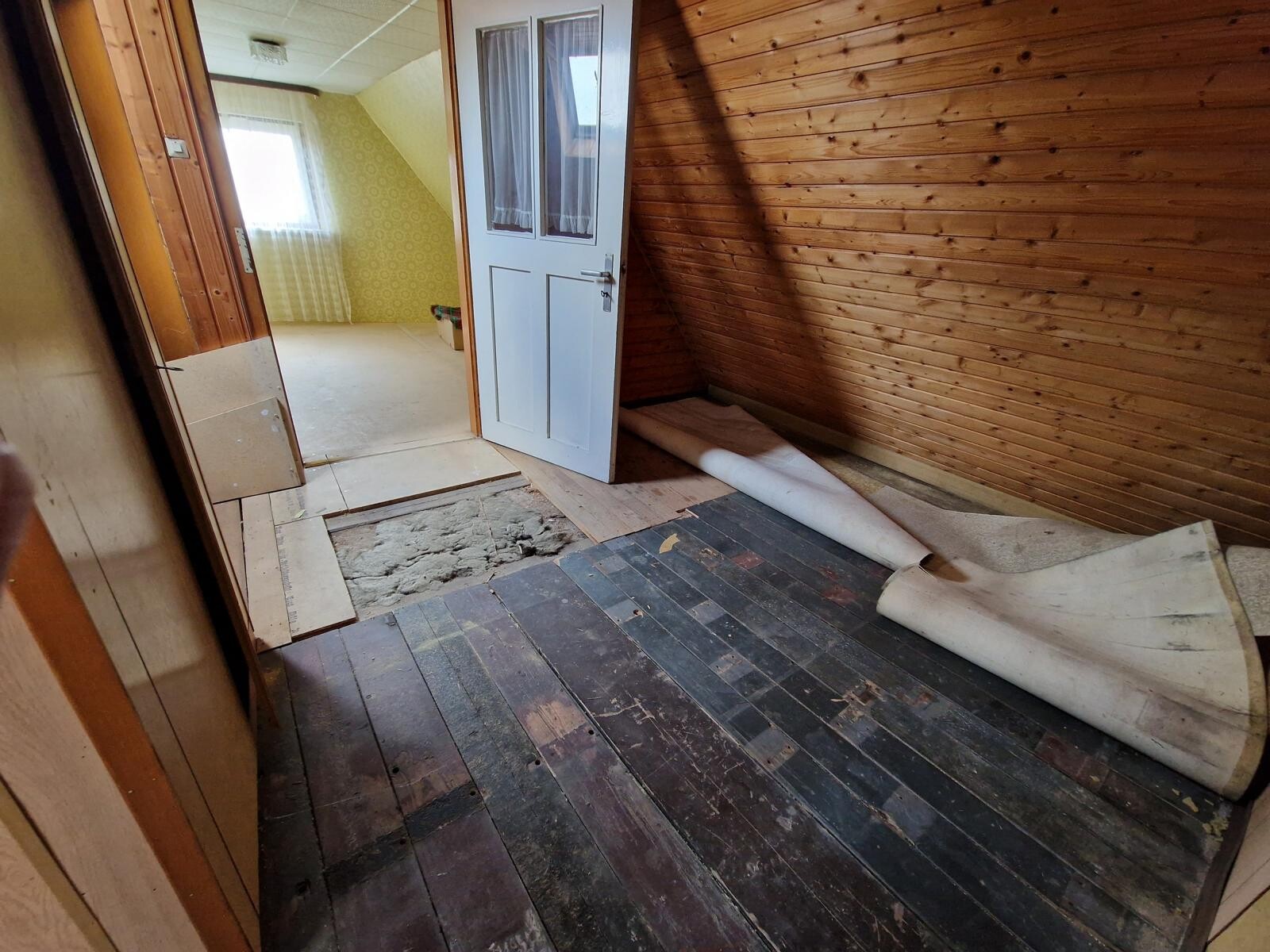
However, based on what I have read, I am now concerned about moisture management in this setup. To better assess the situation, I took several photos and will now try to describe the current construction in as much detail as possible:
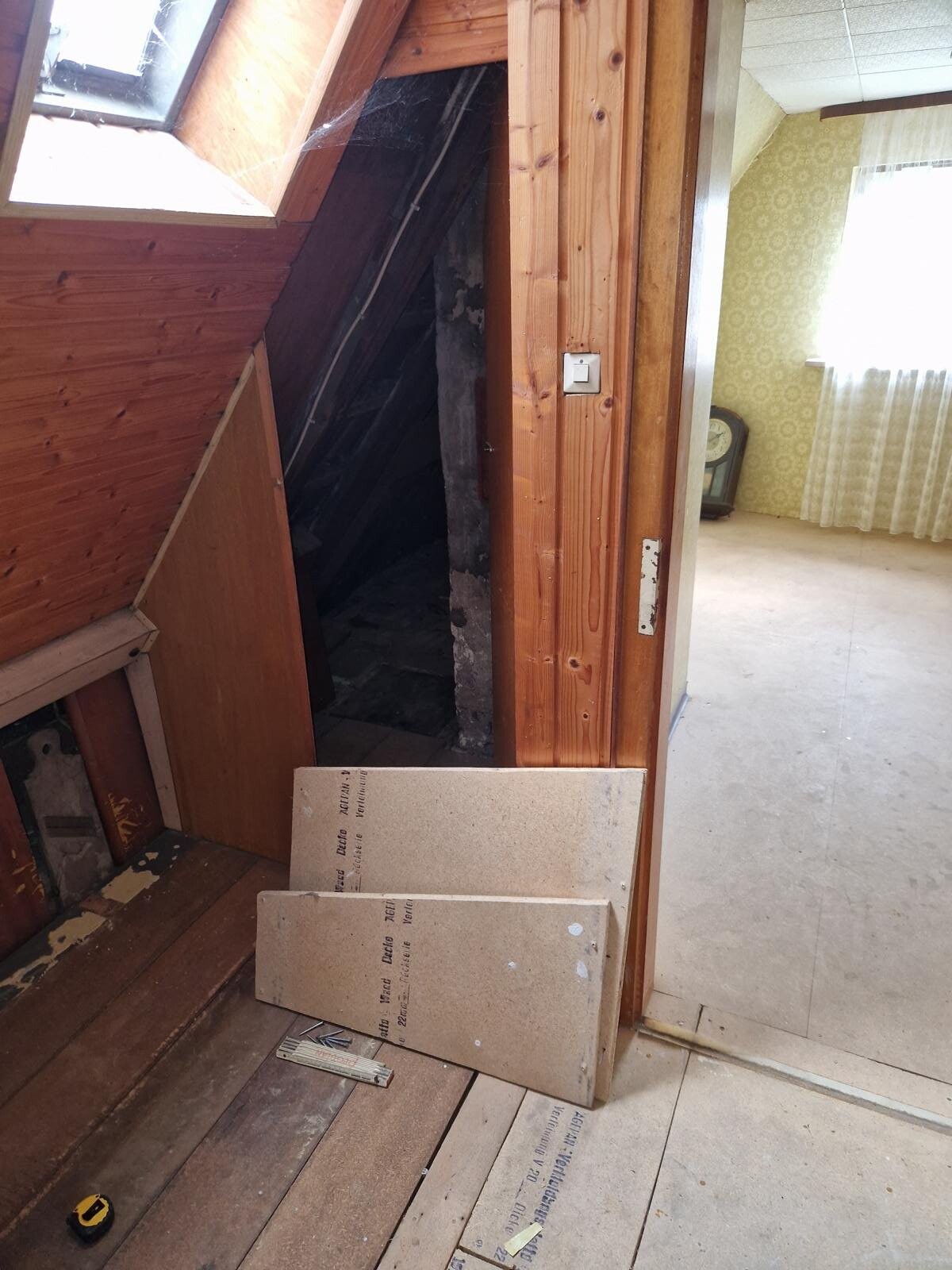
Behind the chimney, there is a small cavity without floor covering. I would also insulate this later with just a vapor barrier and EPS, but I would omit the OSB3 panels in this non-accessible area.
How should I best build up the insulation to avoid moisture damage and keep costs and effort as low as possible?
Thank you in advance for your help and best regards
Current floor/ceiling construction:

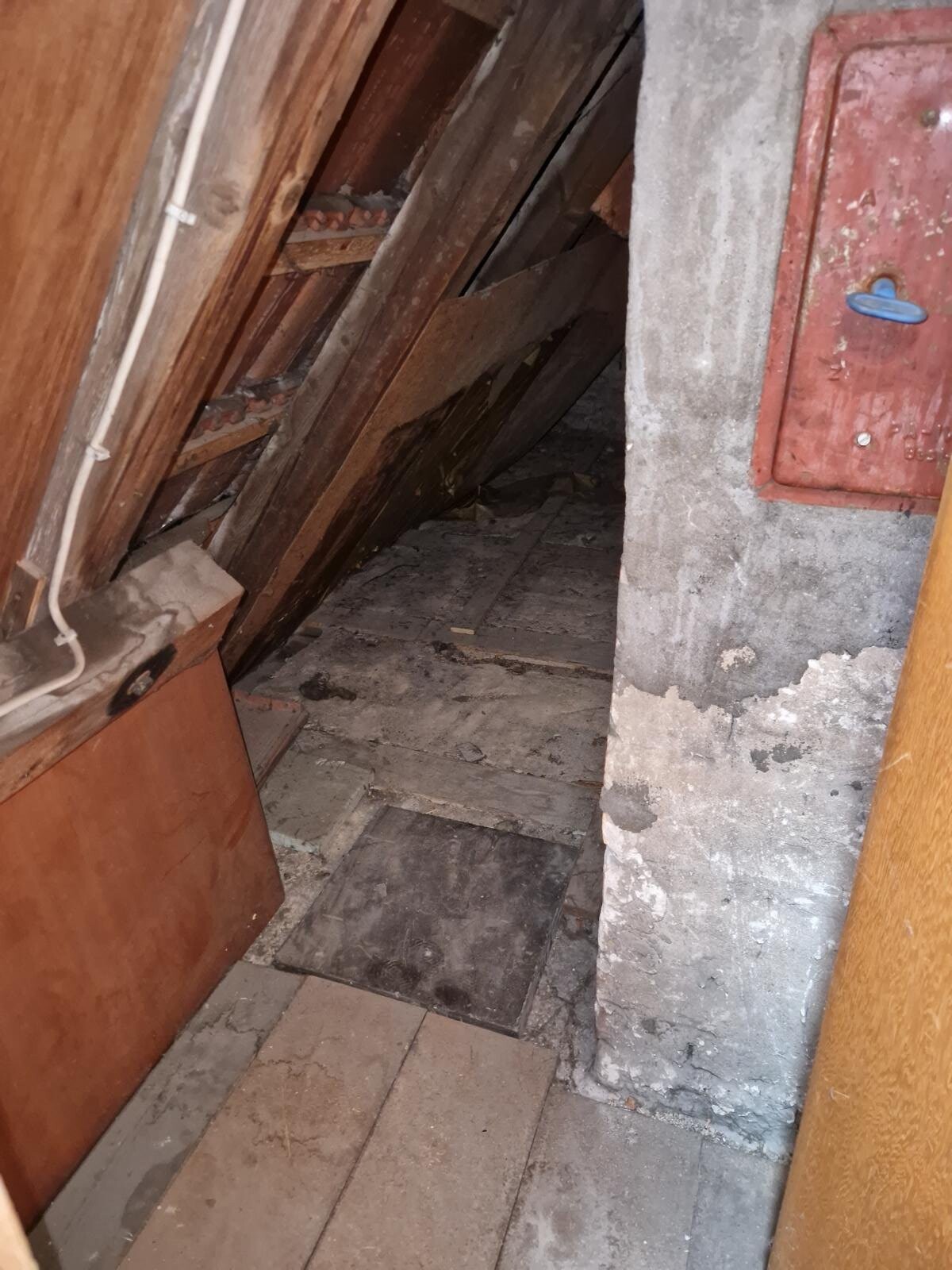
Ceilings below the top floor ceiling:
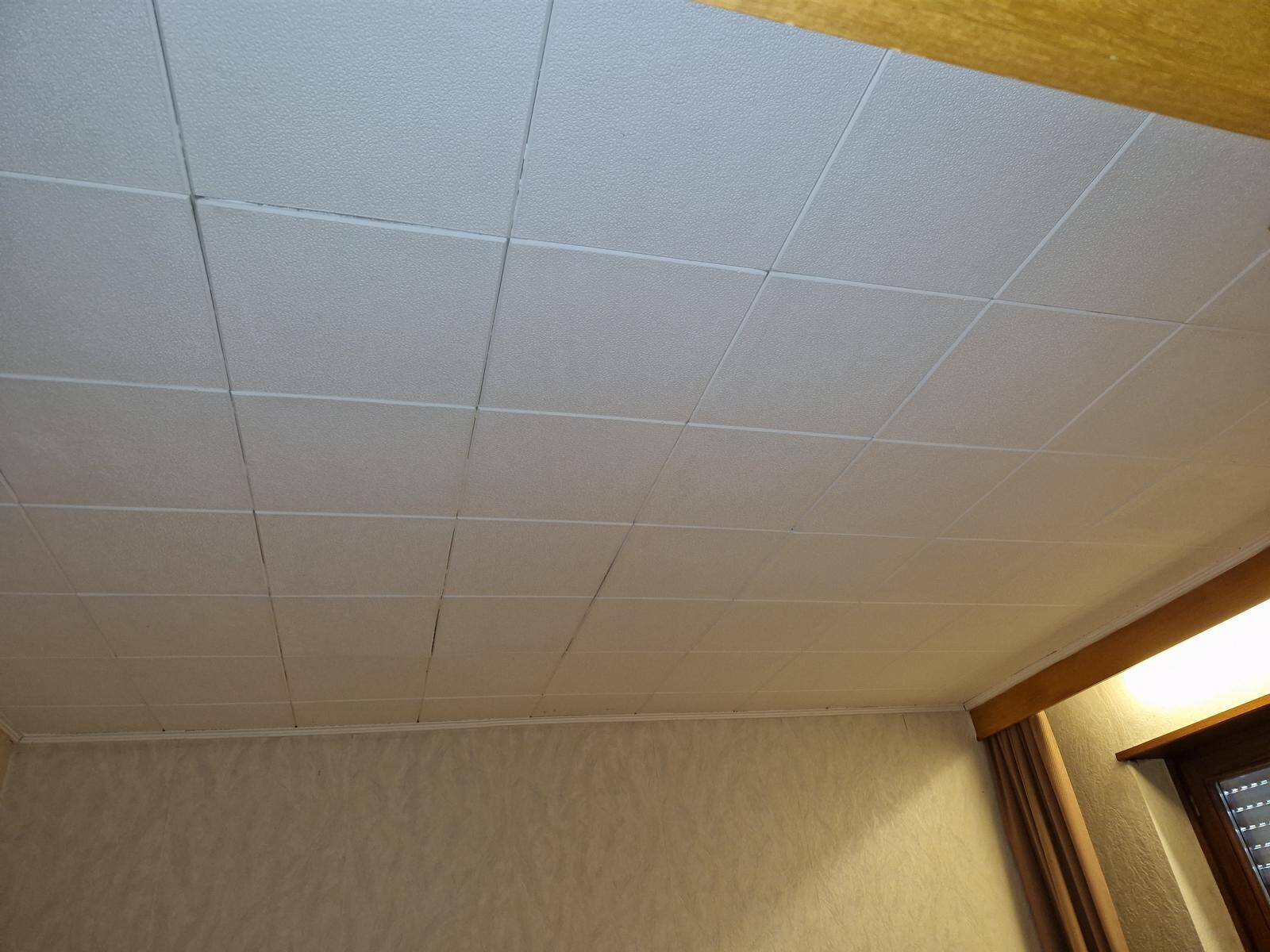
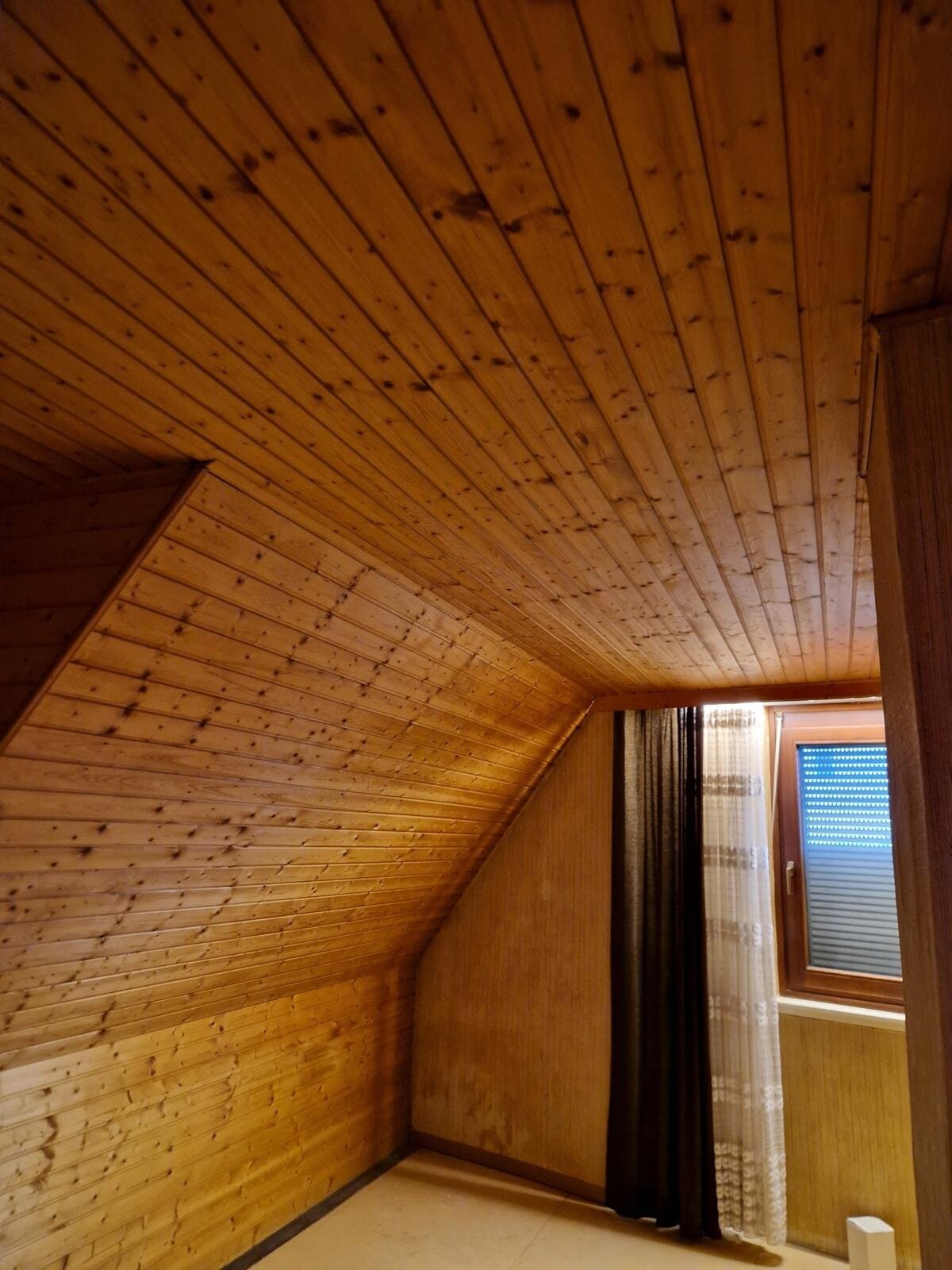
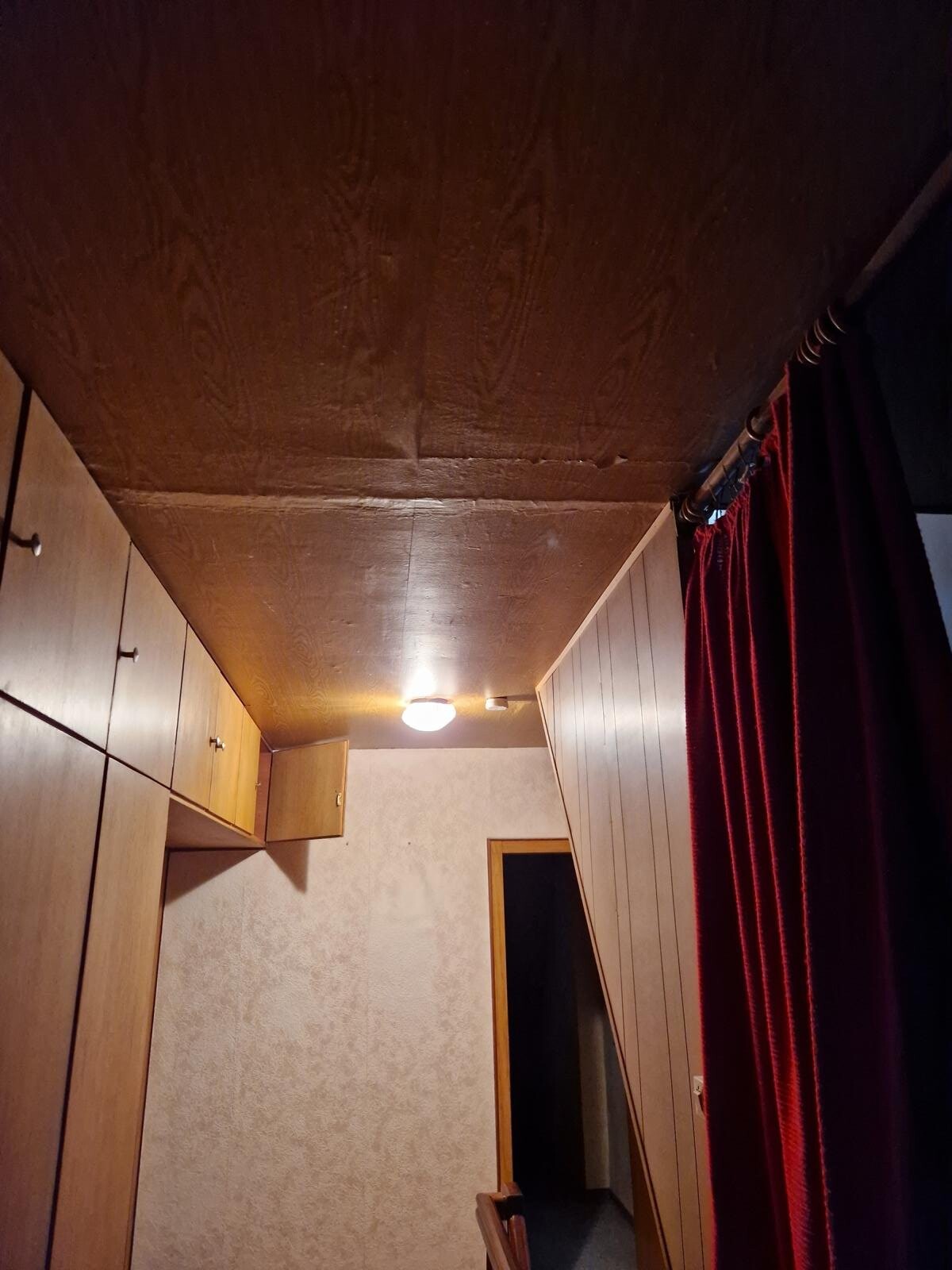
I am new to the forum and have spent the last few days going through numerous threads, but I still have not found a clear answer to my specific problem. Therefore, I am reaching out directly and hope for your expert advice.
Basically, I have to comply with the legal requirement to insulate either the roof or the top floor ceiling in my newly purchased older building. I want to do this myself as simply and cost-effectively as possible. Insulating the roof is currently not an option for me because it is mostly covered with wooden panelling, which I do not want to remove and reinstall. The attic should remain accessible, and a reduction in height due to the insulation of about 16cm (6 inches) would be acceptable.
Regarding the required insulation, I have already been informed that an insulation material with a thermal conductivity of 0.035 W/(m·K) (WLS 035) and a thickness of 140mm (5.5 inches) is necessary. My plan so far was to lay a vapor barrier foil on the existing top floor ceiling surface, then place 140mm (5.5 inches) thick load-bearing expanded polystyrene (EPS) insulation boards on top, and cover this with 22mm (0.9 inches) thick OSB3 panels. The material cost would be just under €1,000 for about 30m² (320 ft²) at a price of €20/m² for the EPS and €10/m² for the OSB3.
However, based on what I have read, I am now concerned about moisture management in this setup. To better assess the situation, I took several photos and will now try to describe the current construction in as much detail as possible:
- The ceiling of the floor below is covered on the underside with wooden ceilings, suspended ceilings, etc.—these I definitely want to keep as they are.
- The ceiling structure itself consists of wooden joists, and the spaces between them are completely filled with a solid hardened material (I am not sure what was used originally).
- The top floor ceiling in the attic is partly covered with old floorboards and particleboard.
Behind the chimney, there is a small cavity without floor covering. I would also insulate this later with just a vapor barrier and EPS, but I would omit the OSB3 panels in this non-accessible area.
How should I best build up the insulation to avoid moisture damage and keep costs and effort as low as possible?
Thank you in advance for your help and best regards
Current floor/ceiling construction:
Ceilings below the top floor ceiling:
N
nordanney4 Aug 2024 21:261. Are you sure that insulation is necessary? Only the minimum thermal protection must be in place.
2. There is no insulation police to check this. If anything, do it for yourself.
3. You can calculate the structure yourself using ubakus.
4. From experience, I would say it could work. The boards are vapor-tight. If needed, you can also tape the edges.
2. There is no insulation police to check this. If anything, do it for yourself.
3. You can calculate the structure yourself using ubakus.
4. From experience, I would say it could work. The boards are vapor-tight. If needed, you can also tape the edges.
D
Didges7235 Aug 2024 09:451) Yes, I am sure and have now confirmed it again with ubakus. Exactly 140mm (5.5 inches) of thermal insulation with a thermal conductivity of 0.035 W/(m·K) is missing to meet the minimum thermal protection requirements.
2) The chimney sweep has already addressed this with me and emphasized my obligation in this regard. As far as I understand, he even reports if I have not fulfilled my duty after 2 years.
3) See point 1)
4) Unfortunately not, that would have been great.
2) The chimney sweep has already addressed this with me and emphasized my obligation in this regard. As far as I understand, he even reports if I have not fulfilled my duty after 2 years.
3) See point 1)
4) Unfortunately not, that would have been great.
N
nordanney5 Aug 2024 11:40Didges723 schrieb:
Yes, I’m sure and have just double-checked with ubakus. It’s exactly the 140mm (5.5 inches) of insulation with a thermal conductivity of 0.035 W/(m·K) missing to meet the minimum thermal protection requirements. I doubt that. Not the current minimum thermal protection standards! In older buildings, a concrete ceiling (without any insulation) is often sufficient for that. I frequently see this in multi-family houses where no additional work is needed.
D
Didges7235 Aug 2024 17:01Shame on me, you are of course right. I overlooked something regarding the requirement. My old ceiling only needs to have a thermal resistance of R=0.90 m²K/W (5.1 ft²·°F·h/BTU). But how can I find out what the ceiling is filled with and whether this material already meets the requirement? Just looking at it is really difficult for me as a layperson.
N
nordanney5 Aug 2024 17:14Didges723 schrieb:
But how do I find out what the ceiling is filled with and whether this material already meets the requirements? Just looking at it is really difficult for me as a layperson.Well. Good question. I guess a professional will have to check it out.Similar topics