
ᐅ Insulation of the top floor ceiling (110 m² collar beam ceiling)
Created on: 8 Jan 2020 16:44
C
ChristianKroC
ChristianKro8 Jan 2020 16:44Hello insulation experts,
First of all, Happy New Year! … and I have three questions right away.
1.
In our split-level house (built in 1978), it’s now time to insulate the top floor ceiling leading to the unheated attic. On one hand, the current insulation is already 40 years old and has deteriorated from the original 100mm (4 inches) thickness down to 50mm (2 inches) or less. On the other hand, especially on windy days, a draft can be felt in the living area.
I’ve attached some pictures of the current situation and my plan below.
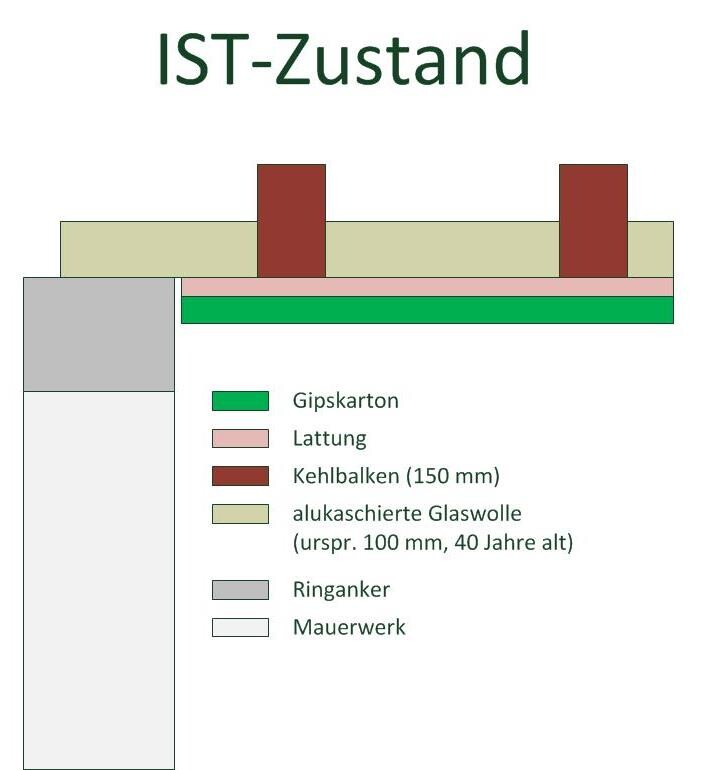
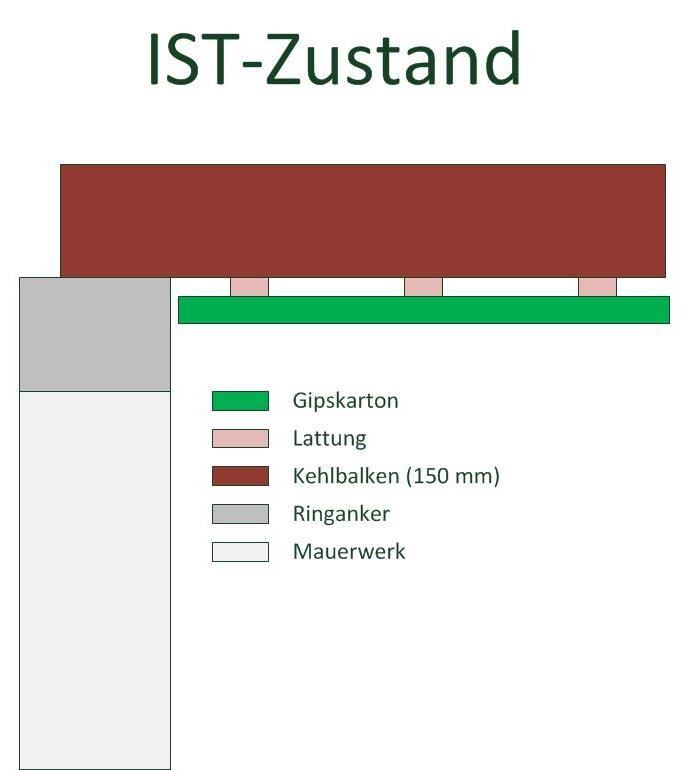
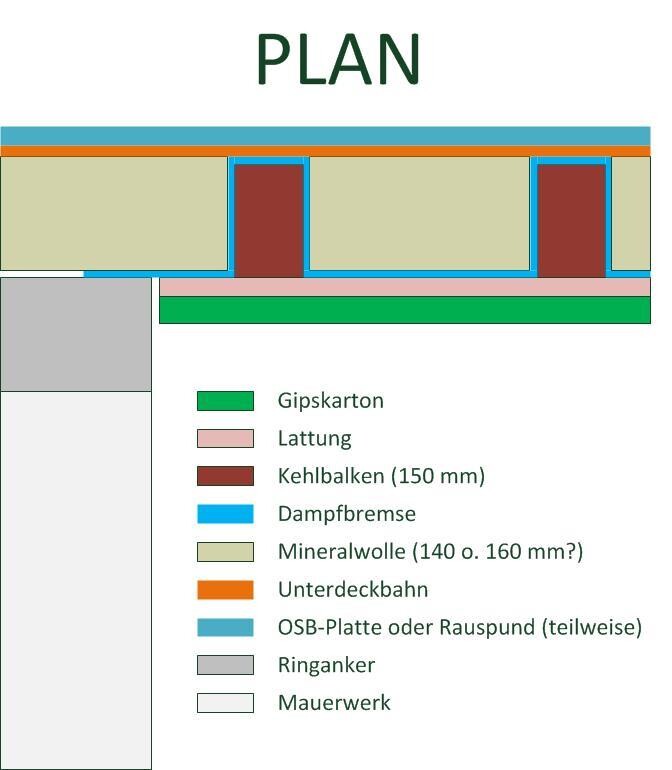
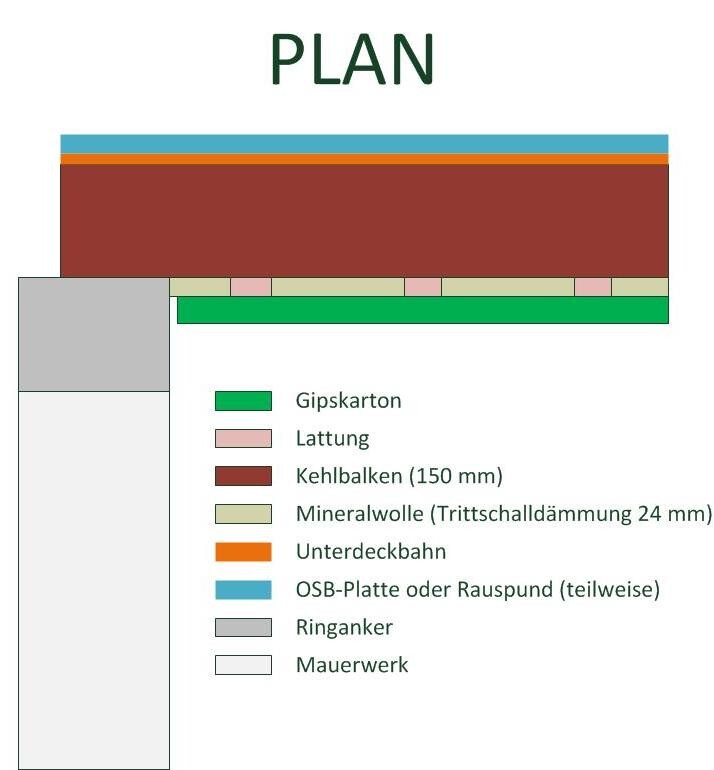
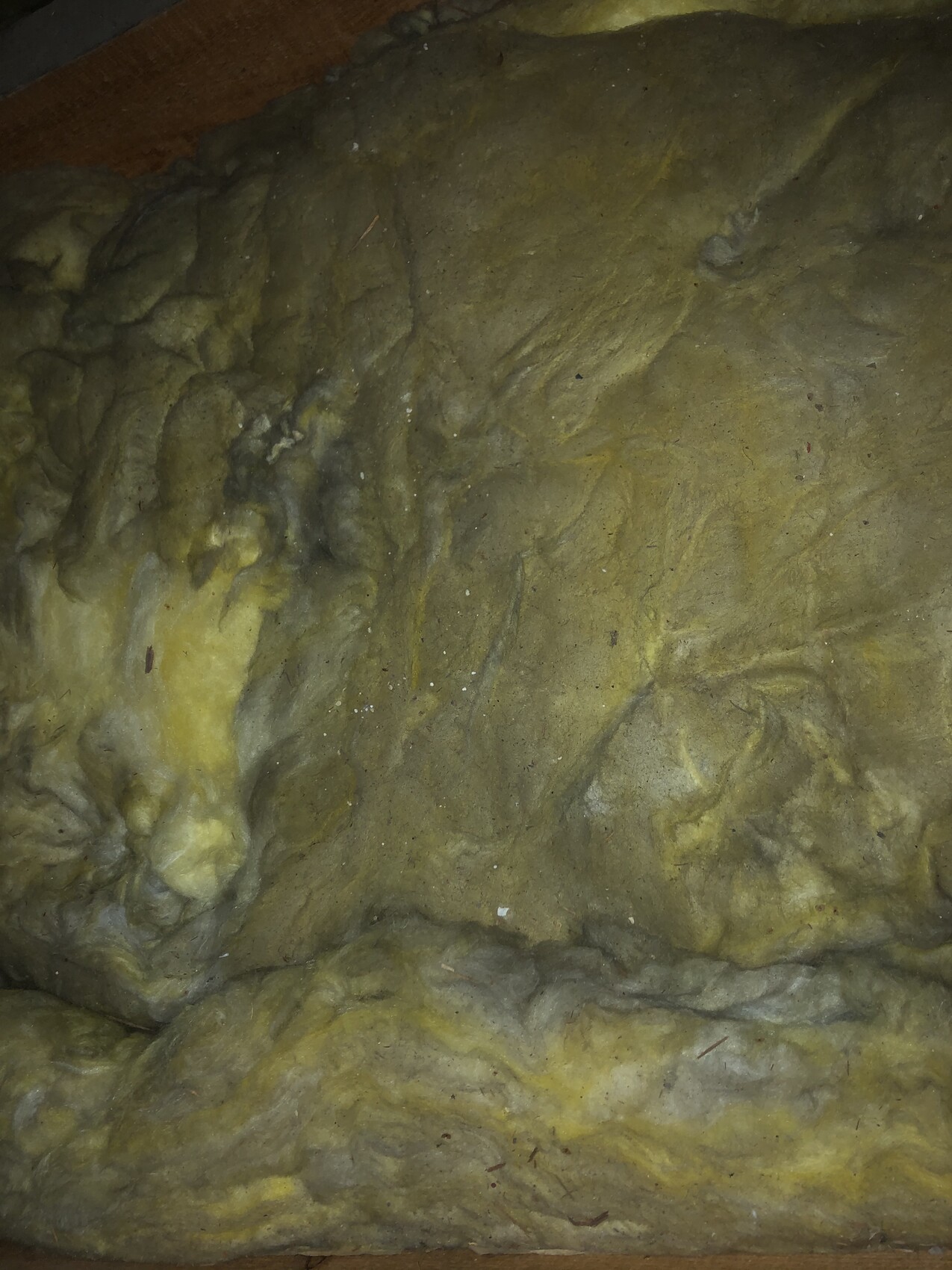
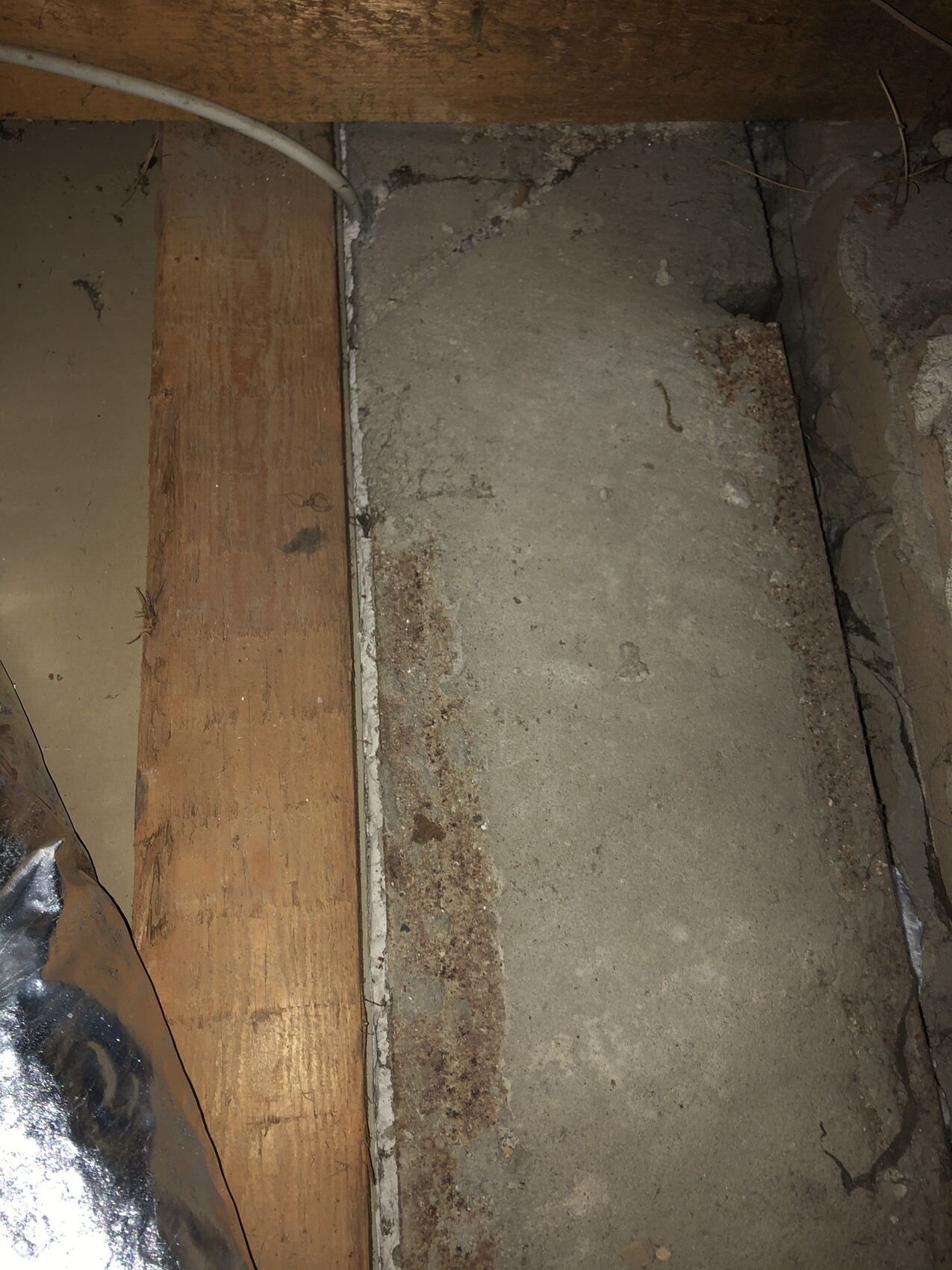
Here are my questions:
- Is a vapor retarder advisable or would it be better to use a climate membrane?
- If yes, how far should I stick it onto the masonry?
- Is impact sound insulation between the plasterboard and vapor retarder useful?
- Do I need an air gap for circulation between the underlay membrane and OSB or tongue-and-groove boards?
- What thickness of mineral wool should I use for 150mm (6 inches) collar beams – 140mm (5.5 inches) or 160mm (6.3 inches)?
2.
Also, there is an interior wall that is unfinished and should be insulated. Would you recommend bonding polystyrene boards here or should I build up collar beams and insulate with mineral wool? Do I need a vapor retarder in this case, or is the masonry sufficient?

3.
Finally, regarding the insulation of the chimneys. The plan is also to bond polystyrene boards 50cm (20 inches) high onto them. Is that correct?
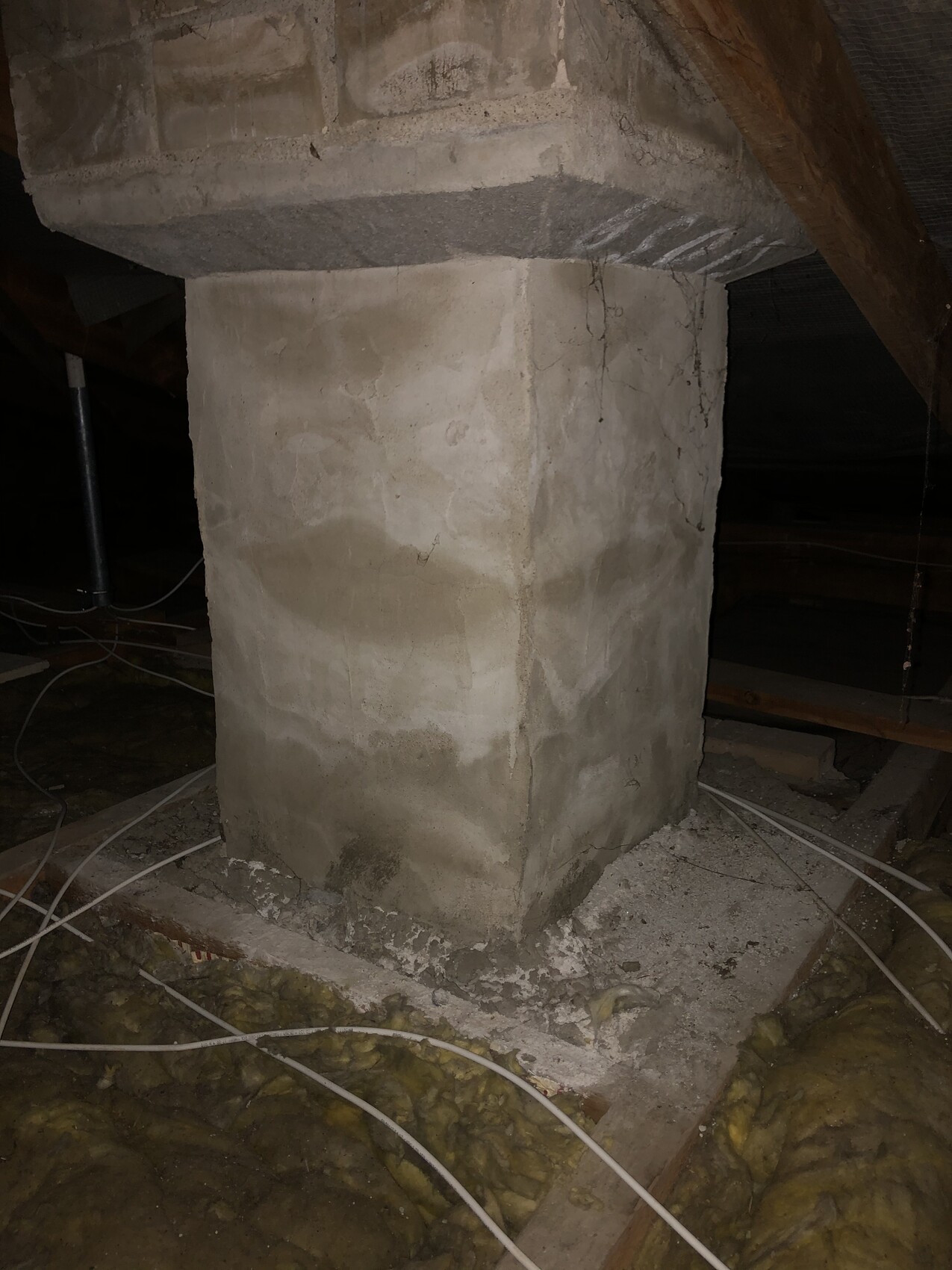
I look forward to your answers and thank you in advance!
Best regards,
Christian
First of all, Happy New Year! … and I have three questions right away.
1.
In our split-level house (built in 1978), it’s now time to insulate the top floor ceiling leading to the unheated attic. On one hand, the current insulation is already 40 years old and has deteriorated from the original 100mm (4 inches) thickness down to 50mm (2 inches) or less. On the other hand, especially on windy days, a draft can be felt in the living area.
I’ve attached some pictures of the current situation and my plan below.
Here are my questions:
- Is a vapor retarder advisable or would it be better to use a climate membrane?
- If yes, how far should I stick it onto the masonry?
- Is impact sound insulation between the plasterboard and vapor retarder useful?
- Do I need an air gap for circulation between the underlay membrane and OSB or tongue-and-groove boards?
- What thickness of mineral wool should I use for 150mm (6 inches) collar beams – 140mm (5.5 inches) or 160mm (6.3 inches)?
2.
Also, there is an interior wall that is unfinished and should be insulated. Would you recommend bonding polystyrene boards here or should I build up collar beams and insulate with mineral wool? Do I need a vapor retarder in this case, or is the masonry sufficient?
3.
Finally, regarding the insulation of the chimneys. The plan is also to bond polystyrene boards 50cm (20 inches) high onto them. Is that correct?
I look forward to your answers and thank you in advance!
Best regards,
Christian
 Vicky Pedia8 Jan 2020 22:12
So many questions,
You’re addressing a frequently debated issue, and I can already promise you’ll find many controversial opinions here:
First of all, your plans are basically fine. The old materials definitely need to be removed, no question.
Here’s my opinion and experience regarding the rest:
And now let the debate begin! There will be 99 other opinions.
You’re addressing a frequently debated issue, and I can already promise you’ll find many controversial opinions here:
First of all, your plans are basically fine. The old materials definitely need to be removed, no question.
Here’s my opinion and experience regarding the rest:
- Vapor retarder
- Two layers don’t matter, but both must be sealed airtight (5-10 cm (2-4 inches))
- No impact sound insulation; better to use tongue-and-groove boards, since OSB tends to mold due to the adhesives, but with good ventilation this is less of an issue
- Mineral wool 140 mm (5.5 inches), so it isn’t compressed and maintains contact
- No polystyrene (risk of mold); mineral wool or masonry alone would be sufficient
- Why insulate the chimney at all?
And now let the debate begin! There will be 99 other opinions.

ChristianKro schrieb:
Here are my questions:
1) Is a vapor retarder advisable, or should I rather use a climate membrane?A climate membrane has the advantage of allowing moisture to dry out. The only downside I can think of is the slightly higher cost.
2) If yes, how far should I attach it to the masonry?The joints in masonry are not airtight, so if you want to do it correctly, the vapor retarder should also cover the masonry. Alternatively, you can plaster the masonry; then you can stick the vapor retarder at the top and bottom and embed the adhesive tape into the plaster.
3) Is impact sound insulation between the drywall board and the vapor retarder useful?It slightly improves sound insulation toward the attic. However, as long as no one is kept up there, it won’t have a noticeable effect.
4) Do I need an air gap for circulation between the underlay membrane and OSB or board cladding?What is the intended purpose of the underlay membrane in this location? Offhand, I don’t see a need for it. OSB has the downside of also acting as a vapor retarder, which means you could trap your insulation and joists between two airtight layers. This should be avoided—better to use board cladding.
5) What thickness of mineral wool should I use for 150mm (6 inches) ceiling joists—140mm (5.5 inches) or 160mm (6.3 inches)?As my predecessor said: 140mm (5.5 inches)—don’t compress the insulation.
6) Also, an interior wall is unplastered and should be insulated. Do you advise bonding polystyrene boards directly, or raising joists and insulating with mineral wool? Do I need a vapor retarder here, or is the masonry sufficient?In my opinion, either approach works. I don’t understand why EPS would cause mold, since it is on the cold side. Regarding the vapor retarder, see above; the unplastered masonry is not airtight.
7) And finally, the chimney insulation. The plan is to bond a 50cm (20 inches) high polystyrene board. Is that correct? The chimney is a thermal bridge and ideally should be partially insulated. However, I would avoid EPS here due to heat exposure and recommend mineral wool.
Similar topics