
I
infooormatiker13 Sep 2011 12:29Hello,
Our single-family house is currently under construction. Today and tomorrow, the roof is being covered. An underlayment membrane is installed beneath the roof tiles.
I have a question regarding the attic: The attic is not insulated. The rafter spaces of the sloped roof and the ceilings on the upper floor will be insulated with mineral wool batts. A plastic vapor barrier membrane is planned beneath the mineral wool. The cladding will be done with gypsum board.
The attic is unheated (cold roof) and ventilated through the ridge.
We want to use the attic as a storage space. Now I am unsure whether it should be insulated or not. Is insulation worthwhile? If so, what type of insulation should be used?
Thank you very much
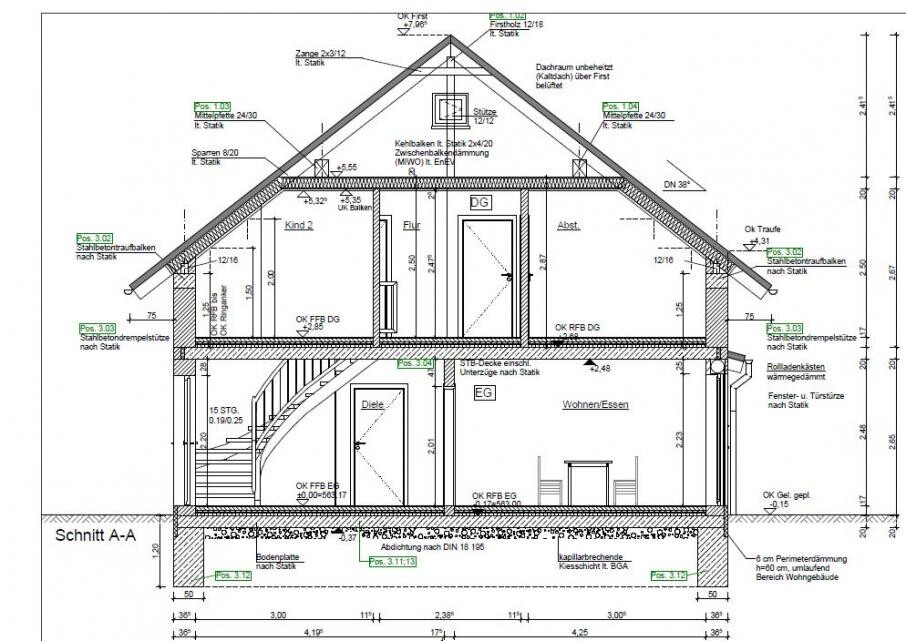
Our single-family house is currently under construction. Today and tomorrow, the roof is being covered. An underlayment membrane is installed beneath the roof tiles.
I have a question regarding the attic: The attic is not insulated. The rafter spaces of the sloped roof and the ceilings on the upper floor will be insulated with mineral wool batts. A plastic vapor barrier membrane is planned beneath the mineral wool. The cladding will be done with gypsum board.
The attic is unheated (cold roof) and ventilated through the ridge.
We want to use the attic as a storage space. Now I am unsure whether it should be insulated or not. Is insulation worthwhile? If so, what type of insulation should be used?
Thank you very much
Hello!
So – based on the usual construction descriptions, the primary issue typically lies elsewhere. The ceiling of the upper floor is generally insulated by applying insulation, usually mineral wool, in the attic space. This insulation is, of course, not walkable. The standard practice usually includes only partial coverage with tongue-and-groove boards.
Regarding roof insulation: an insulated space must also be able to be heated; otherwise, all the warm and humid indoor air will condense there and cannot be ventilated. There are great pictures of mold growth available online!
Regards,
TomTom1
So – based on the usual construction descriptions, the primary issue typically lies elsewhere. The ceiling of the upper floor is generally insulated by applying insulation, usually mineral wool, in the attic space. This insulation is, of course, not walkable. The standard practice usually includes only partial coverage with tongue-and-groove boards.
Regarding roof insulation: an insulated space must also be able to be heated; otherwise, all the warm and humid indoor air will condense there and cannot be ventilated. There are great pictures of mold growth available online!
Regards,
TomTom1
I
infooormatiker14 Sep 2011 12:05Thank you for the reply.
The standard does not include any flooring.
The floor is owner-supplied. What would be the best option here?
The standard does not include any flooring.
The floor is owner-supplied. What would be the best option here?
Informatiker schrieb:
Thank you for the reply.
The standard does not include any flooring.
The floor is a DIY task. What would be the best option here?Hello!
I had a screed installed—but of course, that’s not possible with a wooden beam ceiling.
Once the upper floor ceiling is in place, working with OSB boards will no longer be feasible—so basically, only tongue-and-groove boards remain. You’ll have more options when it comes to the floor covering: I would only install PVC on partial areas to avoid issues with vapor diffusion. Carpet might get musty. Laminate wouldn’t make sense. Leaving the tongue-and-groove boards raw or applying a glaze could still be an option.
Best regards,
TomTom1
Similar topics