
D
dr.evil961 Apr 2020 08:33Hello everyone!
We’re currently trying to figure out the best material for our exterior wall insulation. The exterior walls of our house are made of 240mm (9.5 inches) expanded clay, and the west side was upgraded in the 1970s with “nice” asbestos cladding panels, with 30-40mm (1-1.5 inches) glass wool insulation stuffed underneath. So the build-up is roughly interior plaster -> 240mm expanded clay -> exterior plaster -> 30-40mm battens + glass wool -> cladding. The north and south sides of the facade were not clad.
I also received a quote from a company that would use 120mm (4.7 inches) EPS 035 (expanded polystyrene) for the 130m2 (1,400 sq ft) area.
But now I’m wondering which material is best to build on. EPS is basically a plastic and similar to Styrofoam. I’ve also heard good things about wood fiber boards. I’d like to learn about the materials used on your houses and why.
I’d appreciate any helpful advice!
We’re currently trying to figure out the best material for our exterior wall insulation. The exterior walls of our house are made of 240mm (9.5 inches) expanded clay, and the west side was upgraded in the 1970s with “nice” asbestos cladding panels, with 30-40mm (1-1.5 inches) glass wool insulation stuffed underneath. So the build-up is roughly interior plaster -> 240mm expanded clay -> exterior plaster -> 30-40mm battens + glass wool -> cladding. The north and south sides of the facade were not clad.
I also received a quote from a company that would use 120mm (4.7 inches) EPS 035 (expanded polystyrene) for the 130m2 (1,400 sq ft) area.
But now I’m wondering which material is best to build on. EPS is basically a plastic and similar to Styrofoam. I’ve also heard good things about wood fiber boards. I’d like to learn about the materials used on your houses and why.
I’d appreciate any helpful advice!
EPS is chosen because it costs half as much and, unlike all “natural” fibers, is significantly more weather-resistant, for example, it is not susceptible to moisture.
Ask for EPS 032, which is actually common on the market and only slightly more expensive; however, you can probably save 2cm (1 inch) of insulation thickness, which saves you money again.
Ask for EPS 032, which is actually common on the market and only slightly more expensive; however, you can probably save 2cm (1 inch) of insulation thickness, which saves you money again.

There is a report from the Fraunhofer Institute stating that expanded polystyrene (EPS) facade insulation is no longer considered hazardous waste but is now recyclable. Mineral wool is more expensive, and as far as I know, its production is not very environmentally friendly.
K
knalltüte1 Apr 2020 19:14Really? Just because everyone does it?
What kind of facade cladding will go over the external thermal insulation composite system (ETICS / external wall insulation)?
Wood fiber insulation boards are vapor-permeable with good soundproofing and thermal insulation properties (including summer heat protection).
You might want to get a comparison quote including the cladding (wood? Slate? Render?). The price difference between the complete systems can be quite small depending on the facade cladding.
I like wood. Increasing the use of petroleum-based plastics can’t be the solution, can it?
Doing the work yourself on a ventilated facade with wood fiber insulation boards and larch cladding (shiplap or tongue-and-groove boards) is fairly straightforward.
Of course, have all options checked by an independent professional regarding efficiency, dew point, etc.
What kind of facade cladding will go over the external thermal insulation composite system (ETICS / external wall insulation)?
Wood fiber insulation boards are vapor-permeable with good soundproofing and thermal insulation properties (including summer heat protection).
You might want to get a comparison quote including the cladding (wood? Slate? Render?). The price difference between the complete systems can be quite small depending on the facade cladding.
I like wood. Increasing the use of petroleum-based plastics can’t be the solution, can it?
Doing the work yourself on a ventilated facade with wood fiber insulation boards and larch cladding (shiplap or tongue-and-groove boards) is fairly straightforward.
Of course, have all options checked by an independent professional regarding efficiency, dew point, etc.
C
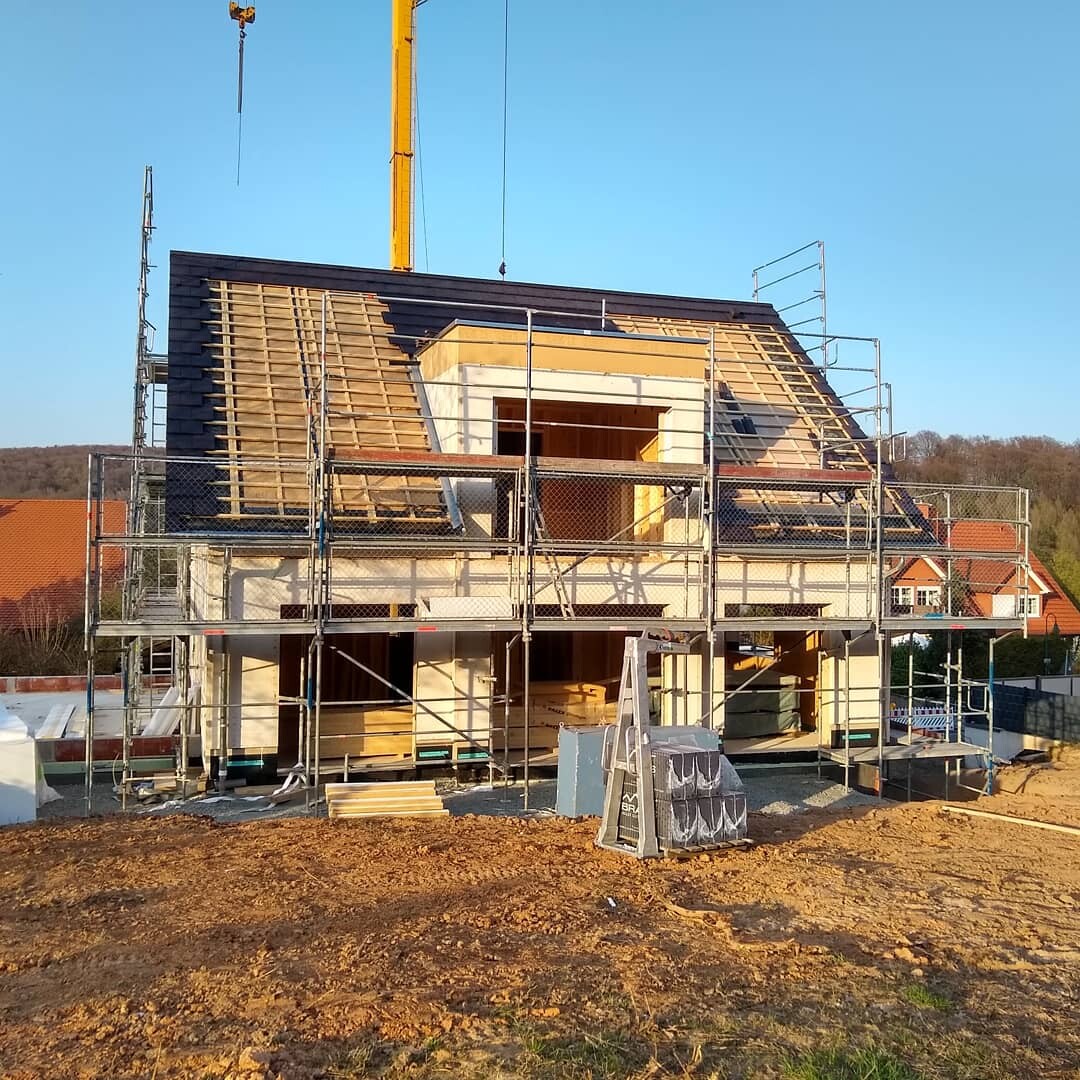
Chris25111 Apr 2020 21:55We have 60mm (2.4 inches) wood fiber boards on the exterior, and our house is entirely made of wood. I simply like the feeling of the space, didn’t want any plastic foil around my house, and aimed to build as sustainably as possible. Here’s how it looks:
Similar topics