
R
raceboy651 Dec 2019 21:43Hello experts,
Since I have not yet found reliable information on an important detail for me, I hope to find it here.
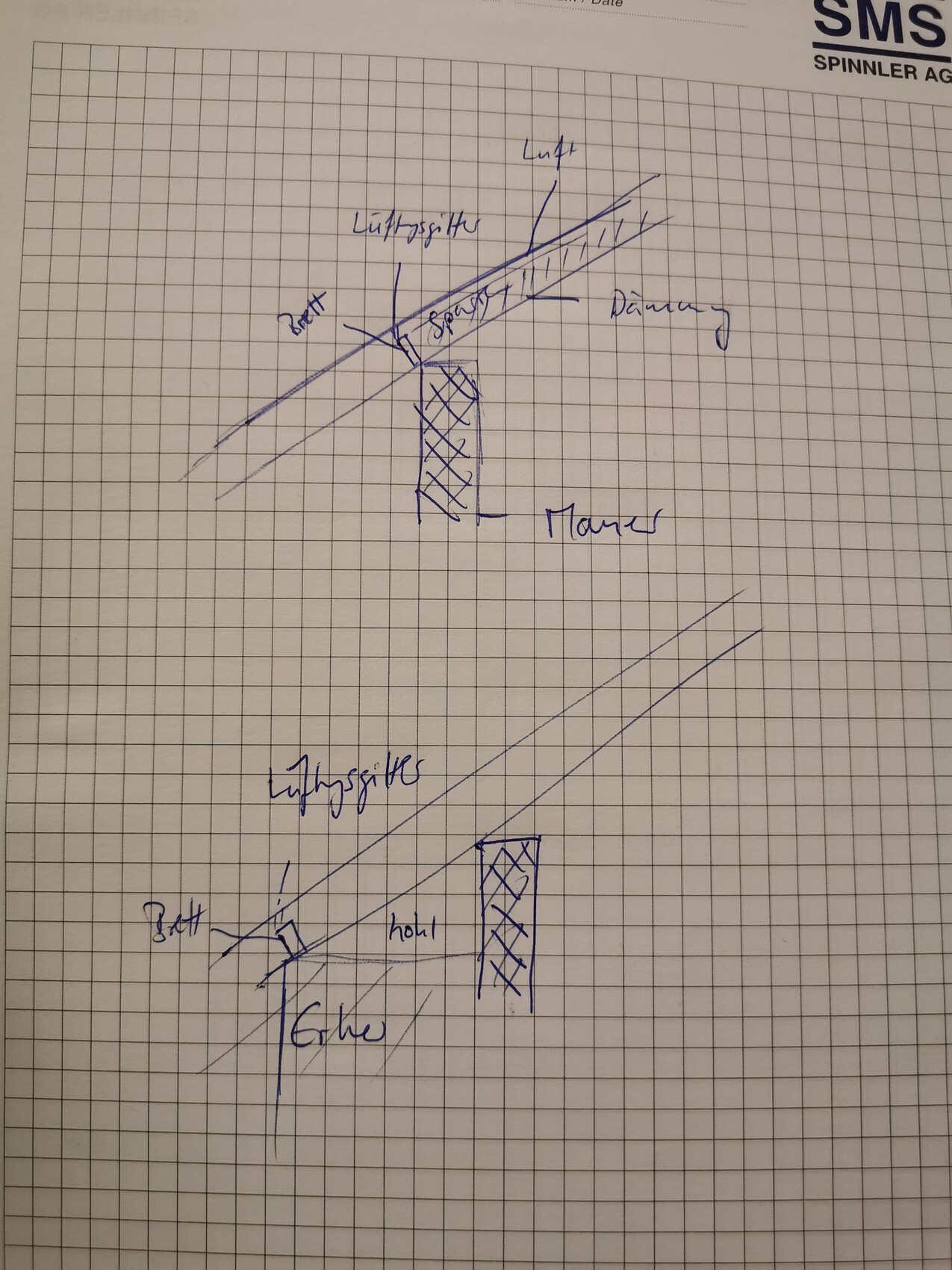
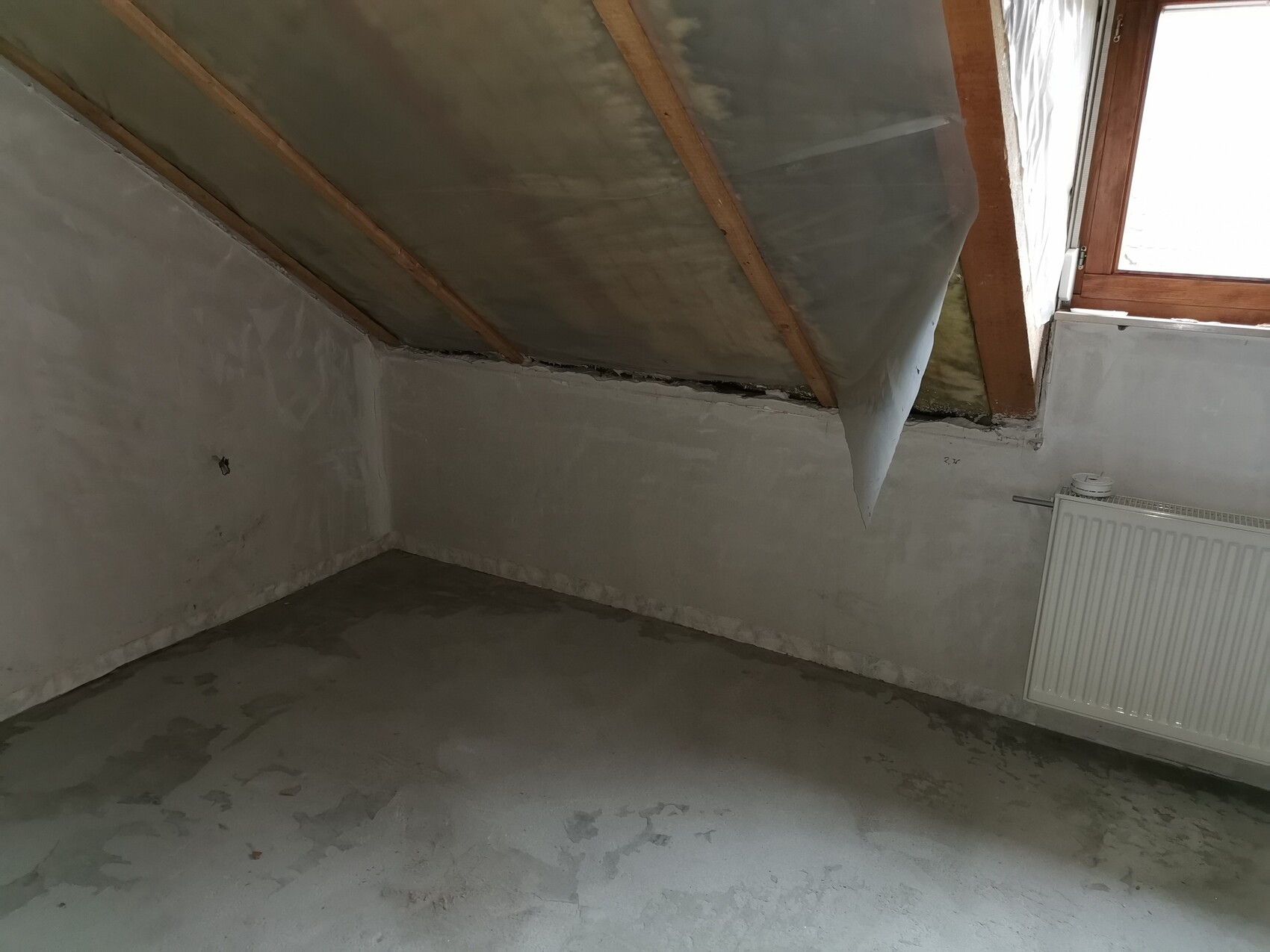
During the deconstruction of our house, which we will then renovate, I noticed the insulation situation in the knee wall area. Attached is a sketch; the top image shows the situation in a normal exterior wall, the lower one above the area of the bay window below.
The following topics:
1. Basically, the insulation should fill the triangle between the rafters and the knee wall so that there is no "thin spot" and therefore no thermal bridge in the insulation, right?
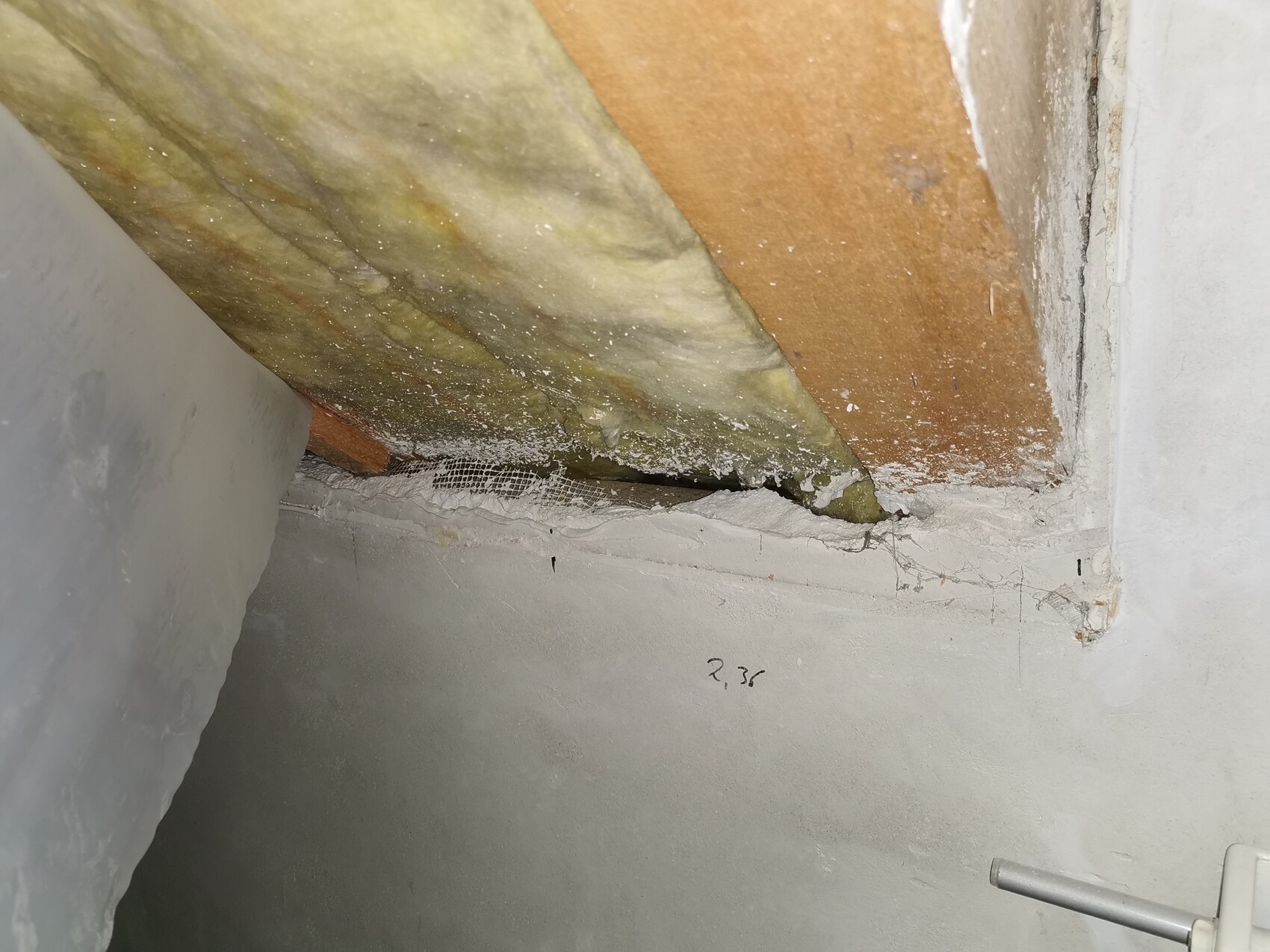
2. The finishing in the bay window area is somewhat unclear to me. In the normal area, the batt insulation ends at the board, and the free air layer above is ventilated by the perforated mesh. How should this be done in the bay window area? A second board in the cavity against which the batt insulation is pressed? Currently, it simply ends without a finishing board or anything similar.
3. The vapor retarder must be properly connected to the knee wall at the bottom, correct?
4. The vapor barrier is currently loosely installed and neither connected nor taped at the joints. This seems to have worked for the past 28 years since the cold roof ensured moisture transport. However, I would now like to install a properly laid and connected vapor barrier.
Thanks in advance for your support.
Best regards
Since I have not yet found reliable information on an important detail for me, I hope to find it here.
During the deconstruction of our house, which we will then renovate, I noticed the insulation situation in the knee wall area. Attached is a sketch; the top image shows the situation in a normal exterior wall, the lower one above the area of the bay window below.
The following topics:
1. Basically, the insulation should fill the triangle between the rafters and the knee wall so that there is no "thin spot" and therefore no thermal bridge in the insulation, right?
2. The finishing in the bay window area is somewhat unclear to me. In the normal area, the batt insulation ends at the board, and the free air layer above is ventilated by the perforated mesh. How should this be done in the bay window area? A second board in the cavity against which the batt insulation is pressed? Currently, it simply ends without a finishing board or anything similar.
3. The vapor retarder must be properly connected to the knee wall at the bottom, correct?
4. The vapor barrier is currently loosely installed and neither connected nor taped at the joints. This seems to have worked for the past 28 years since the cold roof ensured moisture transport. However, I would now like to install a properly laid and connected vapor barrier.
Thanks in advance for your support.
Best regards

R
raceboy654 Dec 2019 09:14Hello,
Thank you for the response.
Regarding point 2, one more addition: The ceiling of the bay window is insulated, you can see insulation boards. Does the edge there also need to be finished with a board and a ventilation grille above it?
Regards and thank you.
Thank you for the response.
Regarding point 2, one more addition: The ceiling of the bay window is insulated, you can see insulation boards. Does the edge there also need to be finished with a board and a ventilation grille above it?
Regards and thank you.
The board is probably only intended to prevent the insulation wool from slipping down. If you can ensure this by other means, I don’t see a strict need to install one there. The ventilation grille, on the other hand, is meant to stop any pests from getting in. I would assume there is one installed at the outer edge of the bay window, so another one at the knee wall is therefore unnecessary, but of course it doesn’t hurt to have it.
If your exterior wall is insulated, I would also check whether the knee wall facing the interior is insulated as well.
If your exterior wall is insulated, I would also check whether the knee wall facing the interior is insulated as well.
R
raceboy654 Dec 2019 12:57Hello again,
Thank you for the information. Yes, such a board with a grid is installed further down in the eaves area, so this second one would be an addition.
Although the exterior wall is not insulated, it is built with 30cm (12 inches) hollow bricks that have a very good U-value, including in the bay window area, as this is fully built down to the basement (house construction calculations are available). It appears that in the knee wall area, only 24cm (9.5 inches) hollow bricks were used for the knee wall, which also have a decent U-value. Therefore, I do not plan to add any more insulation here.
Thank you for the information. Yes, such a board with a grid is installed further down in the eaves area, so this second one would be an addition.
Although the exterior wall is not insulated, it is built with 30cm (12 inches) hollow bricks that have a very good U-value, including in the bay window area, as this is fully built down to the basement (house construction calculations are available). It appears that in the knee wall area, only 24cm (9.5 inches) hollow bricks were used for the knee wall, which also have a decent U-value. Therefore, I do not plan to add any more insulation here.
R
raceboy6513 Dec 2019 19:42Hello everyone,
I have another question:
I’m considering replacing the insulation with a new one that has better thermal properties (thermal conductivity class 32). This way, I can also be sure about the materials used (mineral wool fibers) and the proper installation.
Since it is a cold roof (rafter height 18cm (7 inches), insulation 14cm (5.5 inches), ventilation layer 4cm (1.5 inches)), I would like to keep the insulation thickness at 14cm (5.5 inches) to maintain the cold roof construction.
What do I need to consider regarding energy efficiency regulations? I will achieve the currently required 0.3 W/m²K, but reaching 0.24 W/m²K will not be possible with this setup. Is it acceptable to have this limitation due to the ventilation layer as a technical constraint, or does the 10% rule apply here if I don’t change the roof tiles?
Thanks and best regards
I have another question:
I’m considering replacing the insulation with a new one that has better thermal properties (thermal conductivity class 32). This way, I can also be sure about the materials used (mineral wool fibers) and the proper installation.
Since it is a cold roof (rafter height 18cm (7 inches), insulation 14cm (5.5 inches), ventilation layer 4cm (1.5 inches)), I would like to keep the insulation thickness at 14cm (5.5 inches) to maintain the cold roof construction.
What do I need to consider regarding energy efficiency regulations? I will achieve the currently required 0.3 W/m²K, but reaching 0.24 W/m²K will not be possible with this setup. Is it acceptable to have this limitation due to the ventilation layer as a technical constraint, or does the 10% rule apply here if I don’t change the roof tiles?
Thanks and best regards
Similar topics