
Hello,
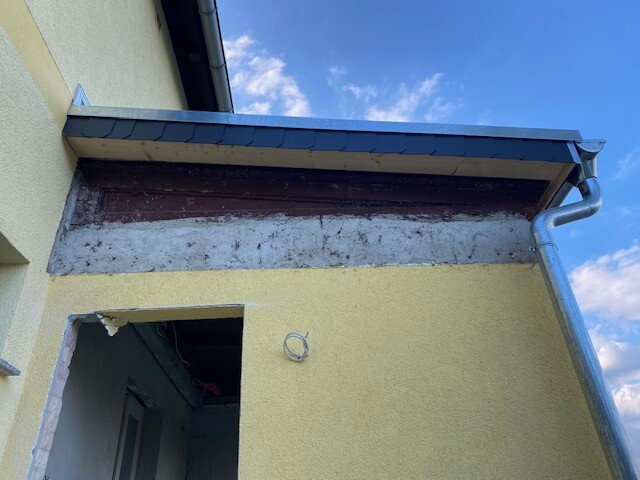
we have an extension on our house that is being converted into a living space (kitchen). So far, the roof was made with a simple wooden board structure and a double layer of roofing felt. Now, we have had external insulation installed on the roof, including all the necessary components (see Picture 1).
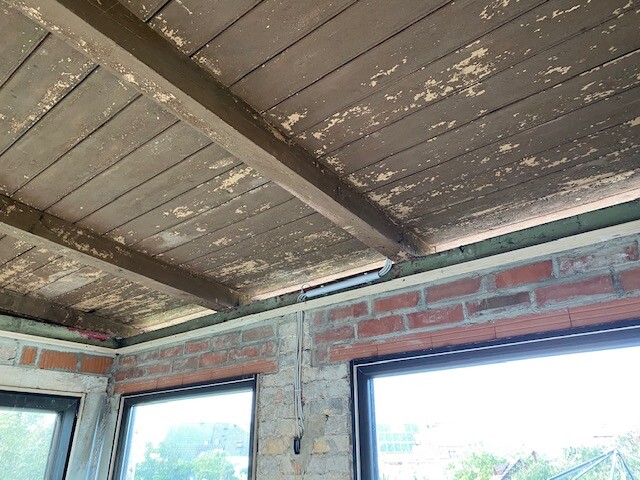
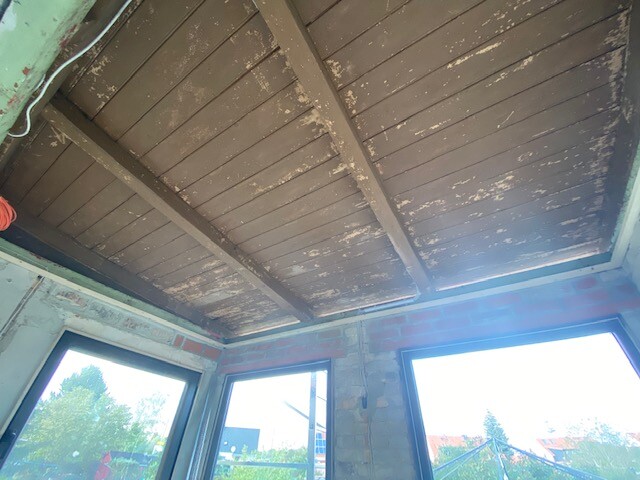
We are wondering how to seal the interior properly to avoid any mold issues. Previously, this was an unheated space and the roof itself was well ventilated – the exterior unfinished area plus the wood (see Picture 1) was only covered with wooden boards. We would like to suspend the ceiling again from the continuous lower beam (green) inside (see Picture 2). However, we still need to properly seal the roof structure. At the moment, you can still see through from the front between the rafters (see Picture 3).
Does anyone have advice on the best way to construct the ceiling from the inside, including sealing? (Keyword: vapor barrier)?
We are open to all suggestions. Thanks!
we have an extension on our house that is being converted into a living space (kitchen). So far, the roof was made with a simple wooden board structure and a double layer of roofing felt. Now, we have had external insulation installed on the roof, including all the necessary components (see Picture 1).
We are wondering how to seal the interior properly to avoid any mold issues. Previously, this was an unheated space and the roof itself was well ventilated – the exterior unfinished area plus the wood (see Picture 1) was only covered with wooden boards. We would like to suspend the ceiling again from the continuous lower beam (green) inside (see Picture 2). However, we still need to properly seal the roof structure. At the moment, you can still see through from the front between the rafters (see Picture 3).
Does anyone have advice on the best way to construct the ceiling from the inside, including sealing? (Keyword: vapor barrier)?
We are open to all suggestions. Thanks!
Ah, great, that was our thought as well – we were just unsure if it would be okay since we want the ceiling to be flat, but the roof slopes. That would mean we’d have to stuff a lot of insulation wool against the house wall.
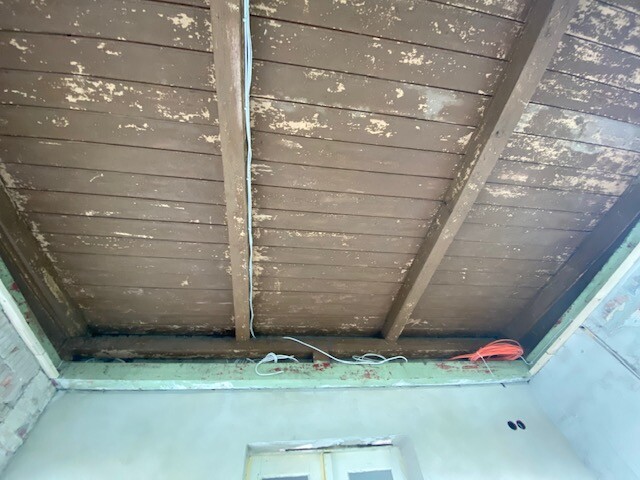
How could the "gaps" at the front be closed so that it is also moisture-proof? We were thinking of Powerpanel Aqua, but since it isn’t vapor-permeable, we would probably have a moisture problem in summer because the moisture couldn’t escape.
I took a picture from the outside. We are basically between two layers of wood, so bricks wouldn’t hold.
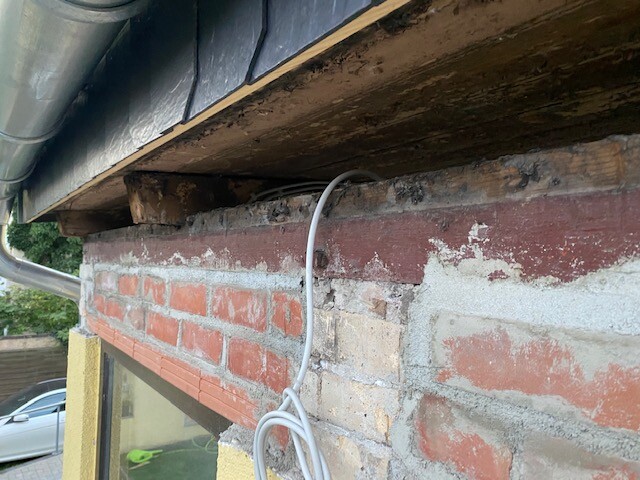
How could the "gaps" at the front be closed so that it is also moisture-proof? We were thinking of Powerpanel Aqua, but since it isn’t vapor-permeable, we would probably have a moisture problem in summer because the moisture couldn’t escape.
I took a picture from the outside. We are basically between two layers of wood, so bricks wouldn’t hold.
N
Nice-Nofret10 Sep 2020 20:44Hmm, before I saw off anything there, I would want to be sure that the overhang isn’t supporting the roof.
Similar topics