
ᐅ Insulating the knee wall from the outside: which materials to use and how to attach them?
Created on: 29 Jan 2019 08:09
A
ArcplaneHello everyone!
We have purchased an old house built in 1960, solid construction, but completely uninsulated. Upstairs, all the rooms have sloped ceilings and knee walls. Behind each knee wall is an attic space that can be accessed through a hatch from the room.
We now want to insulate the knee walls from the outside, meaning not on the room side, but on the attic side. So, it is not exposed to the weather, but it is in a cold attic space.
What is suitable for insulation in this case? Fire safety is very important to us, so materials like polystyrene foam are out of the question. At the same time, it should not be too expensive because we plan to demolish the house completely and rebuild in a few years—if we have the budget for it. But until then, we don’t want to be cold.
There are no rafters in the attic space, so it would be difficult to fix roll insulation. Or should we install battens specifically for this purpose?
The pictures show the attic spaces from inside (and the previous owner's meager attempts at insulation, which we will remove) and the hatch from the outside.
The hatch itself is also a problem: How can it be insulated?
Oh, and we really don’t intend to use the attic spaces regularly; the solution does not need to be walkable at all times. It just needs to be possible to open the hatches occasionally for inspection purposes.
Any advice would be greatly appreciated—it’s already cold up there…
Thank you very much and best regards,
Andreas
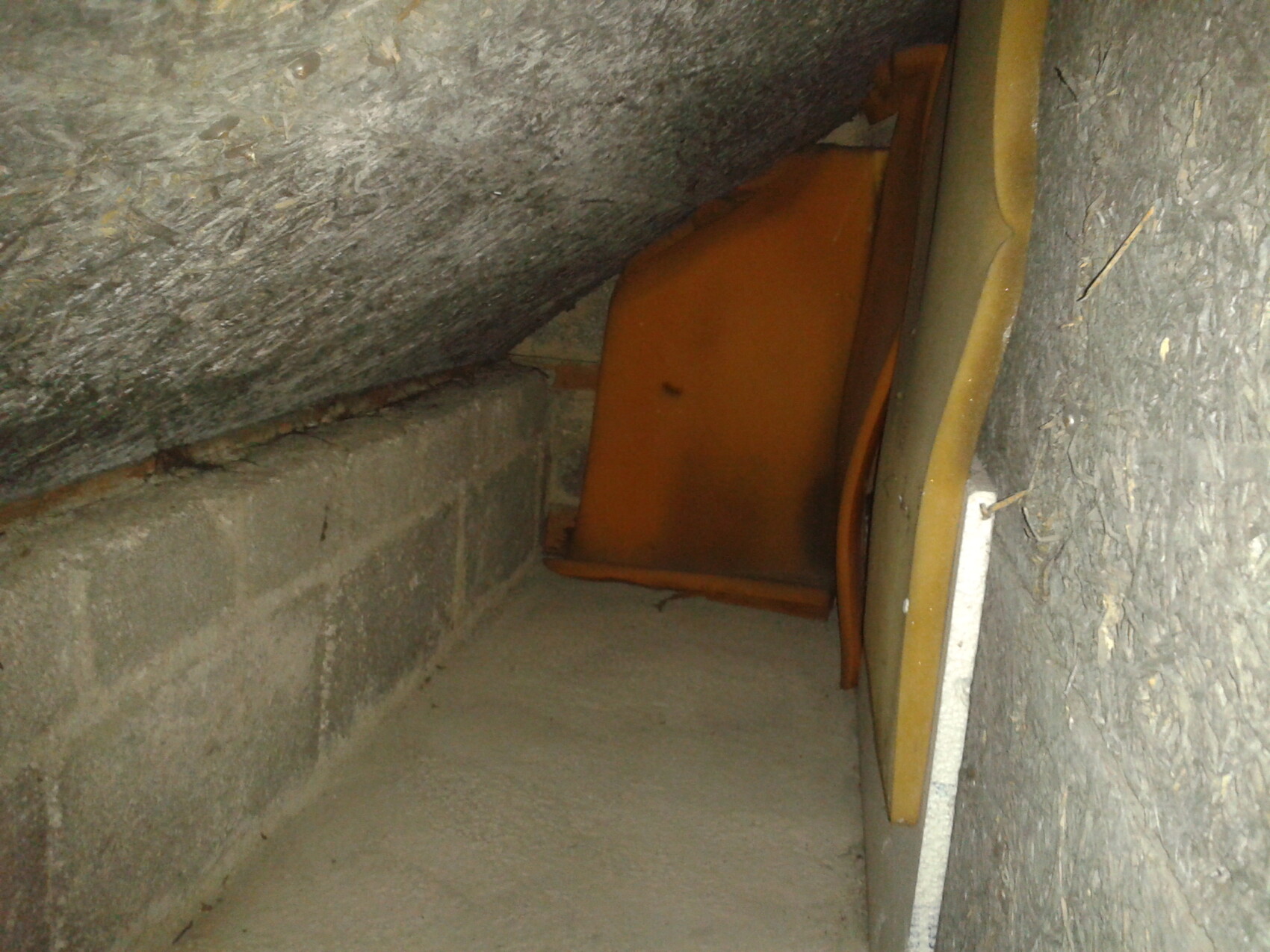
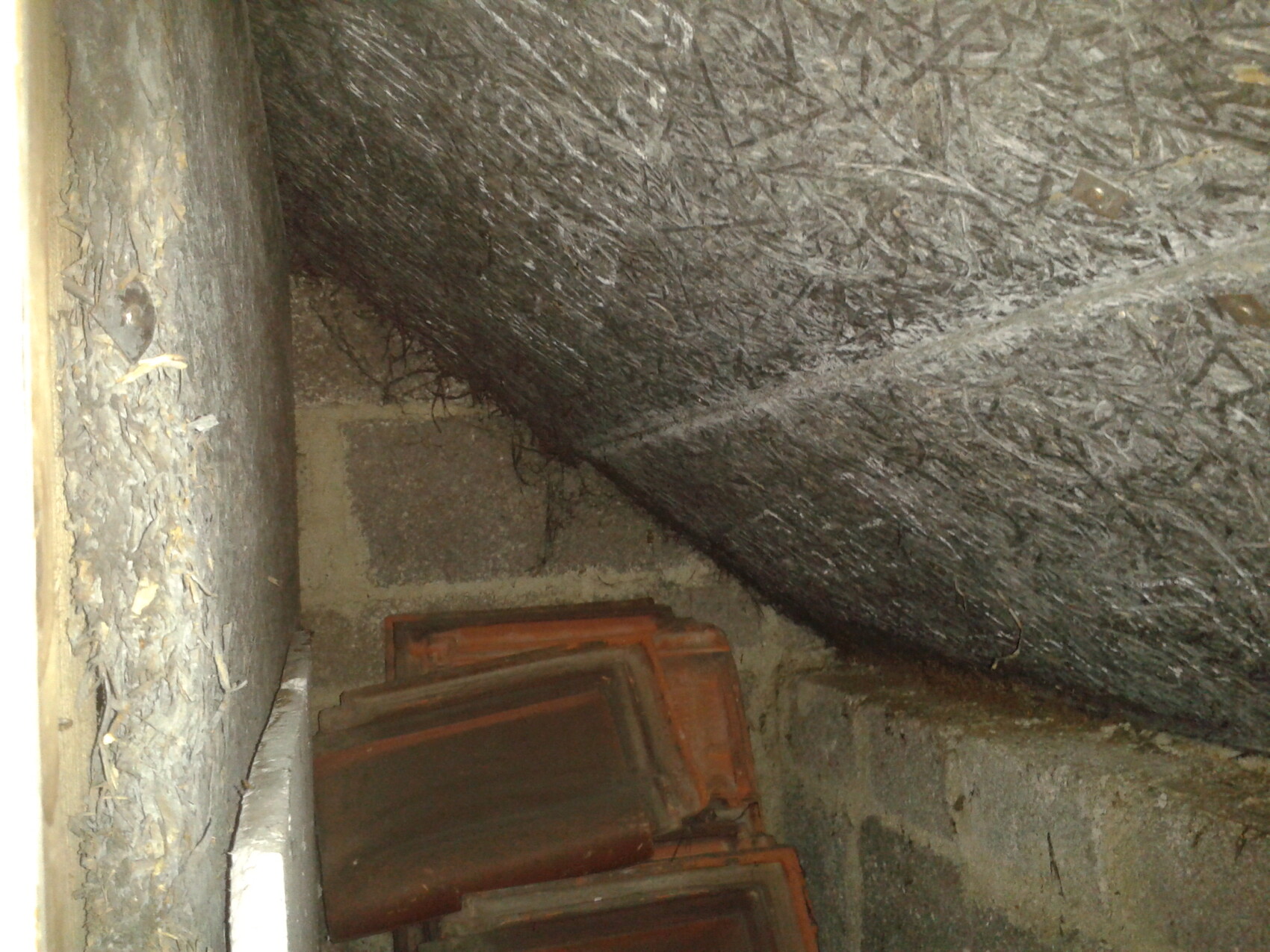
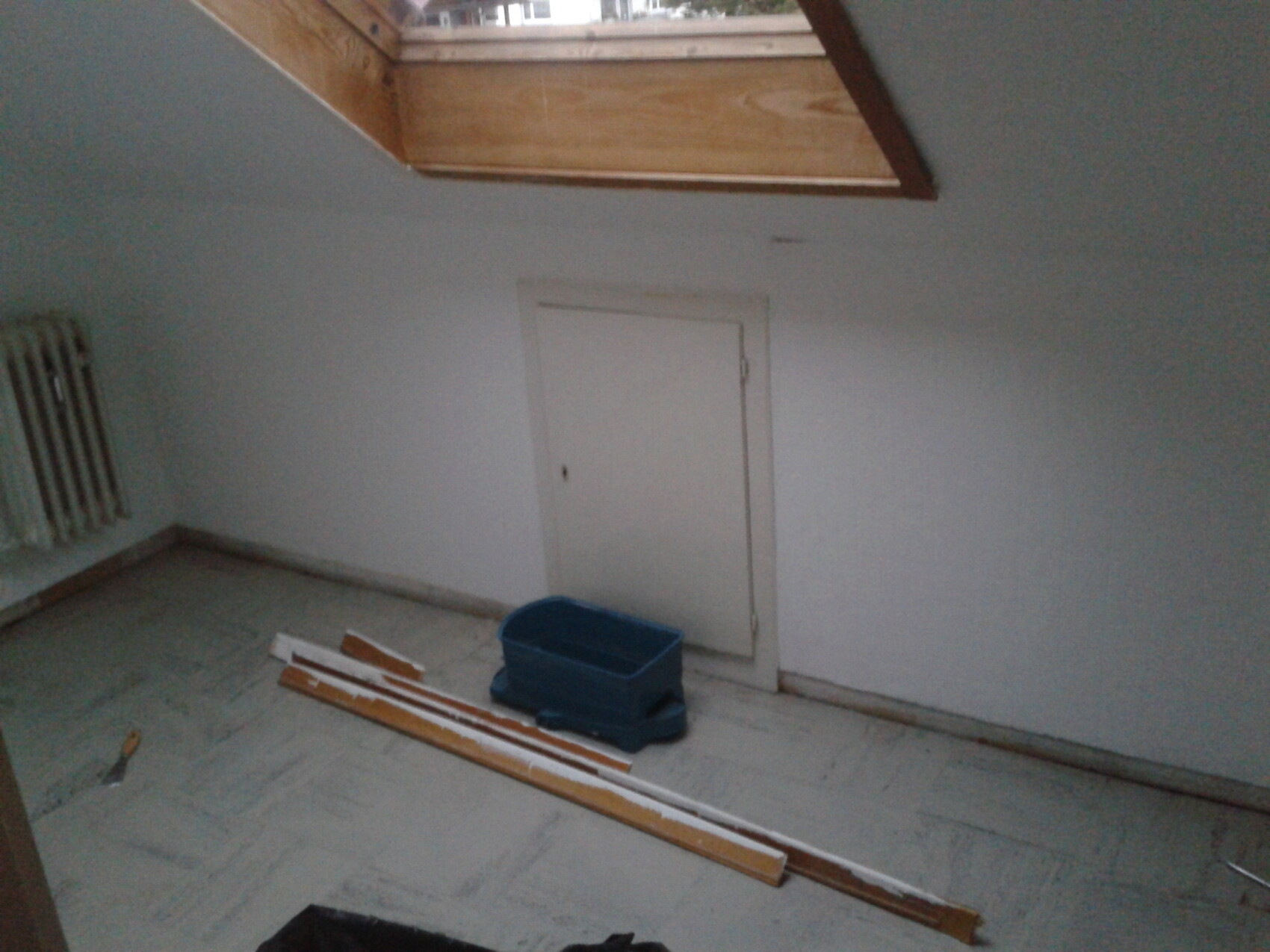
We have purchased an old house built in 1960, solid construction, but completely uninsulated. Upstairs, all the rooms have sloped ceilings and knee walls. Behind each knee wall is an attic space that can be accessed through a hatch from the room.
We now want to insulate the knee walls from the outside, meaning not on the room side, but on the attic side. So, it is not exposed to the weather, but it is in a cold attic space.
What is suitable for insulation in this case? Fire safety is very important to us, so materials like polystyrene foam are out of the question. At the same time, it should not be too expensive because we plan to demolish the house completely and rebuild in a few years—if we have the budget for it. But until then, we don’t want to be cold.
There are no rafters in the attic space, so it would be difficult to fix roll insulation. Or should we install battens specifically for this purpose?
The pictures show the attic spaces from inside (and the previous owner's meager attempts at insulation, which we will remove) and the hatch from the outside.
The hatch itself is also a problem: How can it be insulated?
Oh, and we really don’t intend to use the attic spaces regularly; the solution does not need to be walkable at all times. It just needs to be possible to open the hatches occasionally for inspection purposes.
Any advice would be greatly appreciated—it’s already cold up there…
Thank you very much and best regards,
Andreas
For the roof, mineral wool is commonly used, but just stuffing something in somewhere doesn’t really help much.
That brings us to the second point. You will probably never have more money later, unless you win the lottery. Building costs keep rising, and interest rates are increasing. In 5 years, you might be able to afford less house than you can now. Of course, there are exceptions, like fresh graduates who have debts instead of equity, but at 38 years old, that shouldn’t apply. In 5 years, it will also be difficult to get a loan at all.
That brings us to the second point. You will probably never have more money later, unless you win the lottery. Building costs keep rising, and interest rates are increasing. In 5 years, you might be able to afford less house than you can now. Of course, there are exceptions, like fresh graduates who have debts instead of equity, but at 38 years old, that shouldn’t apply. In 5 years, it will also be difficult to get a loan at all.
D
Deliverer29 Jan 2019 10:39Nothing you do at this particular point now will pay off over the next 10 years.
W
wurmwichtel29 Jan 2019 12:58Have cement-bonded wood wool boards installed in the knee walls?
How thick are the walls?
I wouldn’t necessarily touch that. On one hand, wood wool boards provide decent insulation, and on the other hand, insulating only the knee walls while leaving the rest of the house untreated would be disadvantageous.
Whether you’d actually save anything is questionable (I don’t think so) since the payback periods nowadays are between 20 and 70 years if you comply with the regulations.
How thick are the walls?
I wouldn’t necessarily touch that. On one hand, wood wool boards provide decent insulation, and on the other hand, insulating only the knee walls while leaving the rest of the house untreated would be disadvantageous.
Whether you’d actually save anything is questionable (I don’t think so) since the payback periods nowadays are between 20 and 70 years if you comply with the regulations.
Thank you for the quick initial responses!
Currently, we only live in the upper floor. At night, it is already cold and drafty, especially for my wife and child. That is why we want to add insulation. The goal is not to recoup costs but to improve quality of life.
The thing about the thin fiber cement panels is correct, but only on one side of the house. I don’t have a photo of the other side handy, but there you can only see the bare masonry. The walls are about 20 to 30 cm (8 to 12 inches) thick.
However, even where the panels are installed, the problem with the shutters remains. There are also gaps and cracks everywhere, which cause noticeable drafts.
I would be very grateful for any further suggestions!
Best regards,
Andreas
Currently, we only live in the upper floor. At night, it is already cold and drafty, especially for my wife and child. That is why we want to add insulation. The goal is not to recoup costs but to improve quality of life.
The thing about the thin fiber cement panels is correct, but only on one side of the house. I don’t have a photo of the other side handy, but there you can only see the bare masonry. The walls are about 20 to 30 cm (8 to 12 inches) thick.
However, even where the panels are installed, the problem with the shutters remains. There are also gaps and cracks everywhere, which cause noticeable drafts.
I would be very grateful for any further suggestions!
Best regards,
Andreas

Arcplane schrieb:
On the upper floor, all rooms have sloping ceilings and knee walls. Behind the knee walls, there is an attic space accessible through a hatch from the room.
We now want to insulate the knee walls. Specifically, from the outside—not from the room side, but from the attic side. Using the correct terms is extremely helpful to avoid misunderstandings. Usually, this is a minor detail for me, but here is a special case where both exist simultaneously, so the terms should be clearly separated:
If I understand correctly, you want the insulation where the yellow foam is applied on the attic side of the dwarf wall, shown in the picture. You want to leave the knee wall untouched, which I also consider to be the sensible approach.
https://www.instagram.com/11antgmxde/
https://www.linkedin.com/company/bauen-jetzt/
Similar topics