
Hello everyone,
We are carrying out a full renovation of the house we bought (built in 1969). In May, we replaced the roof. Since a new roof covering was more than necessary, we decided to install a 100mm (4 inch) exterior (above-rafter) insulation layer.
Between the rafters, we insulated with 120mm (5 inch) glass wool towards the heated upper floor. The collar beams still contain 40mm (1.5 inch) glass wool from 1969.
We will also install a new roof hatch with a folding ladder.
The attic is unheated, has a roof window, and the floor consists of 23mm (1 inch) tongue-and-groove boards. The attic will be used as storage space.
We planned to insulate between the rafters in the attic as well with 120mm (5 inch) glass wool.
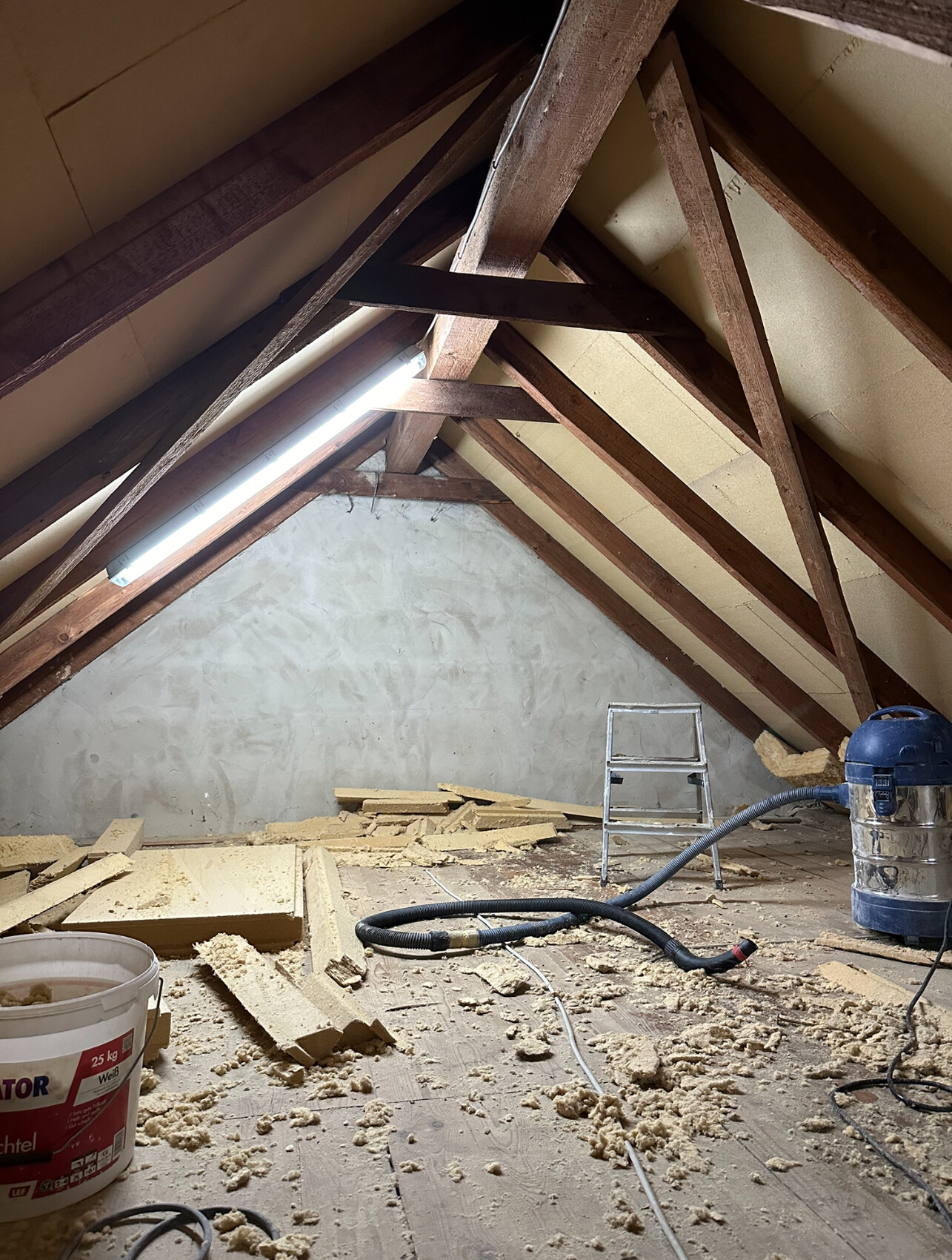
However, installing a vapor retarder airtight only in this area is nearly impossible due to the many braces under the ridge beam (see photo).
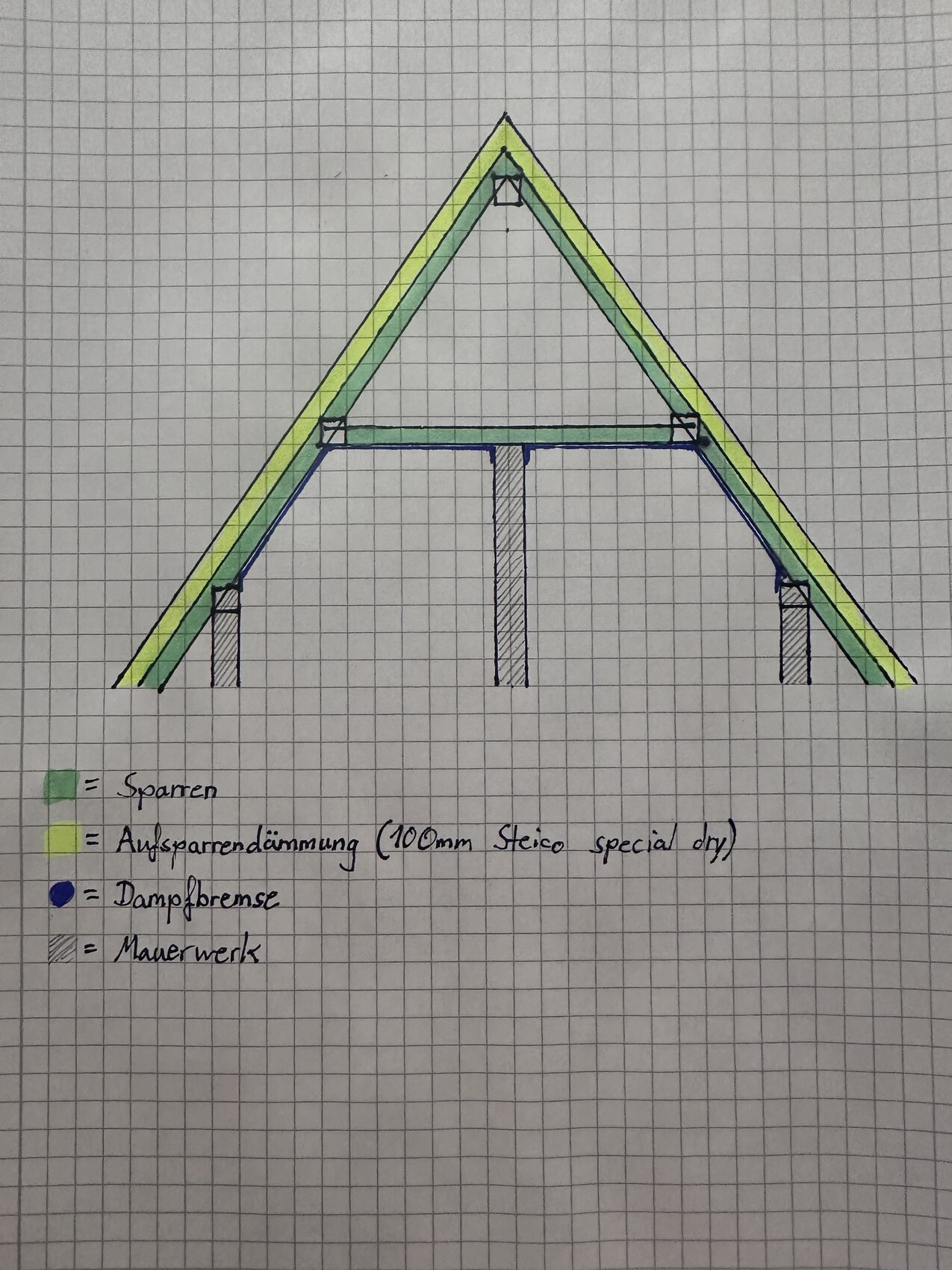
If I run the vapor retarder down to the central beam and seal it securely there, would I then trap moisture in the attic? Since the attic is not ventilated daily and rarely accessed. The vapor retarder in the heated upper floor below runs from the knee wall along the rafters over the collar beams to the wall (see drawing).
1: What is the correct approach regarding the vapor barrier and insulation between rafters in the attic?
I also read that holes should be drilled in the exterior insulation above the central beam and that part should remain uninsulated to allow air circulation. This should not affect the stored Christmas decorations etc.
2: Alternatively, would it be better to install walkable insulation boards on top of the tongue-and-groove floor and completely skip the between-rafter insulation? Would drilling holes in the exterior insulation still be necessary then?
Thank you very much for your answers.
Best regards
We are carrying out a full renovation of the house we bought (built in 1969). In May, we replaced the roof. Since a new roof covering was more than necessary, we decided to install a 100mm (4 inch) exterior (above-rafter) insulation layer.
Between the rafters, we insulated with 120mm (5 inch) glass wool towards the heated upper floor. The collar beams still contain 40mm (1.5 inch) glass wool from 1969.
We will also install a new roof hatch with a folding ladder.
The attic is unheated, has a roof window, and the floor consists of 23mm (1 inch) tongue-and-groove boards. The attic will be used as storage space.
We planned to insulate between the rafters in the attic as well with 120mm (5 inch) glass wool.
However, installing a vapor retarder airtight only in this area is nearly impossible due to the many braces under the ridge beam (see photo).
If I run the vapor retarder down to the central beam and seal it securely there, would I then trap moisture in the attic? Since the attic is not ventilated daily and rarely accessed. The vapor retarder in the heated upper floor below runs from the knee wall along the rafters over the collar beams to the wall (see drawing).
1: What is the correct approach regarding the vapor barrier and insulation between rafters in the attic?
I also read that holes should be drilled in the exterior insulation above the central beam and that part should remain uninsulated to allow air circulation. This should not affect the stored Christmas decorations etc.
2: Alternatively, would it be better to install walkable insulation boards on top of the tongue-and-groove floor and completely skip the between-rafter insulation? Would drilling holes in the exterior insulation still be necessary then?
Thank you very much for your answers.
Best regards
Similar topics