
A
Adamski1131 Mar 2026 19:31Hello everyone,
I have the following question:
In our garden, we have a covered pergola with living space underneath. We would like to insulate it using aluminum-faced PIR boards (already available). On top of the insulation, we want to install tiles. We understand that this can’t be done directly. Do you have any suggestions on the best way to achieve this? The insulation will be adhered using a two-component (2K) thick coating. However, I also need to waterproof the insulation from above and seal the joints with aluminum tape. Which waterproofing membrane would be best for this, and what should the substrate be like for the tiles? We want to keep the build-up as low as possible to avoid raising the floor height too much. Maybe waterproofing membranes and uncoupling membranes?
My rough plan:
1) 2K thick coating as adhesive for the PIR boards
1.1) Primer on PIR
2) Thin screed?
3) Waterproofing slurry
4) Tiles
Currently, there are bitumen sheets and Styrofoam installed, and on top of that, tiles have been laid without gravel or anything underneath. All of this should be removed down to the concrete slab.
The exterior walls will also be insulated.
I would appreciate any advice.
I have the following question:
In our garden, we have a covered pergola with living space underneath. We would like to insulate it using aluminum-faced PIR boards (already available). On top of the insulation, we want to install tiles. We understand that this can’t be done directly. Do you have any suggestions on the best way to achieve this? The insulation will be adhered using a two-component (2K) thick coating. However, I also need to waterproof the insulation from above and seal the joints with aluminum tape. Which waterproofing membrane would be best for this, and what should the substrate be like for the tiles? We want to keep the build-up as low as possible to avoid raising the floor height too much. Maybe waterproofing membranes and uncoupling membranes?
My rough plan:
1) 2K thick coating as adhesive for the PIR boards
1.1) Primer on PIR
2) Thin screed?
3) Waterproofing slurry
4) Tiles
Currently, there are bitumen sheets and Styrofoam installed, and on top of that, tiles have been laid without gravel or anything underneath. All of this should be removed down to the concrete slab.
The exterior walls will also be insulated.
I would appreciate any advice.
Hi,
the idea of using PIR insulation and then directly installing tiles on top sounds simple at first, but honestly, it’s quite problematic from a building physics and mechanical perspective. PIR with aluminum foil facing is not a surface that can reliably hold a tile system over time, especially outdoors under a pergola where you have temperature fluctuations and moisture. The two-component thick coating used as adhesive is theoretically possible, but it is not a load-bearing layer for further construction because it simply lacks compressive strength.
If you waterproof on top and then add uncoupling layers, you quickly end up with an extra 20–30mm (3/4–1 1/4 inches) thickness, which you wanted to avoid. Have you considered using a drainage mat plus loosely laid slabs instead of a traditional tile installation? It’s often thinner than you might expect and much more forgiving in terms of installation errors.
One more point that is often overlooked: how do you plan to seal the connections to vertical elements, especially with the aluminum facing and taped joints? In practice, that is usually the weakest point.
the idea of using PIR insulation and then directly installing tiles on top sounds simple at first, but honestly, it’s quite problematic from a building physics and mechanical perspective. PIR with aluminum foil facing is not a surface that can reliably hold a tile system over time, especially outdoors under a pergola where you have temperature fluctuations and moisture. The two-component thick coating used as adhesive is theoretically possible, but it is not a load-bearing layer for further construction because it simply lacks compressive strength.
If you waterproof on top and then add uncoupling layers, you quickly end up with an extra 20–30mm (3/4–1 1/4 inches) thickness, which you wanted to avoid. Have you considered using a drainage mat plus loosely laid slabs instead of a traditional tile installation? It’s often thinner than you might expect and much more forgiving in terms of installation errors.
One more point that is often overlooked: how do you plan to seal the connections to vertical elements, especially with the aluminum facing and taped joints? In practice, that is usually the weakest point.
A
Adamski1131 Mar 2026 19:47I actually intended to use waterproofing tapes and sealing corners, embedding them into the waterproof slurry or composite waterproofing, for example from Knauf. Installing a screed would be feasible. If necessary, I would add an additional layer beforehand.
We would also like to tile the uncovered part of the terrace with the same tiles, using drainage mortar. Therefore, floating installation is not an option.
The PIR insulation is 10cm (4 inches) thick.
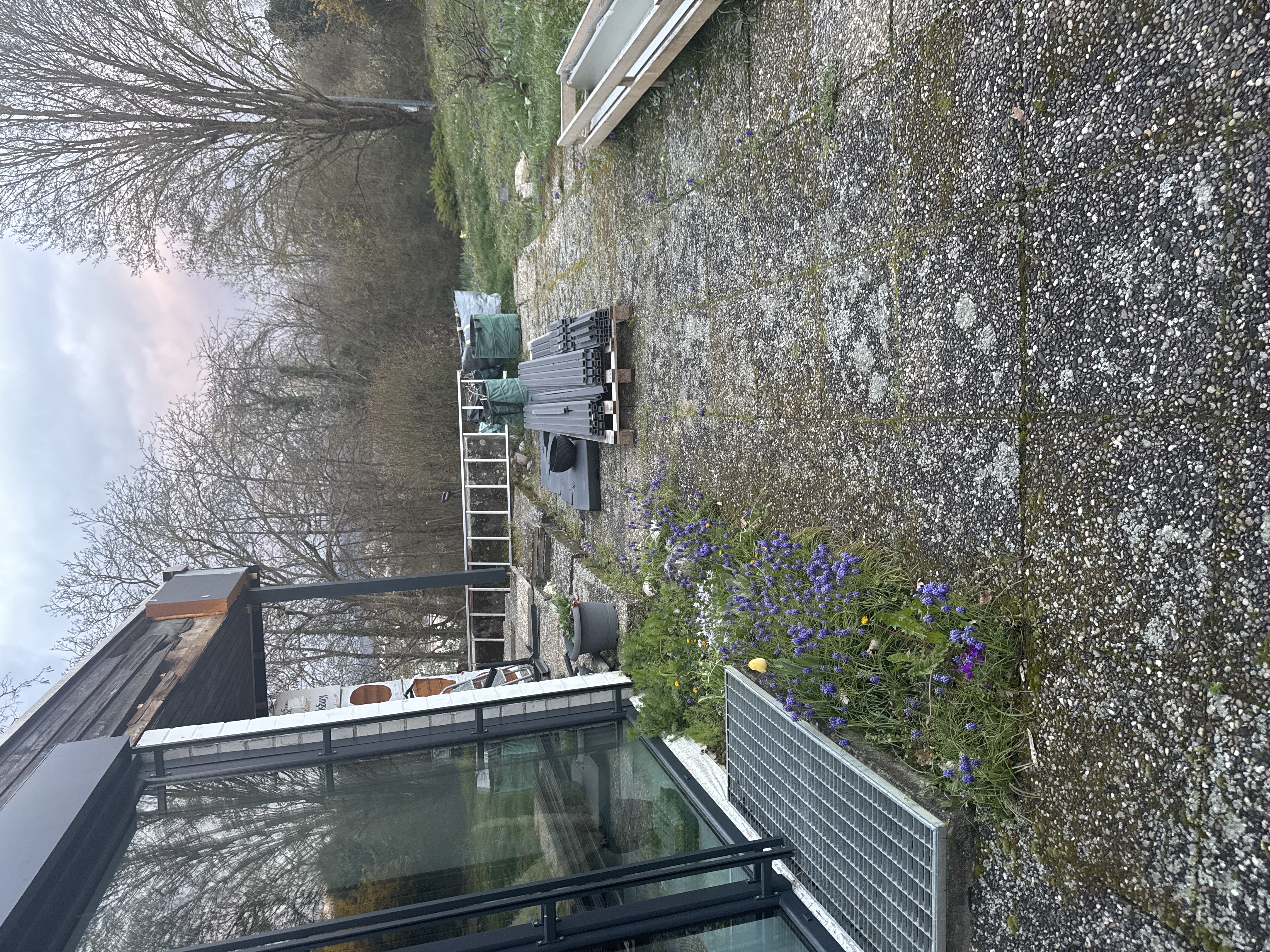
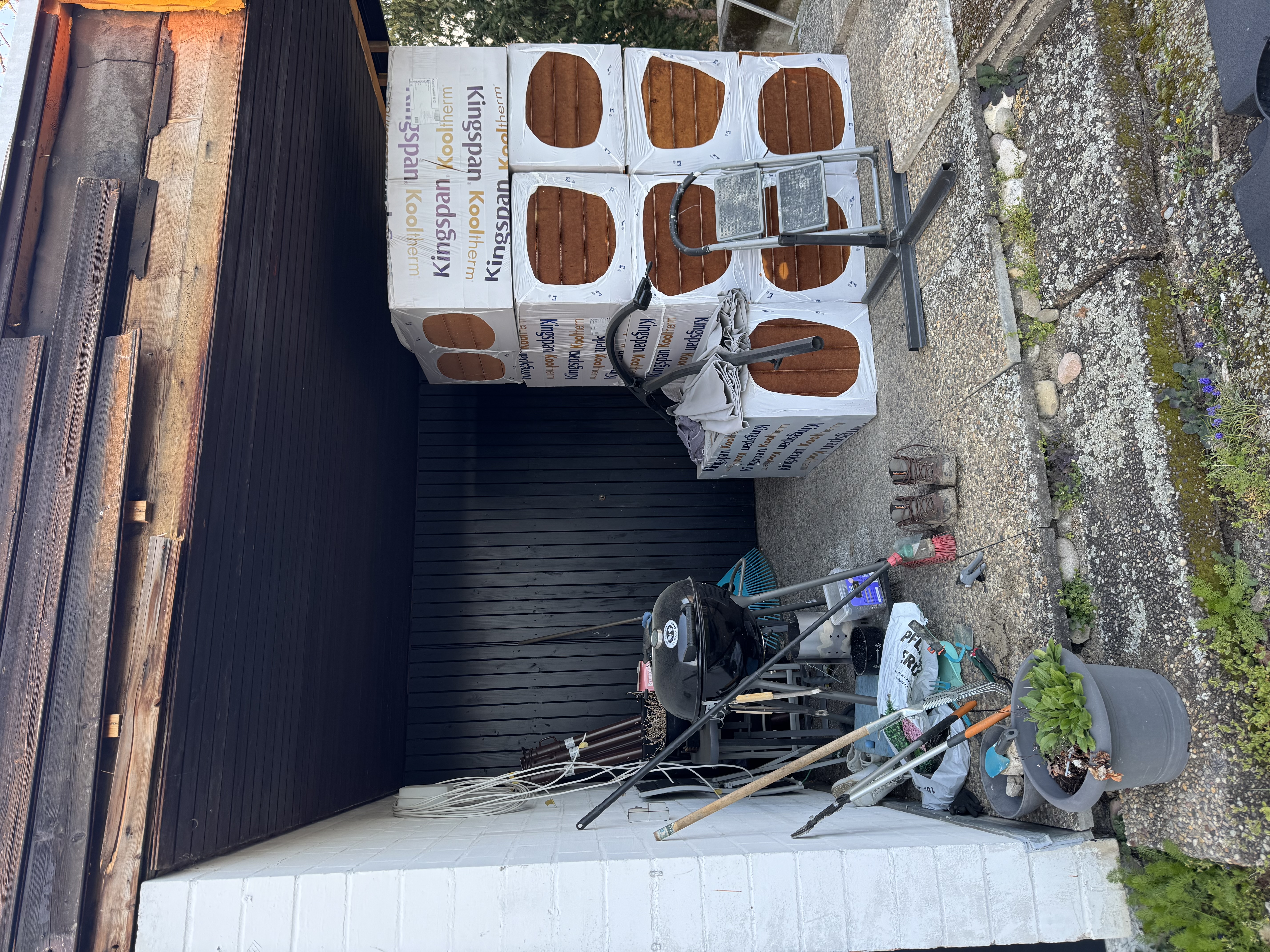
We would also like to tile the uncovered part of the terrace with the same tiles, using drainage mortar. Therefore, floating installation is not an option.
The PIR insulation is 10cm (4 inches) thick.
I must say, this is an interesting project, but the combination of PIR insulation and tiles sounds a bit like a construction site where you might have to do some repairs later on. Sure, sealing tapes and corners are a good start, but I still see challenges with ensuring a long-lasting waterproofing and stability. PIR boards are not the same as a solid substrate that truly provides a durable bond. Using waterproof slurry and a bonded waterproofing system like Knauf’s can create an initial barrier, but what about temperature fluctuations? The PIR insulation will definitely react differently to varying outdoor temperatures, which could lead to problems such as cracks or uneven pressure distribution, especially if you plan to tile over it later.
The screed might work, but then you will quickly reach a build-up height of 20mm (0.8 inches) to 30mm (1.2 inches), which you initially wanted to avoid. Perhaps it would be an option to install a thin, stable uncoupling membrane that helps absorb the movement between the PIR and the tiles better, without raising the floor height too much?
Also, regarding waterproofing—have you really considered everything? Especially at the transitions to the pergola and the walls, those could become the weak spots. If these areas aren’t properly sealed, you might end up with moisture accumulating under the tiles.
Nevertheless, if you really want to stick to your plan, then an additional screed layer could definitely provide the necessary stability, though you won’t be able to avoid adding some height. How about considering a different surface material or a simpler solution for the roof insulation? Drainage mats might actually be worth considering in this context.
The screed might work, but then you will quickly reach a build-up height of 20mm (0.8 inches) to 30mm (1.2 inches), which you initially wanted to avoid. Perhaps it would be an option to install a thin, stable uncoupling membrane that helps absorb the movement between the PIR and the tiles better, without raising the floor height too much?
Also, regarding waterproofing—have you really considered everything? Especially at the transitions to the pergola and the walls, those could become the weak spots. If these areas aren’t properly sealed, you might end up with moisture accumulating under the tiles.
Nevertheless, if you really want to stick to your plan, then an additional screed layer could definitely provide the necessary stability, though you won’t be able to avoid adding some height. How about considering a different surface material or a simpler solution for the roof insulation? Drainage mats might actually be worth considering in this context.
A
Adamski115 Apr 2026 19:26I have decided to go with the screed option.
So the plan would be as follows:
Do I need a vapor barrier or vapor retarder?
Would this work as planned?
Does the screed go directly on the insulation, or is there something else in between?
So the plan would be as follows:
- 2k sealing coating
- PIR insulation glued with 1)
- Screed on PIR approximately 3cm (1.2 inches)
- Waterproofing of the screed and wall connections
- Tiles
Do I need a vapor barrier or vapor retarder?
Would this work as planned?
Does the screed go directly on the insulation, or is there something else in between?
Similar topics