
Hello everyone,
I want to undertake the insulation of the top floor ceiling myself.
[Facts]:
- Semi-detached house built in 1972, two floors with heated basement rooms
- Upper floor ceiling made of reinforced concrete - B225, thickness according to plan 16cm (6.3 inches)
- Roof pitch is 18 degrees and cannot be converted into living space
- The purlins rest directly on the concrete ceiling
- The roof will not be insulated; instead, the floor will be insulated
- The attic space should be partially usable as storage and walkable
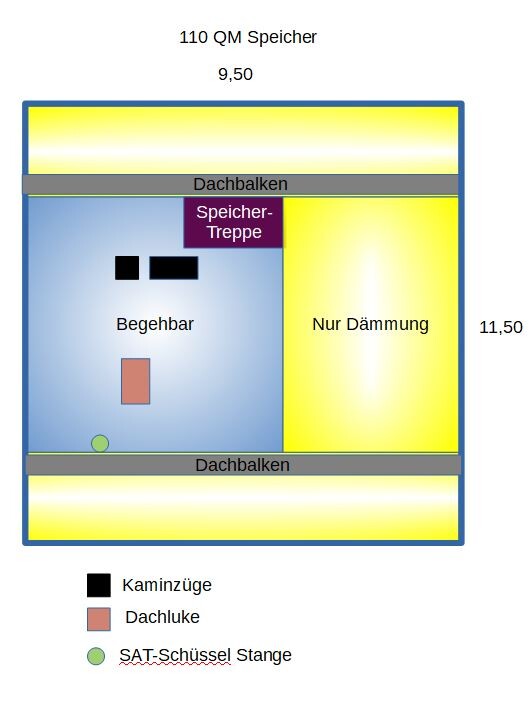
See sketch top view attic 110 sqm (1184 sq ft) area, approx. 40 sqm (430 sq ft) walkable
[Questions]:
1) Preparations:
What preparations do I need to make on the concrete before starting work? Thorough cleaning?
2) Vapor barrier:
Do I also need to install a vapor barrier foil on the reinforced concrete B225 at the upper floor?
3) Insulation material:
I plan to lay EPS 040 WI/DI/DZ 50mm (2 inch) polystyrene boards (width 500mm (20 inches) x length 1000mm (39 inches)) double-layered and staggered (without cross joints) everywhere.
This means about 9-10cm (3.5-4 inches) of insulation thickness. What U-value would I achieve with this?
Material cost comes to around 800 EUR including VAT.
Which affordable insulation boards would you recommend for my project? Has anyone had experience using polystyrene boards?
4) OSB boards (thickness - no idea - any recommendations)?
For the walkable area I would additionally install OSB-3 tongue and groove boards, 12mm (0.5 inch) thick, 205cm (80 inches) x 62.5cm (25 inches).
Material cost is approximately 200 EUR including VAT.
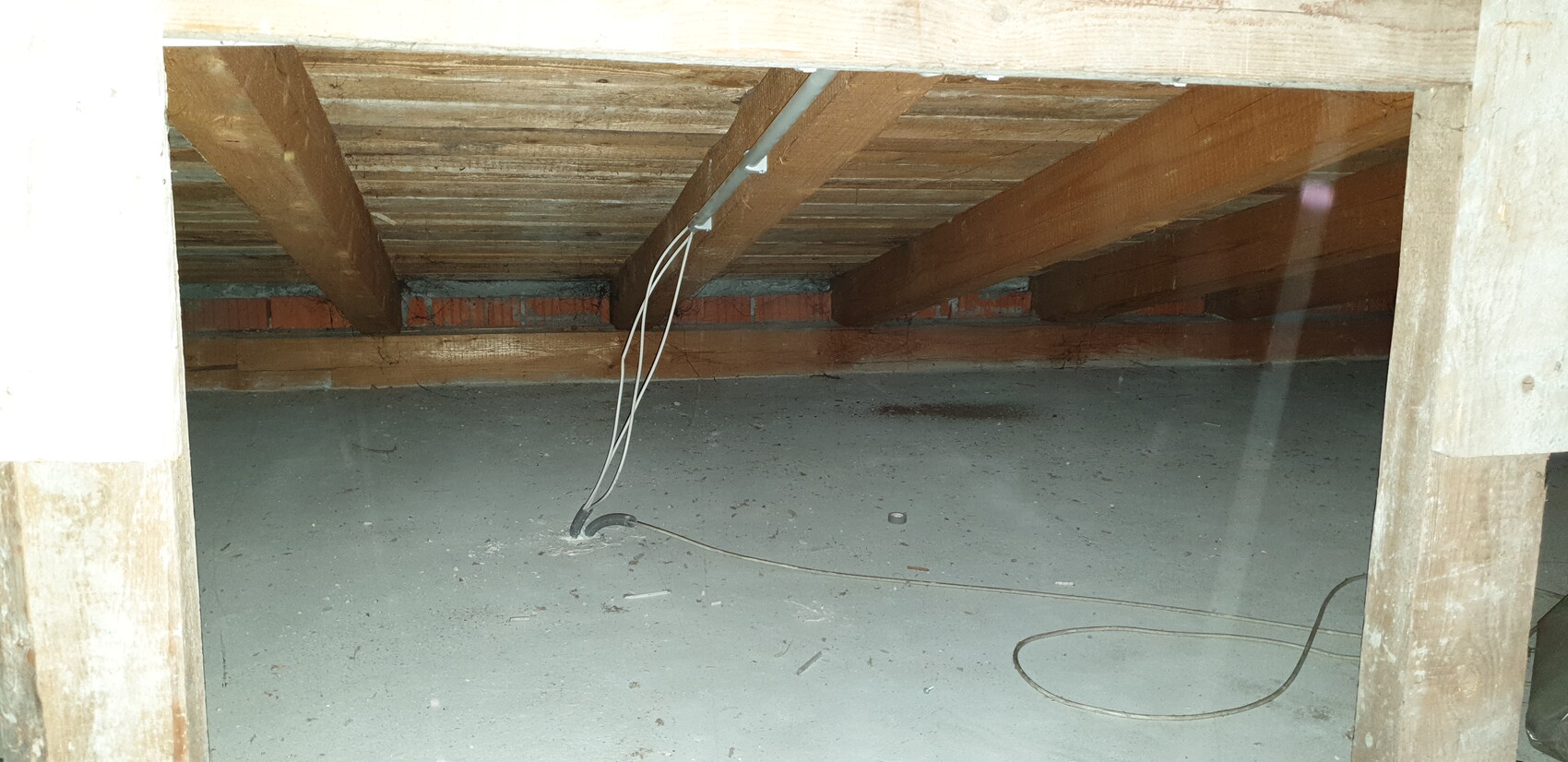
5) How should I deal with cables embedded in the concrete ceiling and around the purlins when insulating?
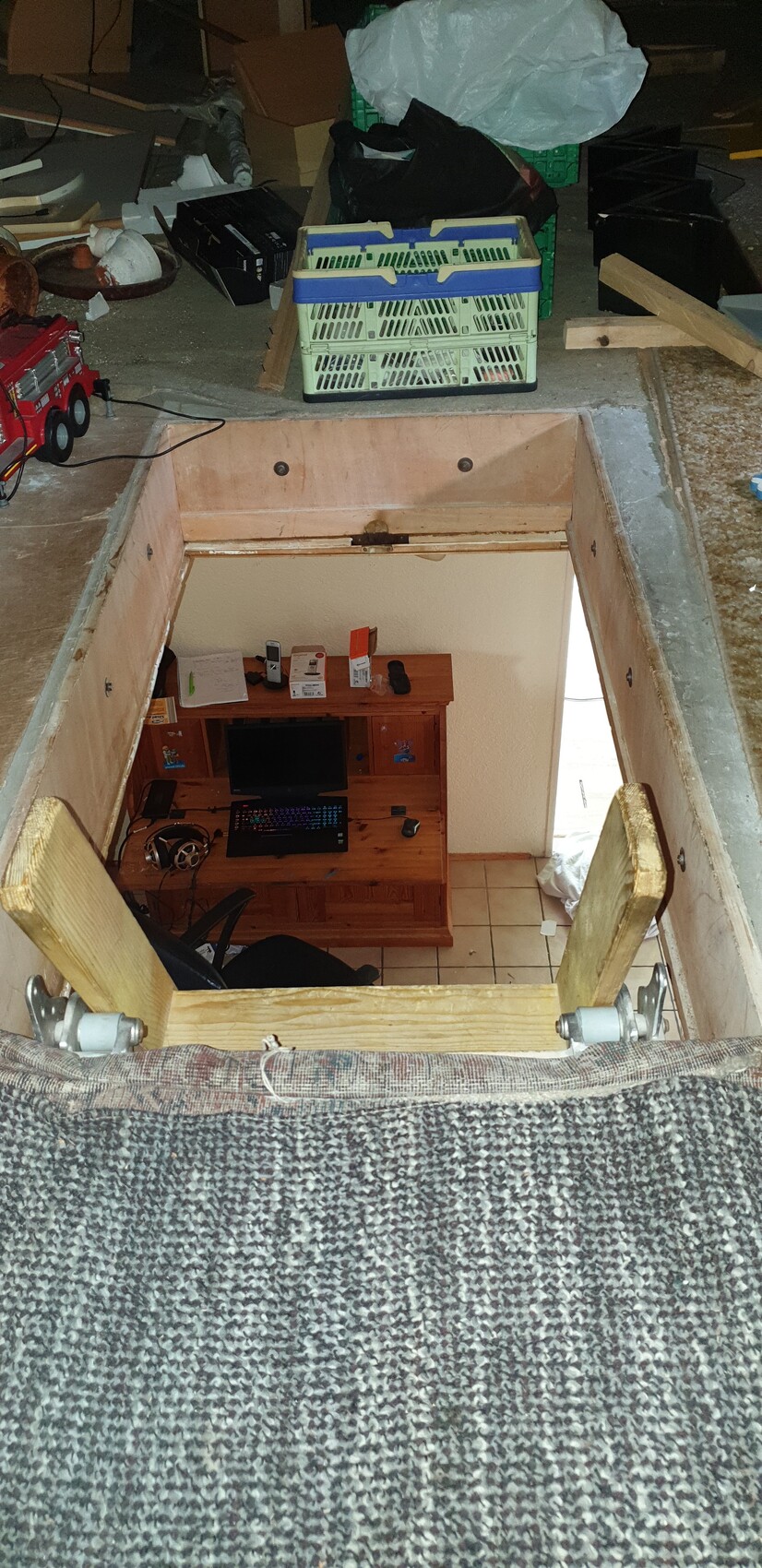
6) How should/could I insulate the attic stairs?
7) Are there any special considerations I might have overlooked?
Looking forward to your opinions/ideas/tips and tricks,
Chippy
I want to undertake the insulation of the top floor ceiling myself.
[Facts]:
- Semi-detached house built in 1972, two floors with heated basement rooms
- Upper floor ceiling made of reinforced concrete - B225, thickness according to plan 16cm (6.3 inches)
- Roof pitch is 18 degrees and cannot be converted into living space
- The purlins rest directly on the concrete ceiling
- The roof will not be insulated; instead, the floor will be insulated
- The attic space should be partially usable as storage and walkable
See sketch top view attic 110 sqm (1184 sq ft) area, approx. 40 sqm (430 sq ft) walkable
[Questions]:
1) Preparations:
What preparations do I need to make on the concrete before starting work? Thorough cleaning?
2) Vapor barrier:
Do I also need to install a vapor barrier foil on the reinforced concrete B225 at the upper floor?
3) Insulation material:
I plan to lay EPS 040 WI/DI/DZ 50mm (2 inch) polystyrene boards (width 500mm (20 inches) x length 1000mm (39 inches)) double-layered and staggered (without cross joints) everywhere.
This means about 9-10cm (3.5-4 inches) of insulation thickness. What U-value would I achieve with this?
Material cost comes to around 800 EUR including VAT.
Which affordable insulation boards would you recommend for my project? Has anyone had experience using polystyrene boards?
4) OSB boards (thickness - no idea - any recommendations)?
For the walkable area I would additionally install OSB-3 tongue and groove boards, 12mm (0.5 inch) thick, 205cm (80 inches) x 62.5cm (25 inches).
Material cost is approximately 200 EUR including VAT.
5) How should I deal with cables embedded in the concrete ceiling and around the purlins when insulating?
6) How should/could I insulate the attic stairs?
7) Are there any special considerations I might have overlooked?
Looking forward to your opinions/ideas/tips and tricks,
Chippy
N
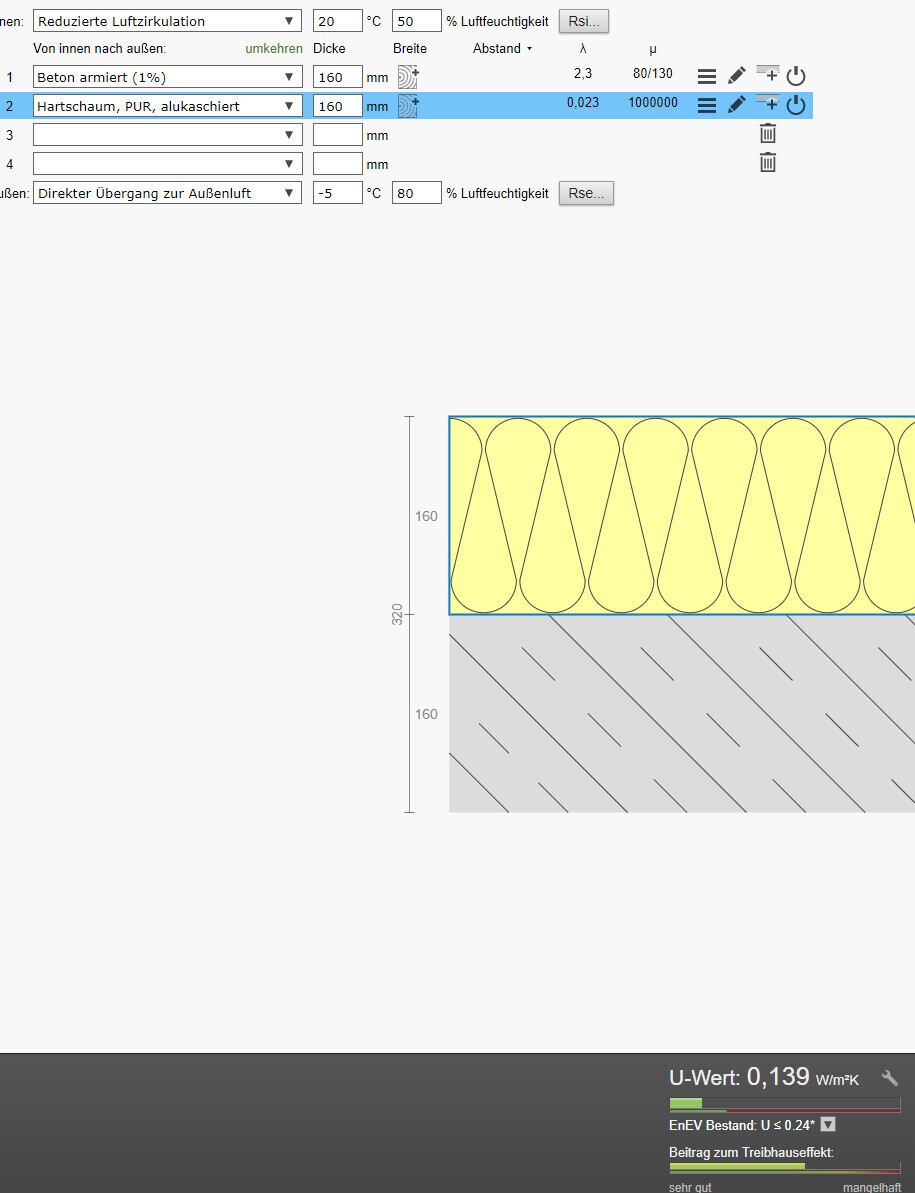
nordanney28 Oct 2020 22:47You’ll need an energy consultant for that anyway. At least that’s what ubakus roughly suggests. It should be fine.
I can’t contribute anything regarding funding.
chippy79 schrieb:No. Use aluminum tape to seal the joints.
Is it a problem if the panels don’t have tongue and groove edges?
I can’t contribute anything regarding funding.
I just spoke with the energy consultant. He said that the material for insulating the top floor ceiling is NOT eligible for funding if done as self-performed work.
I looked up the passage in the information sheet myself:
If the material is purchased separately, the costs can be claimed only if the installation is carried out by a professional company, or if the proper execution of the measure and the material costs incurred are informally confirmed in addition to the information in the “Confirmation of Completion” by an energy efficiency expert according to the program guidelines.
He also mentioned that the insulation boards should only be glued from above with vapor-permeable tape, otherwise moisture could penetrate into the concrete.
Best regards
I looked up the passage in the information sheet myself:
If the material is purchased separately, the costs can be claimed only if the installation is carried out by a professional company, or if the proper execution of the measure and the material costs incurred are informally confirmed in addition to the information in the “Confirmation of Completion” by an energy efficiency expert according to the program guidelines.
He also mentioned that the insulation boards should only be glued from above with vapor-permeable tape, otherwise moisture could penetrate into the concrete.
Best regards
N
nordanney29 Oct 2020 10:28chippy79 schrieb:
The proper execution of the work and the material costs incurred for this must be informally confirmed in addition to the details in the "Confirmation after Completion" by an energy efficiency expert according to the program guidelines. This applies to all self-performed work. What is the energy consultant’s issue with providing this confirmation? I have never had a problem with that before. After all, that’s what you pay them for.
Well, I have already submitted application 430 (for windows) with this energy consultant. But I just sent him an email asking if he would confirm the proper installation.
However, I would then need to have the application amended.
That means I could also install the insulation material without adhesive, right? That way, moisture can escape more easily.
Best regards
However, I would then need to have the application amended.
That means I could also install the insulation material without adhesive, right? That way, moisture can escape more easily.
Best regards
The vapor barrier is installed on the interior side, and with a sealed roof, a rain barrier is hardly necessary.
Except for the concrete ceiling. However, this is the responsibility of the energy consultant colleague, who must also demonstrate moisture protection in connection with the insulation.
Except for the concrete ceiling. However, this is the responsibility of the energy consultant colleague, who must also demonstrate moisture protection in connection with the insulation.
Similar topics