
ᐅ Independent Expert Assessment for Mold Damage in Older Buildings
Created on: 11 Nov 2025 21:11
J
Jodimaster2kJ
Jodimaster2k11 Nov 2025 21:11This has been ongoing since the beginning of 2025.
Exterior wall/corner.
Landlord. (86). They need to ventilate and heat more.
Now an independent court-appointed expert will be involved as a separate evidentiary procedure.
Building protection contractor writes: Clear signs of mold were visible in the lower and upper corner areas of the room, and the wallpaper on the right exterior wall had been removed (according to the tenant, a cabinet had stood here).
At the time of inspection, the room temperature was measured at 21°C (70°F) and the relative humidity at 57%. These values are considered "normal."
A surface temperature measurement of the “exposed” exterior wall at about 1.0 m (3.3 ft) height showed a temperature of 20.20°C (68.4°F).
The temperature measurement in the lower corner behind the bed showed a surface temperature of 17.6°C (63.7°F)! This temperature drop, despite the currently warm weather, is partly due to the corner location (keyword: thermal bridge) and partly due to the unfavorable position of the bed.
As temperatures drop toward autumn and winter, the temperature difference will increase further, inevitably leading to condensation and subsequent mold growth.
The same cause was responsible for the cabinet, now removed, that stood against the exterior wall.
We consider moisture penetration from outside to be ruled out due to the intact two-layer facade.
To verify this, the wall moisture was also measured electrically. The values were within the dry range between 48 and 58 digits. If the room continues to be used as it has been until now, and especially if the furniture position remains unchanged, further mold growth cannot be ruled out!
A structural upgrade of the walls with calcium silicate boards as interior insulation is possible. If interested, we would be happy to provide you with an offer.
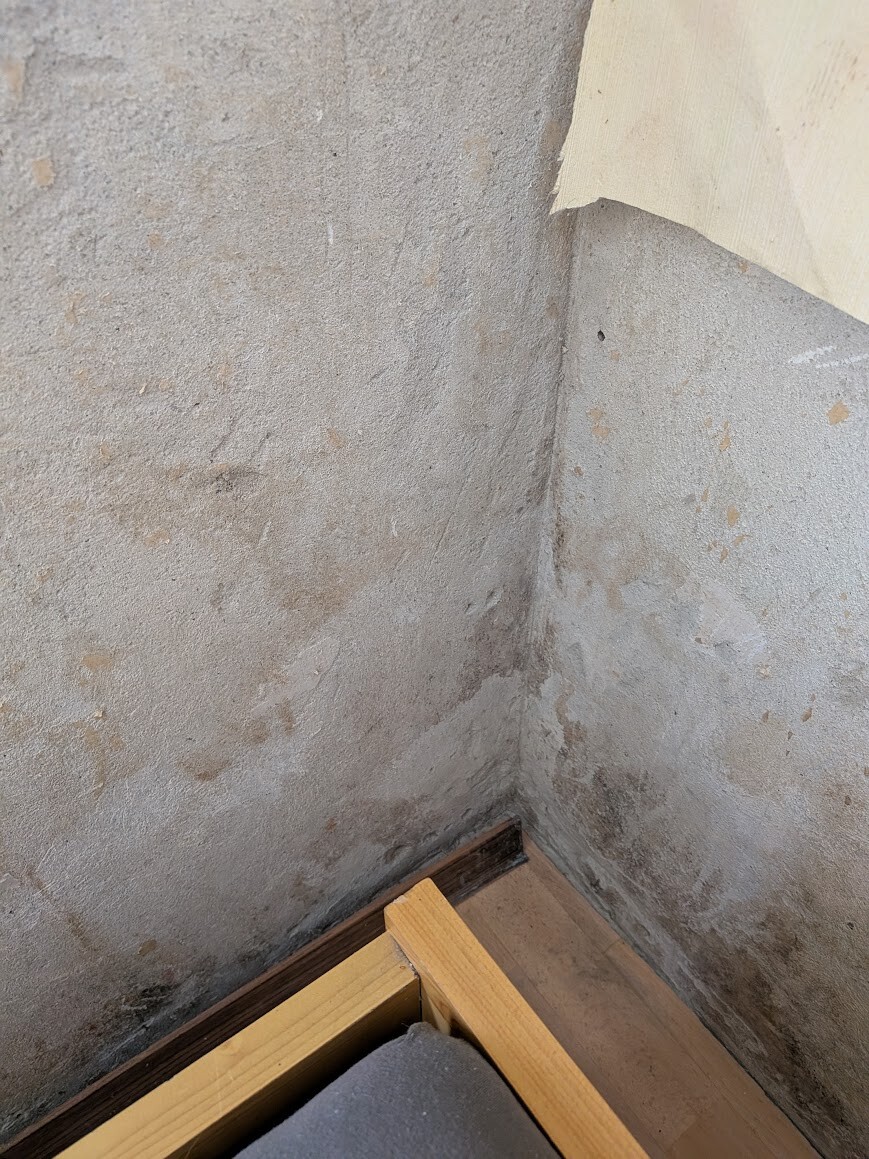
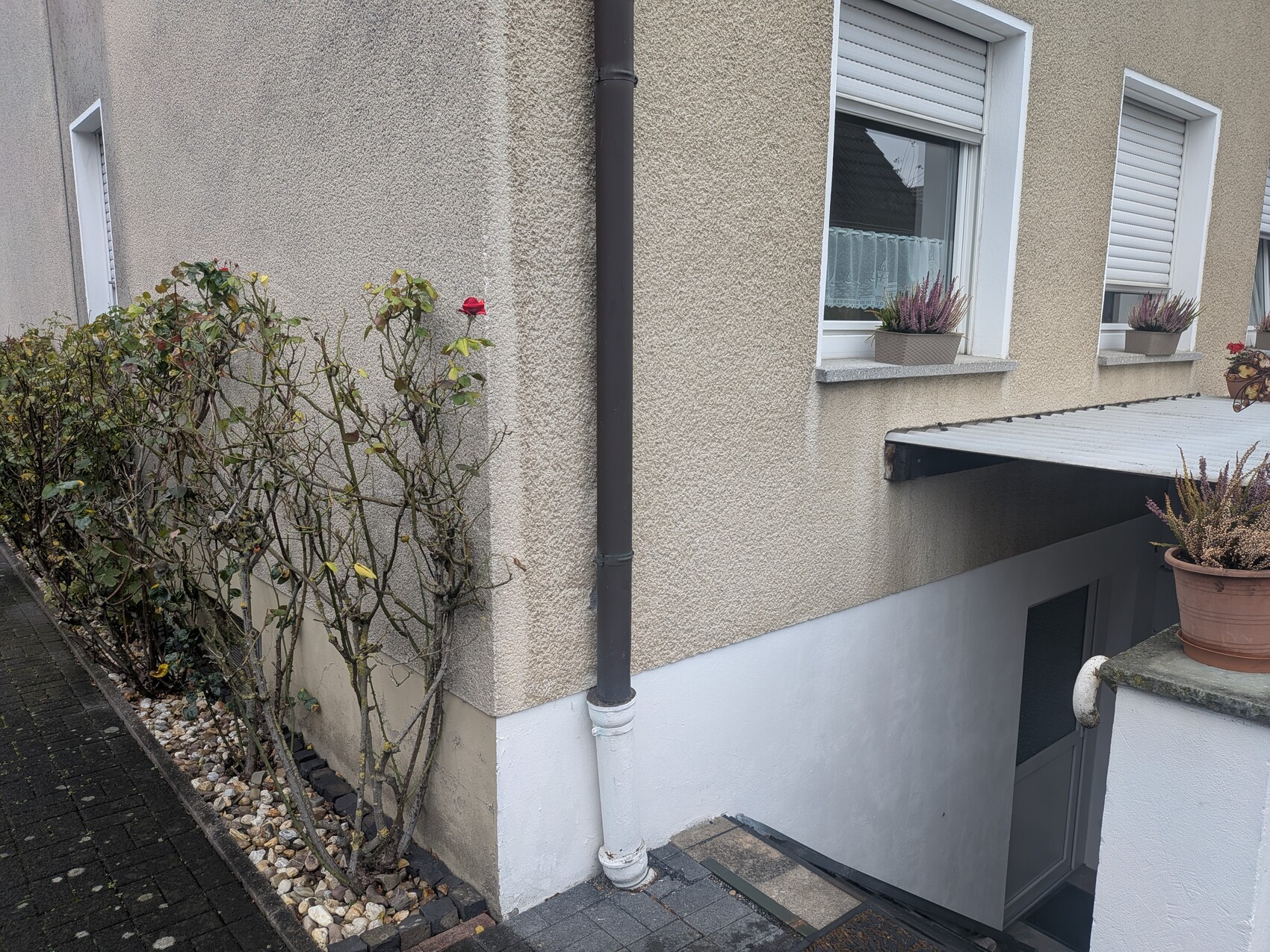
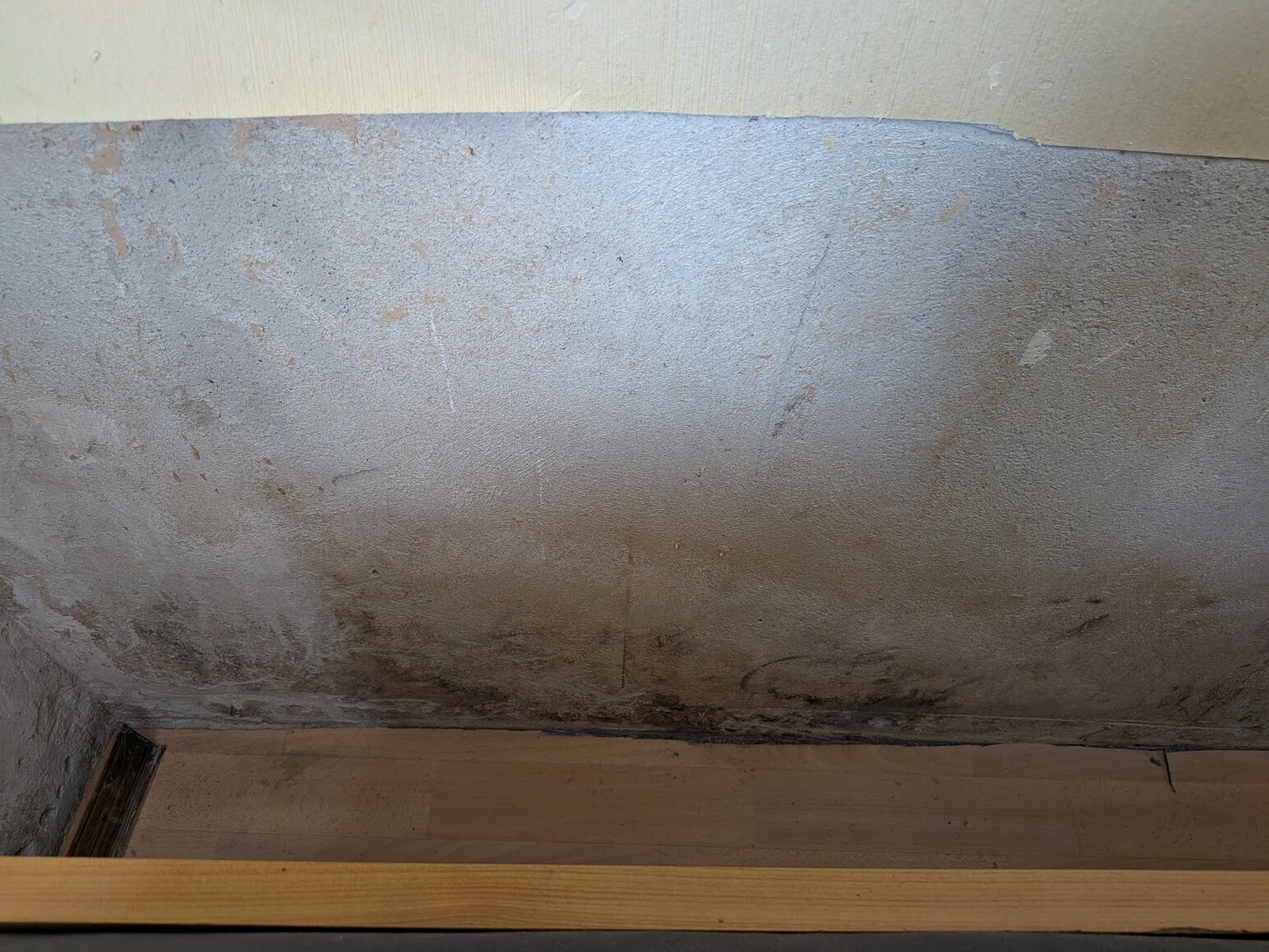
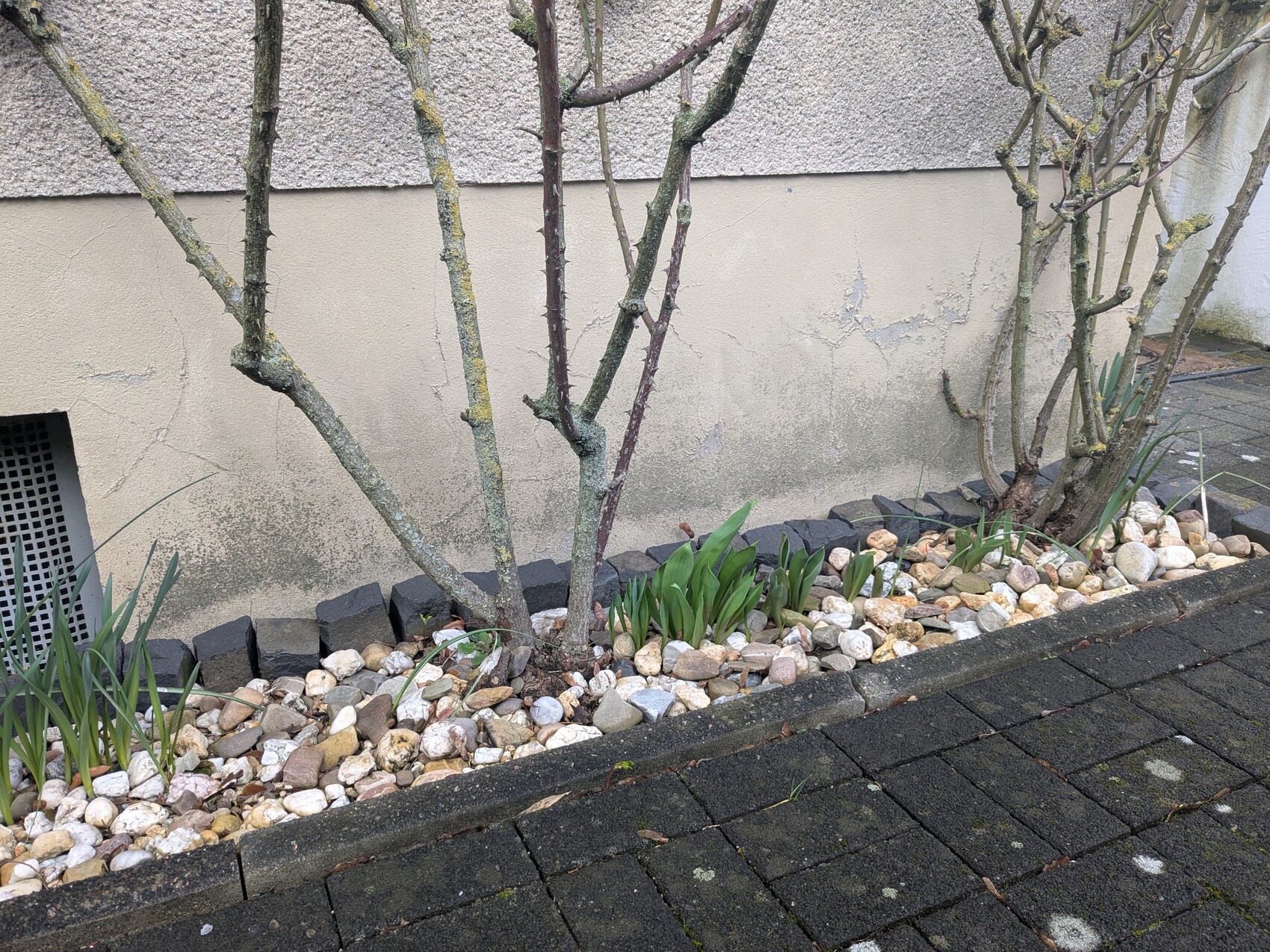
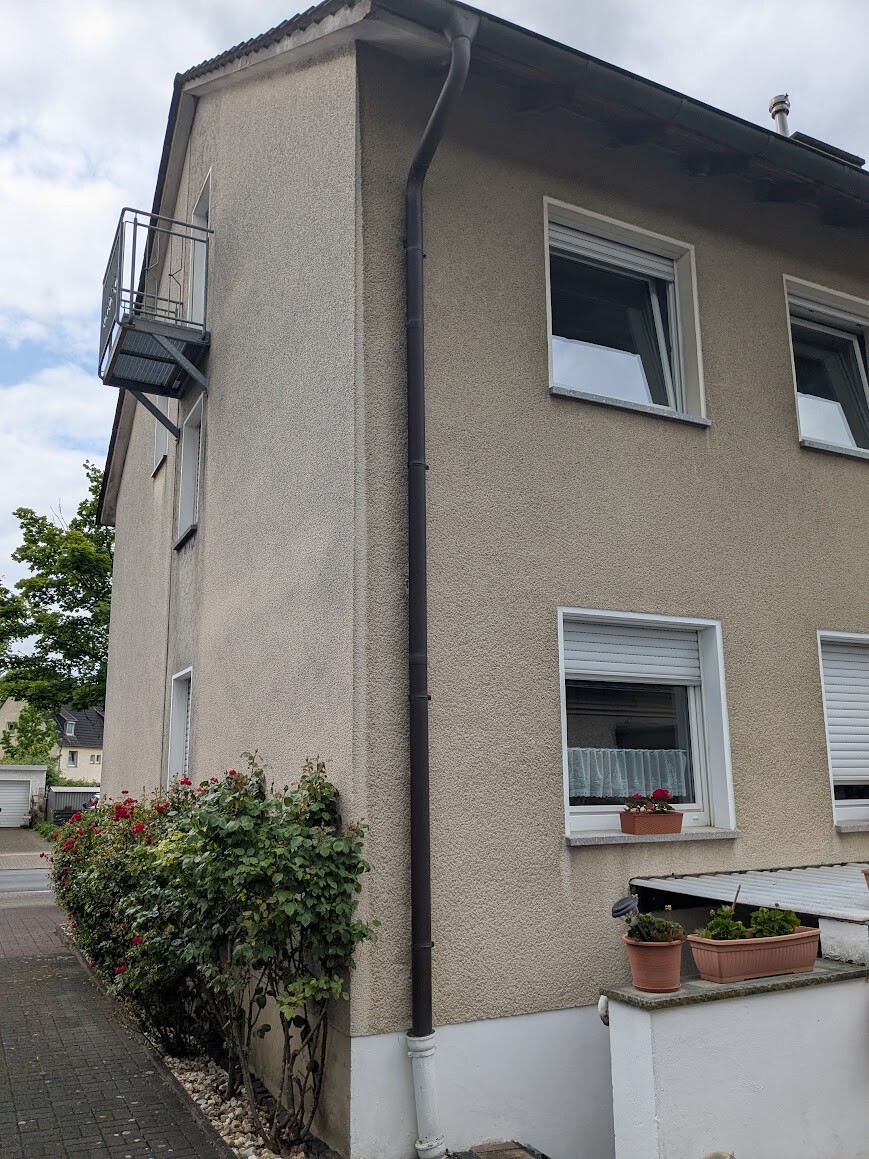
Exterior wall/corner.
Landlord. (86). They need to ventilate and heat more.
Now an independent court-appointed expert will be involved as a separate evidentiary procedure.
Building protection contractor writes: Clear signs of mold were visible in the lower and upper corner areas of the room, and the wallpaper on the right exterior wall had been removed (according to the tenant, a cabinet had stood here).
At the time of inspection, the room temperature was measured at 21°C (70°F) and the relative humidity at 57%. These values are considered "normal."
A surface temperature measurement of the “exposed” exterior wall at about 1.0 m (3.3 ft) height showed a temperature of 20.20°C (68.4°F).
The temperature measurement in the lower corner behind the bed showed a surface temperature of 17.6°C (63.7°F)! This temperature drop, despite the currently warm weather, is partly due to the corner location (keyword: thermal bridge) and partly due to the unfavorable position of the bed.
As temperatures drop toward autumn and winter, the temperature difference will increase further, inevitably leading to condensation and subsequent mold growth.
The same cause was responsible for the cabinet, now removed, that stood against the exterior wall.
We consider moisture penetration from outside to be ruled out due to the intact two-layer facade.
To verify this, the wall moisture was also measured electrically. The values were within the dry range between 48 and 58 digits. If the room continues to be used as it has been until now, and especially if the furniture position remains unchanged, further mold growth cannot be ruled out!
A structural upgrade of the walls with calcium silicate boards as interior insulation is possible. If interested, we would be happy to provide you with an offer.
N
nordanney11 Nov 2025 21:44Do you also have a question about this? The expert clearly states the solution: do not place furniture against the walls as before (and, of course, ventilate and heat properly—but that goes without saying). It’s quite a hint that the tenant bears a significant share of the responsibility given the circumstances. Additionally, internal insulation is possible, but I haven’t read anything suggesting it is absolutely necessary or that it can’t be done without.
J
Jodimaster2k11 Nov 2025 21:46This was not an expert surveyor but a building protection contractor commissioned by the landlord who was here for 10 minutes.
This is not valid in court. Irrelevant. If anything, proper measurements should have been carried out instead of just briefly holding a measuring device against the interior walls, etc.
There is also no obligation for the tenant to avoid placing furniture against exterior walls without an agreement. This is legally quite clear.
The room is only 9 m² (97 ft²) in size.
The tenant is simply requesting defect remediation. As can be seen, the mold is located in the plaster.
This is not valid in court. Irrelevant. If anything, proper measurements should have been carried out instead of just briefly holding a measuring device against the interior walls, etc.
There is also no obligation for the tenant to avoid placing furniture against exterior walls without an agreement. This is legally quite clear.
The room is only 9 m² (97 ft²) in size.
The tenant is simply requesting defect remediation. As can be seen, the mold is located in the plaster.
J
Jodimaster2k11 Nov 2025 21:58I have read: On the exterior wall, I measured values between 88 and 110 grams using the Gant ball probe meter. In comparison, the dry, well-adhered walls showed values of 37–44 grams.
The covering over the basement entrance has an insufficient slope and is not sealed against the house wall. Additionally, the required upstand on the flashing is missing, allowing water to penetrate the exposed masonry.
This water ingress causes mold in the living area located behind it.
I recommend completely resealing the overhang, including the upstand, and increasing the slope.
Furthermore, it would be advisable to apply a surface water repellent treatment to the entire house.
The covering over the basement entrance has an insufficient slope and is not sealed against the house wall. Additionally, the required upstand on the flashing is missing, allowing water to penetrate the exposed masonry.
This water ingress causes mold in the living area located behind it.
I recommend completely resealing the overhang, including the upstand, and increasing the slope.
Furthermore, it would be advisable to apply a surface water repellent treatment to the entire house.
N
nordanney11 Nov 2025 22:10Jodimaster2k schrieb:
This is not an expert report; it was a building protection contractor hired by the landlord who was here for 10 minutes. Okay. That was not clear from the post. According to others, the expert would not reach a very different conclusion.
Jodimaster2k schrieb:
Feel free to watch the video as well. What do you see there, besides the base render showing damage?
Jodimaster2k schrieb:
There is no obligation that the tenant cannot place furniture against exterior walls without an agreement. This is legally quite clear.
The room is only 9 sqm (97 sq ft) in size. Unfortunately, you are mistaken. Legally, this is only clear in two different directions. First, if the walls do not develop mold with proper heating and minimum distances maintained. Then, placing furniture directly against the walls constitutes improper tenant use. There are sufficient court rulings stating that you are then required to keep a 5–10 cm (2–4 inches) distance. This would be your responsibility!
Second, if mold still occurs even with adequate spacing of the furniture, then there is a defect in the rented property. There are also numerous court rulings on this. The landlord is responsible in this case!
Please don’t oversimplify the matter.
If you want, I can provide relevant reference rulings.
Once again, what exactly is your question? What do you want to hear?
Similar topics