
Hello forum community, here are some photos of our roof structure. It is so narrow that you cannot crawl inside.
The boards are lying loose on top and can be lifted.
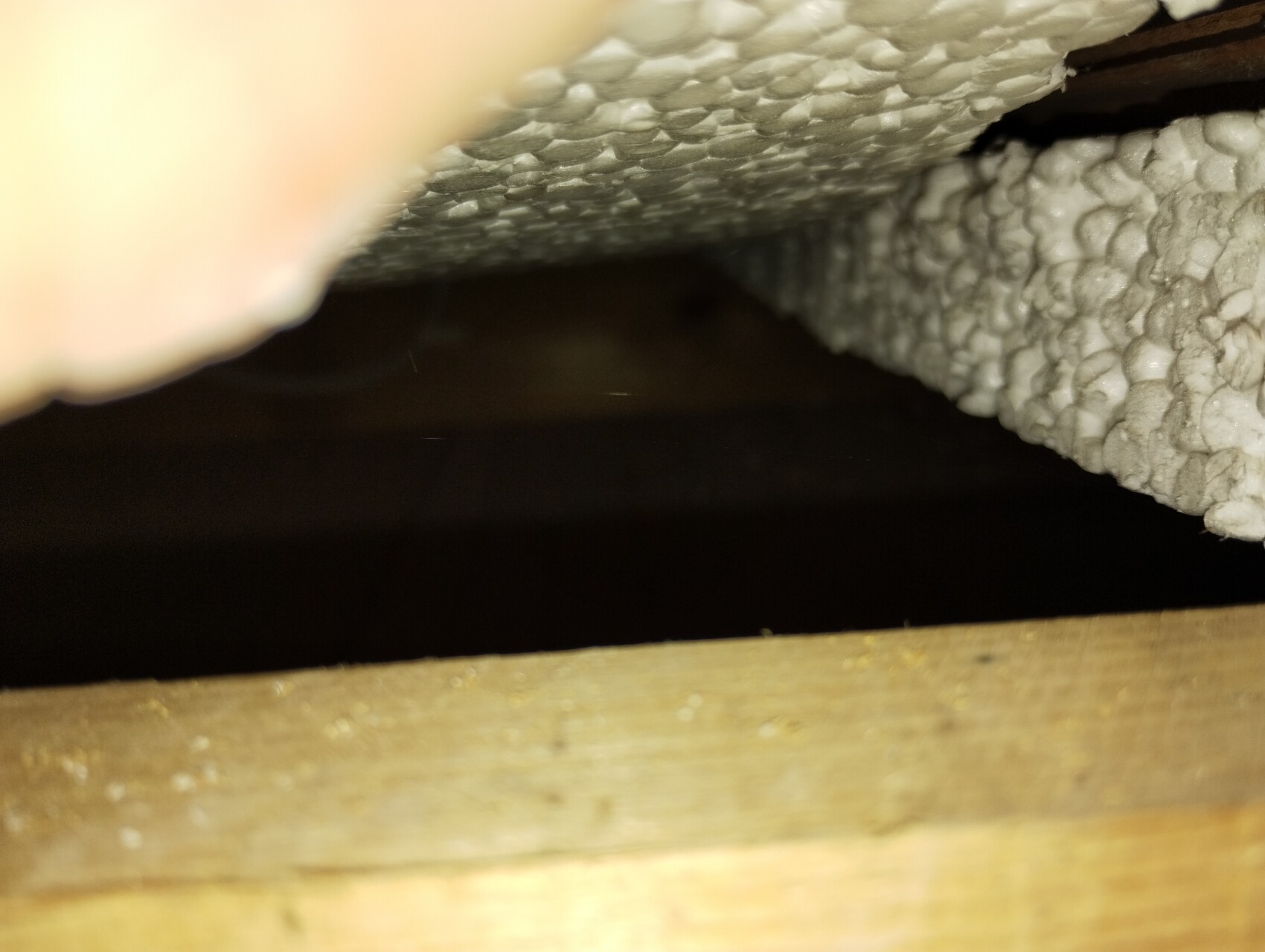
Below them is a layer of expanded polystyrene (EPS) about 2-3cm (1 inch) thick. Underneath that, there is a cavity—or at least I hope it’s a cavity.
Is it possible to improve the insulation by filling this cavity with insulating material, or could it even be feasible to fill the entire roof structure with insulation? I once heard of an insulation material that can be injected into the gaps of a double-sheathed house.
Would something like that be possible here as well?
I hope the details are somewhat visible in the pictures.
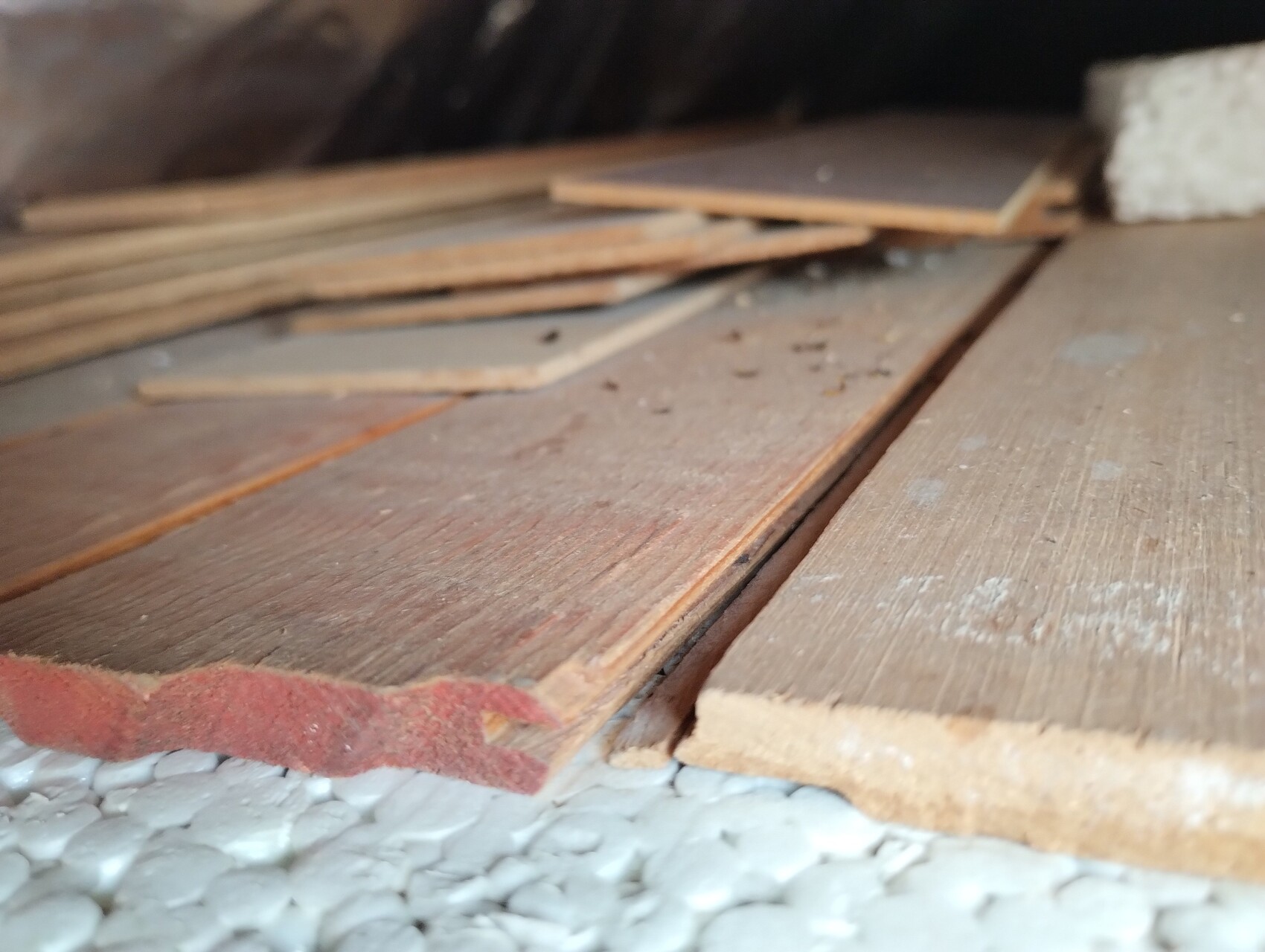
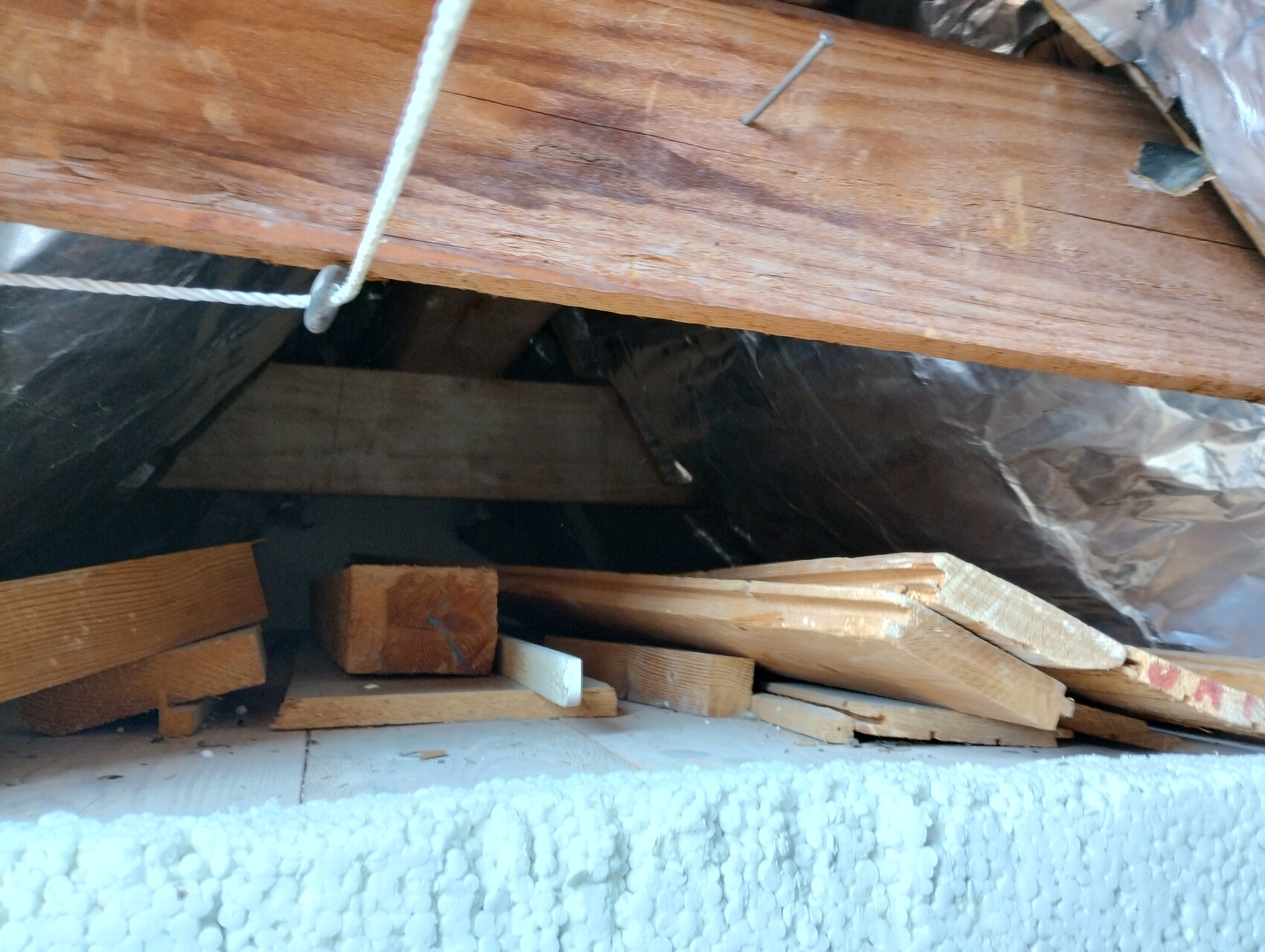
The boards are lying loose on top and can be lifted.
Below them is a layer of expanded polystyrene (EPS) about 2-3cm (1 inch) thick. Underneath that, there is a cavity—or at least I hope it’s a cavity.
Is it possible to improve the insulation by filling this cavity with insulating material, or could it even be feasible to fill the entire roof structure with insulation? I once heard of an insulation material that can be injected into the gaps of a double-sheathed house.
Would something like that be possible here as well?
I hope the details are somewhat visible in the pictures.

From the pictures, it’s clear that there are just a few loose boards resting on foam insulation panels, with what appears to be an empty cavity beneath. This is obviously not an optimal insulation setup. If the cavity is continuous and accessible, it might be possible to have something blown in, like cellulose or similar material. However, it needs to be airtight; otherwise, it won’t be effective and could lead to mold growth. I definitely wouldn’t recommend just stuffing everything tightly. It’s better to have a professional take a look to see if proper insulation can be installed or if another solution would be more suitable.
Cellulose is indeed the material of choice here. It remains vapor-permeable, can be blown in, provides good thermal insulation, and stays stable over time. There are countless companies offering this. It is certainly possible to do it yourself as well, although it requires considerable effort.
The first roofer unfortunately did not offer cellulose blown-in insulation. According to the roofer, the roof has bitumen felts, lacks sufficient ventilation, and is missing a vapor retarder. According to the craftsman, blown-in insulation is not the best choice in this case. Unfortunately, the roof frame is difficult to access; otherwise, he would line the roof frame with mineral wool.

Hello,
yes, the installation can be a bit tricky. If there are cardboard ducts inside and no proper ventilation, cellulose insulation is not necessarily the best choice, mainly because moisture cannot be reliably removed in that case. Without a vapor barrier, it quickly becomes a mold risk, especially with blown-in insulation.
If you access the area from above (removing the boards as you mentioned), introducing mineral wool or flexible wood fiber insulation from above could be an option, as long as you can ensure it is airtight. It is always important to avoid uncontrolled moist indoor air entering the insulation. Perhaps placing a vapor control layer under the loose cover, then adding mineral wool, and sealing it again could work, but it must be done very carefully.
An experienced energy consultant or insulation professional on site would be extremely helpful because they can evaluate the entire system. Just stuffing or blowing insulation in won’t help if condensation or decay occurs afterward.
Best regards
yes, the installation can be a bit tricky. If there are cardboard ducts inside and no proper ventilation, cellulose insulation is not necessarily the best choice, mainly because moisture cannot be reliably removed in that case. Without a vapor barrier, it quickly becomes a mold risk, especially with blown-in insulation.
If you access the area from above (removing the boards as you mentioned), introducing mineral wool or flexible wood fiber insulation from above could be an option, as long as you can ensure it is airtight. It is always important to avoid uncontrolled moist indoor air entering the insulation. Perhaps placing a vapor control layer under the loose cover, then adding mineral wool, and sealing it again could work, but it must be done very carefully.
An experienced energy consultant or insulation professional on site would be extremely helpful because they can evaluate the entire system. Just stuffing or blowing insulation in won’t help if condensation or decay occurs afterward.
Best regards
Similar topics