
ᐅ Impact Sound Insulation – Assessment of Sound Transmission Between Rooms
Created on: 18 May 2026 16:18
S
Sophia29 Dear experts,
For health reasons, I have a serious issue with low-frequency noise and am therefore looking for a quiet apartment. I now have the opportunity to move into a top-floor apartment (older building, attic). The flooring was replaced about 5 years ago. I took a photo of the door threshold in the entrance area, but I cannot confidently assess the floor structure from it.
My question is whether it is possible to draw any conclusions about the expected impact sound or noise transmission from below to above based on this construction – can anyone provide a rough estimate based on the visible materials and the build-up height?
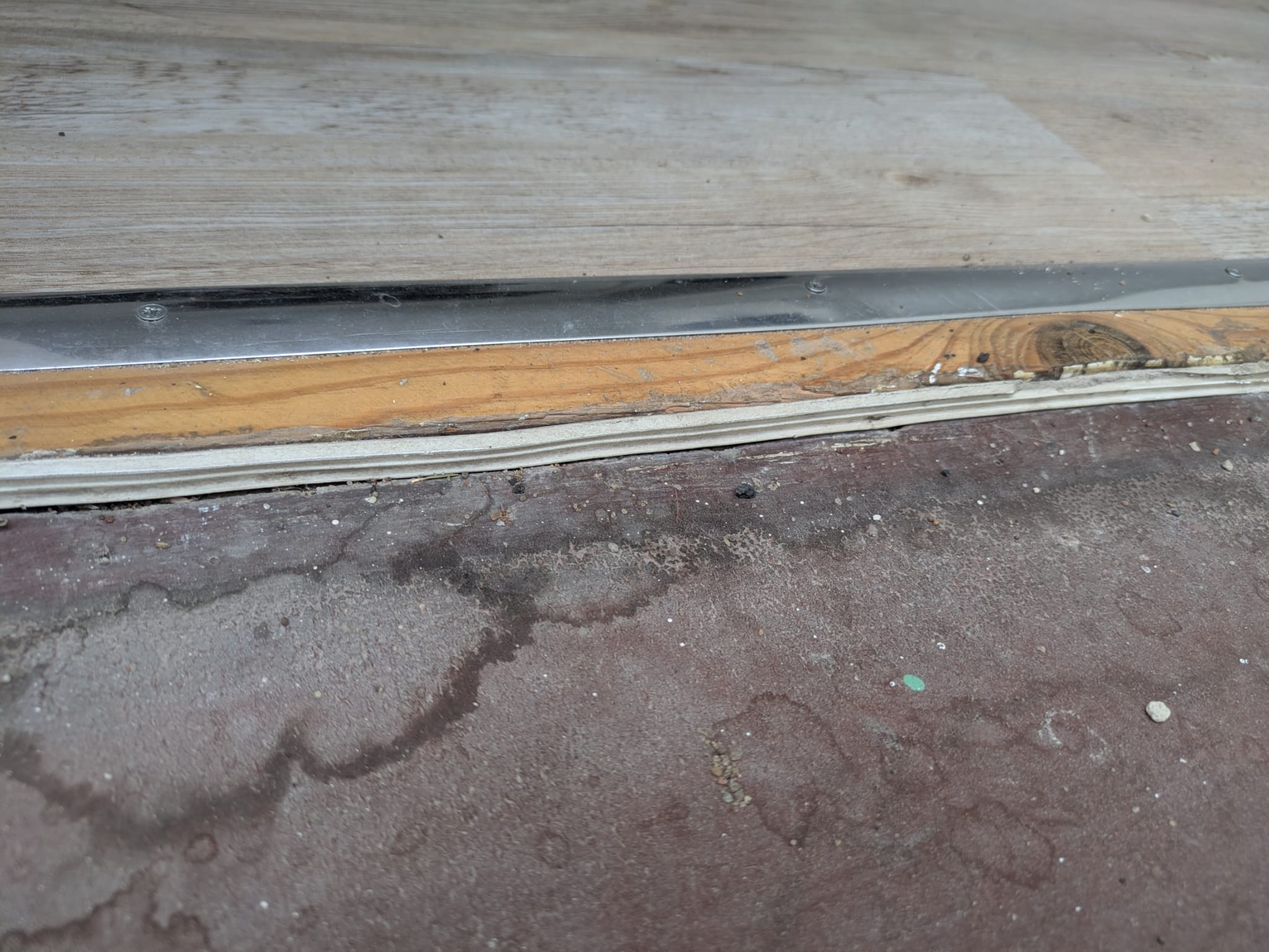
I would be very grateful for an assessment!
Kind regards,
Sophia
For health reasons, I have a serious issue with low-frequency noise and am therefore looking for a quiet apartment. I now have the opportunity to move into a top-floor apartment (older building, attic). The flooring was replaced about 5 years ago. I took a photo of the door threshold in the entrance area, but I cannot confidently assess the floor structure from it.
My question is whether it is possible to draw any conclusions about the expected impact sound or noise transmission from below to above based on this construction – can anyone provide a rough estimate based on the visible materials and the build-up height?
I would be very grateful for an assessment!
Kind regards,
Sophia
Hi,
It’s quite difficult to accurately assess just by looking at the threshold, even though some real estate agents try to claim “luxurious sound insulation” from just 8mm laminate flooring. What you can often tell, however, is whether a floating floor construction was installed at all or if new flooring was simply laid directly on the existing structure, which unfortunately happens quite often in older buildings.
If the floor was replaced 5 years ago, that doesn’t tell you much by itself. What really matters is whether proper impact sound insulation was installed at the time and how the ceiling below is constructed. Old timber beam ceilings tend to transmit low-frequency noises quite effectively throughout the house, especially the dull thudding or bass-like sounds you’re sensitive to. Even modern floor coverings often can’t completely eliminate that.
If you notice a soft edge strip or some minimal decoupling at the threshold, that would be a good sign. If everything is tightly butted together with no separation joints, I’d be more skeptical. Do you happen to know if there is screed beneath the visible floor or directly a timber subfloor? Also, how thick does the entire floor assembly seem? 3cm (1 inch) or rather around 8 to 10cm (3 to 4 inches) makes a big difference.
Honestly, I would trust a simple on-site test more than photos. Really. Try going in during the evening or early morning when someone is home downstairs. Listen to normal walking, firmer steps, maybe chair scraping. It sounds trivial, but it often tells you more than any theoretical assessment. Low-frequency sound is exactly the issue where numbers from listings often become pretty meaningless.
And while living in the attic helps reduce noise from above, it doesn’t automatically protect against structural noise from below or sideways. Older buildings often have their own unique quirks—putting it nicely.
It’s quite difficult to accurately assess just by looking at the threshold, even though some real estate agents try to claim “luxurious sound insulation” from just 8mm laminate flooring. What you can often tell, however, is whether a floating floor construction was installed at all or if new flooring was simply laid directly on the existing structure, which unfortunately happens quite often in older buildings.
If the floor was replaced 5 years ago, that doesn’t tell you much by itself. What really matters is whether proper impact sound insulation was installed at the time and how the ceiling below is constructed. Old timber beam ceilings tend to transmit low-frequency noises quite effectively throughout the house, especially the dull thudding or bass-like sounds you’re sensitive to. Even modern floor coverings often can’t completely eliminate that.
If you notice a soft edge strip or some minimal decoupling at the threshold, that would be a good sign. If everything is tightly butted together with no separation joints, I’d be more skeptical. Do you happen to know if there is screed beneath the visible floor or directly a timber subfloor? Also, how thick does the entire floor assembly seem? 3cm (1 inch) or rather around 8 to 10cm (3 to 4 inches) makes a big difference.
Honestly, I would trust a simple on-site test more than photos. Really. Try going in during the evening or early morning when someone is home downstairs. Listen to normal walking, firmer steps, maybe chair scraping. It sounds trivial, but it often tells you more than any theoretical assessment. Low-frequency sound is exactly the issue where numbers from listings often become pretty meaningless.
And while living in the attic helps reduce noise from above, it doesn’t automatically protect against structural noise from below or sideways. Older buildings often have their own unique quirks—putting it nicely.
Thank you very much for your response!
Unfortunately, I only have this one photo and cannot visit the apartment again before signing the contract – the viewing has already taken place. The information from the management is quite limited. I also can’t clearly tell from the photo whether there might be an additional intermediate layer. That’s why I’m a bit at a loss now. So far, I’ve experienced low-frequency impact noise from below mostly in red or yellow brick buildings from the 1950s and 60s, not in buildings from around the turn of the century. What unsettles me, though, is the previous tenant’s statement that he occasionally heard Alexa alarms or videos from below. I hadn’t noticed that in older buildings before. I’m not sure if this could indicate that low-frequency sounds also come through.
I also learned today that it’s a timber construction with straw insulation in between.
Best regards
Unfortunately, I only have this one photo and cannot visit the apartment again before signing the contract – the viewing has already taken place. The information from the management is quite limited. I also can’t clearly tell from the photo whether there might be an additional intermediate layer. That’s why I’m a bit at a loss now. So far, I’ve experienced low-frequency impact noise from below mostly in red or yellow brick buildings from the 1950s and 60s, not in buildings from around the turn of the century. What unsettles me, though, is the previous tenant’s statement that he occasionally heard Alexa alarms or videos from below. I hadn’t noticed that in older buildings before. I’m not sure if this could indicate that low-frequency sounds also come through.
I also learned today that it’s a timber construction with straw insulation in between.
Best regards
A wooden beam ceiling filled with straw is often problematic when it comes to low-frequency structure-borne noise. Dull footsteps, moving furniture, or bass sounds tend to transmit well through such constructions, even if normal voices are sometimes less noticeable.
The fact that the previous tenant could hear Alexa alarms or videos from below is already an indication that the ceiling is acoustically quite sensitive. If such noises are audible, low frequencies can definitely also become an issue, especially if you are sensitive to them.
Photos of the threshold unfortunately provide very limited information. What really matters is the actual ceiling structure and whether an effective impact sound insulation was installed under the new floor.
If the management can hardly provide any information and a second inspection is not possible, I would be cautious in your position. Especially given your sensitivity, a wrong assessment could have significant consequences later on.
The fact that the previous tenant could hear Alexa alarms or videos from below is already an indication that the ceiling is acoustically quite sensitive. If such noises are audible, low frequencies can definitely also become an issue, especially if you are sensitive to them.
Photos of the threshold unfortunately provide very limited information. What really matters is the actual ceiling structure and whether an effective impact sound insulation was installed under the new floor.
If the management can hardly provide any information and a second inspection is not possible, I would be cautious in your position. Especially given your sensitivity, a wrong assessment could have significant consequences later on.
R
RenoBau2619 May 2026 07:41Your own structure is responsible for impact sound insulation to the floor below. You don’t have any impact sound issues yourself – there’s no one living above you.
Aside from that, I don’t really see much soundproofing in the ceiling against “noise” from below. But often, this depends more on who is living beneath you rather than how the ceiling is constructed.
Sorry, but I wouldn’t want to move in with those kinds of problems there.
Aside from that, I don’t really see much soundproofing in the ceiling against “noise” from below. But often, this depends more on who is living beneath you rather than how the ceiling is constructed.
Sorry, but I wouldn’t want to move in with those kinds of problems there.
0
007sascha23 May 2026 14:31Even if your apartment is well insulated against impact sound, it won’t help if the decoupling of the tiles or edge strips in the other apartments has been poorly renovated. In that case, you will still receive their impact noise through the walls. If a second inspection is refused, I would generally advise staying away.
Similar topics