
ᐅ Ideas for Floor Plan Adjustments for a House with an Extension on a West-Facing Slope
Created on: 29 Oct 2019 16:46
S
susi999
I am looking for ideas to modify the floor plan.
The house is located on a steep west-facing slope and dates back to 1955.
We would like to renovate the property to create two separate apartments. We plan to use the ground floor apartment ourselves with two people. An open kitchen would be preferred. In addition, having an office would be nice. Does anyone have ideas for the renovation and redesign of the floor plan? We are somewhat unsure about how to most effectively use, modify, or adapt the small children's room in the extension toward the east, or how the hallway area might be optimized.
Thank you in advance for any ideas and advice.
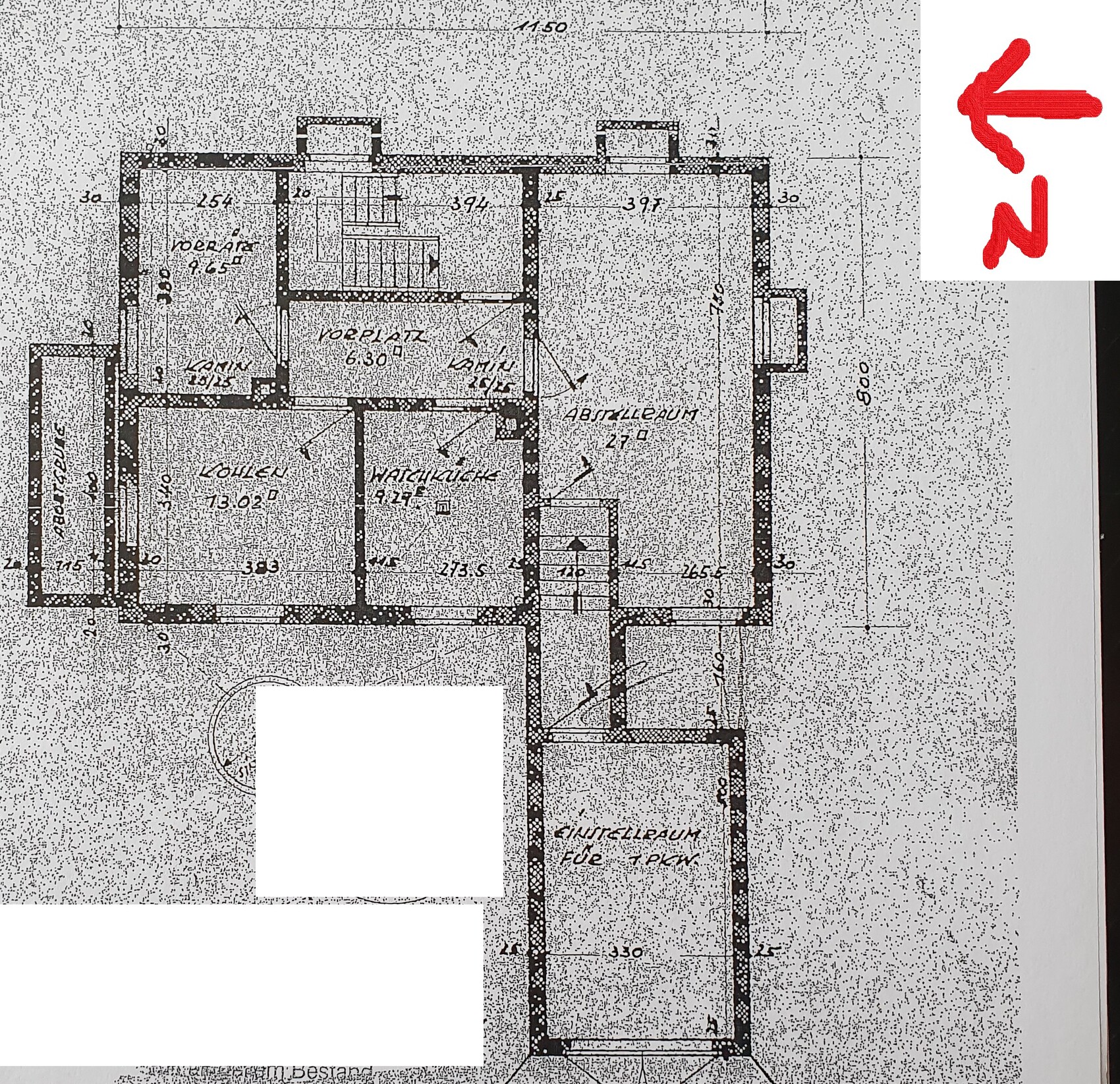
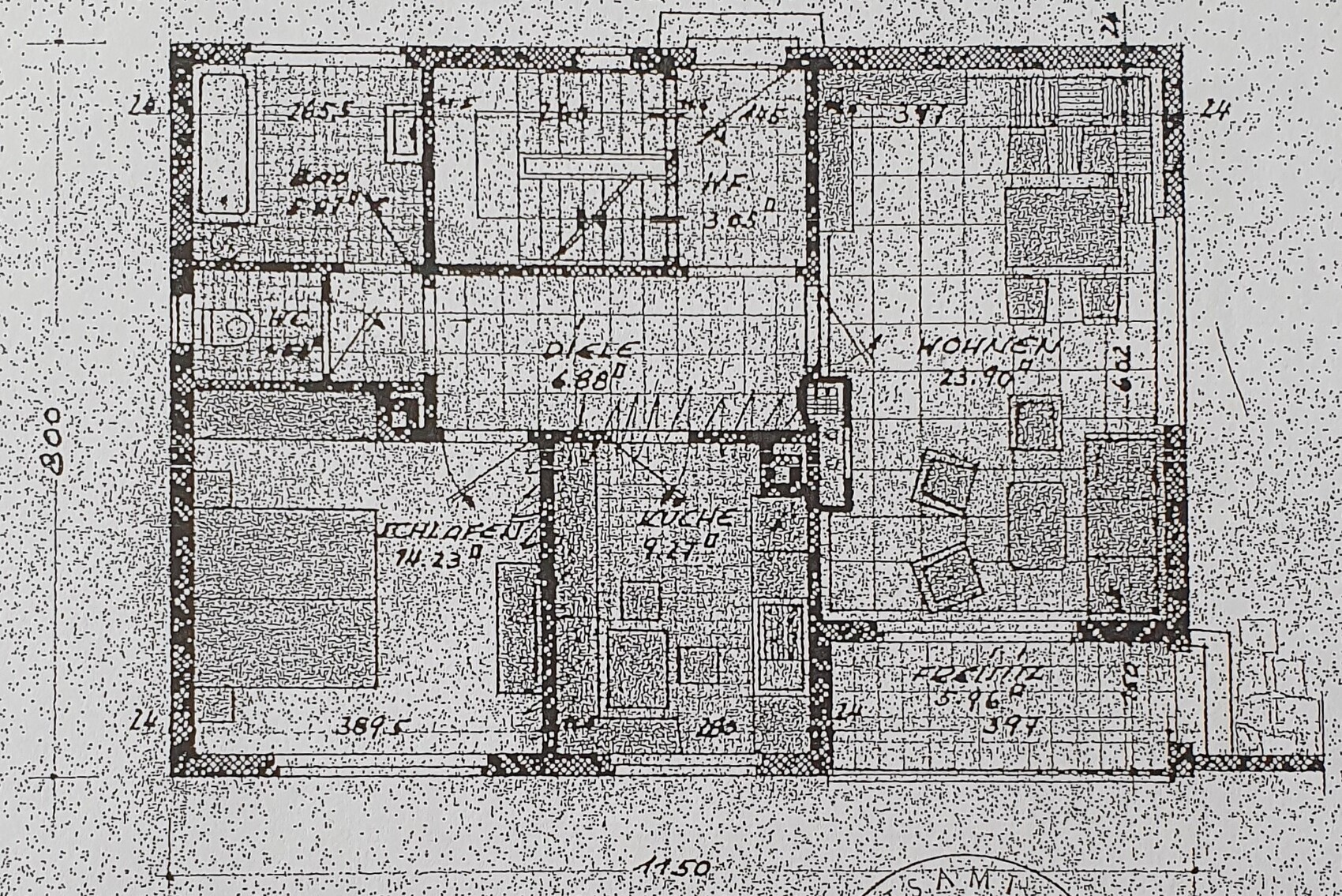
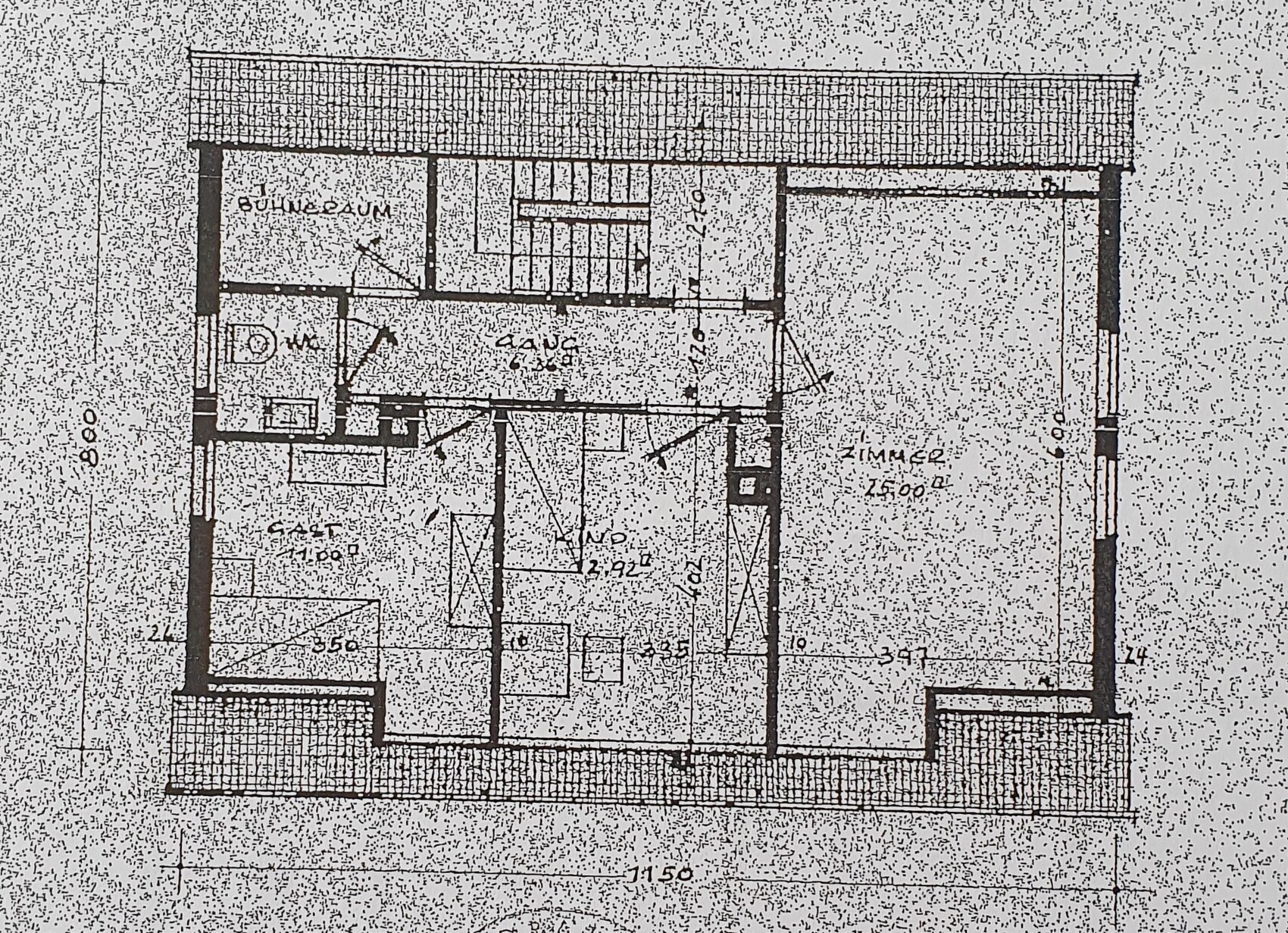
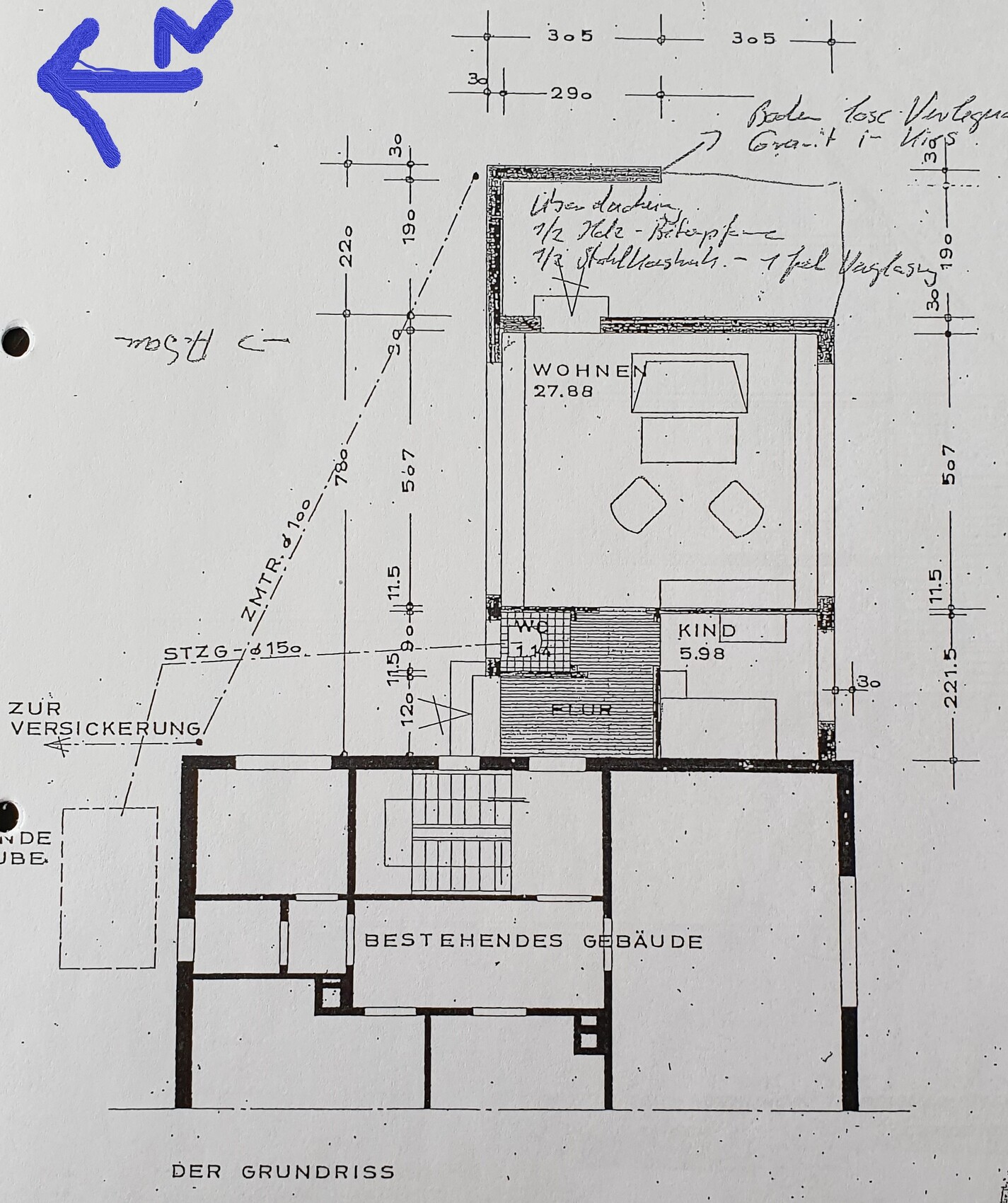
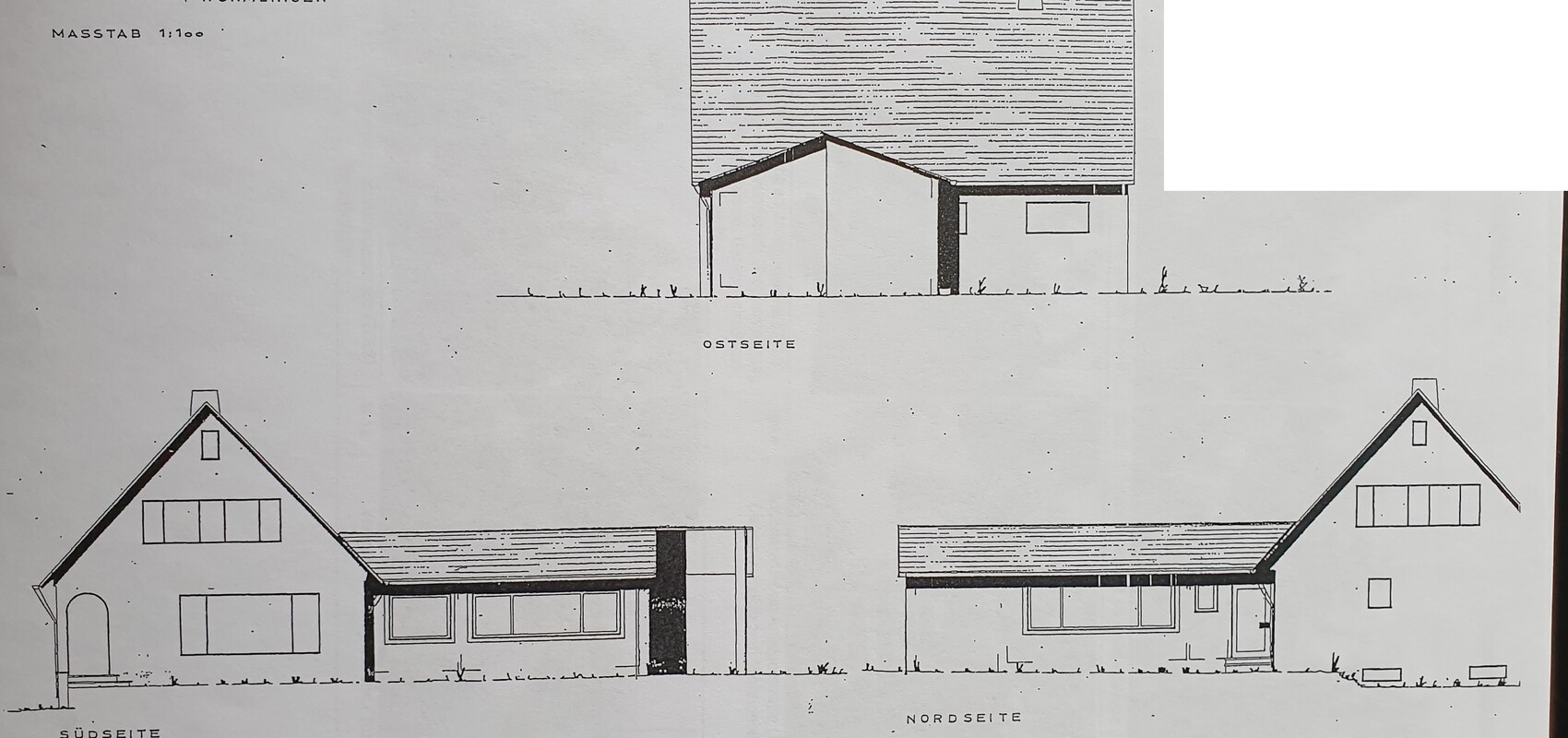
The house is located on a steep west-facing slope and dates back to 1955.
We would like to renovate the property to create two separate apartments. We plan to use the ground floor apartment ourselves with two people. An open kitchen would be preferred. In addition, having an office would be nice. Does anyone have ideas for the renovation and redesign of the floor plan? We are somewhat unsure about how to most effectively use, modify, or adapt the small children's room in the extension toward the east, or how the hallway area might be optimized.
Thank you in advance for any ideas and advice.

I believe the extension already exists (it would also be interesting to know whether it is insulated, what kind of windows it has, etc., whether it is on the same level as the original building, if the entrance is lower, i.e., raised ground floor, which was common in 1955...) and is to be renovated as well.
Why is demolition not being considered?
Why is demolition not being considered?
The extension already exists and dates back to 1957. It is intended to be used exclusively by the ground floor apartment. Insulation and windows are therefore roughly similar to those in the rest of the house. The entrance is at the same level as the ground floor and the extension.
Demolition is not an option, as rebuilding currently seems too expensive for us. Maybe we will simply keep the existing floor plan and use the entire house ourselves. In that case, some rooms will just remain empty. I was just thinking that other people here might have more experience and see possibilities within the existing floor plan.
Demolition is not an option, as rebuilding currently seems too expensive for us. Maybe we will simply keep the existing floor plan and use the entire house ourselves. In that case, some rooms will just remain empty. I was just thinking that other people here might have more experience and see possibilities within the existing floor plan.
It’s simply a classic floor plan from that era – which also means: when you do a full renovation and rebuild, nobody really wants that anymore. And often, unfortunately, you don’t know what to expect with a major renovation. Worst case scenario: there was a severe water damage that was never properly repaired, and the mold has been sitting inside the wall for years. Or who knows. The foundation slab is water-permeable, etc. There are many unpleasant possibilities that only become apparent during the renovation. On top of that, the requirements for electrical and plumbing systems are now completely different compared to 1955. This means that if you want to do it right and properly, it involves a huge effort just to bring it somewhat up to modern standards. The extension is not basemented and dates back to 1957 – so I assume the slab on grade is not insulated, meaning the floor is likely to be quite cold. If you don’t want that, it becomes really complicated. And so on.
Overall, it’s a lot of work (and cost) with an uncertainty factor that nobody really wants to or can quantify. Therefore, you should seriously consider a full renovation. It’s unlikely to be much cheaper than demolition and a (simple) new build (since you apparently don’t want to live in a very large house). If one of the uncertainty factors hits hard, costs can easily escalate – and the project can drag on indefinitely.
Then the question is simply whether the house is worth it. We can’t judge that. Maybe it has a high emotional value for you – which is completely understandable and then you are usually willing to invest much more. If it doesn’t have that, isn’t a particularly charming house from that time, doesn’t have exceptionally high-quality building materials for the era, and isn’t a listed building under preservation orders – honestly, I would tear it down.
What’s your situation like? Are you already living there? In that case, demolition naturally becomes a different matter (but so does a full renovation). Do you already own the land? What does your financial situation look like? Would it be conceivable to first gut the interior yourselves and then only do the rough demolition afterwards? In the meantime, maybe increase your equity – all options to consider. New construction isn’t cheap, you’re right, especially today when costs are rising across the board. But with a new build you have facts, relatively accurate numbers, and timelines. With a full renovation, all of that is much more uncertain.
My brother renovated an old farmhouse (from the 17th century – of course with heritage protection, so a somewhat different challenge), and the budget was exceeded significantly, the timeline more than doubled. Instead of a few months, they had to live elsewhere for almost two years. And all of this was NOT foreseeable beforehand, even with the appropriate experts and architects.
I think before you start trying to find the best possible solution for your needs with the existing building, you should take some time for internal reflection and weigh everything carefully. If after that you still say: we’re doing it, we want this – then you’ll easily find enough people here to work out a suitable floor plan. But I guess most people here feel like I do: it’s not clear why this old building absolutely has to be preserved. I am not sure that demolition and building a small single-family house wouldn’t even be cheaper than converting this house into two living units.
Overall, it’s a lot of work (and cost) with an uncertainty factor that nobody really wants to or can quantify. Therefore, you should seriously consider a full renovation. It’s unlikely to be much cheaper than demolition and a (simple) new build (since you apparently don’t want to live in a very large house). If one of the uncertainty factors hits hard, costs can easily escalate – and the project can drag on indefinitely.
Then the question is simply whether the house is worth it. We can’t judge that. Maybe it has a high emotional value for you – which is completely understandable and then you are usually willing to invest much more. If it doesn’t have that, isn’t a particularly charming house from that time, doesn’t have exceptionally high-quality building materials for the era, and isn’t a listed building under preservation orders – honestly, I would tear it down.
What’s your situation like? Are you already living there? In that case, demolition naturally becomes a different matter (but so does a full renovation). Do you already own the land? What does your financial situation look like? Would it be conceivable to first gut the interior yourselves and then only do the rough demolition afterwards? In the meantime, maybe increase your equity – all options to consider. New construction isn’t cheap, you’re right, especially today when costs are rising across the board. But with a new build you have facts, relatively accurate numbers, and timelines. With a full renovation, all of that is much more uncertain.
My brother renovated an old farmhouse (from the 17th century – of course with heritage protection, so a somewhat different challenge), and the budget was exceeded significantly, the timeline more than doubled. Instead of a few months, they had to live elsewhere for almost two years. And all of this was NOT foreseeable beforehand, even with the appropriate experts and architects.
I think before you start trying to find the best possible solution for your needs with the existing building, you should take some time for internal reflection and weigh everything carefully. If after that you still say: we’re doing it, we want this – then you’ll easily find enough people here to work out a suitable floor plan. But I guess most people here feel like I do: it’s not clear why this old building absolutely has to be preserved. I am not sure that demolition and building a small single-family house wouldn’t even be cheaper than converting this house into two living units.
M
Mottenhausen1 Nov 2019 10:26susi999 schrieb:
Demolition is not an option since rebuilding is currently too expensive for us. Maybe we’ll just keep the existing floor plan and use the entire house ourselves. Okay, a new approach: please share your rough budget—how much are you generally willing to spend? If, as I suspect, it will end up being just a minor renovation anyway, you can save yourself a lot of further worries.
Here’s how I see it: the rough-in plumbing, electrical work, screed, insulation, heating system, roof, facade, windows, tiles, interior plaster, and so on, cost about the same in new construction as in renovation—1 meter of PE piping costs the same either way. On the contrary, when everything can be planned from scratch, installation is often faster, complicated modifications are avoided, and you save mainly time and also some money. For example, windows (including roller shutter boxes) built to new construction standard sizes (at least in 12.5cm (5 inches) increments) are cheaper to procure than custom-made, centimeter-precise windows for your old house. Enlarging windows requires wider lintels, which can even endanger the structural shell. Reducing window sizes to standard dimensions? Who wants to downsize windows...
Regarding what you’re planning, you won’t avoid needing a building permit / planning permission even for renovation work, and energy efficiency regulations for older buildings will apply as well.
The budget is around 200,000 euros. If it’s possible to achieve something nice for less, that’s of course welcome. We plan to do a lot of the work ourselves. A few years ago, we completely renovated a house from the ground up, including plumbing, electrical installations, and insulation. Windows are the least of our concerns since we run our own window and shutter manufacturing business. Custom-made windows are standard for us.
susi999 schrieb:
Unfortunately, I couldn’t find the attached questionnaire.You are also in the wrong subforum. If you look under the floor plan discussions, you will find one there. Without it, there will only be follow-up questions.
Similar topics