
Hello, we are now experiencing our first winter in the house.
The humidity level is always around 60%, sometimes even higher.
The exterior plaster was completed last week.
Moisture also accumulates on the roof windows.
Could it be that the masonry is still damp?
It’s a brick house without mechanical ventilation.
Regards, Patrick
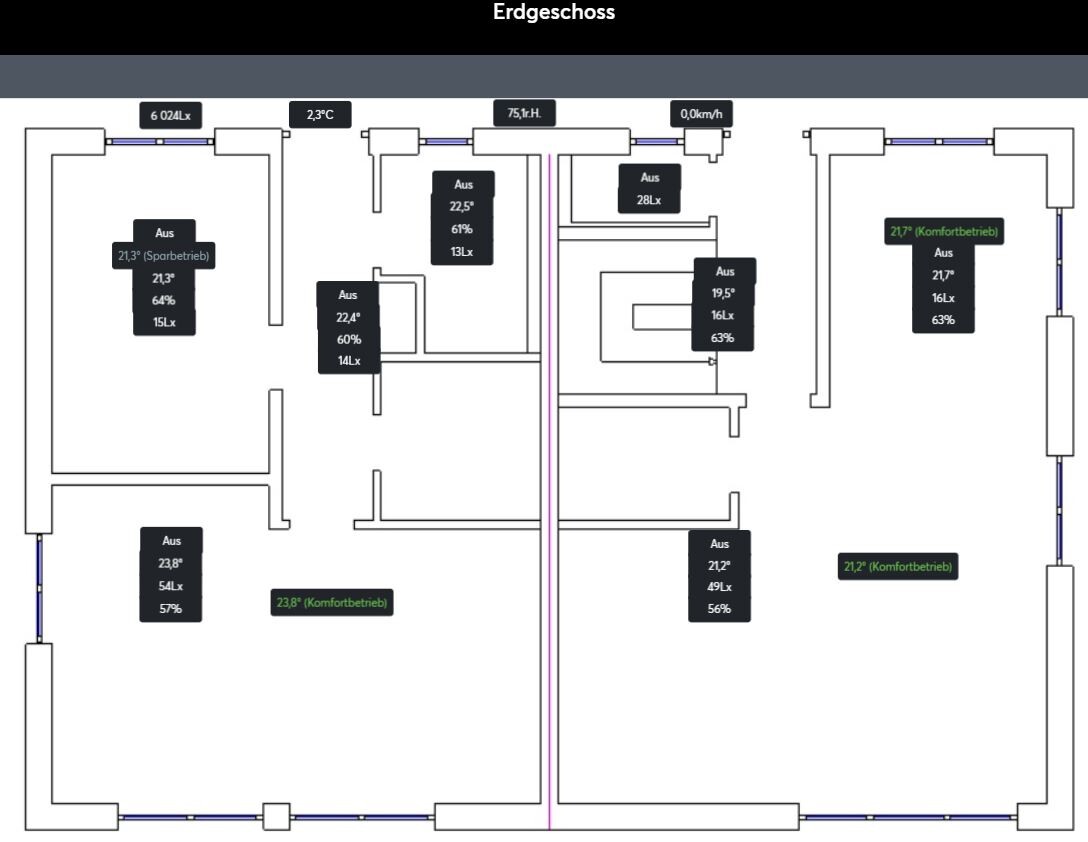

The humidity level is always around 60%, sometimes even higher.
The exterior plaster was completed last week.
Moisture also accumulates on the roof windows.
Could it be that the masonry is still damp?
It’s a brick house without mechanical ventilation.
Regards, Patrick
T
T_im_Norden21 Nov 2020 16:44Outdoor air at 5°C (41°F) with 80% relative humidity contains 5.44 g/m³
Indoor air at 20°C (68°F) with 80% relative humidity contains 13.85 g/m³
Conclusion: Ventilation dries the room because more moisture is carried out than comes in.
Ötzi was faster.
Indoor air at 20°C (68°F) with 80% relative humidity contains 13.85 g/m³
Conclusion: Ventilation dries the room because more moisture is carried out than comes in.
Ötzi was faster.

Patricck schrieb:
Hm, well, I can’t really open the windows more than every day.Actually, you have to. That’s just how it is with new constructions. That’s why many recommend a ventilation system for people who work full-time and don’t have the time or energy to ventilate for half an hour in the morning and evening.
I believe the very reason this forum exists is because nowadays you have to actively get the air out of the house—meaning the moisture.
A person loses about 1 liter (1 quart) of water through sweat during the night—that needs to be removed. Plus, there’s kitchen steam on top of that.
Heat – ventilate – heat – ventilate...

Ã
Ötzi Ötztaler21 Nov 2020 18:28Yes, there is definitely still over a ton of water inside that will come out over time—if it is allowed to drain.
Similar topics