
G
gruselhaus10 Jul 2023 11:52Dear soil experts,
Some tiles in the driveway to the garage were broken, which I have now removed. I still have some spare tiles left.
I want to make sure I do this correctly: The edge where the car drives onto the driveway experiences obviously higher stress. If the garage door did not hit there, I would like to place a rubber ramp, but that’s not possible. Therefore, the new tiles should be installed as securely as possible.
I would appreciate any useful tips. It would also be helpful if the required materials could be bought in small quantities, as I do not need a whole 10kg (22 lb) bag.
Thanks and best regards,
Thomas
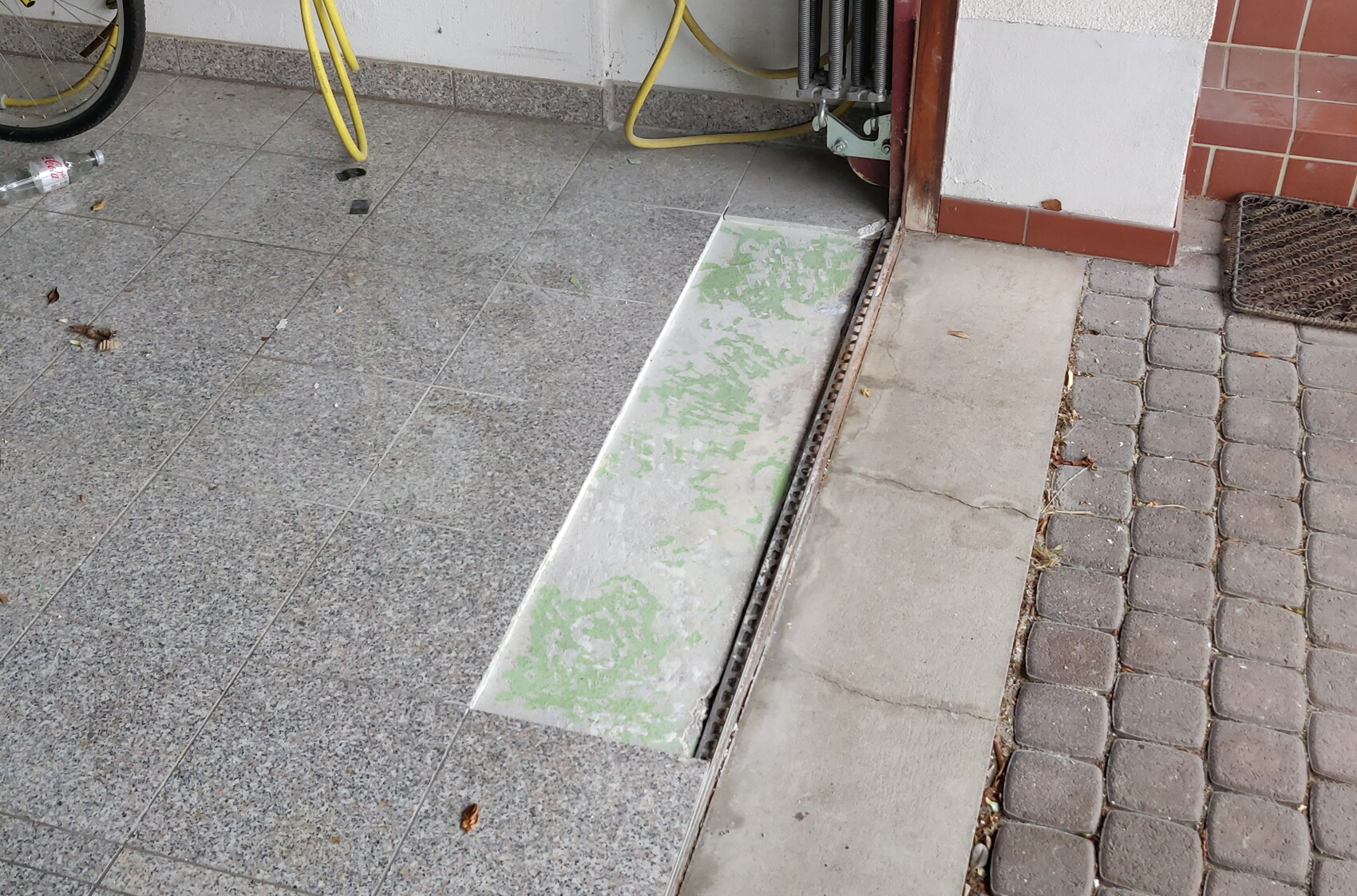
Some tiles in the driveway to the garage were broken, which I have now removed. I still have some spare tiles left.
I want to make sure I do this correctly: The edge where the car drives onto the driveway experiences obviously higher stress. If the garage door did not hit there, I would like to place a rubber ramp, but that’s not possible. Therefore, the new tiles should be installed as securely as possible.
- Is there a specific recommendation for the type of tile adhesive or mortar to use here? I have heard about flexible adhesives that prevent tiles from breaking quickly, for example, on wood. However, the substrate here is a stable screed.
- Could a better edge trim help?
- Should the trim be placed directly on the screed or supported with adhesive underneath?
- Should I prime the screed? The old tiles were installed over a green coating. Some of it is still visible and difficult to sand off.
- I still have a notched trowel with a 5mm (0.2 inch) notch from installing a parquet floor. Can I use it?
I would appreciate any useful tips. It would also be helpful if the required materials could be bought in small quantities, as I do not need a whole 10kg (22 lb) bag.
Thanks and best regards,
Thomas
B
Benutzer 100111 Jul 2023 02:40A stainless steel rail belongs there.
Not a small, soft rail like that.
Example
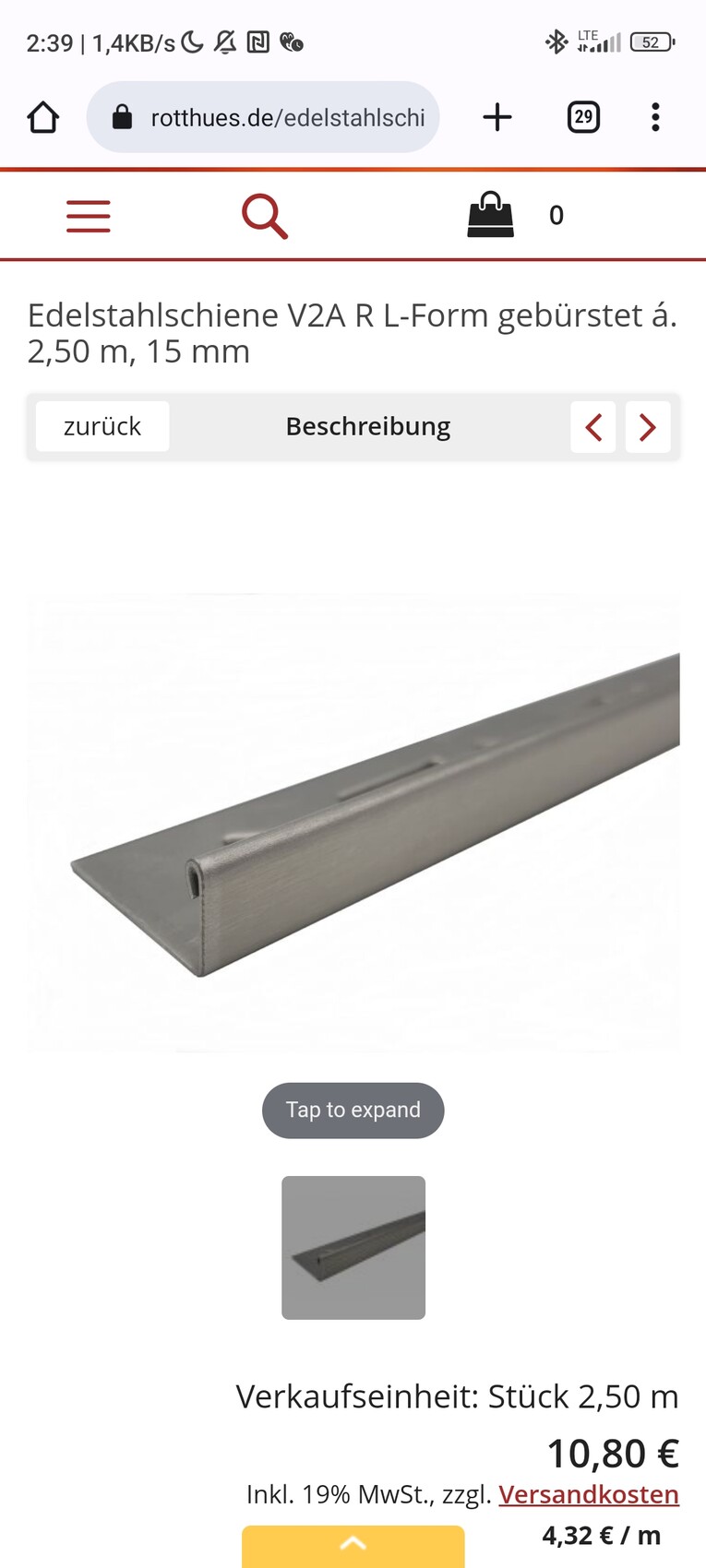
Not a small, soft rail like that.
Example

If you take a look at the finishing profile (see photo), you will notice that no mortar was pushed through the support ribs during installation. This means that the profile is not supported from behind by pressure. As a result, it can shift when driven over, and movement in rigid building materials typically leads to cracks or breakdown of the material structure.
In the simplest case, a resin can be injected through the open ribs to fill the hollow space beneath with a pressure-resistant material. This should usually be sufficient to install ceramic tiles adjacent to the profile again.
However, there is a concern that the situation visible here may also be present under the first row of tiles that are still in place.
Best regards to all: KlaRa
In the simplest case, a resin can be injected through the open ribs to fill the hollow space beneath with a pressure-resistant material. This should usually be sufficient to install ceramic tiles adjacent to the profile again.
However, there is a concern that the situation visible here may also be present under the first row of tiles that are still in place.
Best regards to all: KlaRa
Similar topics