
Hello everyone,
I am replacing a balcony door with an entrance door and plan to deactivate the built-in roller shutter box. The plan is to remove the roller shutter, insulate the box, and close the opening flush to the outside. A tradesman suggested using glass wool to insulate the roller shutter box, followed by an aluminum cover.
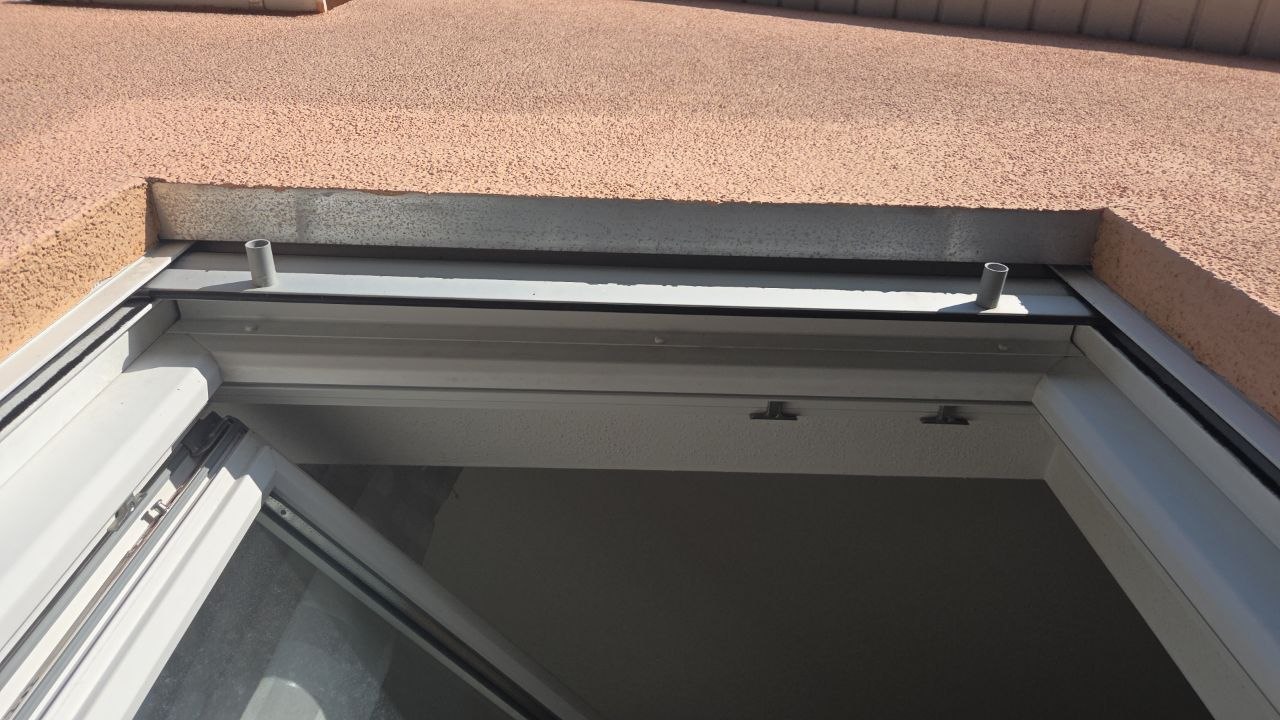
My questions are:
1. Is glass wool the right insulation material for a roller shutter box, or is there a better option?
2. Should I pay attention to vapor barrier, vapor retarder, or anything else to prevent moisture ingress?
3. What is the best way to design the outer cover panel – aluminum, sheet metal, or are there other alternatives? What should I watch for regarding connections (sealing, thermal bridges)? And where is the best place to source this?
4. The modification should be as reversible as possible (if at all achievable), in case the roller shutter needs to be reinstalled many years from now.
Regarding the situation: This is an external wall roller shutter box (not a surface-mounted shutter), which sits in the wall opening above the door (see attached image). The facade is plastered.
I would appreciate advice on the proper procedure and the materials needed.
I am replacing a balcony door with an entrance door and plan to deactivate the built-in roller shutter box. The plan is to remove the roller shutter, insulate the box, and close the opening flush to the outside. A tradesman suggested using glass wool to insulate the roller shutter box, followed by an aluminum cover.
My questions are:
1. Is glass wool the right insulation material for a roller shutter box, or is there a better option?
2. Should I pay attention to vapor barrier, vapor retarder, or anything else to prevent moisture ingress?
3. What is the best way to design the outer cover panel – aluminum, sheet metal, or are there other alternatives? What should I watch for regarding connections (sealing, thermal bridges)? And where is the best place to source this?
4. The modification should be as reversible as possible (if at all achievable), in case the roller shutter needs to be reinstalled many years from now.
Regarding the situation: This is an external wall roller shutter box (not a surface-mounted shutter), which sits in the wall opening above the door (see attached image). The facade is plastered.
I would appreciate advice on the proper procedure and the materials needed.
Hi,
Glass wool is possible, but honestly, for such an old roller shutter box, I would recommend using XPS or PIR boards instead, simply because they offer better performance in tight spaces and fit more neatly. With glass wool, you just stuff it in and hope no one looks inside later. Sounds harsh, but that’s often the case. Especially above an entrance door, you can quickly end up with a classic cold spot that only becomes noticeable in winter when the lintel above is suddenly about 2°C (4°F) colder than the adjacent area.
From my perspective, airtightness on the inside is more important than any thick vapor barrier. Many people make the mistake of focusing only on insulation, while moist indoor air travels through every small gap into the old box. Eventually, this leads to that slightly musty surprise behind the cover. If you seal the inside properly, for example with connection adhesive or sealing tape, and fit the insulation boards snugly, that is often sufficient. How old is the house approximately, and is the exterior wall solid or cavity-built? That definitely makes a difference in the construction approach.
For the outside, I would only use aluminum if it is properly folded and installed with ventilation behind it. Thin sheets from hardware stores often look like a poor compromise after just 3 years. Titanium zinc or coated sheet metal generally maintains a cleaner appearance, although aluminum is naturally easier if you need to work on it again later. A reversible solution only works reasonably well if you don’t completely foam or plaster it over like a champion on a coffee break. The connection to the plaster is more important than the material itself. You often see fine hairline cracks after the first winter because nobody considered movement.
And if you really want to keep the roller shutter at some point, I wouldn’t completely destroy or fully seal the box on the inside. Instead, use glued insulation boards instead of foam, and an externally screwed cover. It doesn’t look quite as “permanent,” but it will save a lot of frustration later.
Glass wool is possible, but honestly, for such an old roller shutter box, I would recommend using XPS or PIR boards instead, simply because they offer better performance in tight spaces and fit more neatly. With glass wool, you just stuff it in and hope no one looks inside later. Sounds harsh, but that’s often the case. Especially above an entrance door, you can quickly end up with a classic cold spot that only becomes noticeable in winter when the lintel above is suddenly about 2°C (4°F) colder than the adjacent area.
From my perspective, airtightness on the inside is more important than any thick vapor barrier. Many people make the mistake of focusing only on insulation, while moist indoor air travels through every small gap into the old box. Eventually, this leads to that slightly musty surprise behind the cover. If you seal the inside properly, for example with connection adhesive or sealing tape, and fit the insulation boards snugly, that is often sufficient. How old is the house approximately, and is the exterior wall solid or cavity-built? That definitely makes a difference in the construction approach.
For the outside, I would only use aluminum if it is properly folded and installed with ventilation behind it. Thin sheets from hardware stores often look like a poor compromise after just 3 years. Titanium zinc or coated sheet metal generally maintains a cleaner appearance, although aluminum is naturally easier if you need to work on it again later. A reversible solution only works reasonably well if you don’t completely foam or plaster it over like a champion on a coffee break. The connection to the plaster is more important than the material itself. You often see fine hairline cracks after the first winter because nobody considered movement.
And if you really want to keep the roller shutter at some point, I wouldn’t completely destroy or fully seal the box on the inside. Instead, use glued insulation boards instead of foam, and an externally screwed cover. It doesn’t look quite as “permanent,” but it will save a lot of frustration later.