
E
Elias_dee26 Mar 2023 19:49Good evening,
general question: how airtight does a shell construction need to be?
During the inspection of our shell, we first noticed a gap around a drilled hole for an electrical outlet: the white gap in the photo is the space between two bricks, meaning there is a direct opening to the outside where you can feel a slight draft. The outlet probably won’t fully seal this. At another spot, the bricks do not fit tightly either, and you can see outside (2nd photo).
Is this considered poor workmanship and something we should report, or is it normal and will the plaster render still make it airtight?
PS: no external insulation will be added. These are hollow bricks without filling, 36.5 cm (14.4 inches).
Thank you in advance!
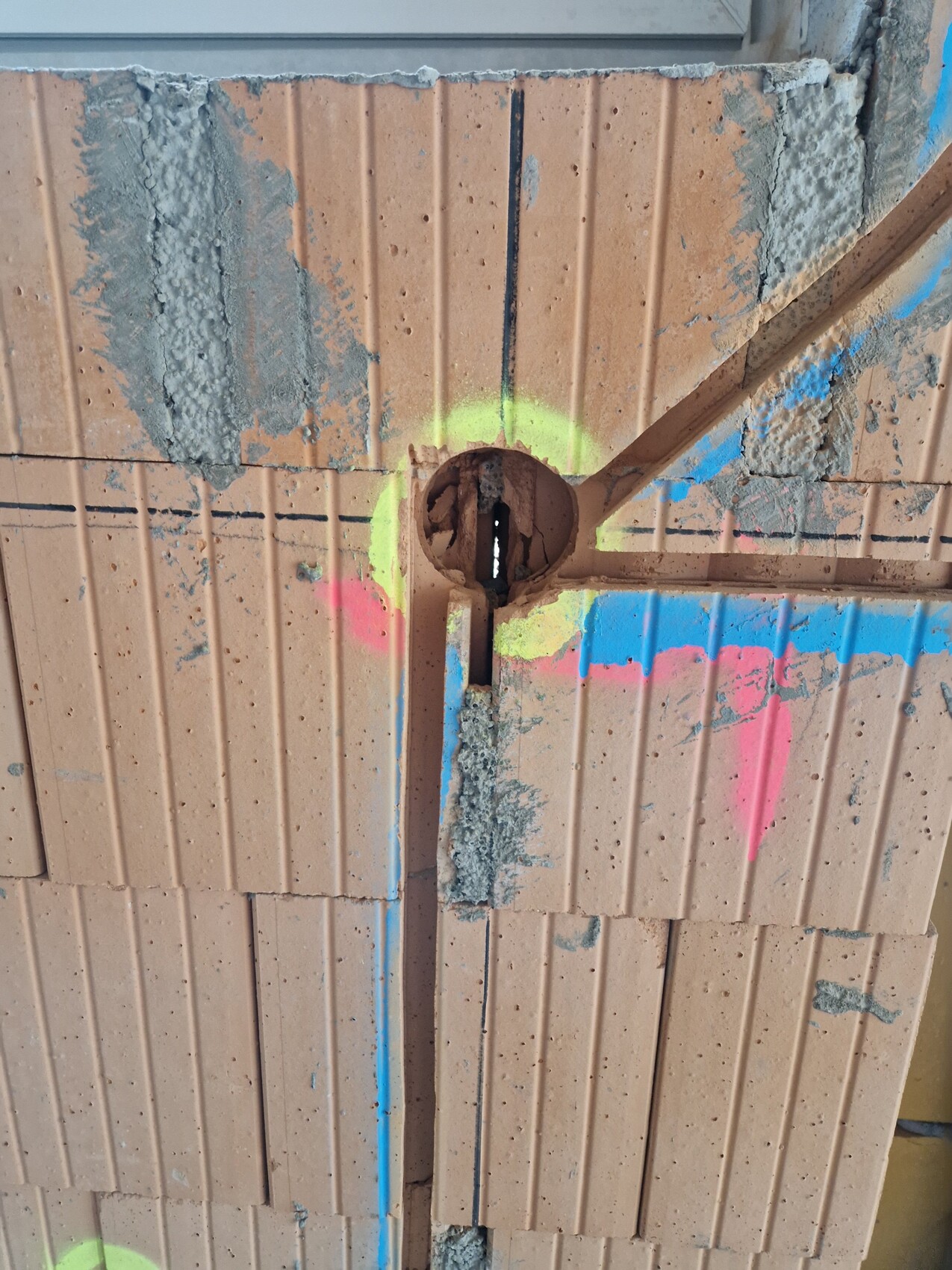
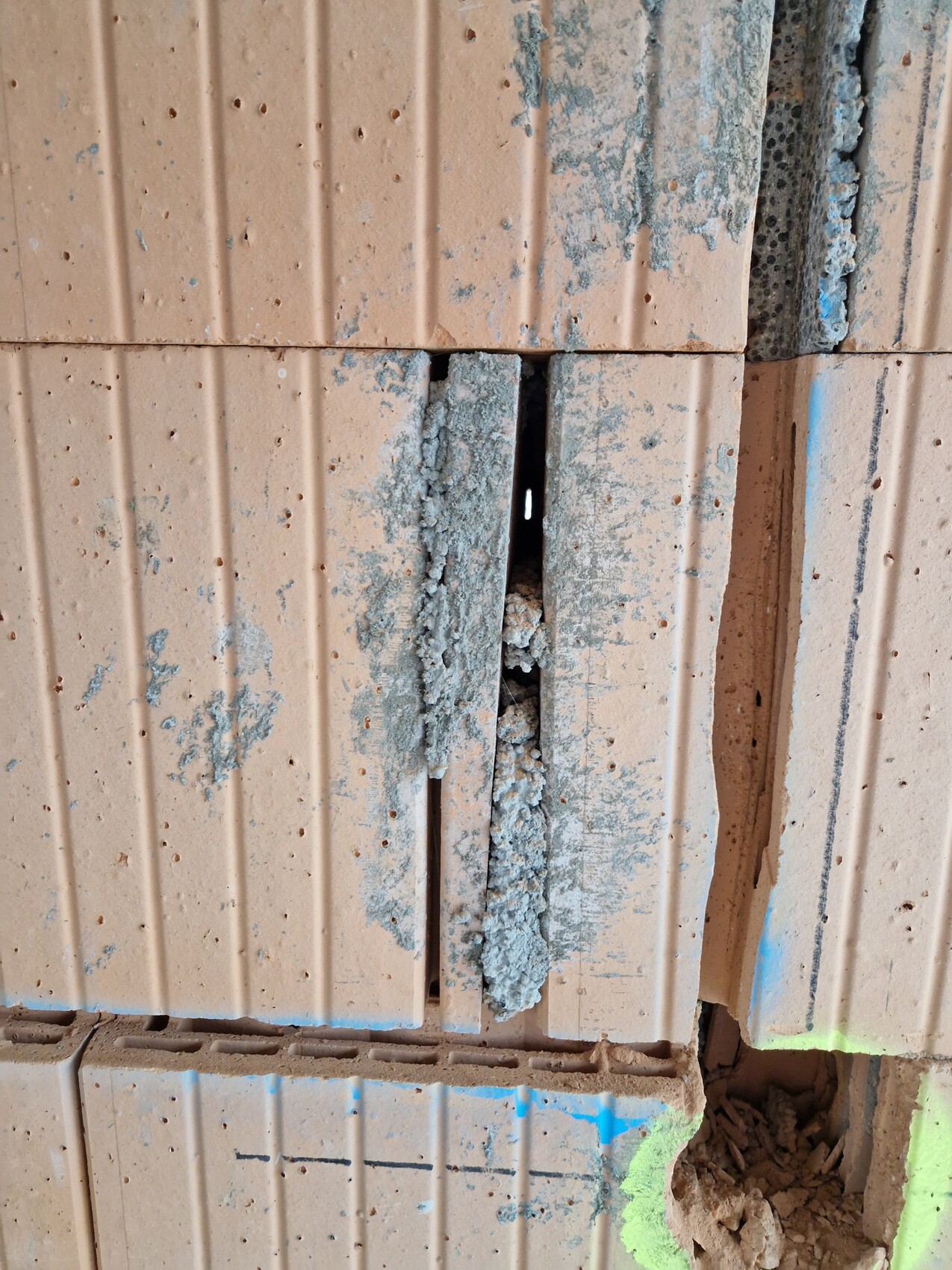
general question: how airtight does a shell construction need to be?
During the inspection of our shell, we first noticed a gap around a drilled hole for an electrical outlet: the white gap in the photo is the space between two bricks, meaning there is a direct opening to the outside where you can feel a slight draft. The outlet probably won’t fully seal this. At another spot, the bricks do not fit tightly either, and you can see outside (2nd photo).
Is this considered poor workmanship and something we should report, or is it normal and will the plaster render still make it airtight?
PS: no external insulation will be added. These are hollow bricks without filling, 36.5 cm (14.4 inches).
Thank you in advance!
A
Allthewayup26 Mar 2023 20:35The brick manufacturer usually publishes so-called "processing instructions" which specify the acceptable sizes of gaps and how to handle them in practice. For Poroton bricks, the guidelines state that gaps from 50mm (2 inches) and above should be filled with a piece of brick. Gaps between 15 and 50mm (0.6 and 2 inches) must be completely filled with lightweight mortar. For gaps between 5 and 15mm (0.2 and 0.6 inches), it is sufficient to seal the wall surfaces on both sides with lightweight mortar, and anything below 5mm (0.2 inches) requires no further action. Airtightness is ensured by the plaster, and natural light entering the unfinished structure does not constitute a defect. This is what the information sheet states.
After consulting regarding our building project, I have permission to fill such "gaps" with lightweight mortar (LM21) as I see fit, and I receive the material for free. However, since we do not have any gaps larger than 15mm (0.6 inches), this is more about satisfying my inner perfectionist than a technical or energy-related necessity.
After consulting regarding our building project, I have permission to fill such "gaps" with lightweight mortar (LM21) as I see fit, and I receive the material for free. However, since we do not have any gaps larger than 15mm (0.6 inches), this is more about satisfying my inner perfectionist than a technical or energy-related necessity.
E
Elias_dee26 Mar 2023 21:19Allthewayup schrieb:
The manufacturer of the bricks usually also provides so-called "application instructions," which specify what size of "gaps" are acceptable and how to handle them in practice. For Poroton bricks, the instructions state that gaps of 50mm (2 inches) or more must be filled with a whole brick piece. Gaps between 15 and 50mm (0.6 and 2 inches) should be completely filled with a lightweight mortar. For gaps between 5 and 15mm (0.2 and 0.6 inches), it is sufficient to seal both sides of the wall surfaces with lightweight mortar. Anything below 5mm (0.2 inches) requires no further measures. Airtightness is ensured by the plaster, and daylight entering the shell construction is not considered a defect. That is what the information sheet says.
After consulting about our building project, I was told I can fill such "gaps" with lightweight mortar (LM21) however I like, and I receive the material for free. Since we have no gaps larger than 15mm (0.6 inches), this is more about satisfying my inner perfectionist than a technical or energy-related necessity.Thank you very much – the response is very helpful!Similar topics