
ᐅ How to Integrate a Utility Room in the Basement Effectively Within the Thermal Envelope?
Created on: 2 May 2020 13:59
V
voicepoint
Hello everyone,
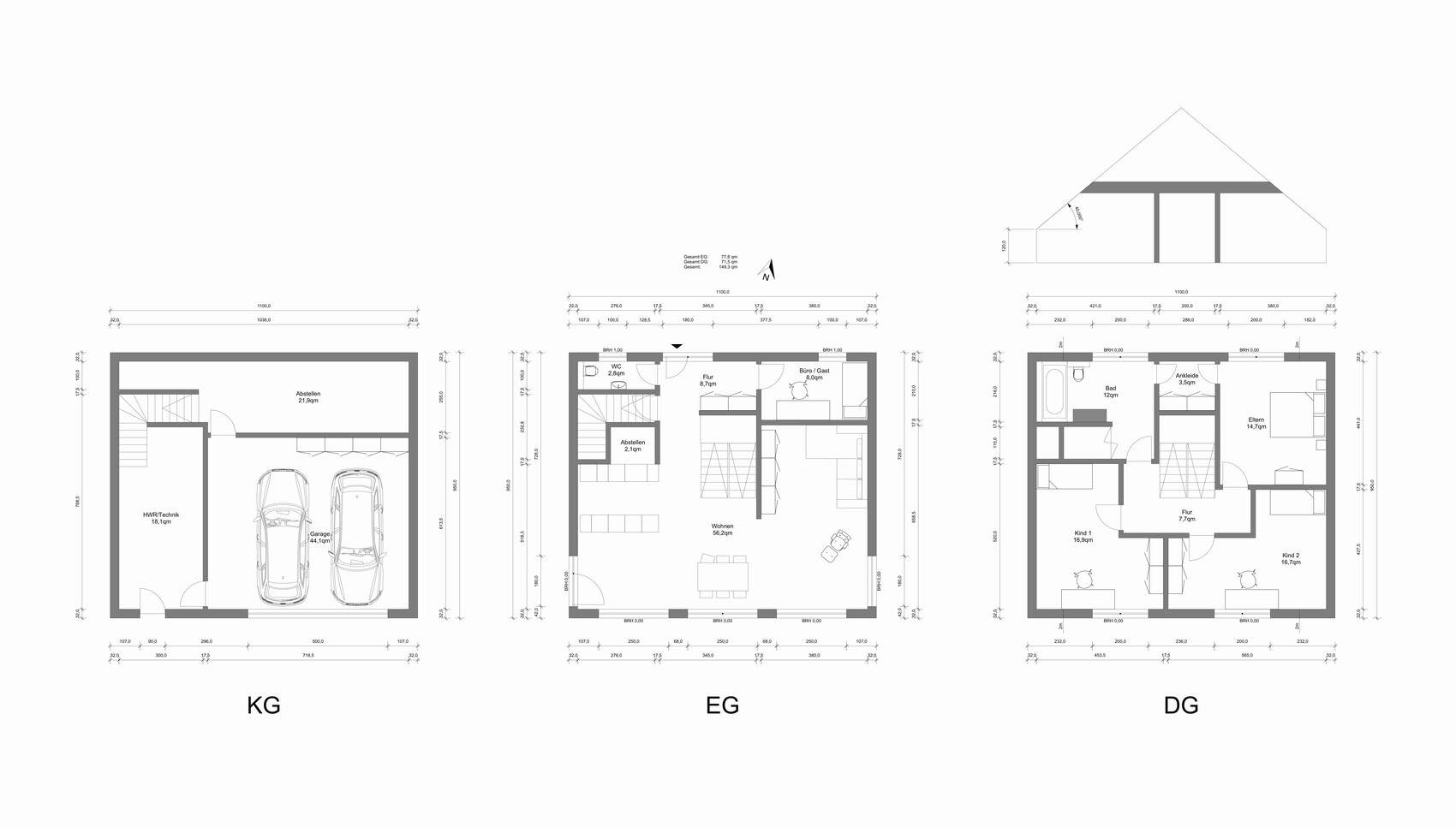
We are currently in the planning phase.
We are planning to build a single-family house with a basement. The ground floor (GF) and upper floor (UF) will be constructed using wood frame construction, while the basement will be either masonry or precast concrete (partially underground due to the sloped site).
The GF and UF will meet the KFW 40 standard as built. Accordingly, a (partial) inclusion of the basement in the thermal envelope would probably make sense. Depending on the decision regarding the 52 GW ceiling, it might also become a 40+ house (a ventilation system will be installed in any case).
The basement is planned to have a utility/technical room, and the rest of the basement will be used as a garage. The heating system will be installed in the utility room, so this room must be included in the building’s thermal envelope.
Currently, I see five possible options to implement this (options 1-3 could be simplified to meet KFW 55):
1) Include only the utility room in the thermal envelope
2) Include the entire basement in the thermal envelope (garage door?!)
3) Create a small, separate room in the basement for the heating system, leaving the rest outside the thermal envelope
4) Skip all measures and not use the KFW loans and funding
5) Extend the ground floor with a technical room exclusively for the heating system (electricity, ventilation, etc. would remain in the basement)
All options obviously differ in costs but also allow for higher levels of funding.
So far, we have been offered a 20cm (8 inch) thick slab in C20/25 concrete, masonry or concrete for the basement floor, external basement wall insulation of 120mm (5 inches), and a screed with 50mm (2 inches) insulation in the utility room. It was noted that additional insulation might be necessary (perimeter insulation).
Which approach would you choose, or what would you consider most sensible? Is there a better solution we might have overlooked?
Thank you very much and best regards,
Noel
We are currently in the planning phase.
We are planning to build a single-family house with a basement. The ground floor (GF) and upper floor (UF) will be constructed using wood frame construction, while the basement will be either masonry or precast concrete (partially underground due to the sloped site).
The GF and UF will meet the KFW 40 standard as built. Accordingly, a (partial) inclusion of the basement in the thermal envelope would probably make sense. Depending on the decision regarding the 52 GW ceiling, it might also become a 40+ house (a ventilation system will be installed in any case).
The basement is planned to have a utility/technical room, and the rest of the basement will be used as a garage. The heating system will be installed in the utility room, so this room must be included in the building’s thermal envelope.
Currently, I see five possible options to implement this (options 1-3 could be simplified to meet KFW 55):
1) Include only the utility room in the thermal envelope
2) Include the entire basement in the thermal envelope (garage door?!)
3) Create a small, separate room in the basement for the heating system, leaving the rest outside the thermal envelope
4) Skip all measures and not use the KFW loans and funding
5) Extend the ground floor with a technical room exclusively for the heating system (electricity, ventilation, etc. would remain in the basement)
All options obviously differ in costs but also allow for higher levels of funding.
So far, we have been offered a 20cm (8 inch) thick slab in C20/25 concrete, masonry or concrete for the basement floor, external basement wall insulation of 120mm (5 inches), and a screed with 50mm (2 inches) insulation in the utility room. It was noted that additional insulation might be necessary (perimeter insulation).
Which approach would you choose, or what would you consider most sensible? Is there a better solution we might have overlooked?
Thank you very much and best regards,
Noel
@Pinky0301
Applying the standard factor of 1.0 for a new build???
Sorry, that doesn’t make sense. It’s intended for existing buildings where thermal bridges can no longer be optimized. Both standard factors, including the optimized one, are not related to new constructions. In these cases, energy consultants either cannot calculate thermal bridges properly or have never looked at Annex 2.
The KfW even refers to the excessive costs that result from this. See the KfW FAQ.
I was actually asked this question once in an exam about an old building where I had two unheated garages included.
As an energy consultant, there’s little you can do about outdated architectural designs. I now understand why I hold both qualifications,...
Applying the standard factor of 1.0 for a new build???
Sorry, that doesn’t make sense. It’s intended for existing buildings where thermal bridges can no longer be optimized. Both standard factors, including the optimized one, are not related to new constructions. In these cases, energy consultants either cannot calculate thermal bridges properly or have never looked at Annex 2.
The KfW even refers to the excessive costs that result from this. See the KfW FAQ.
I was actually asked this question once in an exam about an old building where I had two unheated garages included.
As an energy consultant, there’s little you can do about outdated architectural designs. I now understand why I hold both qualifications,...
K
knalltüte5 May 2020 10:57I’m so glad that our architect is also an energy consultant.
Seems like a great combination...
Seems like a great combination...
V
voicepoint6 May 2020 12:01As far as I understand:
- The thermal envelope is not the same as the building’s exterior shell; one can differentiate between, for example, heated and unheated spaces. Otherwise, how else could you adequately insulate a garage in the basement? I wouldn’t want to know the U-value of a 5m (16.4 ft) garage door, nor would I try to compensate with thicker exterior walls on the ground floor.
- A KfW document states that doors to unheated areas (e.g., basement) must meet the same requirements as doors leading to the outside.
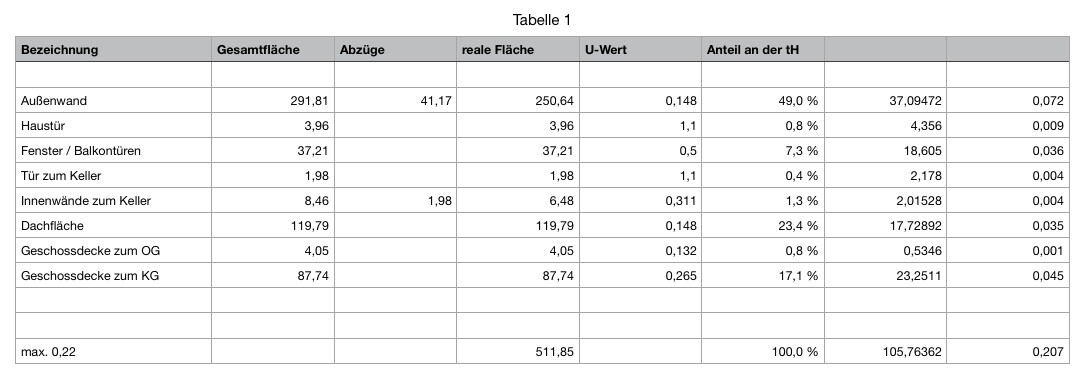
For my case, I roughly calculated the overall U-value of the building. With additional insulation under the ground floor screed and an appropriate door to the basement, I would achieve a total U-value of 0.207, which would be sufficient for KfW 40.
Did I calculate this correctly? By weighting individual U-values according to the total area of the thermal envelope? Thermal bridges are, of course, not considered...
- The thermal envelope is not the same as the building’s exterior shell; one can differentiate between, for example, heated and unheated spaces. Otherwise, how else could you adequately insulate a garage in the basement? I wouldn’t want to know the U-value of a 5m (16.4 ft) garage door, nor would I try to compensate with thicker exterior walls on the ground floor.
- A KfW document states that doors to unheated areas (e.g., basement) must meet the same requirements as doors leading to the outside.
For my case, I roughly calculated the overall U-value of the building. With additional insulation under the ground floor screed and an appropriate door to the basement, I would achieve a total U-value of 0.207, which would be sufficient for KfW 40.
Did I calculate this correctly? By weighting individual U-values according to the total area of the thermal envelope? Thermal bridges are, of course, not considered...
Similar topics